

What is Residential Virtual Staging and How Does It Transform Listings?
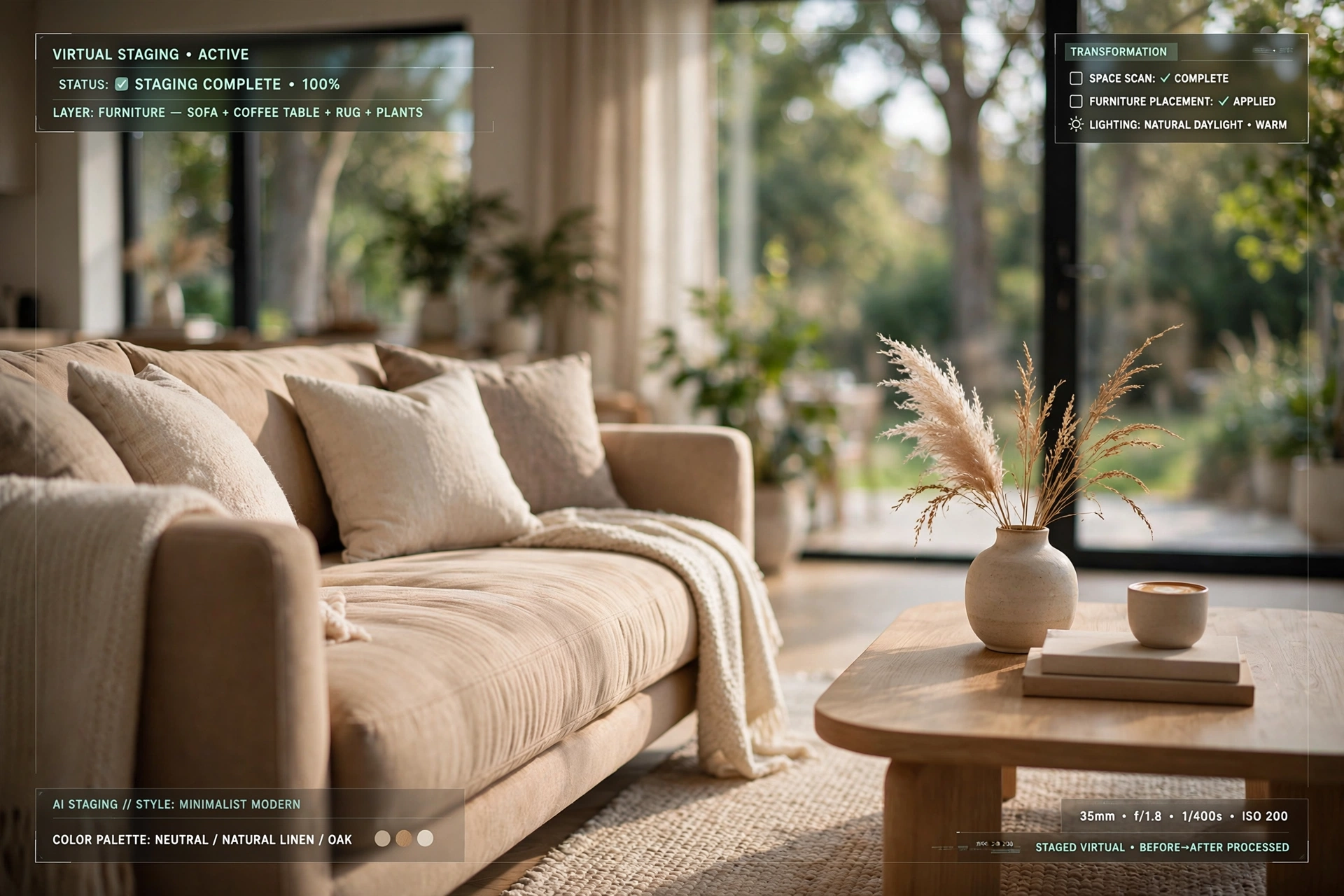
Empty rooms are a psychological barrier for homebuyers. When a potential buyer walks into a vacant space, they often struggle to visualize how a king-sized bed fits or where the sectional sofa should go. This cognitive load leads to shorter viewing times and lower offers. Residential virtual staging solves this by using computer vision and AI to digitally furnish a property, transforming a cold, empty shell into a curated home that evokes emotion.
By integrating high-fidelity 3D models into real estate photography, agents can showcase the maximum potential of a property without the logistical nightmare of moving physical furniture. In my experience working with luxury listing agents, a well-staged room doesn't just look "better"—it changes the narrative of the home from a "project" to a "lifestyle." This is why understanding the technical and strategic application of Digital Staging Services: Scaling Real Estate Listings in 2026 has become a prerequisite for competitive agents in 2026.

Understanding the Core Concept of Residential Virtual Staging
To truly grasp the impact of this technology, we must look beyond simple image editing. Residential virtual staging is the process of adding digitally rendered furniture and decor to photos of vacant rooms to create a realistic representation of a lived-in space. Unlike traditional staging, which requires renting furniture and hiring a physical designer, virtual staging happens entirely in a digital environment.
📚
Definition
Residential Virtual Staging is the application of computer-generated imagery (CGI) and artificial intelligence to insert photorealistic furniture, lighting, and textures into real estate photographs to enhance the visual appeal and spatial perception of a vacant property.
Now, here's where it gets interesting: the technology has shifted from basic "cut-and-paste" images to sophisticated AI that understands depth and perspective. Modern tools utilize computer vision to map the floor plane and walls, ensuring that a digital sofa doesn't appear to be floating or clipping through a wall. This level of precision is essential because the human eye is incredibly sensitive to perspective errors; a single misplaced shadow can make a listing look "fake," which immediately erodes trust with the buyer.
According to research by the National Association of Realtors (NAR), properties that are staged—whether physically or virtually—sell significantly faster than those that are not. While they don't always distinguish between the two in every report, the psychological effect is identical: the buyer stops asking "Will my furniture fit?" and starts asking "When can I move in?" This shift in mindset is what drives the increased conversion rates seen in Property Listing Optimization: The 2026 Guide to Higher Conversion.
The process usually involves three main stages: analysis of the empty room's lighting and dimensions, the selection of a design style (such as Scandinavian, Mid-Century Modern, or Industrial), and the final rendering where AI balances the shadows and reflections to match the original photo. This ensures that the digital assets blend seamlessly with the real-world environment, creating a cohesive image that feels authentic rather than manufactured.
Why Does Residential Virtual Staging Matter for Modern Real Estate?
The impact of visual presentation on property value is not a matter of opinion; it is a matter of data. In a digital-first market, the first "showing" happens on a smartphone screen. If the images are sterile and empty, the buyer’s brain registers the space as "cold," which can lead to a subconscious devaluation of the property.
According to a report by McKinsey on the digitalization of real estate, high-quality visual content can increase lead generation by up to 40% because it reduces the friction between discovery and the decision to visit. When a home is virtually staged, the buyer is no longer doing the hard work of imagining the space; the agent is providing the vision for them. This is a fundamental shift in Real Estate Visual Marketing: The 2026 Guide to AI-Driven Sales, where the goal is to sell a dream, not just square footage.
The financial implications are equally stark. Physical staging for a mid-sized home can cost thousands of dollars per month in rental fees and labor. In contrast, AI-driven virtual staging provides a scalable alternative that costs a fraction of the price while offering more versatility. For instance, an agent can provide three different staging styles—modern, traditional, and minimalist—for the same room to appeal to three different buyer demographics. This level of personalization is impossible with physical furniture.
Furthermore, the risk of "under-selling" a property is high when the space is empty. Empty rooms often look smaller than they actually are because there are no reference points for scale. By placing a correctly scaled dining table in a room, the buyer instantly understands the proportions of the space. This prevents the common issue where buyers walk into a home and feel it is "too small," simply because they lacked a visual benchmark in the listing photos.
The consequence of ignoring this trend is a longer "Days on Market" (DOM) metric. In 2026, buyers have zero patience for listings that look like they were photographed ten years ago. If your competitors are using AI Property Enhancement: Pricing and Value Guide to make their listings pop, a vacant, unstaged home will simply be scrolled past.
Practical Application: How to Implement Virtual Staging Successfully
Implementing residential virtual staging is not as simple as clicking a button; it requires a strategic approach to design and lighting. The mistake I made early on—and that I see constantly with new agents—is over-furnishing the space. When you pack a digital room with too much furniture, you create the opposite effect: the room looks cluttered and small, defeating the purpose of the staging.
To do this correctly, follow this professional workflow:
- Capture High-Quality Base Photos: Use a wide-angle lens and a tripod. Ensure the room is brightly lit. AI works best when it has a clean, high-resolution baseline. If the photos are grainy or dark, the virtual furniture will look like a sticker placed on top of a photo.
- Identify the Target Demographic: If you are listing a condo in a trendy urban area, go with a "Modern Minimalist" or "Industrial" style. If it's a suburban family home, "Transitional" or "Traditional" works best. The furniture must match the neighborhood's vibe.
- Map the Spatial Flow: Determine the "hero" piece of furniture. In a living room, it's the sofa; in a bedroom, it's the bed. Ensure there is a clear walking path in the digital render so the room still feels spacious.
- Leverage Professional AI Tools: This is where RealVisionAI Blog - AI Real Estate Photography & Virtual Staging becomes essential. Instead of spending hours in complex software, their system generates market-ready visuals in 12 seconds, handling the perspective and lighting automatically.
- Disclose the Staging: Always include a small watermark or a caption stating "Virtually Staged" to maintain transparency and avoid any claims of misleading advertising.
💡
Key Takeaway
The goal of virtual staging is not to hide the property's flaws, but to highlight its potential. Less is more; prioritize spatial flow and scale over decorative density to ensure the room feels inviting and large.
By utilizing these steps, agents can integrate Passo a Passo: AI Property Enhancement into their standard listing process. When the staging is done correctly, it acts as a silent salesperson, guiding the buyer through the home and helping them imagine their life within those walls.

Comparing Your Visual Options: Traditional vs. AI Staging
Deciding which method to use depends on your budget, the property's price point, and how long you expect the home to stay on the market. While physical staging is still the gold standard for ultra-luxury estates, the efficiency of AI has made it the dominant choice for the vast majority of residential listings.
| Feature | Traditional Physical Staging | Generic/Cheap AI Tools | RealVisionAI Professional Approach |
|---|---|---|---|
| Cost | Very High ($2k - $10k+) | Very Low | Affordable/Scalable |
| Setup Time | Days/Weeks | Minutes | 12 Seconds |
| Realism | Absolute (Real objects) | Low (Flat, "fake" look) | High (AI-driven depth/light) |
| Flexibility | Zero (One style only) | High (Multiple styles) | High (Curated styles) |
| Logistics | Moving trucks & labor | Software only | Instant Cloud Processing |
| Best For | Luxury Mansions | Low-end rentals | Professional Real Estate Agents |
As the table demonstrates, the "Generic AI" approach often fails because it lacks the professional eye for design and the technical precision of computer vision. This results in images that look like a video game from 2010. On the other hand, a professional approach ensures that the furniture isn't just "there," but is logically placed and realistically lit, making it the most viable option for those wondering Is AI Property Enhancement Worth It?.
Common Misconceptions About Virtual Staging
Most guides get this wrong by claiming that virtual staging is just a "cheap alternative" to physical staging. In reality, for many listings, it is the superior strategic choice. Here are the most common myths debunked with data and experience.
Myth 1: "Buyers feel cheated if the home isn't physically staged."
Actually, the opposite is true. When a home is physically staged, buyers often feel the pressure to "match" the furniture or feel intimidated by the perfection. Virtual staging is understood as a "suggestion" of potential. As long as it is disclosed, buyers appreciate the help in visualizing the space.
Myth 2: "AI staging looks fake and unprofessional."
This was true five years ago. However, with the advent of generative AI and advanced computer vision, the line between a render and a photo has blurred. The "fake" look comes from using low-end tools that don't account for ambient occlusion (the way light gathers in corners) or correct perspective vanishing points.
Myth 3: "It's only for empty houses."
This is a huge misconception. Some of the most effective uses of virtual staging involve "virtual decluttering." This is the process of removing old, ugly furniture from a photo and replacing it with modern pieces. In my experience, removing a tenant's outdated 1980s sofa and replacing it with a sleek 2026 sectional can increase a property's perceived value by thousands of dollars. This is a core part of Types of AI Property Enhancement for Real Estate.
Myth 4: "It's too technical for the average agent to use."
The barrier to entry has vanished. You no longer need to be a Photoshop expert or a 3D artist. With tools like RealVisionAI Blog - AI Real Estate Photography & Virtual Staging, the AI does the heavy lifting, allowing the agent to focus on the marketing strategy rather than the technical execution.
Frequently Asked Questions
Does residential virtual staging actually increase the sale price?
While it is difficult to isolate one single variable, the data suggests a strong correlation between high-quality staging and higher offers. When a buyer can visualize the home as a luxury space, they are less likely to negotiate aggressively based on the "emptiness" or "lack of character" of the property. According to industry benchmarks, staged homes often sell for 1% to 5% more than unstaged homes because the perceived value is elevated. By removing the mental effort required to imagine the layout, you remove the friction that often leads to low-ball offers.
How is virtual staging different from 3D rendering?
Virtual staging is a specific application of 3D rendering. While 3D rendering can create an entire house from scratch (common in new construction where the house isn't built yet), virtual staging starts with a real photograph of an existing space. The "staging" part refers to the act of adding furniture to a real environment. 3D rendering is about creation; virtual staging is about enhancement. For those looking at When to Use Real Estate Image Processing for Your Listings, virtual staging is the correct choice for existing homes.
Which design styles are most effective for residential listings in 2026?
In 2026, the "Quiet Luxury" and "Biophilic" trends are dominating. This means neutral tones, organic shapes, and the integration of greenery (virtual plants). Avoid overly "trendy" colors that might date the home. The goal is to create a "neutral high-end" look that appeals to the widest possible audience. Using a mix of textures—like a linen sofa with a marble coffee table—creates a sense of richness that translates well in photos and attracts higher-quality leads.
Is it legal to use virtual staging in real estate listings?
Yes, it is legal and widely accepted across the globe, provided it is done ethically. The key is "truth in advertising." You should not use virtual staging to hide a structural defect (like a hole in the wall or a leaking ceiling). The furniture should be used to show potential, not to deceive. Most Multiple Listing Services (MLS) require or strongly suggest a "Virtually Staged" disclosure. When used correctly, it is viewed as a marketing tool, similar to using a wide-angle lens or HDR photography.
How long does it take to virtually stage a whole house?
Depending on the tool used, the timeframe varies wildly. Traditional CGI artists might take several days to render a full house. However, using AI-powered platforms like RealVisionAI Blog - AI Real Estate Photography & Virtual Staging, the process is nearly instantaneous. Because the AI handles the perspective and lighting in seconds, an agent can have a fully staged 5-bedroom home ready for the MLS in under an hour. This speed is a critical advantage in a fast-moving market where every hour a listing is offline is a lost opportunity.
Conclusion
Residential virtual staging is no longer a luxury "extra"—it is a fundamental component of a professional real estate strategy in 2026. By bridging the gap between a vacant shell and a dream home, this technology eliminates the psychological barriers that prevent buyers from making strong offers. Whether you are dealing with a luxury estate or a starter condo, the ability to control the visual narrative of a property is the most powerful tool in your marketing arsenal.
The shift toward AI-driven visuals allows agents to be more agile, reducing the overhead of physical staging while increasing the reach of their listings. If you want to stay ahead of the competition and ensure your properties don't sit idle on the market, integrating a professional workflow is the only way forward.
To experience the future of listing visuals, visit RealVisionAI Blog - AI Real Estate Photography & Virtual Staging and transform your vacant spaces into market-ready homes in seconds. For more insights on maximizing your property's appeal, explore our guide on why use AI property enhancement.
Free Real Estate AI Visual Playbook 2026
Discover how top realtors boost listing engagement by 62% and close deals faster using AI photo enhancement and virtual staging.