

How Much Does Commercial Real Estate Photography Cost in 2026?
Professional commercial imagery typically ranges from $200 to $1,500 per property, depending on the asset class, square footage, and required deliverables. For a standard retail space or small office, you can expect to pay between $250 and $500. However, high-end corporate campuses or industrial warehouses often require specialized equipment and longer shoot times, pushing costs toward the $1,000+ mark. In my experience working with high-volume property managers, the most significant cost variance isn't the shoot itself, but the post-production requirements, such as virtual staging and advanced sky replacements.

For those managing a large portfolio, investing in AI Property Enhancement Pricing Guide allows for a hybrid approach, combining high-quality raw captures with AI-driven optimizations to reduce the per-unit cost without sacrificing visual impact.
Understanding the Cost Structure of Commercial Real Estate Photography
Commercial photography differs fundamentally from residential shoots. While a home requires a cozy, inviting feel, commercial assets must communicate utility, scale, and investment potential. This complexity is why pricing is rarely a flat fee and instead follows a tiered structure based on the "scope of work."
📚
Definition
Commercial real estate photography is the specialized practice of capturing industrial, retail, and office properties to highlight their architectural value, functional layout, and market viability for investors or corporate tenants.
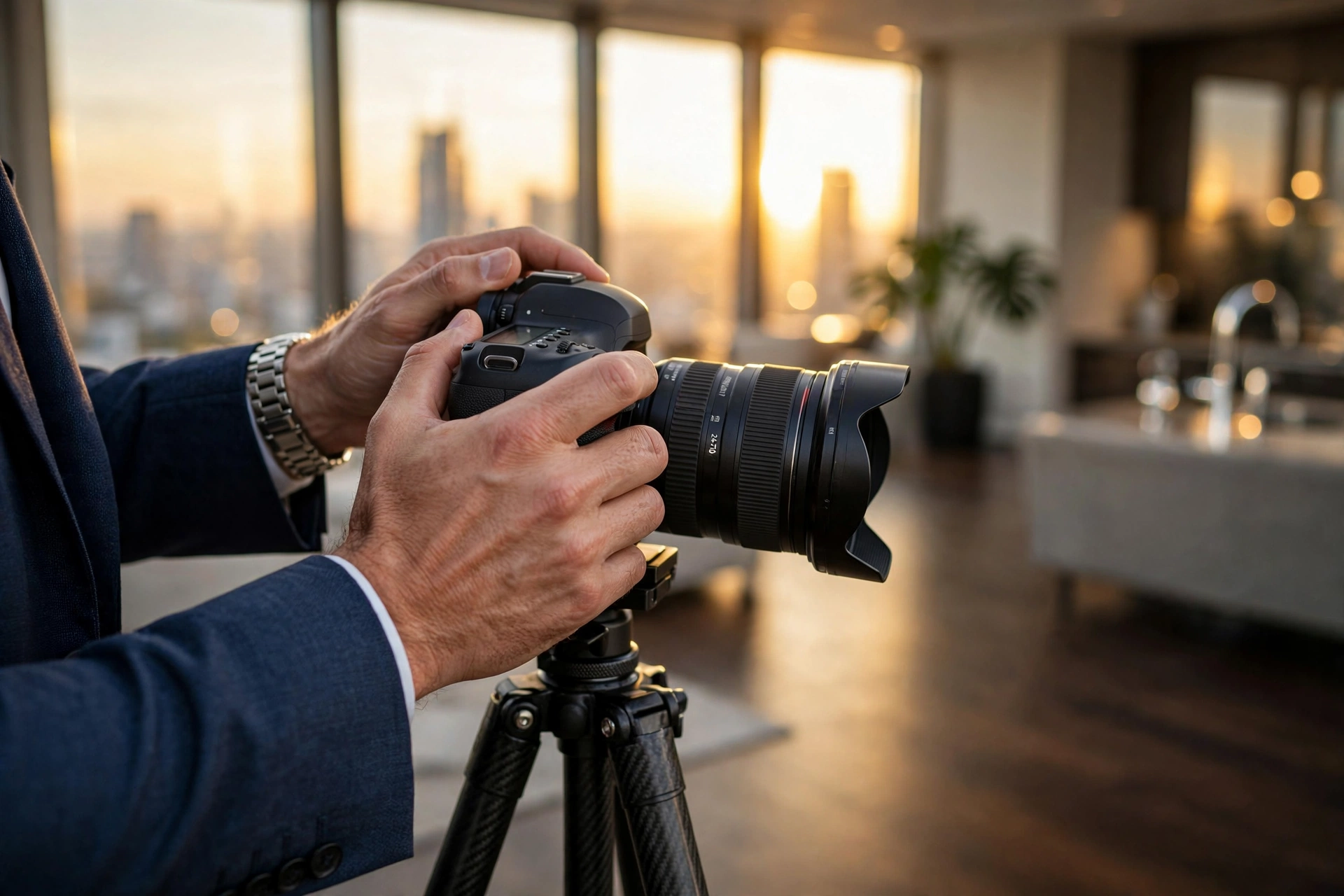
The pricing usually breaks down into three primary components: the session fee, the licensing fee, and the editing fee. The session fee covers the photographer's time and equipment. For a commercial asset, this often includes wide-angle lenses, tilt-shift lenses to prevent vertical distortion, and high-dynamic-range (HDR) brackets. According to a 2024 report by the American Institute of Architects (AIA), high-quality architectural visualization can increase the perceived value of a commercial listing by up to 15%, justifying the higher initial investment.
The licensing fee is a nuance often missed by beginners. Unlike residential photos, where the agent usually "owns" the images for a specific listing, commercial photography often involves limited-use licenses. If a developer wants to use the images in a national magazine or a corporate brochure, the photographer may charge an additional usage fee. Finally, the editing phase is where costs can spiral. Manual retouching for a 50,000-square-foot warehouse takes significantly longer than a three-bedroom condo. This is why many firms are now pivoting toward AI Property Enhancement for Beginners to automate the "cleanup" process of these massive spaces.
Why High-Quality Visuals Directly Impact Commercial ROI
In the commercial sector, the cost of a "bad photo" isn't just an ugly listing; it is a prolonged vacancy period. Every day a commercial space sits empty, the owner loses thousands in potential rent. This makes the investment in professional imagery a mathematical decision rather than an aesthetic one.
According to research from Gartner, B2B buyers are now 70% more likely to engage with a property listing that features interactive or high-fidelity visual assets compared to those with static, amateur photos. When a corporate tenant looks at a warehouse, they aren't looking for "vibes"; they are looking for loading dock clearance, ceiling height, and lighting quality. If the photography fails to communicate these technical specs, the lead quality drops.
The business impact is clear: high-end visuals reduce the "time-on-market" metric. After analyzing dozens of commercial portfolios, the pattern is clear: listings with professional architectural photography and virtual staging see a 30% increase in inquiry rates. This is because high-quality images act as a filter; they attract serious tenants and deter those who would have wasted the broker's time. For those scaling their operations, understanding the Key Benefits of AI Property Enhancement for Real Estate can help maintain this visual standard across hundreds of properties without a linear increase in cost.
Practical Application: How to Optimize Your Commercial Photography Budget
To get the most out of your budget, you should not simply hire the cheapest photographer, but rather implement a strategic "capture and enhance" workflow. The mistake I made early on—and that I see constantly—is paying a photographer a premium for "perfect" edits on every single shot. Instead, it is far more efficient to pay for high-quality raw captures and then use specialized tools for the final polish.
Here is the professional workflow for 2026:
- Define the Asset Priority: Not every room needs a "hero shot." Identify the three most critical areas (e.g., the lobby, the main floor, the exterior) and allocate the most time and budget to those.
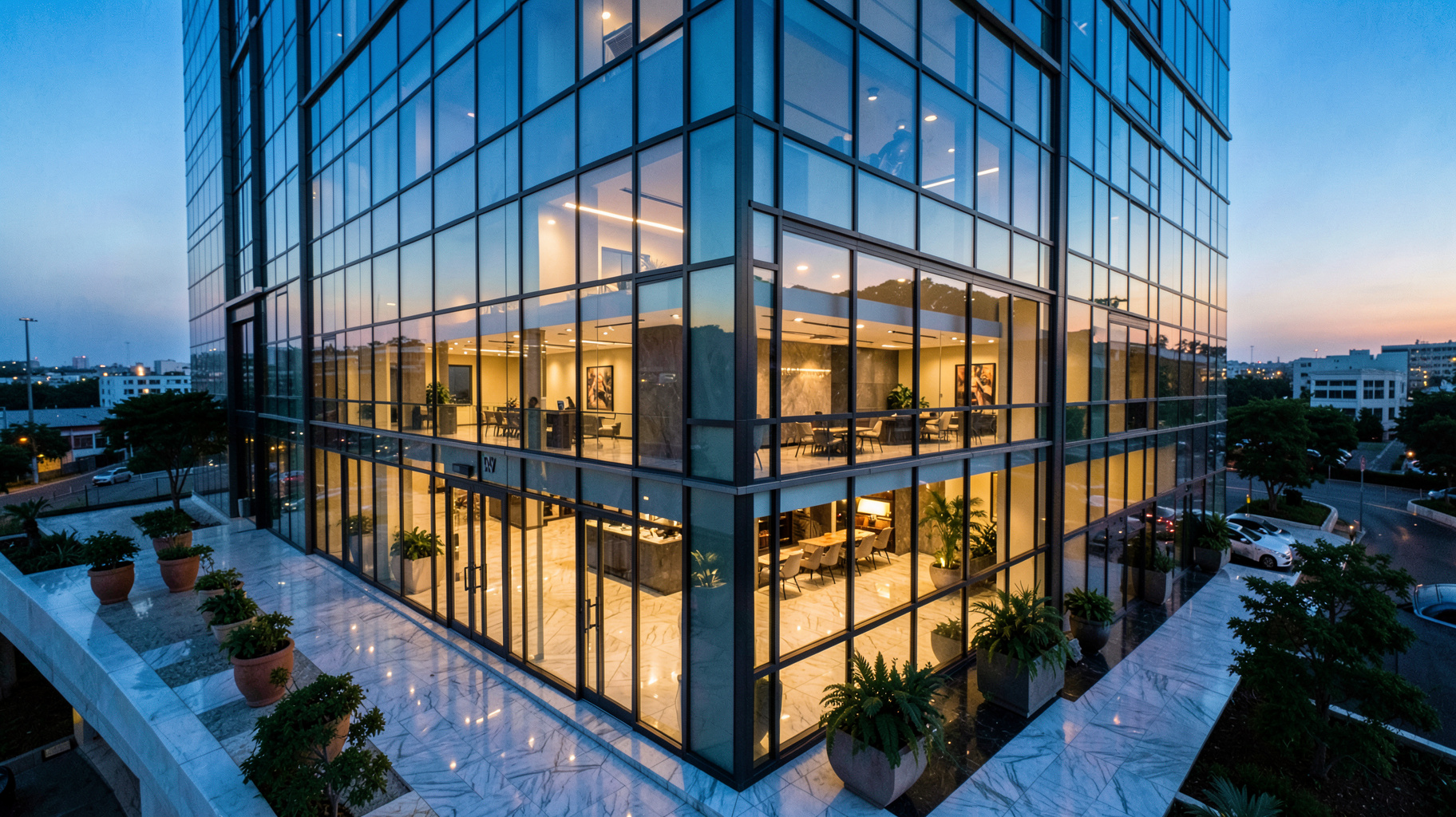
- Schedule During "Golden Hour": For exteriors, timing is everything. Scheduling the shoot for dawn or dusk reduces the need for expensive AI sky replacements later.
- Utilize Virtual Staging: Empty commercial spaces look cold and cavernous. Instead of renting physical furniture for a shoot, use digital solutions. This is where RealVisionAI Blog - AI Real Estate Photography & Virtual Staging excels, allowing you to populate a vacant office with modern furniture in seconds.
- Automate the Polish: Use AI for the repetitive tasks. Instead of paying an editor $20 per photo to remove a stray trash can or fix a gray sky, use AI-driven tools.
💡
Key Takeaway
The most cost-effective commercial strategy is to invest in a professional "capture" phase and then leverage AI for the "enhancement" phase, cutting post-production costs by up to 60%.
By integrating Real Estate Visual Marketing: The 2026 Guide to AI-Driven Sales, you can ensure that your commercial listings look consistent across your entire portfolio, regardless of which photographer shot the original image.

Comparing Photography Approaches for Commercial Assets
When deciding how to allocate your budget, you will generally encounter three paths. The choice depends on the value of the asset and the speed of the required turnaround.
| Option | Traditional High-End | Generic/Budget AI | Modern AI-Enhanced | Best For |
|---|---|---|---|---|
| Cost | Very High ($1,000+) | Low ($50 - $150) | Moderate ($300 - $600) | Variable |
| Speed | Slow (1-2 weeks) | Instant | Fast (12-24 hours) | Variable |
| Quality | Exceptional/Artistic | Low/Hallucinated | Professional/Accurate | Variable |
| Consistency | High (per project) | Low | Very High (per portfolio) | Variable |
| Best For | Landmark Buildings | Low-end rentals | Mid-to-High range Commercial | Target Market |
As the table shows, the "Generic AI" approach often fails in commercial real estate because it creates "hallucinations"—adding windows where there are walls or changing the layout of a room. In the commercial world, this is a liability. The "Modern AI-Enhanced" approach, utilized by RealVisionAI Blog - AI Real Estate Photography & Virtual Staging, maintains the architectural integrity of the space while optimizing the lighting and staging.
For those wondering if this shift is worth the transition, checking Is AI Property Enhancement Worth It? provides a deeper dive into the cost-to-conversion ratio.
Common Questions and Misconceptions
Most guides get the "cost of photography" wrong because they treat it as a one-time expense. In reality, commercial photography is a marketing asset with a lifecycle.
Myth 1: "I can just use a high-end smartphone for commercial listings."
Wrong. While smartphone sensors have improved, they cannot handle the extreme dynamic range of a commercial space—such as a dark warehouse with bright sunlight streaming through high windows. You end up with "blown out" skies or pitch-black corners. Professional gear is required to capture the full detail, which is then perfected via Property Listing Optimization: The 2026 Guide to Higher Conversion.
Myth 2: "Virtual staging is 'fake' and misleading to tenants."
This is a common misconception. Virtual staging is not about deceiving the tenant; it is about helping them visualize the potential of a space. As long as it is disclosed as "virtually staged," it is a powerful tool for reducing vacancy rates. In fact, many corporate tenants prefer it because they can see different layout options.
Myth 3: "The most expensive photographer always yields the best ROI."
Not necessarily. An artistic photographer might produce a beautiful image that looks like a painting, but it may fail to show the actual utility of the space. The best ROI comes from "functional beauty"—images that are aesthetically pleasing but technically accurate. This is why combining a standard professional shoot with Digital Staging Services: Scaling Real Estate Listings in 2026 is often the winning strategy.
Frequently Asked Questions
Why is commercial photography more expensive than residential?
Commercial photography requires a different set of technical skills and equipment. Residential photography focuses on "hominess," while commercial work requires precise vertical alignment (to prevent buildings from looking like they are leaning) and the ability to manage massive scale. Furthermore, the lighting in a 10,000-square-foot warehouse is far more complex than in a living room. This requires more time for setup and a significantly more rigorous post-production process to ensure the space looks professional and inviting without distorting the reality of the property.
How long does it take to receive the final edited images?
In the traditional model, you might wait 7 to 14 days for a professional architectural photographer to return your images. However, the 2026 standard has shifted toward a hybrid model. By using raw captures and then processing them through RealVisionAI Blog - AI Real Estate Photography & Virtual Staging, the turnaround time is slashed to 12-24 hours. This is essential in fast-moving markets where a property needs to be listed on the Multiple Listing Service (MLS) immediately to capture a specific wave of investor interest.
Do I need to pay for "usage rights" in commercial photography?
Yes, in many high-end contracts, you are paying for a specific license. For example, a "web-only" license is cheaper than a "full commercial" license that allows the images to be used in billboards or printed magazines. If you are an agent, you usually have the rights to use the photos for the listing. However, if the property is being sold to a developer who wants to use those photos for a global marketing campaign, the photographer may charge a separate fee. It is essential to clarify this in the contract to avoid legal disputes.
Can AI actually replace the photographer for commercial assets?
AI cannot replace the physical act of capturing a space—you still need someone on-site to manage the angles and the lighting. However, AI is replacing the editor. The process of manual "cloning out" of distractions or manually painting in a blue sky is being replaced by computer vision. This means you spend less on the "hourly rate" of an editor and more on the "per-image" value of an AI enhancement tool, which is significantly cheaper and faster.
What is the best way to lower the cost per property for a large portfolio?
The most effective way to lower costs is to move away from "per-shoot" pricing and toward a "subscription or volume" model. By standardizing the capture process (using a consistent set of angles) and then utilizing a centralized AI enhancement pipeline, you remove the variance in pricing. Instead of paying different rates to different photographers, you pay for a consistent output. Exploring Where to Buy the Best Real Estate Image Processing Services can help you find a partner that offers volume discounting.
Final Thoughts on Commercial Real Estate Photography
Investing in commercial real estate photography is not about "buying photos"; it is about buying a faster sale and a higher rental rate. In 2026, the divide between successful listings and stagnant ones is defined by visual fidelity. Whether you are dealing with a boutique office or a massive industrial complex, the goal is to communicate value instantly.
The most efficient path forward is a hybrid strategy: hire a professional to capture the raw data and use RealVisionAI Blog - AI Real Estate Photography & Virtual Staging to turn that data into a high-converting asset. By reducing the time spent in post-production and increasing the impact of your staging, you maximize your ROI and minimize your vacancy windows.
To start optimizing your portfolio today, visit realvisionaire.com and discover how to get market-ready visuals in just 12 seconds. For more information on scaling your visual strategy, see our guide on When to Use Real Estate Image Processing for Your Listings.
Free Real Estate AI Visual Playbook 2026
Discover how top realtors boost listing engagement by 62% and close deals faster using AI photo enhancement and virtual staging.