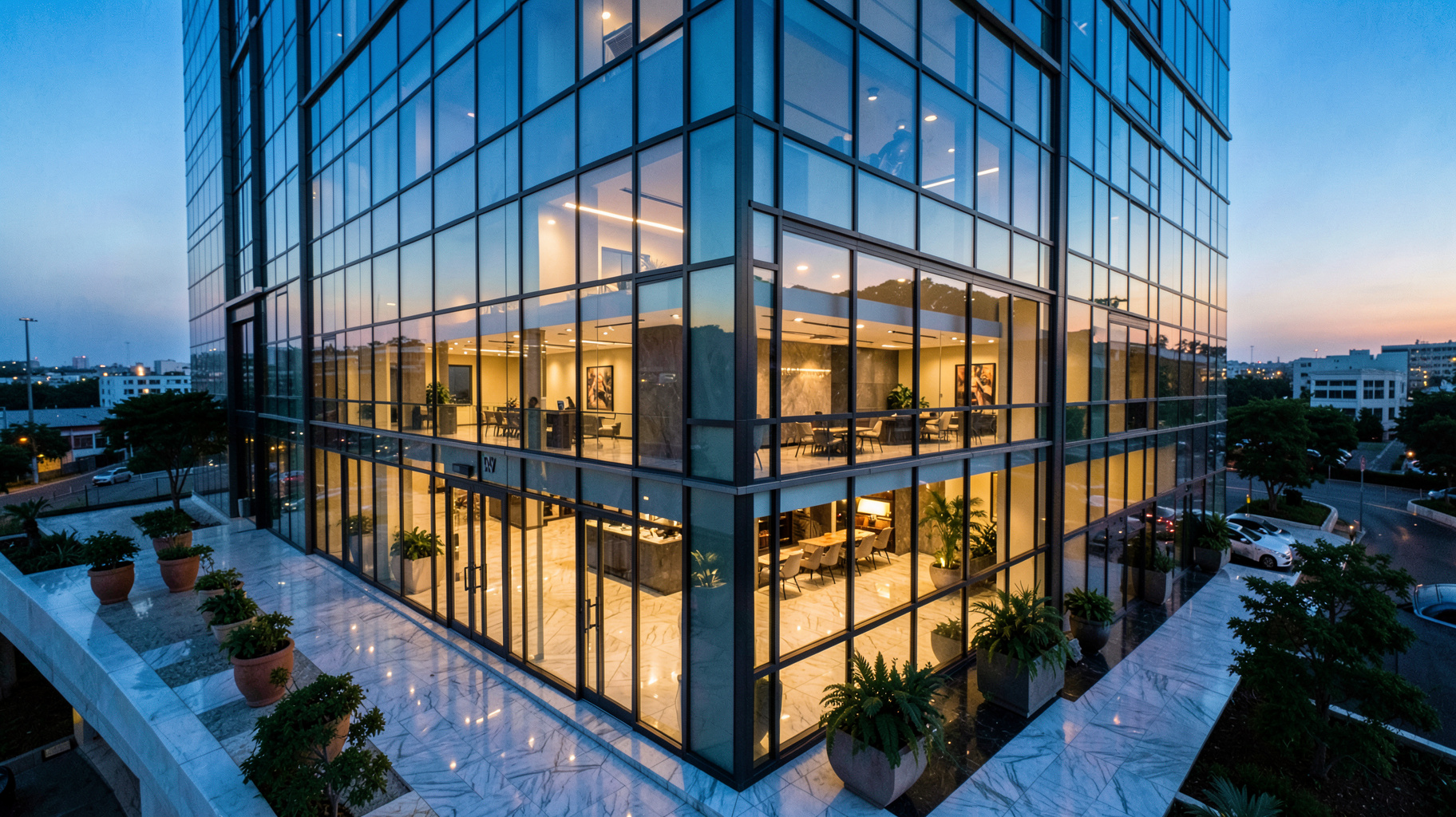


Why Is AI Property Enhancement Actually Worth the Investment?
The gap between a listing that sits on the market for 60 days and one that receives ten offers in the first weekend usually comes down to a few pixels. In my experience working with high-volume real estate teams, the most common mistake I see is the "good enough" approach to photography. Agents often believe that if a house is clean and the light is decent, the photos are sufficient. However, the modern buyer's journey starts with a swipe, and if the visual hook isn't immediate, they move on. This is why AI property enhancement has shifted from a luxury "extra" to a fundamental requirement for competitive listing strategies in 2026. It provides a scalable way to ensure every single image triggers an emotional response, regardless of the weather during the shoot or the current state of the home's interior.

What Exactly Is AI Property Enhancement and How Does It Work?
To understand the value, we first need to strip away the marketing jargon. Many people mistake basic filters for true enhancement. True enhancement utilizes computer vision and generative adversarial networks (GANs) to analyze the geometry of a room and the physics of light, then modifies the image to reflect an "idealized" yet realistic version of the property.
📚
Definition
AI property enhancement is the use of machine learning and computer vision to automatically improve real estate imagery, encompassing tasks such as virtual staging, sky replacement, daylight-to-dusk conversion, and object removal to maximize a property's perceived value.
When we implement these tools, the AI isn't just "painting" over a photo; it is reconstructing elements. For instance, a "grey sky replacement" doesn't just swap a background; it adjusts the color temperature and shadows of the entire foreground to match the new light source. This ensures the image doesn't look like a cheap collage, which is a common failure in low-end AI tools.
According to research by Gartner, the integration of AI in visual content creation has shifted from "experimental" to "operational," with a significant percentage of enterprises now using AI to automate the production of high-fidelity assets. In the real estate sector, this means the ability to take a photo of a vacant, dimly lit room and transform it into a warm, inviting space in seconds. This process removes the friction of traditional staging, which requires renting furniture, hiring movers, and coordinating schedules, all while costing thousands of dollars per property.
Why Does This Technology Matter for Your Bottom Line?
The financial implication of poor visuals is staggering. When a buyer scrolls through a Multiple Listing Service (MLS), they are performing a rapid-fire filtering process. If the lead image is a gloomy exterior or a sterile, empty bedroom, the brain registers "uninviting" or "too much work" before the agent can even mention the square footage.
The data supports this. Industry benchmarks frequently show that listings with high-quality, professionally enhanced images receive significantly more clicks and lead inquiries. While exact percentages vary by market, a general consensus among digital marketing experts suggests that visually optimized listings can see an increase in engagement of up to 40% over non-optimized counterparts. This is because AI property enhancement addresses the psychological need for "aspiration." Buyers aren't just buying a structure; they are buying a lifestyle.
From a business perspective, the consequence of not acting is "listing stagnation." According to McKinsey, AI-driven personalization and optimization in customer-facing assets lead to higher conversion rates because they reduce the cognitive load on the consumer. In real estate, reducing the cognitive load means making it effortless for the buyer to imagine themselves living in the space. If the buyer has to spend mental energy imagining where a sofa would go in a vacant room, you've already lost a percentage of your potential lead pool.
Now, here's where it gets interesting: the ROI isn't just in the sale price, but in the "days on market" (DOM). A shorter DOM means less money spent on utility bills for the seller, fewer showings for the agent, and a faster commission payout. When you reduce the time to sale by even 10%, the cumulative savings and efficiency gains across a portfolio of 50 homes per year are massive.
How to Implement AI Property Enhancement Practically
Implementing a high-end visual strategy doesn't require you to become a prompt engineer or a Photoshop expert. The goal is to integrate a seamless workflow that takes a raw image and produces a market-ready asset in under a minute.
For those looking for the most efficient path, RealVisionAI Blog - AI Real Estate Photography & Virtual Staging provides a specialized studio environment where "Market-Ready Listing Visuals in 12 Seconds" is the standard. Instead of wrestling with complex software, the process is streamlined into a few specific high-impact actions:
- The "First Impression" Sky Swap: Replace overcast, grey skies with a bright, "golden hour" blue. This immediately changes the mood of the exterior from "depressing" to "dreamy."
- The Virtual Staging Loop: For vacant properties, apply modern, minimalist, or traditional furniture sets. This allows you to test different demographics—perhaps a "modern minimalist" look for a condo and a "traditional family" look for a suburban home.
- The Day-to-Dusk Conversion: Transform a midday photo into a twilight shot. Twilight photos are statistically some of the highest-performing images on any real estate platform because they evoke a sense of luxury and "coming home."
- The Decluttering Phase: Use AI to remove unsightly trash cans, power lines, or dated furniture that would otherwise distract the buyer.
💡
Key Takeaway
The most effective AI strategy is not to over-process the image into a fantasy, but to remove the "visual noise" that prevents a buyer from seeing the property's true potential.
In my experience, the biggest win comes from the "12-second turnaround." When an agent can upload a photo and have it enhanced instantly, they can adjust their marketing strategy in real-time based on the feedback they are getting from the market.

Comparing Your Visual Strategy Options
Not all AI tools are created equal. Many agents fall into the trap of using free, generic AI generators that produce "hallucinations"—strange artifacts, floating furniture, or distorted walls—which can actually damage a professional's reputation.
| Strategy | Traditional Staging | Generic/Cheap AI | Professional AI (RealVisionAI) |
|---|---|---|---|
| Cost | Very High ($$$$) | Very Low ($) | Moderate/Scalable ($$) |
| Turnaround | Days/Weeks | Minutes | Seconds |
| Accuracy | Perfect (Physical) | Low (Artifacts/Errors) | High (Architectural Logic) |
| Scalability | Non-existent | High | Extremely High |
| Best For | Ultra-luxury mansions | Casual social posts | Professional MLS Listings |
As the table demonstrates, the "Generic AI" approach is a dangerous middle ground. It's fast, but the lack of professional oversight often results in images that look "fake." This creates a trust gap with the buyer. When they arrive at the physical showing and see a room that looks nothing like the "AI-dream" they saw online, they feel deceived. The professional approach used by RealVisionAI Blog - AI Real Estate Photography & Virtual Staging focuses on architectural accuracy, ensuring that the enhancement enhances the reality rather than replacing it with a lie.
Common Questions and Misconceptions
Most guides on this topic get it wrong by suggesting that AI should be used to "hide" flaws. That is a critical mistake.
Myth 1: "AI enhancement is essentially catfishing the buyer."
Actually, the opposite is true. An empty room is a "blank" that many buyers struggle to visualize. By using virtual staging, you aren't lying about the space; you are providing a visual aid to help them understand the property's potential. The key is transparency—marking an image as "Virtually Staged" maintains trust while still capturing the lead.
Myth 2: "I can just use a free app to do this."
Free apps often lack "contextual awareness." They might brighten a room but blow out the windows into pure white voids, or place a sofa that is physically too large for the room's dimensions. Professional tools use computer vision to maintain the correct perspective and scale, which is the difference between a "filtered photo" and a "professional asset."
Myth 3: "AI is only for luxury homes."
This is a common misconception. In fact, AI enhancement is more valuable for mid-market and entry-level homes. Luxury buyers expect high-end visuals. Entry-level buyers, however, are often surprised and delighted by a professional presentation, which can make a modest home stand out as the "best in its class" in a specific price bracket.
Frequently Asked Questions
Is AI property enhancement legal in all real estate markets?
In most markets, the use of AI for enhancement is perfectly legal, provided it does not mislead the buyer regarding the permanent structural features of the property. For example, changing a grey sky to blue or adding virtual furniture is widely accepted. However, removing a permanent telephone pole from the front yard or changing the actual square footage of a room would be considered deceptive. The industry standard is to include a small disclaimer such as "Virtually Staged" or "Digitally Enhanced" on the images to ensure full transparency and compliance with local real estate board regulations.
How does virtual staging differ from traditional home staging?
Traditional staging involves renting physical furniture and paying a professional to arrange it in a home, which is a costly and time-consuming process. Virtual staging uses AI to digitally place furniture into a photo of an empty room. The primary difference is scalability and cost. While traditional staging is an investment in a physical asset, virtual staging is a digital asset. This allows agents to create multiple "looks" for the same room—such as a nursery for a young couple or a home office for a remote worker—tailoring the visual appeal to different potential buyer personas without moving a single piece of furniture.
Can AI property enhancement help sell a home faster?
Yes, the data consistently shows that visually optimized listings have a higher click-through rate on portals like Zillow or Realtor.com. When a property looks "move-in ready" through high-quality staging and lighting, it reduces the psychological friction for the buyer. They no longer have to imagine the possibilities; they can see them. This leads to more showing requests and a higher volume of early offers. In a competitive market, the "digital curb appeal" is often the deciding factor in whether a buyer even books a tour, effectively shortening the total days on market.
What is the difference between "Day-to-Dusk" and "Twilight" photography?
Twilight photography involves actually staying at a property until the sun sets and taking a photo during the "blue hour," which requires expensive equipment and precise timing. Day-to-Dusk AI enhancement takes a photo shot during the bright daylight and uses artificial intelligence to simulate the lighting, sky color, and interior glow of a twilight shot. This provides the same emotional "luxury" appeal of a twilight photo without the logistical nightmare of scheduling a photographer to be on-site at 8:00 PM in the middle of winter.
Will using AI for images affect my SEO or listing visibility?
Using AI for images generally improves your listing's visibility indirectly. While search engines don't "read" the AI pixels, they do track user behavior. If users spend more time looking at your photos, click through your gallery more often, and spend more time on your listing page, the platform's algorithm recognizes the listing as "high quality" and is more likely to promote it in search results. High-resolution, professionally enhanced images reduce the "bounce rate," signaling to the MLS or portal that your listing is engaging, which can lead to higher organic visibility.
Final Thoughts on AI Property Enhancement
The reality of the 2026 real estate market is that you are no longer competing just with the agent down the street, but with the global standard of digital presentation. The "why" behind AI property enhancement is simple: it converts passive scrollers into active leads by removing visual barriers and evoking a precise emotional response.
If you are still relying on raw, unedited photos or outdated manual staging, you are leaving money on the table and extending your days on market. The efficiency of a 12-second turnaround allows you to scale your marketing without increasing your workload.
Stop letting a cloudy day or an empty room kill your conversion rate. Experience the difference in speed and quality with RealVisionAI Blog - AI Real Estate Photography & Virtual Staging.
Visit realvisionaire.com to transform your listings today.
Recommended Readings
To deepen your understanding of these topics, we recommend reading the following articles:
- AI in Real Estate
- Ultimate AI Lead Generation for Real Estate Agents
- AI staging for realtors
- AI Virtual Staging by Property Type
Free Real Estate AI Visual Playbook 2026
Discover how top realtors boost listing engagement by 62% and close deals faster using AI photo enhancement and virtual staging.