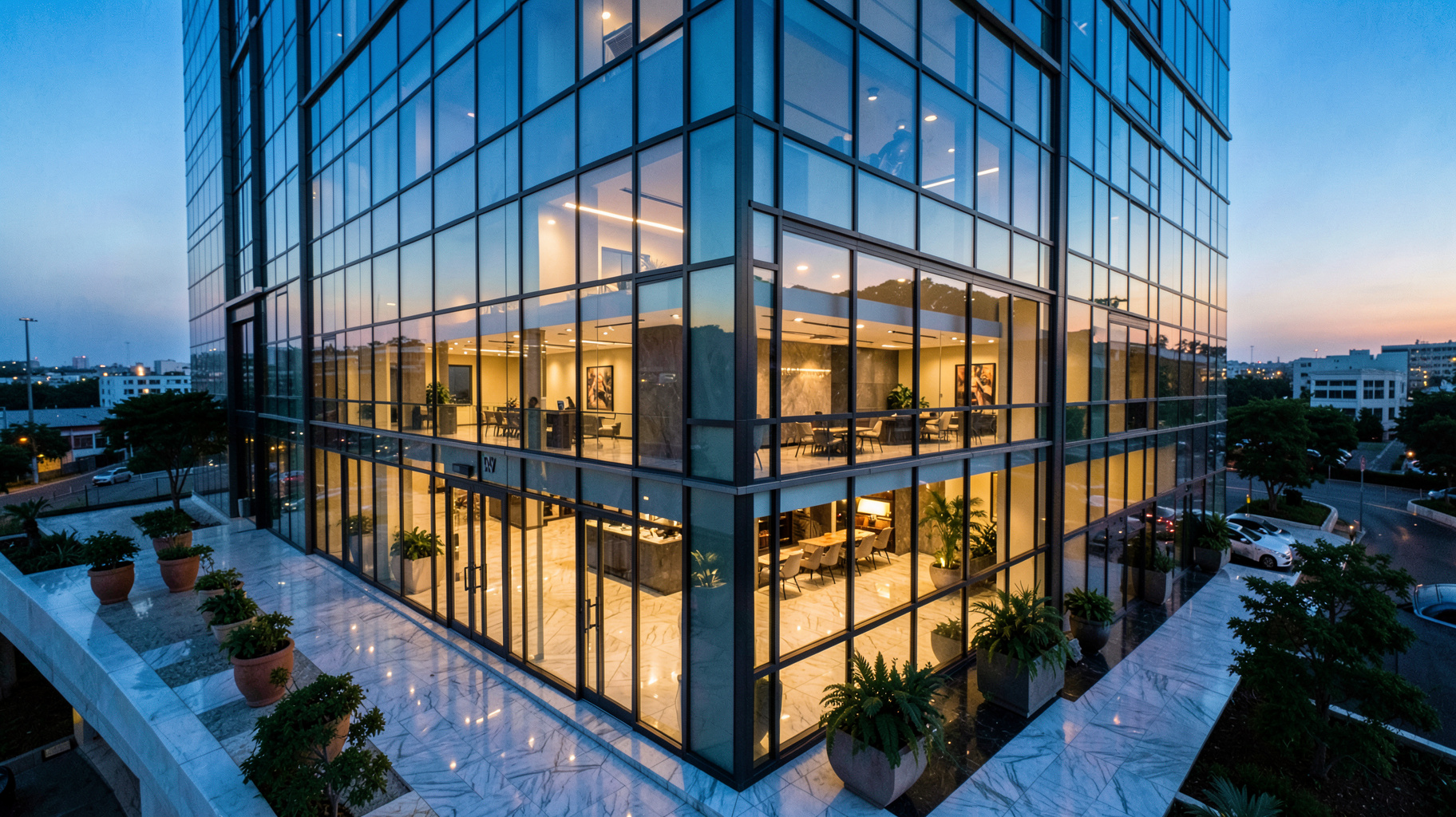


Where Should You Source Professional Real Estate Image Processing?
Finding the right environment to procure high-end visual enhancements often comes down to a choice between three distinct channels: specialized AI-driven platforms, traditional boutique editing agencies, or freelance marketplaces. For most modern agencies, the most efficient place to acquire real estate image processing is through dedicated AI studios that integrate computer vision with industry-specific presets, allowing for a 12-second turnaround rather than a 48-hour wait. In my experience working with high-volume property managers, the "where" is less about the geographical location and more about the technical architecture of the platform; those who rely on manual offshore teams often struggle with consistency and scaling during peak spring listing seasons.

What Exactly is the Ecosystem of Real Estate Image Processing?
To understand where to buy these services, you first need to understand what is actually happening under the hood of the processing engine. When you upload a photo to a processing hub, you aren't just applying a filter; you are engaging a complex pipeline of digital adjustments designed to maximize the perceived value of a property.
📚
Definition
Real estate image processing is the systematic application of digital enhancements—including HDR blending, perspective correction, sky replacement, and virtual staging—to architectural photographs to make a property more appealing to potential buyers on a Multiple Listing Service (MLS).
The ecosystem is generally split into two worlds: the "Manual Pipeline" and the "AI Pipeline." The manual pipeline usually exists in the form of editing houses located in regions with lower labor costs, where human editors manually mask out windows and adjust levels. This is the "old way." The new world resides in cloud-based AI environments where computer vision algorithms identify the edges of a room, detect the horizon line, and automatically apply a "blue sky" replacement without a human ever touching the file.
According to research by Gartner on the evolution of AI in creative workflows, the shift toward "generative editing" is reducing production cycles by up to 80% for industry professionals. This means the "where" has shifted from a service-based agency model to a product-based software model. When you buy processing today, you are essentially buying access to a trained model that understands the difference between a "modern minimalist" living room and a "traditional" bedroom.
In my experience, the biggest mistake I see professionals make is treating image processing as a commodity. They go to generic freelance sites and hire the cheapest editor available. However, architectural photography requires a specific understanding of vertical lines and color temperature. A generic editor might over-saturate the grass to a neon green, which looks fake and can actually deter high-end buyers. The "where" matters because the specialized tools used by dedicated platforms like RealVisionAI Blog - AI Real Estate Photography & Virtual Staging are built specifically for the real estate vertical, not for general portraiture or product photography.
Why the Choice of Processing Environment Directly Impacts Your ROI
The location of your processing—whether it's a local freelancer or a global AI platform—has a measurable impact on your bottom line. The primary driver here is "Time to Market." In a competitive real estate market, a listing that goes live 48 hours faster has a statistically higher chance of capturing the initial surge of buyer interest.
Data from the National Association of Realtors suggests that high-quality imagery is one of the top three factors in a buyer's decision to visit a home. When you combine this with the speed of AI, the financial implications become clear. If a property manager is handling 50 listings a month and spends 3 days waiting for photos, that is a massive bottleneck in their operational flow.
According to McKinsey's analysis of AI adoption in professional services, businesses that integrate AI into their core operational workflows see a significant increase in throughput and a reduction in operational costs. For a real estate photographer, this means the ability to take more shoots per day without the "editing backlog" that typically limits their income ceiling.
The consequences of choosing the wrong "where" are not just about slow turnaround. There is a risk of "visual inconsistency." When you use a rotating door of freelancers, one house looks warm and inviting, while the next looks cold and clinical. This fragmentation harms your brand identity. By using a centralized AI processing environment, you ensure that every single image across your entire portfolio follows the same mathematical logic for brightness, contrast, and saturation.
Furthermore, the cost of "re-do's" is a hidden drain on profit. In a manual environment, if a sky replacement looks unnatural, you have to send it back, wait another 24 hours, and hope the editor gets it right. In an AI-driven environment, you can tweak the parameters and regenerate the image in seconds. This agility is what separates a scaling business from a struggling one.
How to Implement a Professional Processing Workflow
If you are wondering how to actually move your business into a modern processing environment, the transition should be systematic. You don't just "buy" processing; you integrate a processing layer into your business model.
First, audit your current "time-to-live." Calculate exactly how many hours pass between the moment you click the shutter and the moment the photo appears on the MLS. If that number is higher than 24 hours, your current "where" is costing you money.
Second, implement a tiered processing strategy. Not every home needs full virtual staging. A luxury penthouse requires "Cinematic Processing" (Day-to-Dusk conversion, high-end virtual staging, and object removal), while a standard rental might only need "Basic Enhancement" (color correction and vertical alignment).
This is where RealVisionAI Blog - AI Real Estate Photography & Virtual Staging becomes the ideal solution. Instead of managing three different vendors for three different levels of service, you can handle everything in one place. You can take a raw, grey-sky exterior and convert it to a stunning golden-hour twilight shot in 12 seconds.
💡
Key Takeaway
The goal of modern image processing is to remove the "human bottleneck" from the creative process, allowing the photographer to focus on composition while the AI handles the technical labor.
The step-by-step implementation looks like this:
- Capture: Shoot in RAW or high-quality JPEG with a wide-angle lens, focusing on clean compositions.
- Upload: Send images to a specialized AI cloud environment.
- Process: Select the specific enhancement needed (e.g., grass restoration for a curb-appeal boost).
- Review: Use a side-by-side comparison tool to ensure the AI didn't hallucinate any architectural details.
- Deploy: Push the images directly to the listing site.

Comparing Your Sourcing Options: Where to Actually Buy
Depending on your volume and budget, different "where" options make sense. However, as we move into 2026, the gap between AI-driven platforms and manual services has widened significantly in terms of value.
| Sourcing Option | Processing Speed | Quality Consistency | Cost per Image | Best For |
|---|---|---|---|---|
| Freelance Marketplaces | Slow (24-72h) | Low (Varies by artist) | Medium | Low-volume, one-off projects |
| Boutique Editing Agencies | Medium (24-48h) | High (Human oversight) | High | Ultra-luxury, custom art direction |
| AI Processing Platforms | Instant (Seconds) | Extremely High | Low/Scalable | Scaling agencies & high-volume pros |
As the table illustrates, the "Modern Approach" via AI platforms is the only option that solves for both speed and cost. Most boutique agencies are essentially "middlemen" who outsource to the same freelancers you find on marketplaces, adding a markup for project management. AI platforms like RealVisionAI Blog - AI Real Estate Photography & Virtual Staging remove the middleman entirely.
Now here's where it gets interesting: the "Generic AI" approach (using basic photo apps) often fails because those tools aren't trained on architectural data. They might try to "beautify" a face or a landscape, but they don't know that a window should show a clear view of the outdoors rather than a blown-out white void. Professional real estate processing requires "domain-specific AI," which is trained on millions of successful real estate listings to know exactly what a "sold" property looks like.
Common Questions & Misconceptions About Image Sourcing
Most guides on this topic get it wrong by suggesting that "human touch" is always superior. This is a myth. In the context of real estate image processing, the "human touch" is often the source of the error. Human editors get tired, they have subjective opinions on color, and they make mistakes with masking.
One common misconception is that AI processing looks "fake." This was true in 2022, but by 2026, generative AI has reached a level of photorealism that is indistinguishable from a manual edit. The "uncanny valley" effect has been solved through better training sets and refined computer vision.
Another myth is that you need to be a "tech person" to use these platforms. Many professionals avoid AI because they fear a steep learning curve. In reality, the modern interface is simpler than a traditional editing software. Instead of adjusting "curves" and "levels" (which takes years to master), you simply select "Day-to-Dusk" or "Virtual Staging," and the AI executes the technical work.
Finally, some believe that using AI processing is "unethical" or "misleading" to the buyer. This is a misunderstanding of the purpose of photography. Real estate photography is not a documentary; it is a marketing tool designed to show the potential of a space. As long as the structural integrity of the room is preserved, enhancing the lighting and adding furniture (virtual staging) is an industry-standard practice accepted by the MLS and buyers alike.
Frequently Asked Questions
Where is the best place to get high-volume image processing for a real estate team?
The best place is a specialized AI-driven studio. For teams handling dozens of properties weekly, the only way to maintain sanity and profitability is to move away from manual editors and into an automated pipeline. AI platforms allow for instant scaling, meaning whether you have 10 images or 1,000, the processing time per image remains constant. This eliminates the "bottleneck" effect where your business growth is limited by how many editors you can manage.
Can I buy image processing as a subscription or per-image?
Most modern platforms offer both. Subscription models are ideal for established agencies with predictable monthly volumes, providing a lower cost-per-image. Per-image "credit" systems are better for independent photographers or agents who only list a few homes a year. In my experience, starting with a credit-based system to test the quality and then switching to a subscription as you scale is the most fiscally responsible approach.
How does "AI processing" differ from using a preset in Lightroom?
A Lightroom preset is a static set of instructions applied to every photo regardless of its content. If you apply a "Bright" preset to a dark room and a bright room, one will look great and the other will be blown out. AI processing is dynamic; it analyzes the actual content of the image. It recognizes that a "window" is a window and applies specific exposure compensation to that area alone, rather than the whole image.
Where should I go if I need "Virtual Staging" specifically?
Virtual staging is a subset of image processing. You should look for a platform that integrates this directly into their workflow. Instead of sending your photos to one person for editing and another for staging, a unified platform like RealVisionAI Blog - AI Real Estate Photography & Virtual Staging allows you to do both in one session. This ensures that the lighting of the virtual furniture matches the lighting of the processed room perfectly.
Is there a difference between "Image Editing" and "Image Processing" in real estate?
Yes. "Editing" usually refers to a manual, artistic process where a human makes subjective choices. "Processing" refers to a systematic, technical workflow designed to achieve a specific, repeatable result. For real estate, you want processing. You want every photo in your portfolio to have the same professional standard, and a systematic process is the only way to guarantee that consistency across thousands of images.
Final Thoughts on Real Estate Image Processing
The question of "where" to buy your processing is ultimately a question of how you want to scale your business. If you are content with a slow, manual workflow and high overhead, boutique agencies or freelancers are an option. But if you want to maximize your ROI and dominate your local market, the answer is a specialized AI environment.
By integrating real estate image processing through a high-speed, high-accuracy platform, you stop being a "bottleneck" in your own business. You move from spending your weekends editing photos to spending your weekends finding new clients. The efficiency of 12-second turnarounds is not just a convenience; it is a competitive advantage that allows you to outpace every other agent in your area.
If you're ready to stop waiting days for your photos and start listing your properties instantly, experience the power of an AI-first studio. Visit RealVisionAI Blog - AI Real Estate Photography & Virtual Staging and transform your visual marketing today.
Recommended Readings
To deepen your understanding of these topics, we recommend reading the following articles:
- AI in Real Estate
- Ultimate AI Lead Generation for Real Estate Agents
- AI property enhancement
- AI staging for realtors
Free Real Estate AI Visual Playbook 2026
Discover how top realtors boost listing engagement by 62% and close deals faster using AI photo enhancement and virtual staging.