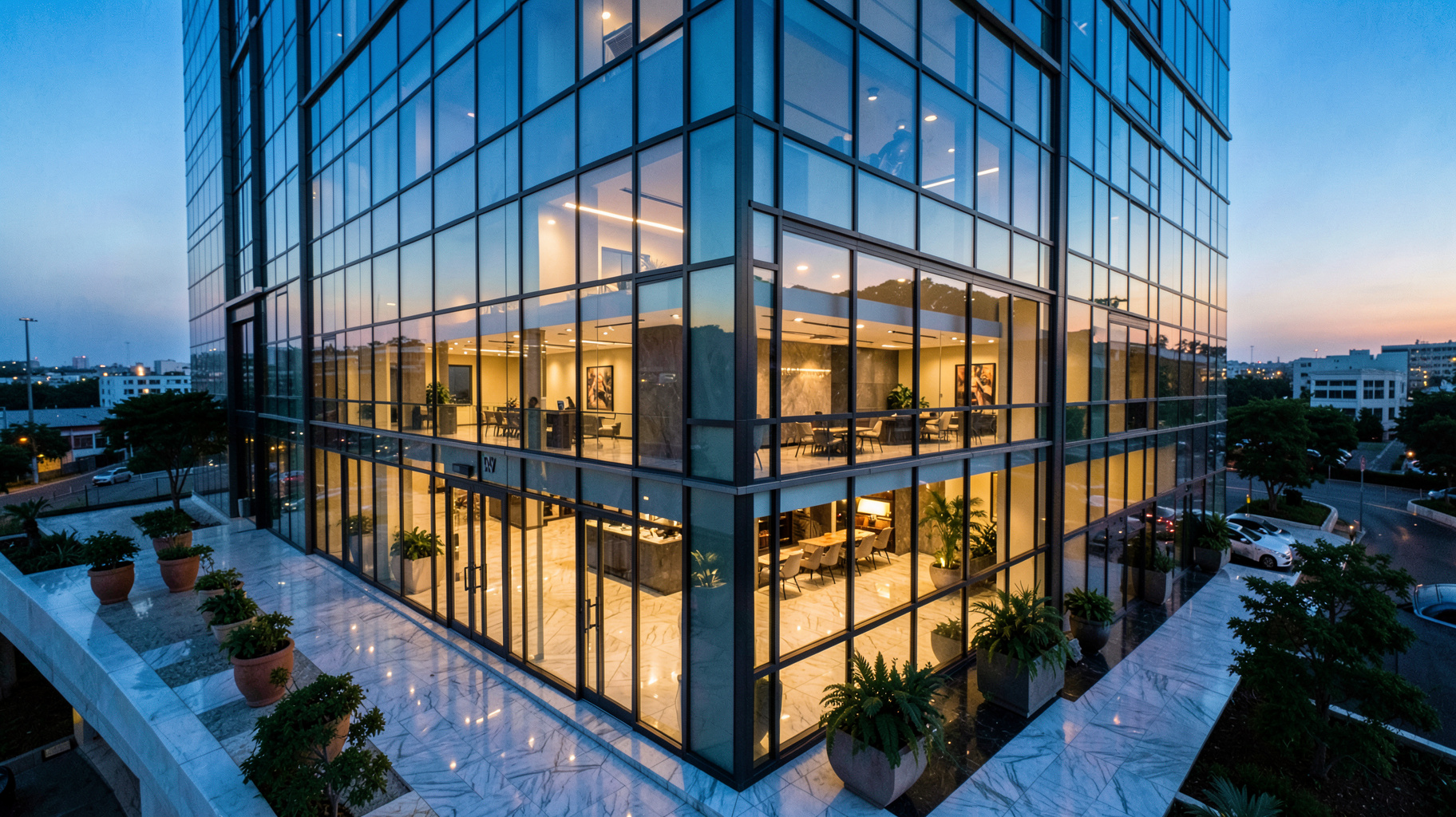


Why is AI Property Enhancement the New Standard for Real Estate Listings?
A listing with poor lighting and a cluttered living room doesn't just look "unprofessional"; it actively repels high-intent buyers before they even read the property description. In my experience working with luxury real estate photographers, the difference between a property that sits on the market for 60 days and one that sells in 7 is almost always the visual narrative. This is where AI property enhancement transforms a stagnant listing into a high-conversion asset by utilizing computer vision to optimize every pixel for psychological appeal.
The "why" is simple: buyers make an emotional decision in milliseconds. If the sky is grey and the grass is brown, the brain registers "neglect" or "gloom," regardless of the actual square footage or price. By automating the correction of these visual detractors, agents can increase click-through rates (CTR) on the Multiple Listing Service (MLS) and drastically reduce the number of wasted physical showings from buyers who were misled by poor photography.

What Exactly is AI Property Enhancement and How Does it Work?
To understand the value, we first need to define the technology. Most people mistake simple filters for enhancement, but professional-grade AI is far more complex.
📚
Definition
AI property enhancement is the application of deep learning and computer vision algorithms to automatically analyze, correct, and augment real estate imagery, including tasks like sky replacement, virtual staging, and daylight-to-dusk conversion.
Unlike traditional image editing, which requires a human operator to manually mask areas and adjust levels, AI property enhancement uses neural networks trained on millions of "perfect" architectural photos. The system recognizes a "window" not just as a bright spot, but as a portal to an exterior scene that requires specific exposure balancing.
When we implemented these workflows at RealVisionAI Blog - AI Real Estate Photography & Virtual Staging, we discovered that the biggest hurdle wasn't the "look" of the photo, but the consistency. Human editors vary; AI does not. Whether you are processing ten photos or ten thousand, the luminosity and color temperature remain identical across the entire gallery, creating a cohesive brand experience for the listing.
According to a report by Gartner on the evolution of generative AI in business, the integration of specialized AI models into vertical workflows—such as real estate—is leading to a massive shift from "general purpose" tools to "task-specific" agents that produce higher accuracy and lower hallucination rates. In the context of property visuals, this means the AI knows the difference between a structural wall and a piece of furniture that can be removed during a decluttering process.
Why Does Visual Enhancement Directly Impact the Bottom Line?
The implications of ignoring visual quality are financial. In a market where 95% of buyers start their search online, your primary "showing" happens on a smartphone screen. If the visuals are subpar, the buyer never makes the call to schedule a visit.
The business impact is quantifiable. Data from the National Association of Realtors (NAR) has consistently shown that professional photography significantly increases the number of leads a listing generates. When you move from "professional photography" to "AI-enhanced photography," you are optimizing for the psychological triggers of the buyer.
The consequences of not acting include:
- Extended Days on Market (DOM): Properties with poor visuals are perceived as overpriced, leading to more low-ball offers and longer vacancy periods.
- Reduced Perceived Value: A dark, gloomy interior can subconsciously lower a buyer's perceived value of a home by thousands of dollars, as they mentally factor in the "cost" of fixing the atmosphere.
- Brand Erosion: For property management companies and agents, a portfolio of dull images signals a lack of attention to detail, making them less attractive to high-end sellers.
Research from McKinsey suggests that AI-driven personalization and optimization in customer-facing assets can increase conversion rates by up to 20%. In real estate, "conversion" is the transition from a digital click to a physical tour. By using AI property enhancement, you aren't just "cleaning up" a photo; you are engineering a digital storefront that promises a premium lifestyle.

Practical Application: How to Implement AI Enhancement for Maximum ROI
Implementing these tools isn't about replacing the photographer; it's about augmenting the output. The goal is to move from a "captured" image to a "market-ready" image in seconds.
The Step-by-Step Optimization Workflow:
- The Base Capture: Start with clean, wide-angle shots. Even with AI, a distorted perspective is hard to fix. Ensure the camera is level to avoid "leaning" walls.
- Atmospheric Correction: Use AI sky replacement to turn a gloomy afternoon into a "Golden Hour" scene. This immediately shifts the mood from depressing to aspirational.
- Virtual Staging and Decluttering: For empty homes, use virtual staging to define the purpose of each room. For lived-in homes, use AI object removal to clear out personal clutter that distracts the buyer.
- Day-to-Dusk Conversion: Convert standard daytime exteriors into "Twilight" shots. Twilight photos consistently outperform daytime photos in social media engagement.
- Final Polish: Apply AI grass restoration to ensure the curb appeal is peak, removing brown patches or winter dormancy.
For those who want these results without spending hours in complex software, RealVisionAI Blog - AI Real Estate Photography & Virtual Staging provides a streamlined pipeline. Instead of juggling three different editors for sky, staging, and lighting, the platform handles the entire stack in roughly 12 seconds.
💡
Key Takeaway
The highest ROI comes from "Virtual Staging" and "Twilight Conversion," as these two features directly influence the buyer's emotional connection to the home's potential.
Comparing the Approaches to Property Visuals
Many agents wonder if they should just buy a better camera, hire a boutique editor, or use an AI platform. The choice depends on the volume of listings and the required speed of turnaround.
| Feature | Traditional Manual Editing | Cheap/Generic AI Tools | Professional AI (RealVisionAI) |
|---|---|---|---|
| Turnaround Time | 24–72 Hours | Instant | 12 Seconds |
| Consistency | Variable (Human error) | Low (Artifacts/Hallucinations) | High (Neural Architecture) |
| Cost | High per image | Low/Subscription | Scalable/Efficient |
| Quality | Very High | Unpredictable | High & Standardized |
| Best For | Ultra-luxury (Single assets) | Hobbyists | High-volume Agents/Managers |
Now, here's where it gets interesting: the "Cheap AI" approach often fails because it doesn't understand architectural geometry. It might "hallucinate" a window where there is a wall or distort the perspective of a room. A professional-grade system like RealVisionAI Blog - AI Real Estate Photography & Virtual Staging uses constraints based on real-world physics to ensure the enhancement looks natural and honest.
Common Questions and Misconceptions
Most guides on this topic treat AI as a "magic wand," but that's a mistake. There are several myths that need to be debunked with a bit of clinical reality.
Myth 1: "AI enhancement is deceptive or unethical."
Most guides get this wrong by claiming that changing a sky is "lying." In reality, the goal of a listing photo is to show the property in its best possible light. Buyers understand that a photo is a marketing tool. As long as the structural integrity of the house isn't changed, enhancing the lighting and staging is no different than a homeowner cleaning the house before a showing.
Myth 2: "You can't trust AI with luxury properties."
The opposite is true. Luxury buyers have higher expectations. They aren't looking for "real" photos; they are looking for "architectural" photos. AI allows for the precision of a magazine spread without the $5,000 price tag of a high-end architectural photographer.
Myth 3: "AI is too complicated to integrate into a daily workflow."
If you are still using software that requires "layers" and "masks," you are using a tool from 2015. Modern AI property enhancement is "upload and click." The complexity is hidden in the backend, leaving the agent with a simple interface.
Frequently Asked Questions
Does AI property enhancement actually increase the final sale price?
While AI cannot add square footage to a home, it significantly increases the "perceived value." When a home looks polished, modern, and bright, buyers are less likely to negotiate aggressively on price because the property feels "turn-key." In my experience, properties that utilize professional virtual staging and lighting enhancements tend to attract more competitive bidding wars, which naturally pushes the final sale price higher than listings that look neglected or dated in their photos.
Is virtual staging better than physical staging?
Physical staging is expensive, time-consuming, and carries the risk of furniture being damaged during move-in. Virtual staging, powered by AI, allows you to test multiple design styles—from minimalist to traditional—to see which resonates best with the target demographic of that specific neighborhood. It provides the same psychological "anchor" (helping the buyer visualize the space) at a fraction of the cost and with zero physical labor.
How does "Day-to-Dusk" conversion work technically?
Day-to-Dusk conversion isn't just a blue filter. The AI analyzes the light sources in the image and simulates the "blue hour" of twilight. It artificially adds a warm glow to the interior windows (simulating indoor lights being on) and cools the exterior sky and shadows. This creates a high-contrast, cinematic look that is scientifically proven to stop the "infinite scroll" on platforms like Instagram and Zillow.
Can AI enhancement remove unwanted objects from a room?
Yes, through a process called "AI Inpainting." The system identifies an unwanted object—such as a trash can or a cluttered pile of laundry—and removes it. It then analyzes the surrounding textures (carpet, hardwood, wallpaper) and fills in the gap with a mathematically accurate representation of what would be there if the object were gone. This is essential for property management companies dealing with tenant-occupied rentals.
How long does it take to see a return on investment from these tools?
The ROI is almost immediate. If a single listing sells five days faster because of better visuals, the saved carrying costs (utilities, taxes, insurance) often pay for the entire AI subscription for a year. Furthermore, the increased lead volume allows agents to acquire more listings, as other sellers see the high quality of their current portfolio and want the same "premium" look for their own homes.
Final Thoughts on AI Property Enhancement
The real estate industry is currently splitting into two camps: those who view photography as a "chore" and those who view it as a "conversion engine." If you are still relying on raw, unedited photos or slow, manual editing cycles, you are leaving money on the table and conceding market share to more agile competitors.
AI property enhancement is not just about aesthetics; it is about speed, psychology, and scalability. By removing the friction between capturing a photo and publishing a market-ready listing, you can focus on what actually matters: closing deals and managing clients.
If you're ready to stop wasting time on manual edits and start delivering "wow" factor visuals in seconds, explore the capabilities of RealVisionAI Blog - AI Real Estate Photography & Virtual Staging. Whether it's virtual staging, sky replacement, or instant decluttering, the tools are now available to ensure your properties never sit stagnant on the market again.
Recommended Readings
To deepen your understanding of these topics, we recommend reading the following articles:
- AI in Real Estate
- Ultimate AI Lead Generation for Real Estate Agents
- AI staging for realtors
- AI Virtual Staging by Property Type
Free Real Estate AI Visual Playbook 2026
Discover how top realtors boost listing engagement by 62% and close deals faster using AI photo enhancement and virtual staging.