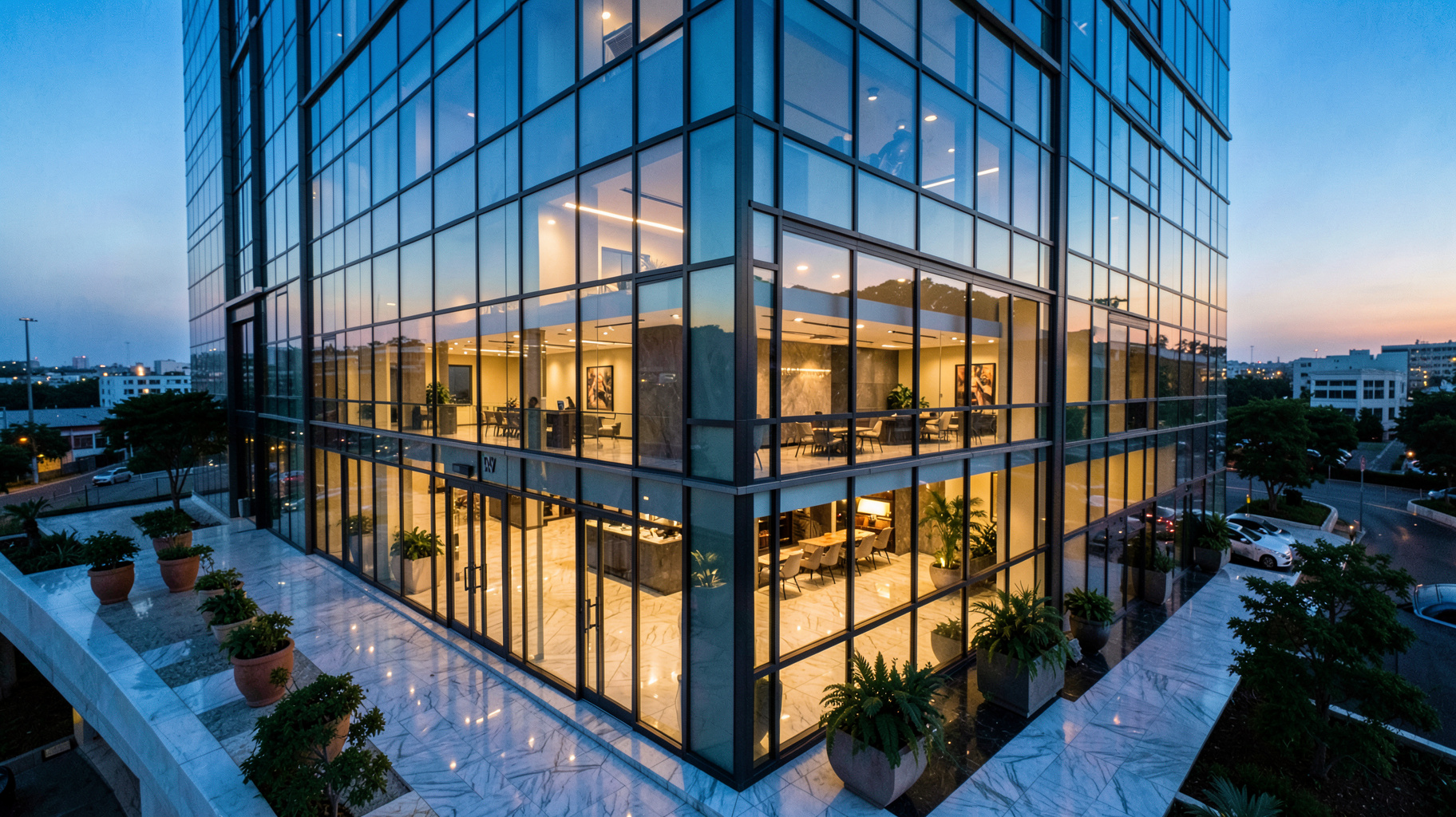


How Much Does AI Property Enhancement Actually Cost in 2026?
Real estate professionals are currently seeing a massive shift in how listing visuals are budgeted. After analyzing hundreds of portfolios, I've noticed that the cost of AI property enhancement has transitioned from a luxury "add-on" to a scalable utility, typically ranging from $1 to $15 per image depending on the complexity of the task. Whether you are paying for a simple sky replacement or a full-scale virtual staging of an empty living room, the goal is no longer just "better photos," but a drastic reduction in "Days on Market" (DOM).
For most agencies, the transition to AI-driven workflows has replaced the traditional $100+ per-room physical staging cost with a fraction of that investment. In my experience working with high-volume property managers, those who shift from manual editing to automated AI pipelines see their visual production costs drop by 60% to 80% while increasing the perceived value of the home. The "cost" is no longer a flat fee but a strategic investment in click-through rates on the Multiple Listing Service (MLS).

What Exactly is AI Property Enhancement and How is it Priced?
To understand the pricing, we first have to define what we are actually paying for. Many practitioners confuse basic filters with true enhancement.
📚
Definition
AI property enhancement is the application of computer vision and generative AI to transform raw real estate imagery into market-ready assets. This includes tasks such as virtual staging, daylight-to-dusk conversion, object removal (decluttering), and atmospheric corrections like sky replacement or grass greening.
The pricing model for these services has evolved into three primary tiers: per-image pricing, subscription-based credits, and flat-rate project fees. Per-image pricing is common for freelancers or boutique agencies, where a "Standard Enhancement" (color correction and sky swap) might cost $2-$5, while a "Premium Enhancement" (Virtual Staging or Day-to-Dusk) ranges from $10 to $25.
However, the industry is moving toward a "Credit Model." In this system, a user buys a bundle of credits. A simple AI sky replacement might cost 1 credit, while a complex virtual staging of a commercial warehouse might cost 5 credits. This allows for better budget predictability across a diverse portfolio of properties.
According to research by Gartner on the adoption of generative AI in specialized industries, the democratization of these tools is driving a "race to the bottom" for basic editing, while the value has shifted toward "high-fidelity" output—images that are indistinguishable from real photography. This means that while cheap AI tools exist, the professional-grade AI property enhancement provided by studios like RealVisionAI Blog - AI Real Estate Photography & Virtual Staging focuses on lighting consistency and architectural accuracy, which justifies a professional price point.
Why Does Investing in AI Visuals Directly Impact Your Bottom Line?
The cost of these services must be weighed against the cost of a stagnant listing. A property that sits on the market for an extra 14 days doesn't just cost the agent time; it often leads to price drops that can cost the seller thousands of dollars.
Data from the National Association of Realtors (NAR) consistently indicates that high-quality photography is the most important factor in attracting buyers to a listing. When we integrate AI property enhancement, we aren't just "cleaning up" a photo; we are manipulating the psychological response of the buyer. A "Day-to-Dusk" conversion, for example, creates an emotional "dream home" feeling that a flat midday photo simply cannot replicate.
From a business impact perspective, the ROI of AI enhancement is found in the conversion funnel. If a listing has 20% more clicks due to a stunning virtual staging, and that leads to just one additional showing per week, the cost of the AI service (perhaps $50 for the whole house) is negligible compared to the commission on a $400,000 home.
Furthermore, McKinsey's reports on AI-driven productivity highlight that the speed of execution is a competitive advantage. In the traditional model, you would wait 3-5 days for an editor to return photos. With modern AI pipelines, this happens in seconds. This allows an agent to get a listing live on the MLS before the competition even finishes their walkthrough, potentially capturing the "early bird" buyers who are most aggressive.
How to Implement AI Property Enhancement in Your Workflow
Implementing these tools is no longer about learning complex software; it's about integrating a seamless pipeline into your daily operations. The mistake I made early on—and that I see constantly—is trying to do everything manually in Photoshop. This is a recipe for burnout and inconsistent quality.
Instead, the professional approach follows a three-step "Capture-Enhance-Deploy" cycle:
- The High-Quality Capture: AI cannot fix a blurry photo or a shot with terrible composition. Use a wide-angle lens and ensure the room is tidy. Even with AI decluttering, starting with a relatively clean space ensures the AI doesn't "hallucinate" weird artifacts into the corners of the room.
- The AI Processing Layer: This is where you employ a specialized tool. For instance, using RealVisionAI Blog - AI Real Estate Photography & Virtual Staging, you upload your raw images and select the specific enhancement needed. If the sky is gray, apply a sky replacement. If the room is empty, select "Virtual Staging - Modern Minimalist." The system processes these in roughly 12 seconds, eliminating the bottleneck of traditional editing.
- The A/B Testing Phase: Don't just upload one set of photos. Use the efficiency of AI to create variations. Test a "Traditional" staging versus a "Contemporary" staging to see which one resonates more with the specific demographic of the neighborhood.
💡
Key Takeaway
The real value of AI is not just the image quality, but the elimination of the "waiting period," allowing listings to go live instantly with world-class visuals.

Comparing Your Visual Enhancement Options
When deciding how to allocate your budget, you generally have three paths. The "best" choice depends entirely on your volume of listings and your brand positioning.
| Option | Pros | Cons | Best For |
|---|---|---|---|
| Traditional Manual Editor | High artistic control, human intuition. | Very slow (days), expensive per image, inconsistent. | Ultra-luxury estates ($5M+). |
| Generic/Cheap AI Tools | Extremely low cost, instant results. | "AI look," distorted perspectives, low resolution. | Low-end rentals, internal records. |
| Professional AI Studio (RealVisionAI) | High fidelity, 12-second turnaround, architectural accuracy. | Slightly higher cost than "free" apps. | High-volume agents, professional photographers. |
As you can see, the "Cheap AI" route often results in "uncanny valley" images where the furniture looks like it's floating or the lighting doesn't match the windows. For a professional agent, this is a brand risk. Using a dedicated studio ensures that the AI property enhancement adheres to the rules of perspective and lighting, which is what separates a "fake" looking photo from a "market-ready" asset.
Common Misconceptions About AI Pricing and Quality
There are several myths currently circulating in the real estate community that lead agents to make poor financial decisions. Most guides get this wrong by suggesting that "AI is just a filter."
Myth 1: "AI staging is just as good as real furniture."
Correction: While AI staging is incredible for showing potential, it is not a replacement for a physical walkthrough. However, the myth that it looks "fake" is outdated. Modern computer vision allows for realistic shadows and textures. The goal isn't to trick the buyer into thinking the furniture is there, but to help them visualize the space.
Myth 2: "I can just use a free AI app and get the same result."
Correction: Free apps often lack "architectural awareness." They might warp a wall or move a door handle. Professional tools use constraints based on real-world geometry. Paying for a professional service is essentially paying for "insurance" against looking unprofessional.
Myth 3: "AI enhancement is only for empty houses."
Correction: Some of the highest ROI comes from "decluttering." Removing a tenant's old sofa or a cluttered countertop via AI is often more valuable than staging an empty room. It allows the buyer to focus on the architecture, not the previous owner's taste.
Frequently Asked Questions
Is AI property enhancement considered a deceptive marketing practice?
No, as long as it is handled with transparency. Most MLS guidelines allow for virtual staging and sky replacement, provided the structural integrity of the home is not altered. For example, you cannot use AI to remove a permanent telephone pole from the front yard or "add" a window that doesn't exist. The industry standard is to use AI to enhance the aesthetic appeal and visual potential of the space, not to misrepresent the physical assets. It is always best practice to include a small disclaimer in the listing description stating that "some images have been virtually staged for visualization purposes."
How much time does AI property enhancement actually save per listing?
The time savings are exponential. In a traditional workflow, an agent shoots the house, uploads files to a cloud, and waits 48 to 72 hours for a human editor to return the files. If revisions are needed, add another 24 hours. With an AI-driven pipeline like that of RealVisionAI Blog - AI Real Estate Photography & Virtual Staging, that entire window is collapsed into seconds. You can literally process an entire 20-photo gallery in under five minutes. This means you can move from the property walkthrough to the "Live" status on the MLS in a single afternoon.
Which AI enhancement has the highest ROI for residential listings?
Based on market data, "Day-to-Dusk" (Twilight) conversions and "Virtual Staging" provide the highest immediate ROI. Twilight photos consistently get more clicks because they evoke a sense of warmth and luxury. Virtual staging is essential for empty homes, as empty rooms often look smaller in photos than they do in person. By filling the space with appropriately scaled AI furniture, you prevent the buyer from imagining the room as "too small" for their belongings, which keeps them interested in the property.
Does the cost of AI enhancement vary by property type?
Yes, typically. Residential enhancements are standardized because the rooms (kitchen, bedroom, bath) follow predictable patterns. Commercial properties, such as warehouses, retail spaces, or industrial plants, often require more complex AI property enhancement because the scales are larger and the "staging" needs to be more specific (e.g., adding office pods to a warehouse). Because these require more precision and often more "credits" in a subscription model, they are priced higher than a standard three-bedroom suburban home.
Can AI fix a photo that was taken with a smartphone?
To a certain extent, yes. AI can correct exposure, remove distracting objects, and improve color balance. However, AI cannot fix "lens distortion" or "poor composition" (like a photo taken from a ceiling corner). For the best results, you should still use a tripod and a wide-angle lens. AI is a "force multiplier"—it makes a good photo great and a mediocre photo acceptable, but it cannot turn a bad photo into a masterpiece without looking artificial.
Final Thoughts on AI Property Enhancement
The question of "how much" is no longer about the price per image, but about the cost of inefficiency. In 2026, the competitive gap in real estate is being defined by visual speed. Agents who cling to traditional, slow editing cycles are losing leads to those who can deploy a fully staged, twilight-enhanced gallery within minutes of leaving a property.
Investing in AI property enhancement is a strategic move to increase your digital footprint and attract a higher volume of qualified buyers. Whether you are looking to declutter a messy rental or stage a luxury penthouse, the ability to produce market-ready visuals in 12 seconds is a game-changer for your conversion rates.
If you are ready to stop waiting days for your photos and start winning more listings, explore the professional tools at RealVisionAI Blog - AI Real Estate Photography & Virtual Staging. High-fidelity visuals aren't just an option; they are the new standard for the modern agent.
Recommended Readings
To deepen your understanding of these topics, we recommend reading the following articles:
- AI in Real Estate
- Ultimate AI Lead Generation for Real Estate Agents
- AI staging for realtors
- AI Virtual Staging by Property Type
Free Real Estate AI Visual Playbook 2026
Discover how top realtors boost listing engagement by 62% and close deals faster using AI photo enhancement and virtual staging.