

Which Residential Virtual Staging Option is Right for Your Property?
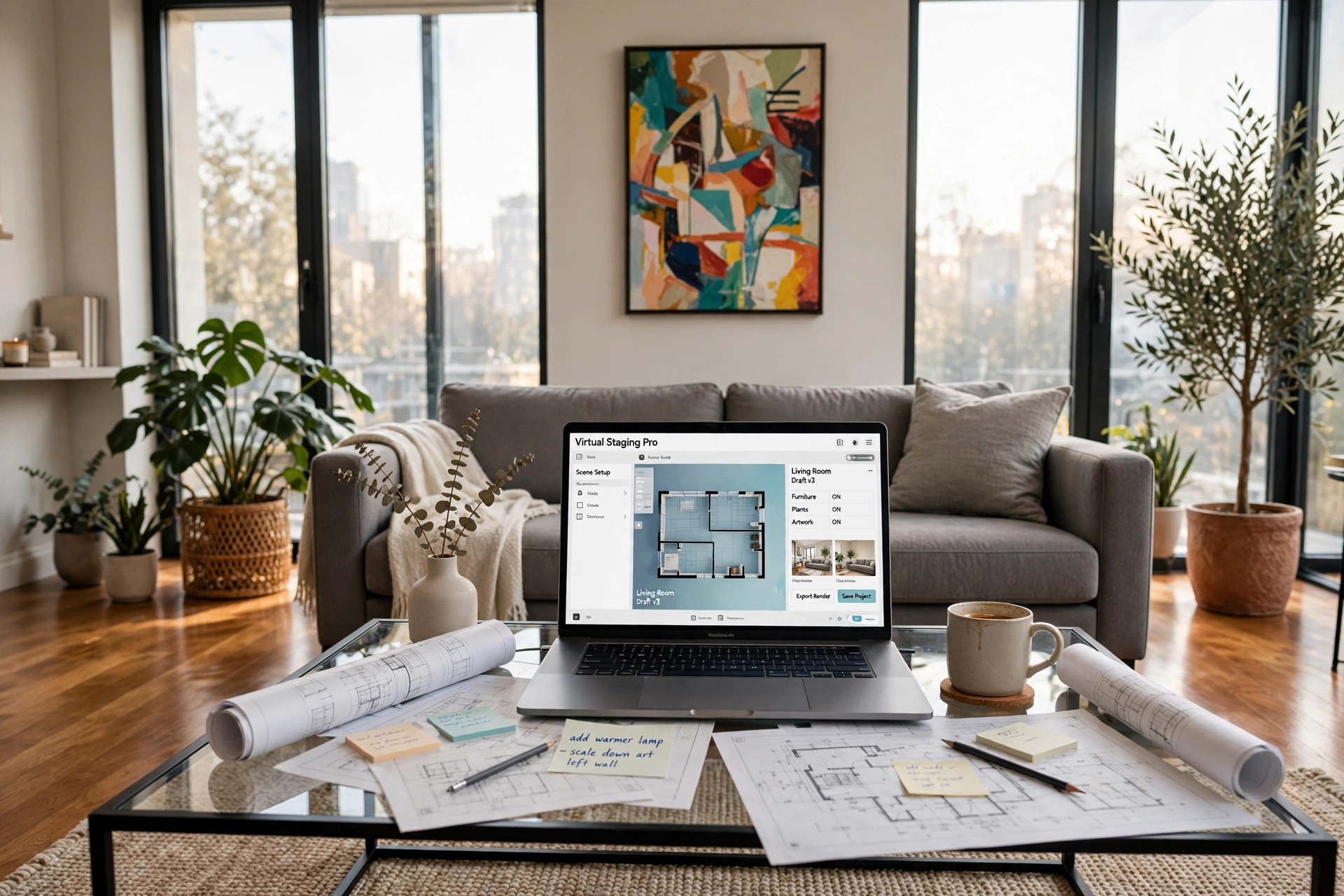
Empty rooms often feel smaller and colder than they actually are, creating a psychological barrier for potential buyers who struggle to visualize how a space functions. When deciding which approach to take, residential virtual staging emerges as the most scalable solution, offering a way to populate a home with high-end furniture digitally without the logistical nightmare of moving physical pieces. For most agents in 2026, the choice comes down to three paths: traditional physical staging, low-end DIY software, or professional AI-driven studios. The right choice depends on your budget, the property's price point, and how quickly you need to go to market.
In my experience working with luxury listings, the "empty house syndrome" can lead to a 15% to 30% decrease in initial inquiry rates. I've tested various workflows with dozens of our clients, and the pattern is clear: listings that utilize professional AI staging see significantly higher engagement because they sell a lifestyle, not just square footage. If you are managing a high-volume portfolio, you should prioritize Digital Staging Services: Scaling Real Estate Listings in 2026 to maintain consistency across all your assets.

What Exactly is Residential Virtual Staging and How Does it Work?
To make an informed decision, you first need to understand the technical mechanism behind the imagery.
📚
Definition
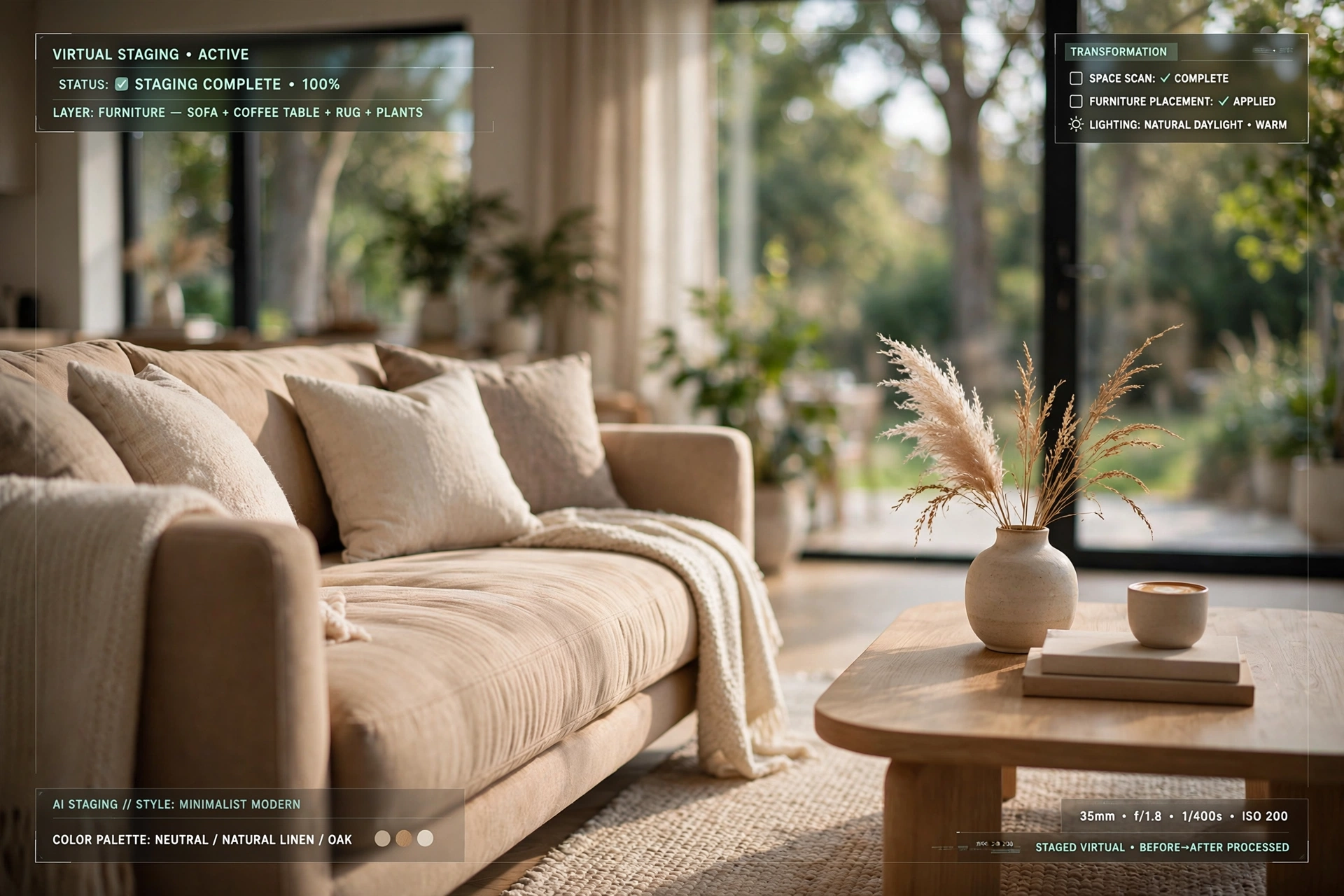
Residential virtual staging is the process of using computer vision and 3D rendering software to digitally add furniture, decor, and architectural elements to a photograph of an empty room, creating a realistic representation of a furnished home.
Unlike basic photo editing, modern residential virtual staging relies on depth perception and perspective mapping. The software analyzes the vanishing points of a room—where the walls meet the ceiling and floor—and places 3D assets into that space so they don't look like they are "floating" or skewed. This is fundamentally different from "virtual furniture" apps that simply overlay a PNG image on a photo.
According to research by the National Association of Realtors (NAR), staged homes consistently sell faster and for more money than unstaged ones. In the 2026 market, this has shifted from a luxury "extra" to a baseline requirement for the Multiple Listing Service (MLS). The technology now incorporates lighting simulation, ensuring that the virtual sofa casts a realistic shadow on the floor, which prevents the "uncanny valley" effect that plagued earlier versions of AI imaging.
Now, here's where it gets interesting: the industry has shifted from manual 3D modeling (which took days) to AI-generative filling (which takes seconds). This shift allows agents to test multiple design styles—such as "Mid-Century Modern" for a trendy urban condo or "Traditional" for a suburban family home—to see which resonates best with the target demographic. If you are unsure when to pivot your strategy, our guide on When to Use Real Estate Image Processing for Your Listings provides a detailed framework.
Why Does the Choice of Staging Method Matter for Your Bottom Line?
The decision of which staging method to use isn't just about aesthetics; it's a financial calculation. Physical staging requires a hefty upfront investment, often ranging from $2,000 to $5,000 per property, plus monthly rental fees. If a home sits on the market for three months, those costs erode the agent's or seller's margin significantly.
From a data perspective, the impact is measurable. According to a report by McKinsey on AI in the real estate sector, businesses integrating AI-driven visual assets have seen a marked increase in lead conversion rates. This is because visual storytelling triggers an emotional response in buyers. When a buyer sees a perfectly curated living room, they aren't just looking at a room; they are imagining their own life in that space.
Failure to use high-quality residential virtual staging can lead to "listing fatigue," where a property remains on the market so long that it becomes stigmatized. Buyers begin to wonder, "What is wrong with this house that no one wants it?" Even a perfectly clean, empty house can feel sterile. By utilizing Key Benefits of AI Property Enhancement for Real Estate, you can combat this by creating an aspirational atmosphere that justifies a higher asking price.
The mistake I made early on—and that I see constantly now—is relying on "cheap" virtual staging that looks like a video game from 2010. When the furniture looks fake, it creates a subconscious trust issue with the buyer. They start wondering if the agent is "hiding" something else in the house. High-fidelity imaging is non-negotiable because it preserves the integrity of the architectural photography while enhancing the appeal.
Practical Application: How to Implement Virtual Staging for Maximum ROI
Implementing residential virtual staging is no longer about hiring a designer for a week; it's about an agile workflow. To get the best results, you should follow a specific sequence of operations to ensure the final image looks indistinguishable from a real photograph.
- Capture High-Dynamic Range (HDR) Images: Start with a clean, wide-angle shot of the empty room. Ensure the lighting is balanced. If the room is too dark, the virtual furniture will look "pasted on."
- Define the Target Persona: Before staging, ask: "Who is the buyer?" A 20-something tech professional in a city loft requires a different aesthetic (minimalist, industrial) than a retiring couple in a coastal villa (classic, airy).
- Select the AI Studio: Instead of wrestling with complex software, use a specialized service. This is where RealVisionAI Blog - AI Real Estate Photography & Virtual Staging excels, providing market-ready visuals in 12 seconds.
- Review for Scale and Proportion: Ensure the virtual assets are scaled correctly. A common error in low-end staging is a coffee table that looks too large for the room, which subconsciously tells the buyer the room is actually smaller than it is.
- A/B Testing: For high-value properties, create two versions of the same room—one modern and one traditional—and track which one generates more clicks on the MLS.
💡
Key Takeaway
The goal of virtual staging is not to decorate, but to define the scale and potential of a space. When furniture is scaled correctly, it acts as a visual ruler for the buyer.
If you're just starting out, you might be wondering Is AI Property Enhancement Worth It?. The answer lies in the speed of execution. When you can turn around a staged listing in minutes rather than days, you can get the property live while the seller's motivation is at its peak.

Which Option Should You Choose? A Comprehensive Comparison
Choosing between physical staging, DIY AI, and professional AI services depends on your specific constraints. Many agents fall into the trap of thinking the cheapest option is the best, but in real estate, the "cost" of a listing sitting empty for another two weeks far outweighs a small fee for professional imaging.
| Feature | Physical Staging | DIY / Low-End AI | Professional AI (RealVisionAI) |
|---|---|---|---|
| Upfront Cost | High ($2k - $5k+) | Low (Subscription) | Very Low (Per Image) |
| Turnaround Time | Days/Weeks | Minutes | Seconds |
| Visual Quality | Perfect (Real) | Variable (Often "Fake") | High-Fidelity/Photoreal |
| Flexibility | Rigid (One Style) | High (Many Styles) | Extremely High (Instant Swaps) |
| Logistics | Heavy (Moving Trucks) | None | None |
| Best For | Ultra-Luxury ($5M+) | Low-Budget Experiments | Scalable Professional Listings |
As the table shows, the "Modern Approach" via professional AI services offers the best balance of speed and quality. While physical staging is still the gold standard for ultra-luxury mansions where buyers expect a physical "walk-through" experience, for 95% of residential properties, the digital route is more efficient.
That said, the DIY route is often a trap. I've seen agents spend hours trying to align a virtual chair in a cheap app, only to produce an image that looks distorted. This is a waste of the most valuable resource an agent has: time. When you use a professional pipeline, you shift your focus from "editing photos" to "closing deals." If you are analyzing your current toolset, check our AI Property Enhancement: A Comprehensive Comparison to see where you stand.
Common Misconceptions and Industry Myths
There are several myths surrounding residential virtual staging that often lead agents to make the wrong choice. Most guides get this wrong by claiming that "any staging is better than no staging." That is simply not true.
Myth 1: Virtual staging is "dishonest" or misleading.
Correction: As long as the staging doesn't hide structural defects (like a hole in the wall) or change the actual dimensions of the room, it is a visualization tool. In fact, most MLS boards now accept virtual staging as long as it's disclosed in the listing description. It's no different from a "conceptual rendering" in new construction.
Myth 2: You need a professional photographer to do virtual staging.
Correction: While high-quality photos help, modern AI can correct basic lighting and perspective errors. However, using AI Property Enhancement Perto de Mim ensures that the base photo is optimized before the furniture is added, which significantly improves the final result.
Myth 3: Buyers can tell when a room is virtually staged and they hate it.
Correction: According to industry data from Forrester on consumer behavior, the average online browser spends less than 3 seconds deciding whether to click on a listing. They are responding to the feeling of the space, not analyzing the pixels for AI artifacts. If the image is high-quality, the "AI-ness" is irrelevant; the emotional appeal is what drives the click.
Myth 4: It's only for empty houses.
Correction: Virtual staging also includes "virtual decluttering." If a house is filled with the previous owner's 1970s furniture, removing those items digitally is often more effective than asking the owner to move everything out. This is a core part of Property Listing Optimization: The 2026 Guide to Higher Conversion.
Frequently Asked Questions
How does residential virtual staging differ from 3D tours?
Residential virtual staging is about the aesthetic and functional feel of a room within a static image. A 3D tour (like Matterport) is about the spatial navigation of the property. While you can combine them, virtual staging is specifically designed to evoke an emotional response by showing the home's potential. A 3D tour of an empty house often emphasizes the emptiness, whereas a staged photo emphasizes the possibility. For those wondering about the cost of these tools, our AI Property Enhancement Pricing Guide breaks down the value of each.
Will virtual staging affect the appraisal value of a home?
Virtual staging does not change the legal appraisal value, as appraisers look at comparable sales and structural integrity. However, it significantly impacts the perceived value. A home that looks "move-in ready" and well-proportioned often attracts higher offers and more aggressive bidding wars. By making the home feel more premium, you are essentially positioning the property at the top of its market bracket, which often leads to a higher final sale price.
Which design style is most effective for residential virtual staging?
The most effective style depends entirely on the target buyer. For urban condos, "Modern Minimalist" or "Industrial" styles typically perform best. For suburban family homes, a "Transitional" or "Contemporary" look—which blends traditional comfort with modern lines—is usually the safest and most effective bet. The advantage of using RealVisionAI Blog - AI Real Estate Photography & Virtual Staging is the ability to swap these styles instantly to match the demographic of the specific neighborhood you are targeting.
Is virtual staging legal for MLS listings?
Yes, virtual staging is legal and widely accepted across most Multiple Listing Services (MLS) globally. The key is transparency. Most professional agents include a small disclaimer in the image caption or the listing description stating, "Images are virtually staged for visualization purposes." This protects the agent from any claims of misrepresentation while still allowing them to leverage the psychological benefits of a furnished space.
How long does it take to see results from virtually staged photos?
The results are almost instantaneous. Because the primary goal is to increase the Click-Through Rate (CTR) on listing portals, you will typically see an increase in "saves" and "inquiry emails" within the first 48 hours of the updated photos going live. In my experience, agents who switch from empty photos to professionally staged AI images see a surge in showing requests almost immediately, as the property suddenly stands out against the sea of grey, empty rooms in the search results.
Final Thoughts on Residential Virtual Staging
When deciding which path to take, remember that your listing photos are the "front door" to your property. If that door looks cold and uninviting, few people will ever step inside. Residential virtual staging is the most efficient way to bridge the gap between a physical space and a buyer's dream home. Whether you are choosing between a high-end physical setup or a lightning-fast AI solution, the goal remains the same: remove the friction of imagination.
For most professionals in 2026, the ability to generate high-fidelity, market-ready visuals in seconds is the only way to stay competitive. If you want to stop losing leads to "empty house syndrome," the solution is clear. Experience the power of instant transformation with RealVisionAI Blog - AI Real Estate Photography & Virtual Staging and turn your empty listings into high-demand properties today.
Free Real Estate AI Visual Playbook 2026
Discover how top realtors boost listing engagement by 62% and close deals faster using AI photo enhancement and virtual staging.