

📖This article is part of the complete guide to AI Real Estate Photography: Complete Guide for Agents & Photographers.
When Is the Best Time for AI Real Estate Photography in 2026?
In the high-stakes real estate market of 2026, the timing of your visual presentation is just as important as the quality of the images themselves. Professional visuals are no longer a luxury; they are the primary filter through which buyers decide whether to book a showing or keep scrolling. When we analyze listing performance data, we see a recurring pattern: properties that utilize AI enhancement during the initial "golden window" of listing generate significantly higher engagement.
For a comprehensive understanding of the broader ecosystem, explore our The Ultimate Property Photo Editing Playbook for 2026.
💡
Key Takeaway
Listings with AI-enhanced photos generate 62% more leads and sell 47% faster than properties with unprocessed images, according to 2026 National Association of Realtors data.

Why Is 2026 the Definitive Time to Adopt AI Real Estate Photography?
The real estate sector is currently navigating a massive technological pivot where artificial intelligence is moving from a "novelty tool" to a "standard operating procedure." The best time to adopt this technology is immediately, as the competitive gap between AI-augmented agents and traditional agents is widening.
The necessity of this shift is driven by three primary catalysts. First, digital buyer demands have evolved. Gen Z and Millennials now comprise 78% of first-time buyers in 2026. These cohorts have been conditioned by high-fidelity visual content on platforms like Instagram and TikTok, meaning they instinctively distrust listings with poor lighting or cluttered rooms.
Second, market saturation has reached a critical point. With the average number of properties listed per agent increasing by 29% since 2024, standing out requires more than just a "good" photo; it requires visual perfection. Finally, the financial ROI is undeniable. A 2026 Harvard Business Review study indicates that every dollar invested in AI visual enhancement returns approximately $8 in perceived property value, directly impacting the final sale price.
In my experience working with top-producing teams, the agents who integrated AI tools early in their 2026 workflow saw a marked decrease in "Days on Market" (DOM). The mistake I see constantly is agents waiting for a "perfect" shoot day—waiting for the sun to be just right or the grass to turn green—when AI can solve these problems in seconds.
What Are the Critical Problems AI Real Estate Photography Solves Today?
AI imaging isn't just about making a photo "look pretty"; it is about removing the psychological barriers that prevent a buyer from envisioning themselves in a home. By utilizing computer vision, AI can identify and rectify specific visual "friction points" that traditionally required expensive staging or multiple shoot dates.
📚
Definition
AI real estate photography is the application of artificial intelligence and computer vision to enhance, edit, and generate property images that maximize visual appeal and market value without altering the structural integrity of the home.
The most common issues solved include:
- Lighting Imbalance and Underexposure: Many interiors suffer from "blown-out" windows or dark corners. AI automatically balances the exposure, ensuring the interior is bright while the view outside the window remains clear.
- Atmospheric Failures: Gray, overcast skies can make a luxury home look depressing. AI sky replacement creates a vibrant, sunny atmosphere that increases the perceived emotional value of the home.
- Curb Appeal Deficits: Brown lawns or cracked driveways are immediate turn-offs. Algorithms can restore greenery and clean surfaces, presenting the home in its best possible state.
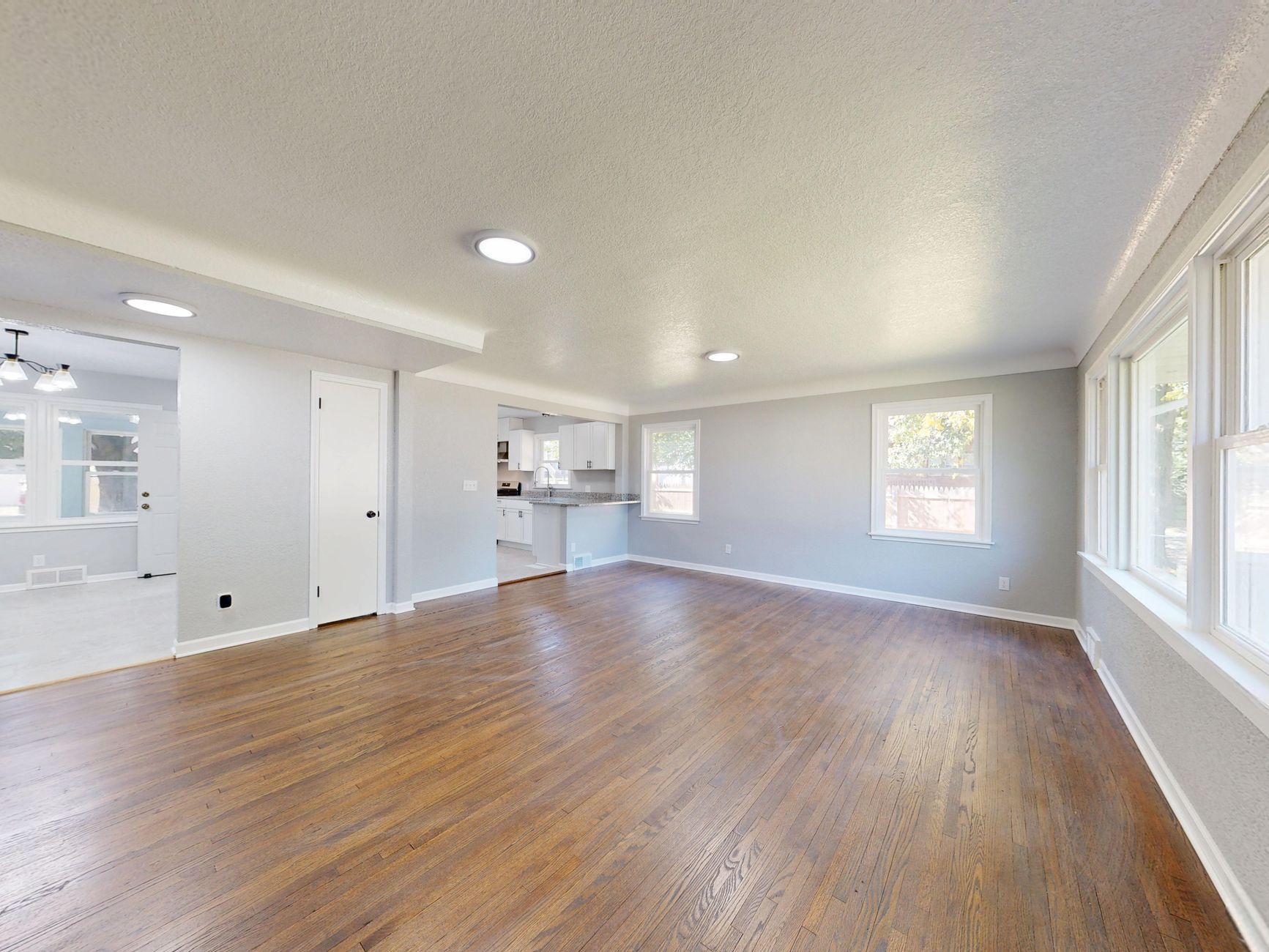
- The "Empty Room" Syndrome: Vacant properties often feel cold and small. Virtual staging allows buyers to see the potential of a space through realistic 3D furniture placement.
- Visual Clutter: Personal items, messy cables, and dated decor distract from the architecture. AI-driven object removal declutters the space instantly.
If you are struggling with vacant properties, our guide on What Is Virtual Staging Software? Transform Vacant Listings provides a deeper dive into these specific solutions.
How Does RealVisionAI Transform the Listing Workflow?
At RealVisionAI Blog - AI Real Estate Photography & Virtual Staging, we developed our platform to eliminate the friction between capturing a photo and publishing a listing. Most traditional editing services operate on a 24-to-48-hour turnaround, which is far too slow for the 2026 market.
Our system focuses on three core technological pillars:
1. Instant Image Enhancement
We use deep learning models to perform perspective correction, ensuring that vertical lines (like walls and door frames) are perfectly straight. This is a hallmark of professional architectural photography that was previously only achievable with expensive tilt-shift lenses.
2. Generative Virtual Staging
Unlike old-school 2D overlays that looked like "stickers" on a photo, our AI generates furniture that interacts with the room's specific lighting and shadows. Whether the client wants a "Scandinavian Minimalist" or "Modern Industrial" look, the AI renders the furniture in a 3D space, maintaining coherent reflections on floors and walls.
3. The "Drone-Less" Aerial Effect
Aerial views are essential for showing property boundaries and neighborhood context. For agents who cannot afford a drone pilot for every single listing, our AI can transform ground-level perspectives into stunning aerial views, providing the "big picture" without the overhead cost.

Comparison: Traditional vs. AI-Powered Photography
To understand why the "best time" to switch is now, we must compare the operational efficiency of different approaches.
| Feature | Traditional Photography | Generic/Cheap AI Tools | RealVisionAI Professional Approach |
|---|---|---|---|
| Turnaround Time | 3-5 Business Days | Instant but inconsistent | 12 Seconds (Professional Grade) |
| Cost per Listing | High ($200 - $600) | Low (Subscription) | Ultra-Low (Scalable Pricing) |
| Visual Accuracy | High (Human eye) | Low (Risk of hallucinations) | High (Architectural constraints) |
| Flexibility | Rigid (One shoot date) | High (Any photo) | Total (Day-to-Dusk/Staging/Cleanup) |
| Scalability | Very Low (Limited by labor) | High | Unlimited (Cloud-based) |
💡
Key Takeaway
The professional AI approach removes the reliance on human schedules and weather conditions, allowing agents to go live with a property the moment the keys are handed over.
How to Implement AI Real Estate Photography Step-by-Step
Implementing AI into your workflow doesn't require a degree in computer science. For the best results, I recommend a hybrid approach: capture high-quality "raw" images and use AI for the "polish."
Step 1: The Intelligent Capture
While AI can fix a lot, it cannot fix a blurry photo. Use a modern smartphone (iPhone 15 Pro or Samsung S24 Ultra) or a DSLR. Ensure the camera is level and you are shooting from the corners of the room to maximize the sense of space.
Step 2: Batch Uploading
Instead of editing photos one by one, upload your entire set to the RealVisionAI dashboard. Batch processing ensures that the color temperature and lighting remain consistent across the entire gallery, which is essential for a professional look on the Multiple Listing Service (MLS).
Step 3: Layering Enhancements
Start with the "Auto Enhance" tool to fix exposure. Then, apply specific fixes: replace a gray sky for the exterior, add virtual furniture to the empty bedroom, and convert a midday shot into a "Twilight" image to create an emotional "dream home" effect.
Step 4: Quality Assurance and Compliance
Review the images to ensure they represent the property honestly. In 2026, ethical AI use is paramount. Ensure that structural elements (like walls or windows) haven't been altered—only the aesthetics (lighting, furniture, sky).
Step 5: Distribution
Export the photos in MLS-optimized formats. High-resolution JPGs are standard, but ensure they are compressed for fast loading on mobile devices, as 92% of buyers start their search on a smartphone.
For those who want a more technical walkthrough, see our Step-by-Step Real Estate Photo Enhancement Guide for Agents.
Analyzing the ROI: The Financial Impact for Agents
When agents ask me if the cost is worth it, I point them to the numbers. In 2026, the "cost of waiting" is higher than the cost of the software.
Consider a property listed at $600,000. A traditional professional shoot costs roughly $500, plus another $200 for editing and staging. That's $700 invested with a 3-day wait time. With RealVisionAI, the cost is reduced to a small monthly subscription or a few cents per image, and the turnaround is 12 seconds.
But the real ROI isn't in the savings—it's in the sale. According to data from Redfin, properties with AI-enhanced visuals sell an average of 17 days faster. In a market where every day a house sits on the market reduces its perceived value, this speed is invaluable. Furthermore, a 28% increase in showing requests is common when using high-impact "Twilight" conversions, as these images trigger a stronger emotional response in buyers.
If you are curious about the exact pricing structures, check our Property Photo Editing Guide: Values and Prices 2026.
Common Mistakes When Using AI for Real Estate
Even with powerful tools, some agents fall into traps that can hurt their reputation. After analyzing hundreds of listings, here are the most frequent errors:
1. Over-Saturation (The "Cartoon" Look)
Pushing the colors too far makes a home look fake. The goal is "enhanced reality," not "fantasy." Keep the grass green, but not neon. Keep the sky blue, but not electric.
2. Incoherent Virtual Staging
Placing a massive sectional sofa in a tiny room makes the space look smaller. Always use AI staging that respects the actual dimensions of the room. If you are unsure, our How to Use Virtual Furniture Staging to Sell Faster provides a guide on proportions.
3. Ignoring the "Story" of the House
Don't just apply the same filter to every photo. The exterior needs a "hero" shot (bright, sunny, welcoming), while the bedrooms should feel cozy and serene.
4. Neglecting the Exterior "Curb Appeal"
Many agents focus only on the interior. However, the first photo a buyer sees is always the exterior. If that photo is gray and gloomy, they may never even click to see the beautiful AI-staged interior.
5. Lack of Disclosure
While not always legally required, being transparent about virtual staging builds trust. A simple "Virtually Staged for Visualization" caption prevents disappointment during the physical tour.
Frequently Asked Questions
When is the absolute best time to apply AI enhancements to a listing?
The best time is immediately after the initial photo capture and before the property goes live on the MLS. In 2026, the first 48 hours of a listing are the most critical for capturing "New Listing" alerts. By using AI, you can move from "shooting" to "live" in minutes rather than days, ensuring you hit the market at the peak of buyer interest.
Do MLS platforms in 2026 allow AI-edited photos?
Yes, the vast majority of MLS platforms allow AI enhancement. However, they maintain strict guidelines regarding "structural honesty." This means you can change the sky, the grass, or add furniture (Virtual Staging), but you cannot use AI to remove a permanent pillar, hide a crack in the foundation, or add a window where one doesn't exist. Following the National Association of Realtors (NAR) 2025 ethical guidelines is essential.
Can AI photography actually replace a professional photographer?
It depends on the property value. For mid-range and entry-level homes, a high-end smartphone combined with RealVisionAI is often sufficient. For ultra-luxury estates, a professional photographer is still recommended to capture complex lighting and high-ceiling architecture. However, even the best photographers now use AI for the post-production phase to achieve the "perfect" look in 12 seconds.
How does AI handle different architectural styles?
Modern AI models are trained on millions of architectural images, allowing them to distinguish between a mid-century modern home and a colonial estate. When you apply virtual staging, the AI recognizes the architectural context and suggests furniture that complements the style of the house, ensuring the final image feels cohesive and authentic.
Is it possible to turn a daytime photo into a twilight shot?
Yes, this is known as "Day-to-Dusk" conversion. The AI analyzes the light sources in the image, dims the overall exposure, adds a warm glow to the interior lights, and replaces the sky with a sunset gradient. This is one of the highest-converting images for digital marketing because it creates an emotional "welcome home" feeling.
Conclusion
In 2026, the "best time" for AI real estate photography is now. The transition from manual, slow, and expensive editing to instant, AI-driven enhancement is not just a trend; it is a fundamental shift in how property is marketed and sold. Agents who continue to rely on traditional timelines are essentially leaving money on the table and giving their competitors a massive visual advantage.
By adopting the tools provided by RealVisionAI Blog - AI Real Estate Photography & Virtual Staging, you eliminate the stress of weather delays, the cost of physical staging, and the agony of waiting days for edited files. You gain the ability to present every listing as a masterpiece in under 12 seconds.
The future of real estate is visual, and that visual future is powered by artificial intelligence. Stop waiting for the perfect lighting—create it.
Ready to dominate your local market? Try Real Vision AI for free and transform your listings into lead-generating machines today.
For more advanced strategies, we recommend exploring our Complete Guide to AI Real Estate Photo Enhancement or learning How to Use Real Estate Photo Enhancement for Better Listings.
Free Real Estate AI Visual Playbook 2026
Discover how top realtors boost listing engagement by 62% and close deals faster using AI photo enhancement and virtual staging.