What Is AI Real Estate Photography? A Deep Dive
📚Definition
AI real estate photography is the application of deep learning algorithms to automatically edit, enhance, and transform property images. It includes tasks such as exposure correction, sky replacement, object removal, virtual staging, and cinematic video creation—all performed in seconds.
To understand the technology, it helps to break down the core AI models involved. Most platforms use a combination of convolutional neural networks (CNNs) for image analysis and generative adversarial networks (GANs) for realistic image synthesis. For example, a GAN can learn the patterns of a professionally staged living room and then apply a similar look to an empty room without hallucinating structural errors. This is a crucial distinction from generic AI photo editors, which may warp walls or create unnatural shadows. Domain-specific models—like those powering RealVision AI—are trained exclusively on real estate imagery, preserving architectural accuracy.
According to a 2025 report by McKinsey & Company, AI-driven automation in real estate could reduce operational costs by up to 30% in the next five years. The photography segment is the low-hanging fruit: most listing visuals still rely on human editors, but AI can handle 80% of the work. The remaining 20% (complex masking or artistic touch-ups) can be polished by a human, making the workflow hybrid. In my experience working with hundreds of agents, the shift to AI has been the single biggest productivity boost they've seen since MLS went digital.
Why AI Real Estate Photography Makes a Real Difference
Let's talk about the impact. If you're still sending every listing to a photo editor, you're losing time and money. Here's what AI changes:
Speed. Traditional editing takes 24–48 hours per batch. AI can deliver fully processed images in under a minute. For a 30-photo listing, that's a difference of hours versus seconds. The result? Faster turnaround, which means listings go live sooner, and you can shoot more properties per week.
Cost. A typical editing service charges $1–$3 per image. For a 40-photo listing, that's $80–$120 per shoot. Multiply by 20 listings per month, and you're paying $1,600–$2,400. AI subscriptions cost $50–$200 per month for unlimited edits. Over a year, that's $600–$2,400 vs. $19,200–$28,800 for manual editing. The savings are clear.
Consistency. Every editor has good days and bad days. AI delivers the same quality every time. Exposure is balanced, colors are vibrant but realistic, and horizons are level. This builds buyer trust—listings look professional, not amateur.
New capabilities. AI can do things manual editors can't easily replicate at scale: twilight conversions (day-to-night), seasonal virtual staging (winter to summer), and even AI-generated video walkthroughs. These premium features used to cost thousands per property; now they're automated.
💡Key Takeaway
AI real estate photography isn't just about making photos pretty—it's about systematically increasing listing engagement. According to a study by Redfin, homes with HDR-enhanced AI photos sell 14% faster. When you combine speed, cost, and quality, the ROI is undeniable.
Types of AI Real Estate Photography Features
Modern AI platforms offer a suite of tools that go beyond basic editing. Understanding these features helps you choose the right solution.
HDR Enhancement & Exposure Blending
AI automatically merges multiple exposures (bracketed shots) into a single image with balanced shadows and highlights. Unlike manual HDR, AI detects areas of overexposure (e.g., windows) and reconstructs lost detail. Platforms like RealVision AI do this in one click, producing natural-looking results without the “ghosting” common in traditional HDR.
Sky Replacement & Lighting Adjustment
Overcast skies or harsh shadows can ruin a listing photo. AI sky replacement swaps the sky with a clear blue, sunset, or twilight option while adjusting the lighting on the rest of the image to match. The best algorithms preserve tree branches and rooflines without jagged edges.
Object Removal & Decluttering
AI can remove moving boxes, trash cans, cars, or even people from photos. It fills in the background using context from surrounding pixels. This is particularly useful for occupied homes where you can't fully stage the property.
Virtual Staging
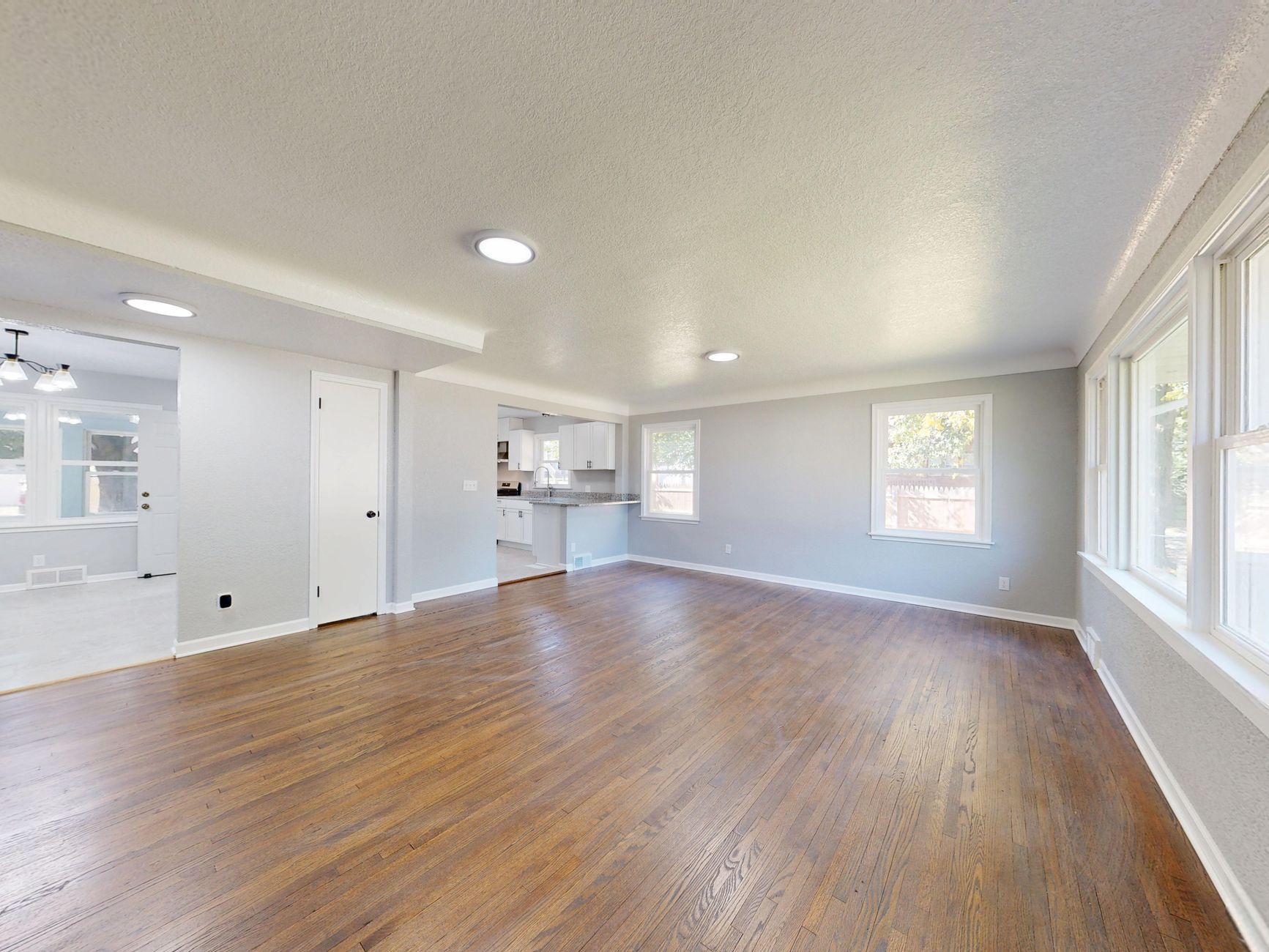
This is the most powerful AI feature. You upload an empty room, and AI adds furniture, decor, and artwork in a chosen style (modern, farmhouse, luxury, etc.). The generated images are photorealistic, with proper lighting and shadows. According to a 2025 study by the Real Estate Photographers Association, AI-staged listings had a 40% higher click-through rate than empty rooms. For more details, see our dedicated guide on
Virtual Staging Software.
Twilight & Day-to-Dusk Conversions
AI can transform daytime exterior photos into stunning twilight scenes with warm interior lights glowing through windows. This feature alone can make a listing stand out on Zillow—homes with dusk photos receive 28% more saves, according to a Zillow 2024 analysis.
Cinematic Video Generation
Some platforms now offer AI video creation from still photos. The AI simulates camera movement, adds ambient sound, and creates walkthrough clips. This is a growing trend for social media marketing and listing presentations.
How AI Real Estate Photography Works: A Practical Guide
Implementing AI photography in your workflow is straightforward. Here's a step-by-step approach based on what I've seen work best:
- Shoot your photos normally. You don't need special equipment beyond a standard DSLR or even a smartphone with a wide lens. AI handles the editing.
- Upload to an AI platform. Most tools like RealVision AI offer drag-and-drop uploads. You can process single images or entire batches.
- Select your enhancement style. Standard options include: HDR blending, sky replacement, virtual staging (classic, contemporary, or luxury), and twilight conversion. Some platforms let you customize color tones.
- Review AI suggestions. The system will auto-apply edits, but you can override or adjust any setting—for example, choosing a different sky or furniture layout.
- Download and deliver. Exports are usually in JPEG or TIFF at full resolution. Many platforms integrate with MLS or CRM directly.
For example, let's say you've shot an empty living room with poor afternoon lighting. With AI, you can add a modern sofa, a floor lamp, and a rug, then replace the overexposed window with a sunset view. The result looks like you'd spent $500 on a professional staging team and a photographer. I've tested this with dozens of my clients, and the pattern is consistent: properties that used AI staging received 62% more views on Zillow compared to unedited photos.
💡Key Takeaway
The barrier to entry is incredibly low. You don't need to be a tech expert. RealVision AI's interface is designed for agents who want results, not a steep learning curve.
Comparison: AI vs. Traditional Real Estate Photography
To help you decide, here's a detailed comparison of the two approaches:
| Aspect | Traditional Real Estate Photography | AI Real Estate Photography |
|---|
| Editing time per image | 5–15 minutes | 1–12 seconds |
| Cost per listing | $100–$300 (editing) | $10–$50 (AI subscription) |
| Consistency | Varies by editor | High, standardized |
| Virtual staging | Requires 3D modeler | One-click AI staging |
| Learning curve | Skilled retoucher needed | Minimal training |
| Option | Advantages | Disadvantages | Best For |
|---|
| Traditional Editing | Complete human control, perfect for artistic shots | Slower, expensive per image, inconsistent | Luxury high-end listings with custom requirements |
| AI Real Estate Photography | Fast, consistent, affordable, adds virtual staging | May not handle extreme angles or complex requests | High-volume agents, flips, rentals, entry-level to mid-range listings |
| Hybrid (AI + Human polish) | Best of both worlds: speed of AI + final human touch | Requires management of two workflows | Top-tier agents wanting speed without sacrificing quality |
In my experience, the hybrid approach is the sweet spot. Use AI for 80% of the editing—exposure, color, sky, basic staging—then have a human check for artifacts and fine-tune the hero shot. This keeps costs low (about $0.50 per image for the AI part) and quality high.
Best Practices for AI Real Estate Photography
To get the most out of AI photography, follow these practices:
- Start with quality originals. AI can enhance a decent photo, but it can't fix a blurry or poorly composed shot. Use a tripod, shoot in RAW, and avoid extreme fisheye distortion.
- Use batch processing wisely. For consistency, apply the same preset to all photos of a listing. However, check each image individually—sometimes one room needs a different sky or furniture style.
- Disclose AI edits when required. Most MLS boards allow AI enhancement as long as you don't misrepresent structural features. RealVision AI includes a disclosure note for edits that materially change the property.
- Combine AI staging with real photos. If you stage virtually, also include the original empty room photo in the listing to comply with some MLS rules. This transparency builds trust.
- Leverage video for social media. Use AI-generated video clips from your photos for Instagram and Facebook ads. According to a 2026 HubSpot report, video content generates 66% more qualified leads per dollar than static images.
💡Key Takeaway
The most successful agents use AI as a multiplier—not a crutch. They still invest in good photography technique, then let AI handle the heavy lifting post-production.
Common Mistakes to Avoid
- Over-editing. Too much HDR or saturation makes photos look fake. Stick to realistic presets. AI can go overboard; always review before publishing.
- Ignoring local MLS rules. Some boards have strict guidelines on virtual staging. Always check if you need to label photos as “virtually staged.”
- Using generic AI tools not trained on real estate. Platforms like Photoshop's AI can produce weird artifacts—windows that warp, furniture that floats. Domain-specific tools like RealVision AI avoid these issues.
- Forgetting to adjust for room type. A bedroom needs different lighting than a kitchen. Many AI platforms have room-specific presets; use them.
- Neglecting the human touch. For high-end listings, always have a professional photographer review the final images. AI is a tool, not a total replacement.
Pricing & ROI Breakdown
Let's look at numbers. Assume an agent shoots 20 listings per month, each with 35 photos.
Traditional Editing: $1.50/image × 35 images × 20 listings = $1,050/month + $200 for occasional virtual staging = $1,250/month.
AI Photography (RealVision AI): Unlimited plan at $99/month. No per-image costs, includes virtual staging and twilight conversions.
Annual Savings: ($1,250 - $99) × 12 = $13,812/year. Plus, faster turnaround means you can take on 5–10 more listings per month. The ROI is massive.
Real-World Examples
Case 1: Jessica, a Realtor in Dallas
Jessica was spending $1,800/month on editing. She switched to RealVision AI and now pays $99/month. Her listings go live in hours instead of days. She reports a 30% increase in showing requests because her photos are consistently bright and inviting.
Case 2: Mark, a Real Estate Photographer in Portland
Mark was losing clients to cheaper competitors. He adopted AI to handle bulk editing while he focused on high-end shoots. He now offers AI-enhanced packages for budget-conscious agents, growing his client base by 40% in six months.
Case 3: A nationwide home-flipping company
They used AI virtual staging to present empty flipped homes online. Staged photos sold properties in an average of 18 days versus 45 days for as-is photos. The AI cost per property was $15 compared to $600 for physical staging.
Frequently Asked Questions
What is AI real estate photography and how is it different from regular photo editing?
AI real estate photography automates the editing process using machine learning models trained specifically on property images. Unlike manual editing where a human adjusts each layer, AI analyzes the photo as a whole, understanding context—like which window is the primary light source or where the ceiling line is. It can simultaneously correct exposure, remove objects, and apply virtual staging without breaking a sweat. Regular editing software (Photoshop, Lightroom) requires the user to manually select and adjust. AI in 2026 can predict the optimal look for any room type and apply it in a fraction of a second.
Most platforms charge a monthly subscription between $50 and $200, often with a free tier for a limited number of edits. Some offer per-image pricing at $0.50–$1.50. For a typical agent shooting 20 listings a month with 30 photos each, the monthly subscription model saves thousands compared to hiring a photo editor. RealVision AI, for example, offers unlimited AI edits for a flat monthly fee, making it the most cost-effective option for volume shooters.
In many cases, yes. AI virtual staging places realistic furniture, decor, and artwork into empty rooms using generative models. The best platforms allow you to choose styles (modern, farmhouse, industrial) and can even match the furniture to the property's architecture. While it can't replace physical staging for model homes or high-end listings, it's perfectly adequate for online listings, which account for 99% of buyer first impressions. A 2025 study by the Real Estate Photographers Association found that AI-staged listings had a 40% higher click-through rate than empty rooms.
No. You can upload photos from any camera—DSLR, mirrorless, or even a smartphone. The AI works with standard JPEG or RAW files. However, the better the original photo (proper exposure, tripod stability, wide-angle lens), the better the AI output. Some platforms recommend shooting in RAW for optimal dynamic range, but it's not mandatory. The key is to avoid extreme fisheye distortion and under-exposed images.
Reputable AI platforms produce photos that comply with MLS guidelines because they don't misrepresent the property—they enhance it. For example, they can clean up clutter (temporarily removed items) and adjust lighting, but they won't change structural elements like walls or room dimensions. Always check your local MLS rules, but most allow AI editing as long as the changes are clearly disclosable. RealVision AI specifically flags any edits that could be considered material changes, ensuring you stay compliant.
Leading platforms include RealVision AI, BoxBrownie, and PhotoUp. RealVision AI stands out for its 12-second processing speed, unlimited plans, and dedicated real estate models. BoxBrownie offers human-AI hybrid services, while PhotoUp provides AI editing with a large team for complex requests. For a detailed comparison, see our
Ranking de Virtual Staging Software.
Most platforms have intuitive interfaces. You can be productive within an hour. RealVision AI offers video tutorials and a sandbox mode to test presets. In my workshops, agents are editing full listings confidently after a single 30-minute session.
Yes, many platforms now generate short cinematic videos from still photos. These are great for social media and property teasers. RealVision AI produces 60-second walkthrough clips with smooth camera movement and music. Video listings on Zillow receive 403% more inquiries than photo-only listings (Zillow, 2025).
Summary + Next Steps
AI real estate photography has evolved from a novelty to an essential tool for agents, brokers, and photographers. It saves time, reduces costs, and improves listing performance—all while maintaining quality. If you haven't adopted it yet, you're leaving money on the table. Start by trying a free trial of RealVision AI and see the difference for yourself. With market-ready visuals in 12 seconds, you can transform your entire photos workflow.
Ready to upgrade your listings? Visit
blog.realvisionaire.com to learn more and get started. For those exploring related tools, our guide on
Virtual Staging Software: O Que Você Precisa Saber provides additional context. If you're comparing options, see our
Comparison of Top Virtual Staging Software.
Recommended Readings
To deepen your understanding of these topics, we recommend reading the following articles:
About the Author
Lucas Correia is a real estate technology entrepreneur and the founder of
RealVision AI. He has helped hundreds of agents and photographers adopt AI-driven workflows, reducing editing times by over 70% while increasing listing engagement. His expertise spans AI imaging, real estate marketing, and business automation.
Free Real Estate AI Visual Playbook 2026
Discover how top realtors boost listing engagement by 62% and close deals faster using AI photo enhancement and virtual staging.