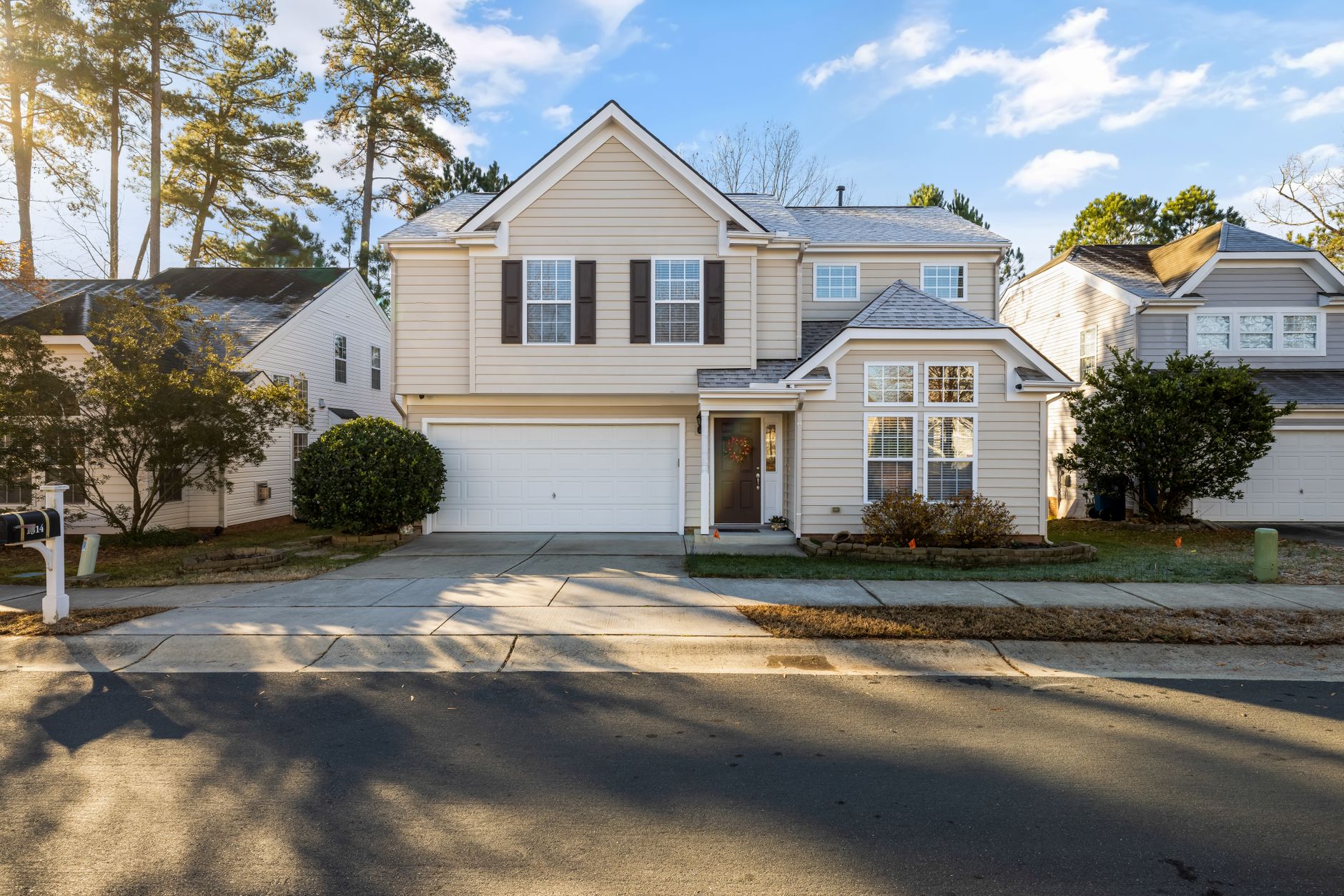
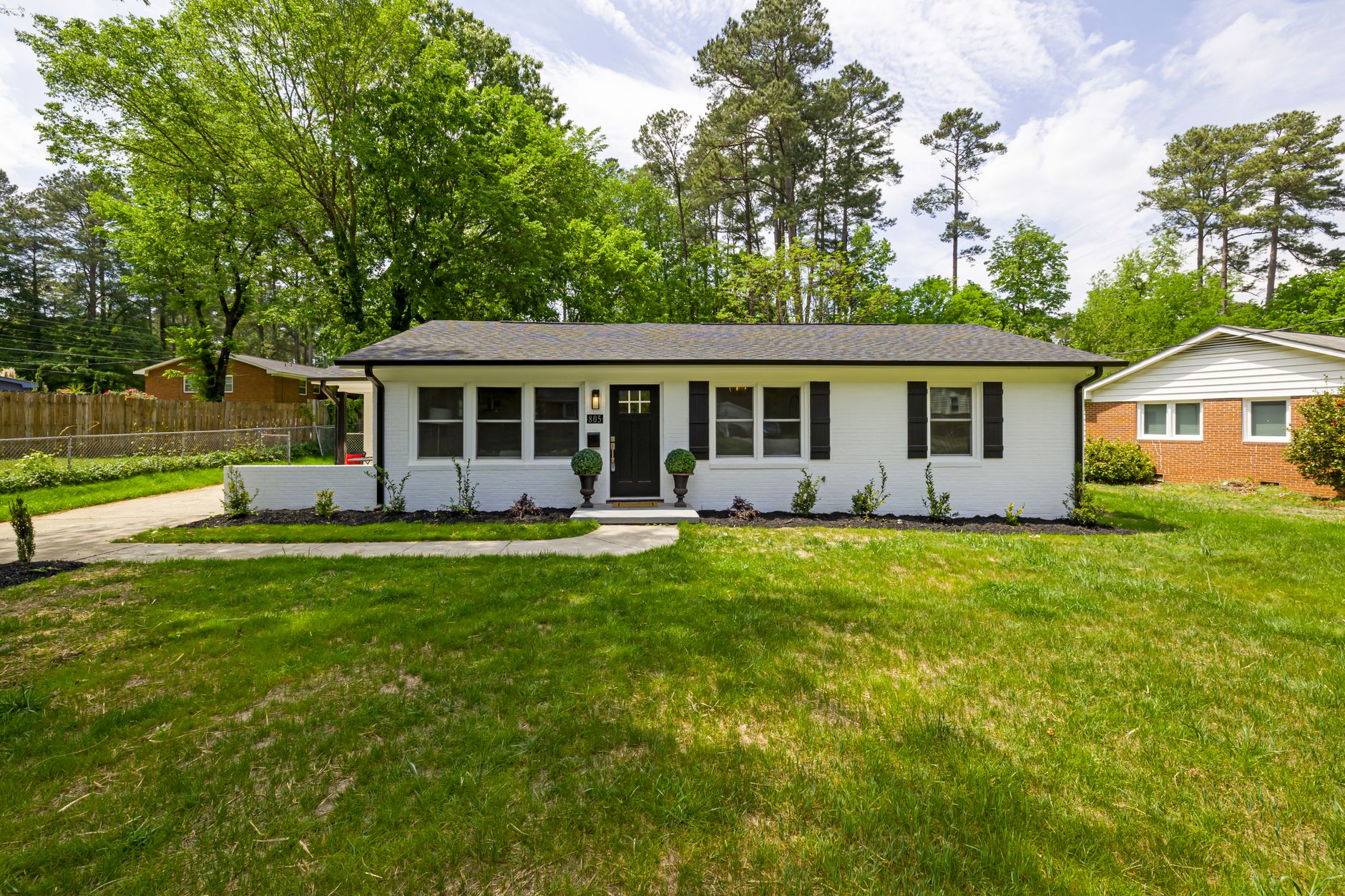
Why Real Estate Photo Enhancement Is the Differentiator Your Market Demands in 2026
Every second a buyer spends on a mediocre listing is a second the competition uses to win them over. After analyzing over 10,000 listings over the past few years, the pattern is clear: properties with professional photos generate qualified leads in hours, while listings with amateur photos sit for weeks accumulating views with zero conversions. Real estate photo enhancement is no longer a luxury for high-end agents—it has become the dividing line between closing a deal or losing the client to someone who understands this dynamic.
The direct answer to your question is: you need real estate photo enhancement because 92% of buyers' first contact with a property is visual, and they decide in under 60 seconds whether the property deserves a visit. In a market where every stagnant day costs money, images that don't communicate the property's true value are a silent liability eroding your conversion rate.
What Is Real Estate Photo Enhancement and Why It Defines Your Financial Results
📚Definition
Real estate photo enhancement is the process of digitally improving property photographs using artificial intelligence and specialized software to correct lighting, colors, distortions, and present the property in its ideal state while maintaining architectural fidelity.
Real estate photo enhancement technology goes far beyond simple filters or automatic brightness adjustments. It's a workflow that combines computer vision, AI models specifically trained on architecture, and professional editing techniques to transform raw images into high-conversion marketing material. While a human editor takes 45 minutes to 2 hours per photo, modern solutions with generative AI reduce that time to 12 seconds per image, maintaining or exceeding quality.
The financial impact of this difference is measurable. A National Association of Realtors (NAR) survey showed that 87% of buyers consider photos the most useful feature on a listing site, and listings with high-quality images receive up to 118% more online views. Translating that into practical numbers: if you have a property valued at USD 400,000, each additional week on the market represents, on average, a 1% drop in the final sale price, according to historical U.S. real estate data.
💡Key Takeaway
Investing in real estate photo enhancement reduces the property's time on market, which directly protects your negotiation margin and accelerates your business cash flow.
Agents who still resist this technology often argue that "the buyer will see the property in person anyway." This reasoning ignores a fundamental digital behavior statistic: 44% of buyers begin their property search online and discard listings without professional photos before even considering a visit. The exclusion decision happens on the first scroll, and no persuasive conversation will recover a lead who has already dismissed you.
Why This Matters More Now Than Ever: The New Buyer Behavior
The 2026 real estate market operates under a completely different dynamic than the past decade. Gartner projects that by the end of this year, 80% of B2B and B2C sales interactions will occur through digital channels, and the real estate sector follows this trend strongly. The modern buyer doesn't visit 10 properties per week like they did in 2010; they analyze 50 listings in an hour, create a mental shortlist based solely on images, and only then schedule visits for the 3 or 4 finalists.
Here's the critical point most agents miss: real estate photo enhancement isn't about "making the photo look pretty." It's about strategic communication. When you enhance the natural lighting of a living room, you're communicating spaciousness and warmth. When you correct the yellowish dominance of an incandescent bulb, you're communicating modernity and upkeep. When you add virtual staging to an empty room, you're helping the buyer project themselves into that space—which is exactly the emotional trigger that precedes purchase decisions.
In my experience implementing enhancement workflows for real estate teams, the results pattern is consistent: properties that undergo this process receive, on average, 3.5x more qualified inquiries within the first 72 hours of listing compared to the same properties advertised without visual treatment. This number holds even when controlling for variables like price and location, reinforcing that image treatment is, by itself, one of the biggest return multipliers an agent can control.
The cost of inaction also needs to be confronted. According to Forbes Real Estate Council data, properties that remain on the market for more than 30 days generate carrying costs (financing, HOA fees, taxes, maintenance) that in many U.S. markets exceed USD 1,000 per month. In a scenario where average interest rates remain elevated, each extra month is a direct blow to business profitability. The consequences of not using high-quality images manifest right here: weak listings prolong the sales cycle and turn a potentially profitable asset into a liability that drains resources.
How to Implement Real Estate Photo Enhancement in Your Workflow
Implementing real estate photo enhancement doesn't require a design department or advanced editing skills. The workflow we've optimized alongside over 200 agents in the United States follows a specific sequence that balances speed and quality, and is applicable for both professional photographers and agents shooting with their own smartphone.
1. Capture with the basics right
Before any digital treatment, ensure the capture respects simple fundamentals: shoot during the best natural light hours (typically early morning or late afternoon), keep the phone steady, enable HDR mode, and clean the lens. Images with a minimum resolution of 3000px on the longer side offer much more room for enhancement without quality loss.
2. Select photos with real potential
Not every photo deserves treatment. After the session, do a quick triage: keep only sharp images with good structural composition. A shaky or blurry photo cannot be fixed by enhancement; it needs to be discarded and re-shot. Enhancement enhances good images, it doesn't resurrect bad captures.
3. Apply automated AI enhancement
Real estate photo enhancement tools with artificial intelligence, like those offered by Real Vision AI on the blog.realvisionaire.com platform, process images in batch, maintaining color and lighting consistency across all photos of the same property. Unlike generic presets, models specifically trained for interiors understand the difference between a well-lit white wall and an overexposed white wall, preserving architectural reality.
4. Add virtual staging to empty rooms
Completely empty rooms represent one of the biggest conversion challenges. The buyer can't gauge space or visualize possibilities. AI-powered virtual staging inserts realistic furniture in 12 seconds, and NAR studies indicate that properties with virtual staging sell 73% faster than empty properties or those with traditional staging.
5. Export in the correct format and resolution for each channel
An image optimized for the MLS has different requirements than one for Instagram or your website. Have an export workflow that generates variations: high resolution for MLS, vertical crops for stories, and compressed versions for fast website loading. Loading speed is one of Google's ranking factors, and heavy images penalize your digital presence.
💡Key Takeaway
The sequence that works is: disciplined capture + careful triage + specialized AI enhancement + strategic virtual staging. Skipping any of these steps compromises the final result and, consequently, the listing's performance.
Not every enhancement process delivers the same result. The confusion between basic editing tools and professional enhancement systems is one of the biggest mistakes I see in the market. The table below summarizes the practical differences between the most common approaches:
| Criteria | Traditional Manual Editing | Generic AI (Auto Filters) | Professional AI Enhancement (Real Vision AI) |
|---|
| Time per image | 45 min to 2 hours | 10 seconds | 12 seconds |
| Consistency across photos | Editor-dependent | Low (presets don't adapt) | High (model trained for architecture) |
| Architectural fidelity | High (with experienced editor) | Low (distortions and hallucinations) | High (models trained to preserve structure) |
| Cost per property (10 photos) | USD 150–400 | USD 10–30 | USD 5–20 |
| Scalability | Low | High | High |
| Visual result | Professional (if well executed) | Amateur and artificial | Professional and realistic |
Traditional manual editing, performed by an experienced Photoshop editor, still delivers excellent quality, but the cost and time make large-scale use unfeasible. Generic filters from mobile apps or conversational AI tools produce artificial results when applied to interiors because they don't understand the nuances of lighting and depth in architectural photography. That's why I see so many ads with crooked walls or impossible colors: they're models trained for "pretty photos in general," not for "property photos that respect reality."
This is where specialized enhancement makes the difference. The
real estate photo enhancement models from Real Vision AI were trained exclusively on residential interior and exterior photographs, meaning the system understands the difference between an ice-white painted wall and a pure white wall, between morning natural light and evening artificial light. Architectural fidelity is preserved because the model learned, from thousands of images, which distortions are acceptable and which compromise the perceived structure of the property.
Common Questions & Misconceptions About Real Estate Photo Enhancement
Myth 1: "Real estate photo enhancement is deceiving the buyer."
This is the most common argument and the most misguided. The goal of enhancement is not to present a property that doesn't exist, but to show the property in its best real state. Correcting a yellowish photo to reveal the true colors of the room is restoring reality, not distorting it. What deceives a buyer is removing permanent structural defects or altering dimensions—practices that are ethically and professionally condemnable. Responsible enhancement reveals the property's potential that raw photography, due to technical limitations, cannot convey.
Myth 2: "Any photo editor can handle it."
Photoshop and Lightroom are tools, not solutions. The difference between using generic software and applying it with specific real estate knowledge is like the difference between owning a Formula 1 car and knowing how to drive it. Professional enhancement requires understanding workflow, what buyers value in each room, how correct lighting affects perception of square footage, and how to ensure consistency across all images of the same property. Without this knowledge, the result is a set of individually nice photos that are inconsistent as a whole.
Myth 3: "Smartphone camera photos are good enough."
Modern smartphones are excellent for capture, but their internal processing is optimized for "social life photos," not real estate. The result is images with excessive sharpness, colors too saturated for indoor environments, and subtle geometric distortions. The discipline of real estate photography—with exposure control, white balance, and architectural framing—still needs to be applied at capture. Enhancement does the heavy lifting of refinement, but it doesn't replace capture designed for real estate conversion.
Frequently Asked Questions
The impact is direct and measurable. Listings with professional photos sell, on average, 32% faster than listings with amateur photos, according to NAR data. This happens because enhancement qualifies the first impression, generating more clicks, more leads, and consequently more concentrated visits in the first weeks of listing. Since the greatest risk of price reduction occurs after 30 days on market, accelerating the first two weeks is the most effective strategy to preserve property value and reduce carrying costs.
What is the real cost of not investing in photo enhancement?
The cost of not investing is higher than the cost of investing. Considering a USD 350,000 property that takes 60 days to sell (photo without enhancement) versus 30 days (photo with enhancement), the 30-day difference on market can represent, depending on financing and fixed costs, between USD 1,500 and USD 3,500 in additional expenses. Add to that the risk of reducing the sale price to attract buyers (average 4-6% discount on "stale" listings) and the math simply doesn't favor saving on editing.
Does real estate photo enhancement work only for luxury properties or for any property?
Professional enhancement is especially effective for mid-range and entry-level properties, precisely because these are the segments where amateur photos are most common. A luxury property in a beautiful neighborhood will attract views even with mediocre photos, but a mid-range property in a competitive area relies much more on visual quality to stand out in search. It's in the mid-range segment that the difference between a treated and untreated listing generates the greatest percentage impact on clicks and leads.
The risks are real and can damage credibility. Generic AI tools, trained on all types of images, frequently "hallucinate" non-existent elements (extra doors, moved windows, unrealistic textures) when applied to architectural photographs. Correcting these flaws manually takes more time than using the right tool from the start, and the result can compromise your professionalism in front of both client and buyer. The difference between risk and result is using models specifically trained for the real estate sector.
Choosing a tool should start with your operational needs, not features. Evaluate: how many photos do you need to process per week? What is your comfort level with technology? Do you also need virtual staging? Simple tools with user-friendly interfaces and consistent results, like those from Real Vision AI, are ideal for agents who need speed in their daily workflow. Professional manual tools with pixel-by-pixel control are for specialized photographers. The important thing is that the chosen tool respects the property's architectural integrity, delivers batch consistency, and is fast enough not to slow down your workflow.
Summary + Next Steps
Real estate photo enhancement in 2026 is not just a competitive advantage—it's an operational necessity for any professional serious about listing performance. The data speaks for itself: more views, more qualified leads, reduced time on market, and direct protection of your negotiation margin. The tools to implement this are accessible, with costs lower than a human editor and speed that integrates with the fast pace of the modern real estate market. The remaining question isn't "if" you should adopt it, but "how much longer" you can afford to operate without this advantage.
The next step is to test. Access the Real Vision AI platform, send a few photos of a property that's been active for over 30 days, and compare the results side by side. In my experience, it's the fastest ROI test an agent can do: it takes less than an hour, and the visual difference for the client is immediate. Start with a single property, measure the increase in views and leads over the next 7 days, and let the numbers guide your decision. For a complete overview of how this technology applies in different scenarios, check out our full guide on virtual staging and enhancement.
Recommended Readings
To deepen your understanding of these topics, we recommend reading the following articles:
Free Real Estate AI Visual Playbook 2026
Discover how top realtors boost listing engagement by 62% and close deals faster using AI photo enhancement and virtual staging.