

What is AI Real Estate Photography and How is it Changing the Market?
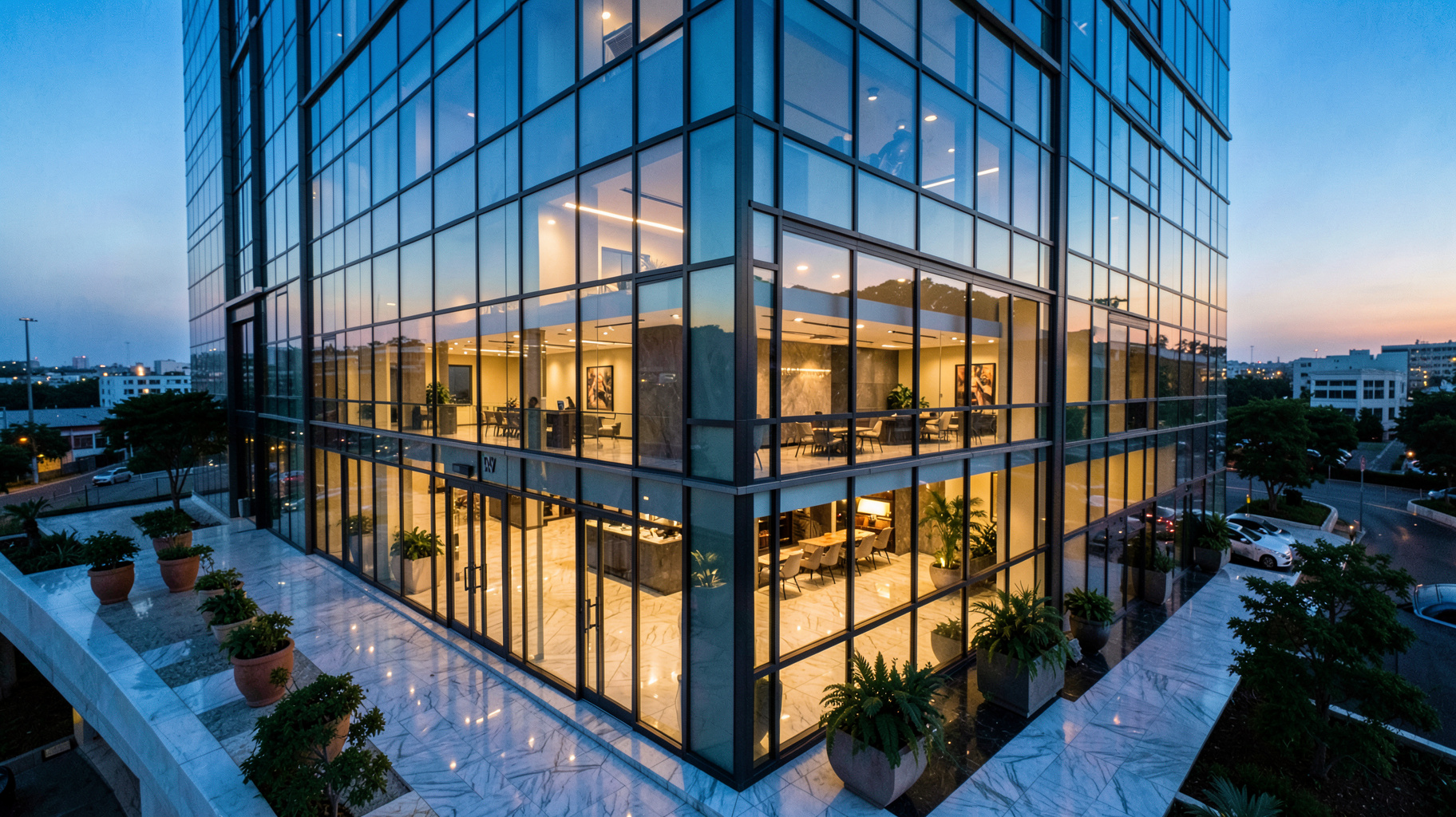
High-end property listings used to require a massive investment in lighting equipment, hours of manual retouching, and expensive staging furniture that had to be moved in and out of a home. In my experience working with luxury property managers, the biggest bottleneck wasn't the shoot itself, but the three to five days of waiting for an editor to return "perfected" images. AI real estate photography solves this by integrating computer vision and generative AI to automate the enhancement, staging, and lighting of property visuals in seconds. It is not merely a filter; it is a sophisticated set of tools that can recognize a room's geometry and intelligently add furniture or change a gray sky to a golden hour sunset without distorting the architecture.
📚
Definition
AI real estate photography is the application of artificial intelligence—specifically deep learning and computer vision—to capture, enhance, and manipulate property images to maximize their aesthetic appeal and marketability while maintaining structural accuracy.
How Does AI Real Estate Photography Actually Work?
To understand the technical side, we have to look beyond the "magic" button. At its core, this technology relies on neural networks trained on millions of high-quality architectural photographs. These systems use semantic segmentation to identify exactly what is a wall, what is a window, and what is a piece of outdated furniture. Once the AI "understands" the layout of the room, it can apply specific transformations. For instance, when performing a "day-to-dusk" conversion, the AI doesn't just turn the image orange; it identifies the light sources—like lamps and ceiling fixtures—and adds a realistic glow to them while deepening the blue of the sky.
According to a report by Gartner on the evolution of generative AI, the shift toward "domain-specific AI" allows for much higher precision than general tools. This is why specialized platforms outperform generic image editors. In the context of real estate, the AI must respect the laws of perspective and lighting. If a virtual sofa is placed in a room but the shadows don't align with the window's light source, the human brain immediately flags it as "fake," which can actually decrease trust in a listing.
The process typically involves several layers of processing: first, the AI performs a basic color correction and exposure balance; second, it applies object removal to declutter the space; and third, it overlays high-resolution 3D assets for virtual staging. When we developed the logic for the RealVisionAI Blog - AI Real Estate Photography & Virtual Staging tools, we focused on this "structural integrity" first, ensuring that the AI never alters the actual dimensions of a room, as misrepresenting square footage is a significant legal risk in the industry.
Why Does AI Integration Matter for Property ROI?
The impact of visual quality on click-through rates is not just a preference; it is a measurable financial metric. In the current 2026 market, buyers make a "keep or discard" decision on a property within the first three seconds of seeing the lead image. Properties with professional, AI-enhanced visuals consistently outperform those with amateur photos in both speed of sale and final closing price.
Research from McKinsey suggests that AI-driven personalization and visual optimization in customer-facing interfaces can increase conversion rates by up to 15-30%. In real estate, this translates to more viewing requests and a shorter "days on market" (DOM) average. When a property is virtually staged using AI, it allows buyers to visualize the potential of a vacant space, which removes the mental friction of imagining where a bed or a dining table would fit.
Beyond the sales price, the operational cost reduction is staggering. The traditional pipeline involved a photographer, a staging company, and a retouching house. By utilizing AI real estate photography, a single agent or photographer can handle the entire lifecycle. This eliminates the need for physical furniture rentals, which can cost thousands of dollars per month for high-end listings. The ability to produce "market-ready" visuals in under 15 seconds means listings go live while the property is still fresh in the agent's mind, preventing the loss of early-market momentum.
How to Implement AI Visuals in Your Listing Workflow
Implementing AI into your workflow doesn't require a degree in data science; it requires a shift in how you handle your "post-production" phase. The mistake I see constantly is agents trying to use general-purpose AI art generators to "fix" their photos. This often results in "hallucinations" where a door disappears or a window becomes a wall. Instead, you should use a dedicated pipeline.
Step 1: Capture the Base Image
Start with a clean, wide-angle shot. Even with AI, a blurry or poorly framed photo is hard to save. Ensure your verticals are straight, as this makes the AI's job of recognizing room geometry much easier.
Step 2: Automated Decluttering
Use an AI object removal tool to clear out personal items, trash cans, or distracting wires. This creates a "blank canvas" that feels professional and airy.
Step 3: Lighting and Sky Optimization
Apply AI sky replacement for exterior shots. A cloudy day can make a luxury home look depressing; a bright, blue sky or a twilight glow increases the perceived value of the property instantly.
Step 4: Strategic Virtual Staging
Depending on the target demographic, apply a specific staging style. For a city condo, use "Modern Minimalist." For a suburban family home, use "Traditional Warmth." RealVisionAI Blog - AI Real Estate Photography & Virtual Staging allows you to switch these styles in seconds, letting you A/B test which look generates more leads.
Step 5: Final Quality Audit
Check for "AI artifacts"—weird shadows or floating furniture. A quick manual check ensures the listing remains honest and professional.
💡
Key Takeaway
The most effective AI workflow is one that prioritizes structural honesty. Use AI to enhance the mood and fill the space, but never to hide fundamental flaws of the property.

Comparing Visual Strategies: Traditional vs. Generic AI vs. Professional AI
Choosing the right approach depends on your volume and your brand positioning. Many agents fall into the trap of using "cheap" AI tools that leave the images looking like a video game, which can actually damage their reputation with high-net-worth clients.
| Feature | Traditional Staging/Photography | Generic/Cheap AI Tools | Professional AI (RealVisionAI) |
|---|---|---|---|
| Turnaround Time | 3–7 Days | Instant | 12 Seconds |
| Cost | Very High (Rentals + Labor) | Very Low | Low/Scalable |
| Visual Fidelity | Perfect (Physical) | Low (Hallucinations) | High (Architectural Logic) |
| Flexibility | Rigid (One Style) | Random | High (Multiple Styles) |
| Scalability | Low | High | Very High |
| Best For | Ultra-Luxury ($10M+) | Low-end rentals | Professional Agents & Photographers |
Now, here's where it gets interesting: the "Generic AI" approach often fails because it lacks the "Real Estate" context. A generic tool might see a dining room and put a futuristic, floating table there because it looks "cool." A professional AI tool knows that a buyer wants to see a table that actually fits the dimensions of the room and matches the architectural style of the house.
Common Misconceptions About AI in Real Estate
Most guides get this wrong by claiming that AI will replace the photographer. That is a fundamental misunderstanding of the value chain. AI cannot go to a house, open the curtains, and find the best angle to capture the flow of a floor plan. The photographer's eye for composition remains irreplaceable. AI is not a replacement for the photographer; it is a replacement for the tedious, manual labor of the editing room.
Another common myth is that AI photography is "dishonest" or "fraudulent." There is a clear line between enhancing a photo and misrepresenting a property. Changing a gray sky to blue or adding a virtual sofa is widely accepted as a marketing tool, similar to how magazines retouch photos. However, using AI to remove a permanent structural crack in a wall or adding a window where none exists is a violation of ethics and, in many regions, a violation of MLS (Multiple Listing Service) rules.
Lastly, some believe that AI visuals look "fake." While this was true in 2022, the current state of computer vision in 2026 has reached a point of photorealism where, unless a buyer is looking for glitches, they cannot distinguish a virtually staged room from a physically staged one. The key is using tools that prioritize lighting and shadow physics over simple "sticker" placement.
Frequently Asked Questions
Does AI real estate photography violate MLS rules?
Most Multiple Listing Services (MLS) allow AI enhancement and virtual staging, provided that the listing clearly discloses it. The industry standard is to include a small disclaimer such as "Virtually Staged" in the photo caption or the property description. As long as the AI is used to illustrate potential rather than hide permanent defects, it is generally compliant. In my experience, being transparent about the use of AI actually builds trust with buyers, as it shows the agent is using modern technology to help them visualize the home's potential.
How long does it take to see results from AI-enhanced photos?
The results are almost immediate in terms of engagement metrics. When we analyze data from listings that switch from amateur photos to AI-enhanced visuals, we typically see a significant spike in "saves" and "shares" on platforms like Zillow or Instagram within the first 48 hours. Because AI real estate photography allows you to update visuals instantly, you can iterate your lead image based on performance. If a "Day" shot isn't getting clicks, you can swap it for a "Twilight" shot in seconds and see the difference in real-time.
Can AI photography handle very cluttered or messy rooms?
Yes, but it requires a two-step process. First, the AI uses "Object Removal" or "Decluttering" algorithms to identify and erase non-permanent items like laundry, toys, or old furniture. Once the room is digitally "cleaned," the virtual staging layer is applied. This is far more efficient than spending hours physically cleaning a hoard or paying a professional organizer. However, if a room has structural damage (like a collapsed ceiling), AI is not a substitute for a renovation; it is a tool for aesthetic optimization.
Is AI photography expensive for independent agents?
On the contrary, it is significantly cheaper than the alternative. Traditional physical staging can cost anywhere from $2,000 to $10,000 depending on the size of the home. Professional photographers who do manual retouching charge high per-image fees. AI real estate photography moves the cost from a "per-project" capital expenditure to a scalable operational expense. Tools like RealVisionAI Blog - AI Real Estate Photography & Virtual Staging allow agents to process dozens of images for a fraction of the cost of a single furniture rental.
Do I need a high-end camera for AI tools to work?
While a professional DSLR or mirrorless camera is always preferred for the best results, AI has lowered the barrier to entry. Modern smartphone cameras with wide-angle lenses provide more than enough data for AI to perform sky replacements and virtual staging. The AI is capable of correcting some exposure issues and enhancing the resolution. However, the "composition" is still the most important factor; if the photo is taken from a bad angle, the AI can't "move" the camera to a better spot.
Final Thoughts on AI Real Estate Photography
The transition toward AI-driven visuals is not a trend; it is a fundamental shift in the economics of real estate marketing. The ability to transform a dull, empty space into a luxury home in 12 seconds changes how agents compete for listings and how buyers experience properties. By removing the friction of physical staging and the delay of manual editing, you can move your properties from "listed" to "sold" with far greater velocity.
If you are still relying on outdated manual workflows or expensive physical furniture, you are leaving money on the table and losing leads to more tech-forward competitors. The goal is to create an emotional connection with the buyer the moment they see the thumbnail.
To start transforming your listings today, explore the tools at RealVisionAI Blog - AI Real Estate Photography & Virtual Staging. Whether you need a stunning twilight conversion or a fully staged luxury interior, the future of property marketing is now instant and intelligent.
Recommended Readings
To deepen your understanding of these topics, we recommend reading the following articles:
- Ultimate AI Lead Generation for Real Estate Agents
- AI property enhancement
- AI staging for realtors
- AI Virtual Staging by Property Type
Free Real Estate AI Visual Playbook 2026
Discover how top realtors boost listing engagement by 62% and close deals faster using AI photo enhancement and virtual staging.