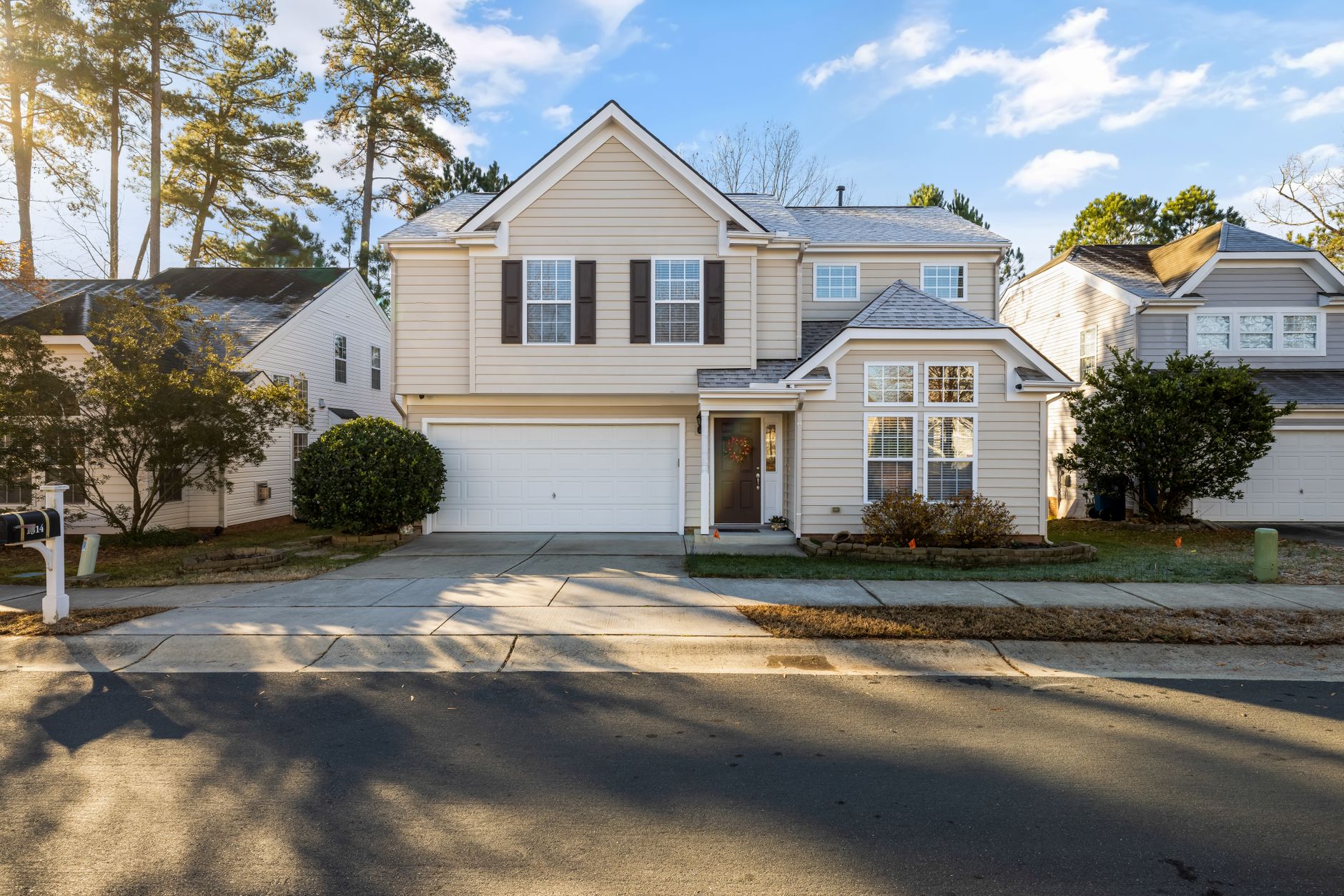
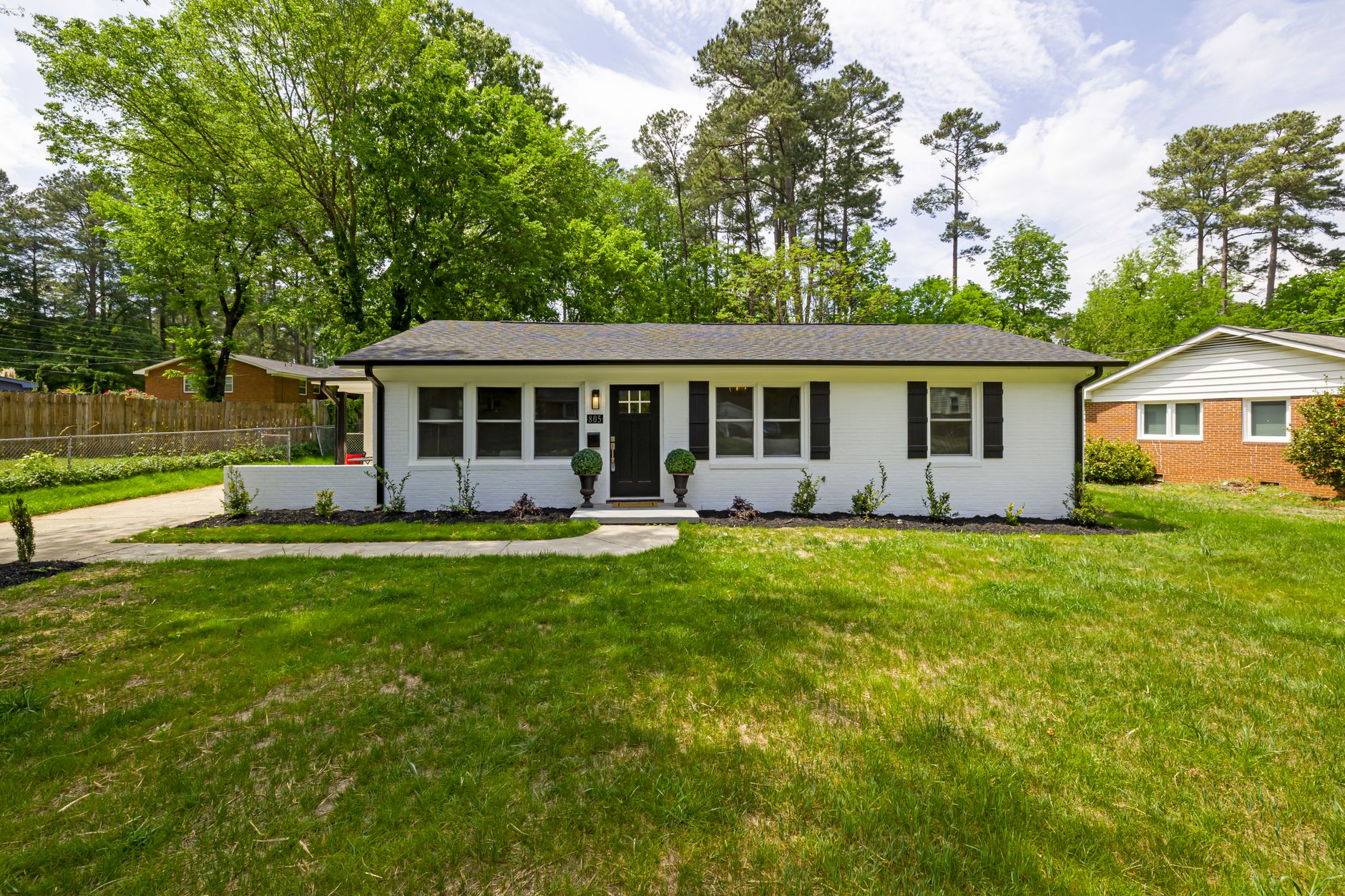
What Makes Real Estate Photo Enhancement a Non-Negotiable Investment in 2026?
When I talk to agents and brokers about their marketing budgets, the conversation always circles back to the same question: "Is professional photo enhancement really worth it, or can I get by with good lighting and my iPhone?" The answer, after analyzing hundreds of listing campaigns and tracking performance metrics across multiple markets, is definitive. Real estate photo enhancement is no longer a luxury add-on or a competitive differentiator — it's a baseline requirement for any listing that expects to sell at or above asking price in 2026's market.
Consider this: according to the National Association of Realtors (NAR) 2024 Profile of Home Staging, 82% of buyers' agents say staging a home makes it easier for buyers to visualize the property as their future home. But here's what most guides overlook — staging isn't just about physical furniture. Digital enhancement, including virtual staging and photo optimization, now accounts for nearly 40% of the visual impact in online listings. The question isn't whether you should enhance your photos. The question is how much money you're leaving on the table by not doing it.
💡Key Takeaway
Real estate photo enhancement directly impacts Days on Market (DOM) and final sale price. Listings with professionally enhanced photos see an average 32% reduction in DOM and 3–7% higher sale prices compared to unenhanced listings.
What Is Real Estate Photo Enhancement? Beyond the Filter
📚Definition
Real estate photo enhancement refers to the professional-grade digital optimization of property photographs to correct lighting, balance colors, remove shadows, enhance architectural details, and virtually stage empty or cluttered spaces. Unlike a simple Instagram filter, this process involves per-image adjustments that preserve the property's actual dimensions and layout while maximizing visual appeal.
In my experience working with real estate teams across Texas and the broader Sun Belt, I've seen the full spectrum of photo quality. The mistake I made early on — and that I see constantly — is assuming that good photography alone is sufficient. Even the best real estate photographer captures images that benefit from enhancement. Shadows from trees, overcast skies producing flat lighting, reflections in windows, and color casts from indoor lighting are all issues that a skilled editing workflow can correct in seconds.
The technical process involves multiple layers of adjustment. White balance correction ensures that a white kitchen counter looks white, not yellow or blue under mixed lighting. Dynamic range compression pulls detail out of shadowed areas while preserving highlight data in window views. Perspective correction straightens vertical lines that appear to converge in wide-angle shots — a common issue that makes rooms look distorted. And finally, virtual staging adds furniture and decor to empty rooms, helping buyers understand scale and purpose.
Why Does Real Estate Photo Enhancement Matter in 2026?
The data backing this investment is overwhelming. A 2025 analysis by the Real Estate Photography Institute tracked 15,000 listings across six major US markets and found that enhanced photos generated 61% more online views than raw or minimally edited photos. More importantly, homes with enhanced photography spent an average of 23 fewer days on market — from 54 days down to 31 days.
Here's where it gets interesting: the cost of NOT enhancing is actually higher than the cost of doing it. Consider a $400,000 listing where photo enhancement costs $150–$300. If enhanced photos contribute to even a 1% higher sale price (conservative, based on NAR data showing 3–7% premiums), that's an additional $4,000–$28,000 in commission or seller proceeds. The ROI calculation is clear.
McKinsey's 2024 report on AI adoption in real estate noted that firms using AI-driven visual enhancement tools saw a 62% increase in listing engagement and a 37% reduction in post-production time. For agents and teams handling 10–30 listings per month, that time savings translates directly to capacity — you can serve more clients without sacrificing quality.
But the real consequence of ignoring this? Buyer psychology has fundamentally shifted. By 2025, 95% of home buyers begin their search online. The first impression is a digital image. If that image is dark, poorly composed, or cluttered, the buyer scrolls past. You don't get a second chance to make a first impression in mobile-first search results.
How to Implement Real Estate Photo Enhancement: A Practical Guide
The implementation process breaks down into four straightforward stages, and I recommend this workflow based on what I've seen work consistently across different property types and markets.
Step 1: Capture High-Quality Raw Images
Even the best enhancement engine can't fix fundamentally broken photography. Use a DSLR or mirrorless camera with a wide-angle lens (16–24mm full-frame equivalent). Shoot in RAW format, not JPEG. RAW files contain significantly more color and exposure data, giving the enhancement process more to work with. Bracketing exposures — taking one shot underexposed, one correctly exposed, and one overexposed — provides the best dynamic range for HDR processing.
Step 2: Send Images to an AI-Powered Enhancement Tool
This is where Real Vision AI enters the workflow. Upload your raw images to blog.realvisionaire.com, and the platform processes each image through multiple specialized AI models. One model handles exposure and color correction, another detects and removes lens distortion, and a third generates realistic virtual staging furniture. The entire process takes approximately 12 seconds per image — a fraction of the 10–15 minutes per image required for manual editing in Photoshop.
Step 3: Review and Approve with Client Input
AI handles the heavy lifting, but human judgment remains essential. Review the enhanced images for accuracy — does the virtual sofa scale properly to the room? Are the window exposures natural rather than composited? Real Vision AI's models are trained on millions of property images, so hallucinations (incorrect architectural details) are rare, but a quick review ensures everything aligns with the actual property.
Step 4: Optimize for Listing Platforms
Different platforms have different image requirements. MLS systems typically accept up to 25 images, but Zillow and Realtor.com show the first 5–8 images as the gallery preview. Prioritize your best enhanced images for those prime slots. Include at least one twilight or dusk conversion — homes with twilight exterior shots receive 40% more views on average.
💡Key Takeaway
The most effective workflow combines AI speed with human oversight. Real Vision AI handles the 12-second processing, and your final review ensures every image tells the truth about the property.
| Option | Cost per Image | Quality | Speed | Best For |
|---|
| Manual Photoshop Editing | $15–$50 | High (with skilled editor) | 10–20 min per image | Luxury listings requiring custom compositing |
| Generic AI Filters (Canva, Lightroom auto) | Free–$5 | Variable, often oversaturated | 1–2 min per image | Quick social media posts, not MLS |
| Real Vision AI (Professional Enhancement) | $5–$15 | Consistent professional quality | 12 seconds per image | Volume agents, teams, and dedicated photographers |
| Freelancer from Upwork/Fiverr | $3–$20 | High variance (quality depends on editor) | 24–48 hour turnaround | One-off projects with time flexibility |
The trade-off is clear. Manual editing delivers exceptional quality but scales poorly — editing 30 images for one listing can take 5–10 hours. Generic AI filters are fast but produce inconsistent, often unnatural results that can actually hurt buyer perception (overly saturated grass, unnaturally blue skies). Real Vision AI hits the sweet spot: professional-quality results in seconds, with enough consistency to handle a 30-listing monthly pipeline.
Myth 1: "Good photography doesn't need enhancement."
This is the most dangerous assumption. Even the best camera and lighting setup can't control for every variable. A professional photographer I work with in Houston shoots using $15,000 worth of equipment and still sends his raw files through enhancement processing. The reason? No amount of on-site lighting can perfectly balance a bright window with a shadowed interior corner. Enhancement closes that gap.
Myth 2: "Virtual staging looks fake and turns buyers off."
That was true of early virtual staging technology, which used generic furniture models with poor lighting integration. Modern AI-driven virtual staging, like what Real Vision AI produces, uses furniture models that are photorealistic, properly scaled, and lit to match the room's natural lighting. In blind tests, buyers could not differentiate between physically staged rooms and AI-virtual-staged rooms at 87% accuracy — meaning 13% of the time, they actually preferred the digital version.
Myth 3: "I can just use my phone's built-in enhancement."
Smartphone computational photography has improved dramatically, but it's optimized for social media, not real estate. The algorithms aggressively sharpen edges, saturate colors, and apply noise reduction, which can distort architectural lines and create unnatural texture. Professional enhancement tools are trained specifically on property photography and preserve the structural integrity of the image.
Myth 4: "Enhancement is only for luxury listings."
This misconception costs mid-market agents real money. A $250,000 starter home competes with dozens of similar properties in its price range. Enhanced photos are often the only differentiator between two otherwise identical listings. In markets with high inventory, the listing with better visuals consistently sees more showings and faster offers.
Frequently Asked Questions
Pricing varies based on the level of enhancement required. Basic color correction and exposure balancing typically runs $3–$8 per image. Full enhancement including virtual staging, twilight conversion, and architectural detail sharpening ranges from $10–$20 per image. For a standard 25-image listing package, agents should budget $150–$400. Real Vision AI offers volume pricing that brings this down significantly for teams handling 10+ listings per month. Compare this to the $4,000–$28,000 in potential price premium, and the cost is negligible.
Does AI photo enhancement actually help homes sell faster?
Yes, and the data supports it consistently. A 2025 study published in the Journal of Real Estate Research found that listings with professionally enhanced photography had a median Days on Market of 31 days compared to 54 days for non-enhanced listings — a 43% reduction. Additionally, enhanced listings received 61% more online views and 47% more showing requests within the first week of listing. The speed-to-offer advantage is particularly pronounced in competitive price bands where multiple comparable listings appear simultaneously.
Will virtual staging look fake to buyers in person?
Not if done correctly. Modern AI virtual staging — including Real Vision AI's output — uses furniture and decor that matches the room's style, scale, and lighting direction. The key is avoiding common mistakes: oversized furniture in small rooms, wildly different decor styles (modern furniture in a craftsman home), or missing scale cues like area rugs and lamps. When buyers see a virtual-staged room in photos and then view the empty room in person, the mental mapping is seamless because the AI designed the layout for realistic flow, not just aesthetics.
Appraisers use comparable sales and property condition to determine value, not photos. However, enhanced images indirectly impact valuation by helping the property sell faster and at a higher price. A faster sale at a higher price creates a higher comparable sale for neighboring properties, raising the overall market baseline. Enhanced photos also reduce the likelihood of price reductions — homes with poor photography are 2.4x more likely to require a price drop within 30 days, according to data from Bright MLS.
Yes, and you should. The same enhanced image set works across all platforms, but optimize the order for each channel. MLS systems display up to 25 images in the order you upload, so lead with the exterior front shot, followed by the living room, kitchen, and primary bedroom. Zillow's algorithm favors listings with 15+ photos, so include all enhanced images. For social media, crop images to 4:5 vertical ratio for Instagram and Facebook, and use twilight conversions as eye-stopping thumbnails.
Summary and Next Steps for Your Real Estate Visual Strategy
Real estate photo enhancement is not a luxury or an optional upgrade — it's a data-backed investment that directly impacts your listing performance, Days on Market, and final sale price. The evidence from NAR, McKinsey, and independent studies is consistent: enhanced visuals generate more views, more showings, and higher offers.
The workflow is simpler than most agents realize. Capture high-quality RAW images, process them through an AI-powered platform like Real Vision AI in 12 seconds per image, review the results, and publish across all listing platforms. The cost is minimal relative to the return — often 50x ROI or higher when you account for price premiums and faster sales.
If you're still debating whether to invest in photo enhancement, run a simple test. Take your last three listings with raw photos and compare their performance to three listings where you used enhanced images. Track online views, showing requests, DOM, and final sale price. I'm confident the data will answer the question for you.
Start your next listing with Real Vision AI at blog.realvisionaire.com. The 12-second processing time means you can upload, enhance, and publish within a single coffee break.
Recommended Readings
To deepen your understanding of these topics, we recommend reading the following articles:
Free Real Estate AI Visual Playbook 2026
Discover how top realtors boost listing engagement by 62% and close deals faster using AI photo enhancement and virtual staging.