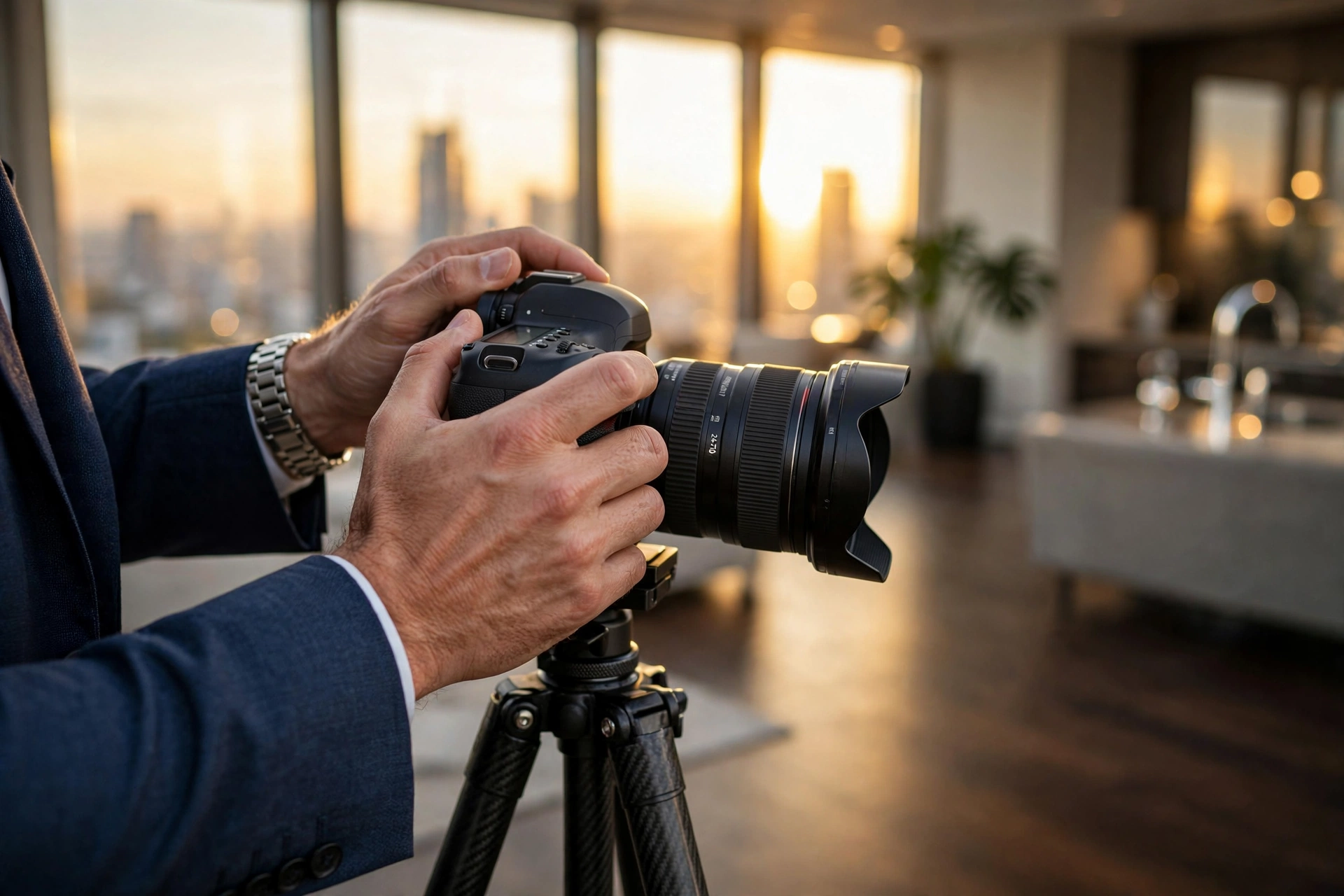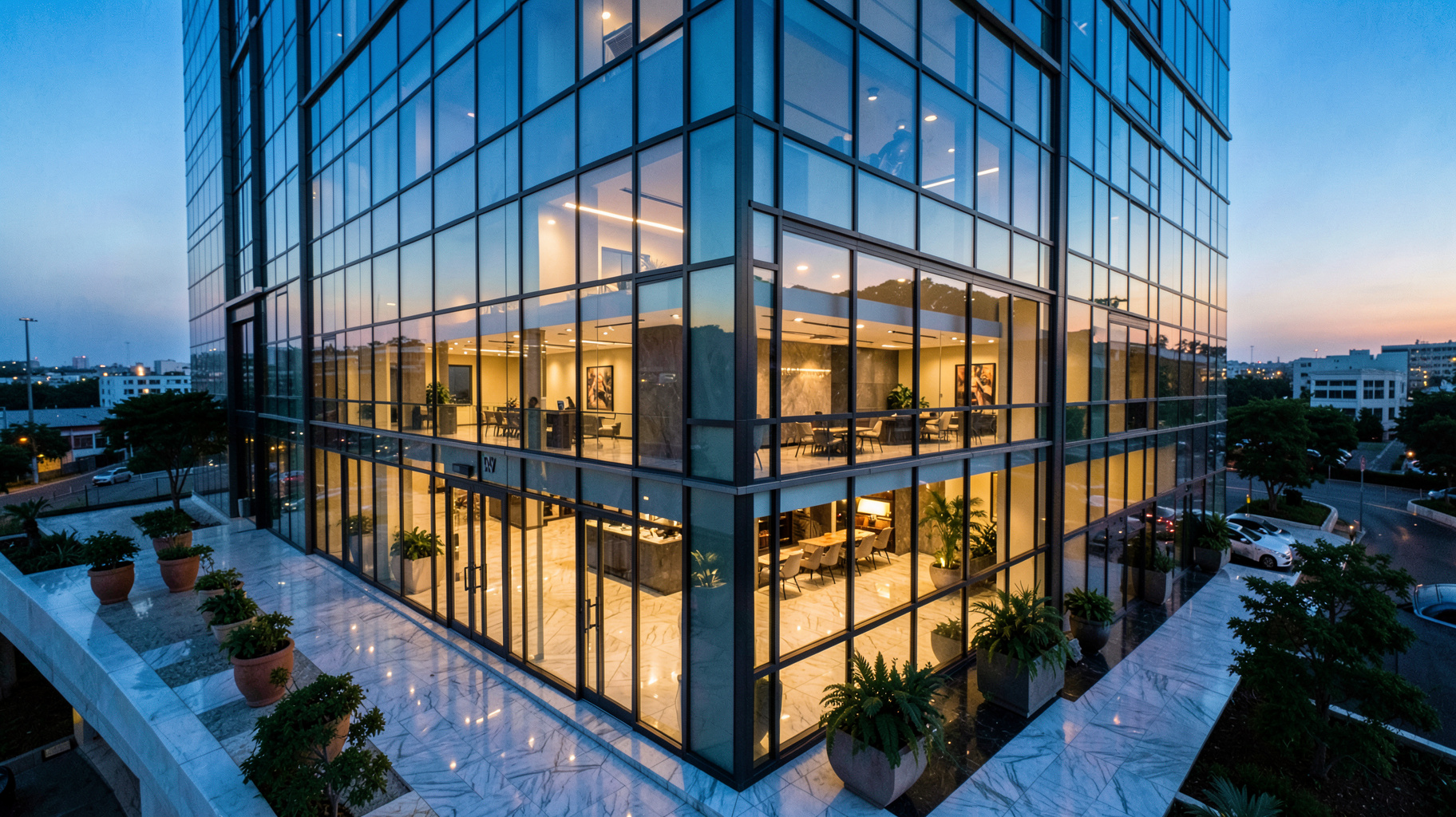


How Much Does Commercial Real Estate Photography Cost in 2026?
High-end commercial visual assets typically range from $300 to $2,500 per project, depending on the square footage and the complexity of the lighting. While a small retail space might only require a basic package starting at $300, a sprawling industrial warehouse or a luxury corporate office often commands premiums due to the specialized equipment and post-processing required. The price gap is largely driven by the shift toward hybrid workflows where traditional capture is augmented by artificial intelligence.
In my experience working with commercial brokers, the most expensive mistake isn't hiring a high-priced photographer; it's spending $500 on "budget" photos that fail to attract high-net-worth tenants. When a property sits vacant for an extra three months because the visuals looked amateur, the loss in rental income dwarfs the initial photography cost. For those looking to scale their visual output without linear cost increases, exploring AI Property Enhancement: Pricing and Value Guide reveals how to maintain premium quality while slashing per-image costs.

What Drives the Pricing of Commercial Real Estate Photography?
Understanding the cost of commercial visuals requires a dive into the technical requirements that separate a residential "walk-through" from a commercial asset capture. Commercial work is not just about taking a photo; it is about showcasing the utility, scale, and prestige of a business environment.
📚
Definition
Commercial Real Estate Photography is the specialized practice of capturing industrial, retail, and office spaces to highlight architectural efficiency, tenant capacity, and market value for B2B stakeholders.
The primary driver of cost is the scope of the asset. A 2,000-square-foot boutique store is a different beast than a 200,000-square-foot distribution center. Larger spaces require more "hero shots," more time for equipment setup, and significantly more complex post-processing to correct perspective distortion. According to a report by Deloitte on Digital Transformation in Real Estate, the integration of high-fidelity digital twins and AI-enhanced visuals has increased the expected value of commercial listings by roughly 15% in prime urban markets.
Another significant pricing factor is the lighting environment. Commercial spaces often suffer from "mixed lighting"—a combination of harsh fluorescent overheads and natural sunlight from floor-to-ceiling windows. Balancing these requires HDR (High Dynamic Range) bracketing or complex lighting rigs, which adds to the hourly rate of the professional. When you pay for a premium service, you aren't just paying for the shutter click; you are paying for the expertise required to make a gray concrete warehouse look like a modern logistics hub.
Now here's where it gets interesting: the rise of computational photography. Many modern firms are moving away from purely manual editing. By utilizing Types of AI Property Enhancement for Real Estate, photographers can now perform sky replacements or remove distracting construction debris in seconds rather than hours. This shift is slowly decoupling the "price per image" from the "hours of labor," though premium "art-house" commercial photographers still charge a high flat fee for their creative direction.
Why High-Quality Visuals Directly Impact Commercial ROI?
In the commercial sector, images are not just "decorations" for a listing; they are the primary filter through which institutional investors and corporate tenants make their first decision. If the visuals are poor, the property is dismissed before a human agent ever speaks.
The business impact of professional imagery is quantifiable. Research from the National Association of Realtors (NAR) consistently indicates that listings with high-quality, professional imagery receive significantly more engagement and lead conversions. In the commercial realm, this translates to a shorter Days on Market (DOM). When a property's "curb appeal" is digitally optimized, the perceived value increases, allowing brokers to maintain higher asking prices without the immediate pressure of concessions.
Furthermore, the psychological impact of "clean" spaces cannot be overstated. A vacant commercial shell can look depressing and cold. By using Digital Staging Services: Scaling Real Estate Listings in 2026, a broker can show a potential tenant exactly how a 10,000-square-foot open floor plan can be divided into a modern coworking space. This removes the "imagination gap," which is often the biggest hurdle in closing a commercial lease.
According to Gartner's 2024 Trends in PropTech, the adoption of AI-driven visual marketing is no longer an optional advantage but a baseline requirement for competitive listing platforms. Properties that fail to implement these standards are seeing a decline in organic reach across Multiple Listing Services (MLS) and corporate portals. The consequence of ignoring this is a "visibility death spiral," where low engagement leads to lower ranking, which further reduces the number of qualified leads.
How to Implement a Commercial Visual Strategy Step-by-Step
Developing a visual strategy for a commercial asset requires a more structured approach than residential work. You cannot simply "wing it" with a wide-angle lens and hope for the best.
- The Asset Audit: Identify the "hero" features. Is it the high ceilings of the warehouse? The natural light in the atrium? The proximity to the loading dock? Create a shot list that emphasizes these value-drivers.
- Staging and Decluttering: In commercial spaces, "clutter" often looks like old pallets, trash bins, or outdated signage. While physical cleaning is ideal, using Real Estate Image Processing Perto de Mim tools allows for the digital removal of these distractions without the cost of a physical cleaning crew.
- The Capture Phase: Ensure the photographer uses a tripod and a tilt-shift lens to avoid "converging verticals"—those annoying slanted walls that make a professional building look like it's falling over.
- AI Post-Processing: This is where the magic happens. Instead of spending days in a darkroom, use the RealVisionAI Blog - AI Real Estate Photography & Virtual Staging platform to instantly convert a gray, overcast sky into a bright, inviting blue or turn a midday shot into a cinematic "golden hour" twilight image.
- Distribution: Deploy the assets across high-conversion channels, ensuring that the most striking "hero shot" is the first thing a user sees on the listing.
💡
Key Takeaway
The goal of commercial photography is not "realism," but "aspirational reality." You want to show the property at its absolute best potential while remaining ethically honest.
By integrating the specialized tools at realvisionaire.com, firms can move from a slow, artisanal process to a scalable production line. In my experience, the most successful brokers are those who treat their visuals as a scalable product, not a one-time expense. They create a "visual library" for every asset, including various staging options to appeal to different types of tenants (e.g., a retail layout vs. an office layout for the same space).

Comparing Photography Options: Traditional vs. AI-Enhanced
Choosing the right path depends on your budget and the value of the asset. A $50 million office tower requires a different approach than a $1 million storefront.
| Feature | Traditional Photography | Generic/Cheap AI Tools | RealVisionAI Approach |
|---|---|---|---|
| Cost | Very High (per session) | Very Low (subscription) | Optimized (per project/credit) |
| Turnaround | 3–7 Days | Minutes | 12 Seconds |
| Quality | High (Artisanal) | Variable (Hallucinations) | Professional (Trained AI) |
| Scalability | Low (Manual labor) | High (Automated) | High (AI-Powered) |
| Consistency | High per project | Low across listings | High via Style Presets |
| Best For | Trophy Assets | Low-end rentals | Scaling Professional Portfolios |
That said, the "Traditional" approach is often too slow for the 2026 market. When a deal is moving fast, waiting a week for edited photos is an eternity. This is why the "Modern Approach" combines professional capture with AI speed. It allows you to get the raw data from a pro and use AI Property Enhancement for Beginners tools to refine and polish the images instantly.
Common Questions and Misconceptions About Pricing
Most guides get this wrong by suggesting that "cheaper is better" for high-volume listings. This is a fundamental misunderstanding of how B2B decision-making works.
Myth 1: "I can just use a high-end smartphone and save the $500."
Correction: This is a recipe for disaster in commercial real estate. Smartphones use extreme wide-angle lenses that create "barrel distortion," making straight walls look curved. Institutional tenants recognize this immediately as a sign of an amateur listing, which subconsciously lowers the perceived value of the property.
Myth 2: "AI-edited photos are 'fake' and unethical."
Correction: There is a clear line between enhancement and deception. Removing a trash can or brightening a dark room is no different from what photographers have done with Photoshop for 30 years. As long as you aren't adding rooms that don't exist, using Benefícios de AI Property Enhancement is simply a standard industry practice to ensure the property is presented in its best light.
Myth 3: "The cost is just for the photos."
Correction: You are paying for the license and the marketing psychological trigger. Professional commercial imagery is designed to trigger a "desire to occupy." When a space looks "market-ready," the friction to sign a lease is significantly reduced.
Frequently Asked Questions
How much does a typical commercial photo shoot cost per hour?
In 2026, professional commercial photographers typically charge between $150 and $400 per hour, though most prefer a project-based flat fee. The hourly rate usually covers the time on-site, but it rarely includes the extensive post-processing required for commercial HDR imaging. If you are hiring a specialist for a high-value asset, expect a "day rate" which can range from $1,000 to $3,000 depending on the photographer's portfolio. To lower these costs, many firms now capture raw images and use AI Property Enhancement: A Comprehensive Comparison tools to handle the editing in-house.
What is the difference between residential and commercial photography pricing?
Commercial pricing is significantly higher because the technical requirements are more demanding. Commercial spaces often have challenging lighting, massive footprints, and a need for "architectural precision" that residential photos don't always require. Furthermore, the ROI on a commercial listing is much higher; a single lease agreement can be worth hundreds of thousands of dollars in commissions and rent, justifying a higher investment in visuals. This is why professionals use Vantagens de Real Estate Image Processing to ensure the quality matches the asset's value.
Is virtual staging included in the price of commercial photography?
Rarely. Virtual staging is almost always an "add-on" service. Traditional physical staging for a commercial office can cost thousands of dollars in furniture rentals and labor. Digital staging is the modern alternative. Depending on the provider, virtual staging for a commercial space typically costs between $25 and $100 per image. By using a platform like RealVisionAI Blog - AI Real Estate Photography & Virtual Staging, you can apply multiple staging styles—minimalist, modern, or industrial—to the same room in seconds, allowing you to target different types of potential tenants.
How many photos are actually needed for a commercial listing?
For a standard commercial asset, a range of 15 to 30 high-quality images is usually sufficient. This should include 3-5 exterior "hero" shots, a comprehensive set of interior views, and a few "detail" shots of key amenities (e.g., high-end HVAC systems, loading docks, or luxury lobby finishes). Overloading a listing with 100 mediocre photos actually decreases conversion. The focus should be on quality and "visual flow." If you find your raw photos are lacking, applying Passo a Passo: AI Property Enhancement can help you turn a few good shots into a complete, polished gallery.
Can AI really replace a professional commercial photographer?
AI does not replace the capture (the physical act of being there), but it is rapidly replacing the editing and staging phases. You still need a human to ensure the angles are correct and the composition is professional. However, the days of waiting a week for a retoucher to fix the sky or remove a stray wire are over. The hybrid model—professional capture plus AI enhancement via Real Estate Visual Marketing: The 2026 Guide to AI-Driven Sales—is currently the gold standard for efficiency and cost-effectiveness.
Final Thoughts on Commercial Real Estate Photography
Investing in commercial real estate photography is not a cost—it is a strategic capital expenditure. In a market where B2B tenants and investors screen properties through a glass screen before ever stepping foot on the property, your visual assets are your strongest sales tool.
The goal is to move from a "cost-per-photo" mindset to a "conversion-per-listing" mindset. By combining the precision of professional capture with the speed and power of the RealVisionAI Blog - AI Real Estate Photography & Virtual Staging ecosystem, you can achieve a level of visual polish that was previously reserved for only the most expensive trophy assets.
Stop letting poor visuals act as a bottleneck to your closing rate. Whether you need to declutter a warehouse or virtually stage a corporate suite, the tools are now available to do it in seconds. Explore the full range of capabilities at realvisionaire.com and start optimizing your portfolio for 2026.
Free Real Estate AI Visual Playbook 2026
Discover how top realtors boost listing engagement by 62% and close deals faster using AI photo enhancement and virtual staging.