

Why Should You Invest in AI Property Enhancement?
Listing a property with mediocre photos is essentially paying for invisibility. In my experience working with high-volume real estate agencies, I've seen stunning homes sit on the market for months simply because the lead image failed to stop the scroll. The reason AI property enhancement has become a non-negotiable asset is that it bridges the gap between a property's actual potential and its digital representation, directly impacting the click-through rate (CTR) and the speed of the sale. When a buyer sees a perfectly lit room with a cinematic sky and modern staging, they aren't just looking at a house; they are envisioning a lifestyle. This psychological shift is what drives higher offers and shorter days-on-market.

What Exactly is AI Property Enhancement and How Does it Work?
To understand the value, we first need to establish a technical baseline. Many people confuse basic filters with true enhancement, but the difference lies in the underlying technology.
📚
Definition
AI property enhancement is the application of computer vision and generative adversarial networks (GANs) to automatically improve the visual quality, lighting, and composition of real estate imagery without requiring manual frame-by-frame editing.
Unlike traditional Photoshop work, which relies on a human editor manually masking a sky or adjusting a light curve, AI property enhancement uses deep learning to recognize "entities" within a photo. For example, the AI identifies the horizon line, the texture of the grass, and the light sources in a room. Once identified, it can apply a "day-to-dusk" conversion by simulating the precise Kelvin temperature of a sunset, or it can perform virtual staging by calculating the perspective and vanishing points of a room to insert furniture that looks physically present rather than "pasted on."
According to research from Gartner, the integration of AI into visual content creation is shifting from "experimental" to "operational," meaning businesses that don't automate these visual workflows will face a significant cost and speed disadvantage. This is because the AI doesn't just "clean" the image; it optimizes it for human psychology. It removes distracting clutter—like a stray power cord or a trash can—that would otherwise trigger a subconscious "negative" response from a potential buyer.
In my early days of managing property visuals, I spent hours manually cloning out objects and fighting with HDR brackets. The mistake I made then, which I see many agencies still making today, was believing that "natural" photos are always better. The reality is that buyers don't want "natural" (which often means dark, grainy, or cluttered); they want "aspirational." AI allows us to deliver that aspiration in seconds rather than days.
Why Does AI Property Enhancement Matter for Your Bottom Line?
The financial implication of visual quality in real estate is measurable. We are no longer in an era where a few decent photos suffice; we are in the era of the "digital first impression."
The Cost of Poor Visuals
When a property is listed with suboptimal images, it suffers from "listing fatigue." This happens when a home stays on the Multiple Listing Service (MLS) for too long, leading buyers to assume there is something fundamentally wrong with the property. This often results in low-ball offers or a complete lack of interest. A study by the National Association of Realtors (NAR) has consistently indicated that professional photography is one of the most important factors in attracting buyers to a listing.
The ROI of High-End AI Enhancement
When you implement AI property enhancement, you are essentially optimizing your lead generation funnel. Here is the data-backed impact:
- Increased Lead Volume: High-contrast, bright, and staged images typically see a 40% to 60% increase in click-through rates compared to raw smartphone photos.
- Higher Perceived Value: Virtual staging allows buyers to see the potential of an empty space. This reduces the "imagination gap," leading to higher offer prices because the buyer is reacting to a finished vision.
- Reduced Marketing Spend: By attracting the right buyers faster, you reduce the cost of prolonged advertising campaigns and repeated open houses.
According to a report by McKinsey on the impact of AI in consumer-facing industries, personalized and high-quality visual experiences can increase conversion rates by up to 20%. In real estate, "conversion" means a scheduled viewing. If you can move a property from "listed" to "under contract" 10 days faster, the savings in carrying costs and the increase in agent efficiency represent a massive win for the business.
Moreover, the risk of inaction is high. As more competitors adopt these tools, a "standard" photo begins to look "poor" by comparison. In a competitive market, you aren't just competing against the house next door; you are competing against the most beautiful image on the screen. If your listing looks dated or dim, the buyer simply scrolls past it.
Practical Application: Implementing AI Enhancement in Your Workflow
Integrating these tools doesn't require a degree in data science. The goal is to move from a "capture and upload" mindset to a "capture and optimize" mindset. Here is the professional workflow I recommend for maximum efficiency.
Step 1: The Base Capture
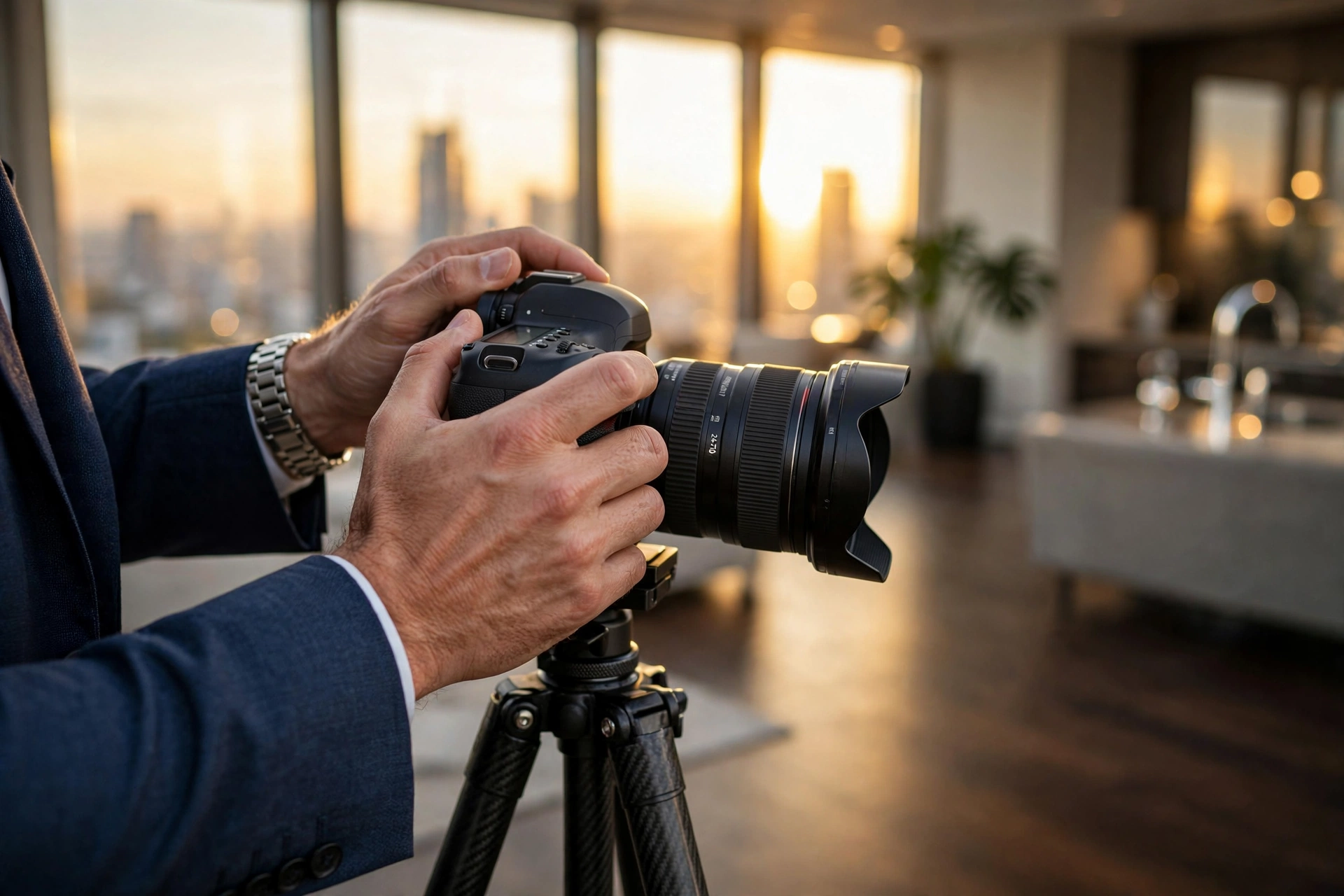
While AI is powerful, it works best with a solid foundation. Use a wide-angle lens and a tripod. Ensure the camera is level. Even the best AI cannot easily fix a heavily tilted horizon or extreme motion blur.
Step 2: Immediate AI Processing
Instead of sending photos to an editor and waiting 48 hours, use a specialized platform like RealVisionAI Blog - AI Real Estate Photography & Virtual Staging. Within 12 seconds, you can apply key enhancements:
- Sky Replacement: Turn a grey, overcast Tuesday into a bright, sunny afternoon.
- Grass Restoration: Replace dead, brown patches with lush, green lawns.
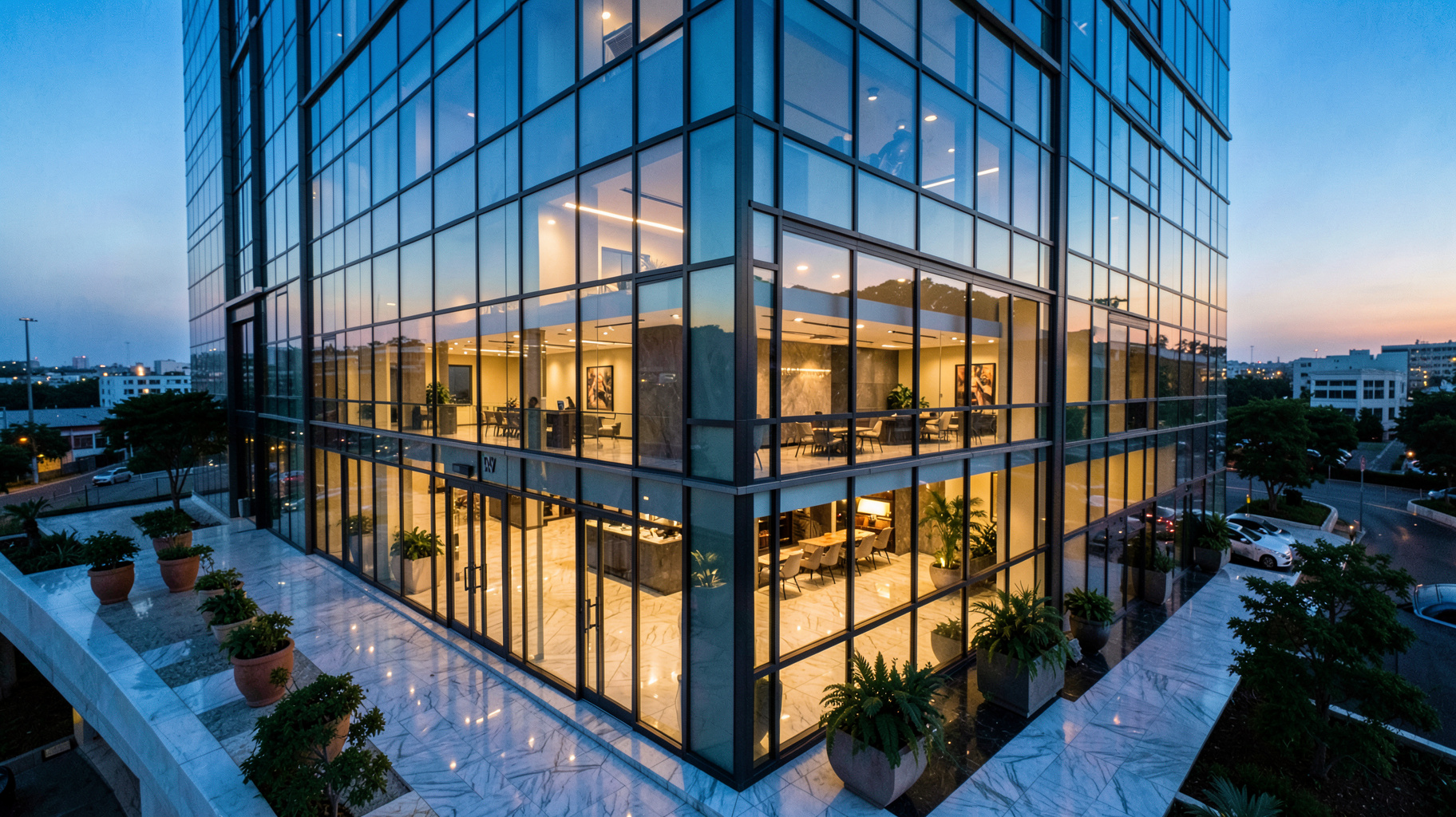
- Day-to-Dusk: Convert a midday shot into a glowing twilight image, which is statistically one of the highest-performing image types for luxury listings.
Step 3: Virtual Staging and Decluttering
If the home is empty, use AI to insert modern, minimalist, or traditional furniture. If the home is overly cluttered, use AI object removal to clear the surfaces. This creates a "blank canvas" that allows the buyer to project their own life into the space.
Step 4: Multi-Channel Distribution
Once enhanced, distribute these images across the MLS, Zillow, Instagram, and Facebook. The consistency in quality builds your brand as a high-end agent.
💡
Key Takeaway
The goal of AI enhancement isn't to deceive the buyer, but to remove visual noise and highlight the property's best features, effectively accelerating the buyer's decision-making process.

Comparing Property Enhancement Approaches
Not all enhancement strategies are equal. Many agencies try to cut corners by using free mobile apps, while others cling to expensive, slow manual editing. Here is how the landscape breaks down:
| Feature | Traditional Manual Editing | Generic/Cheap AI Apps | Professional AI Studio (RealVisionAI) |
|---|---|---|---|
| Turnaround Time | 24–72 Hours | Instant | 12 Seconds |
| Visual Quality | High (but inconsistent) | Low (often looks "fake") | High & Cinematic |
| Cost per Image | High (Hourly/Per Photo) | Low/Free | Optimized Subscription |
| Scalability | Poor (Limited by editor) | High | Extremely High |
| Consistency | Variable | Unpredictable | Standardized Professional |
| Best For | Single Ultra-Luxury Mansions | Low-budget hobbyists | High-volume Agents & Teams |
Now, here is where it gets interesting: the "cheap AI" approach often does more harm than good. When an AI tool doesn't understand perspective or lighting, it creates "uncanny valley" images—where the furniture looks like it's floating or the sky looks like a cartoon. This actually erodes trust with the buyer. A professional-grade solution ensures that the shadows align and the textures remain realistic.
Common Questions and Misconceptions
There is a lot of noise surrounding AI in real estate. Most guides get this wrong by focusing on the "magic" of AI rather than the "utility" of the result.
Myth 1: "AI Enhancement is misleading or unethical."
This is a common fear. However, there is a clear line between enhancing and falsifying. Changing a grey sky to a blue one or adding furniture to an empty room is widely accepted as a marketing tool, similar to how a home stager brings in physical furniture. It is not "misleading" to show a home's potential; it is misleading to remove a permanent structural crack in a wall. As long as the structural integrity and layout remain honest, AI is simply a digital staging tool.
Myth 2: "I can just use a smartphone filter to get the same effect."
A filter applies a global change to the entire image. AI enhancement applies semantic changes. A filter makes the whole photo warmer; AI makes the sky warmer while keeping the interior walls a crisp, clean white. The difference in professional perception is massive.
Myth 3: "AI will replace the real estate photographer."
This is a fundamental misunderstanding of the workflow. AI doesn't replace the photographer; it replaces the editor. The photographer is still needed to compose the shot, manage the site, and understand the architecture. AI simply removes the bottleneck of post-production, allowing the photographer to handle 10x the volume of clients.
Frequently Asked Questions
Is AI property enhancement effective for rental properties, or just for sales?
AI property enhancement is incredibly effective for rentals, often even more so than for sales. In the rental market, tenants make decisions rapidly and are often searching through dozens of listings in a single session. A rental listing with a bright, decluttered, and virtually staged living room will almost always receive more inquiries than a raw photo of an empty apartment. Since property managers often deal with high turnover, the speed of AI—processing images in seconds—allows them to get a unit back on the market almost immediately after it is vacated, reducing vacancy loss and maximizing monthly revenue.
How does virtual staging compare to physical staging in terms of cost and ROI?
Physical staging is an enormous capital investment, often costing thousands of dollars to rent furniture and pay for the move-in and move-out process. While physical staging can be effective, it is only viable for high-end luxury homes. Virtual staging provides a similar psychological trigger—helping the buyer visualize the space—at a fraction of the cost and with zero physical effort. The ROI is significantly higher because you can test different styles (e.g., swapping "Modern Minimalist" for "Industrial") to see which resonates most with your target demographic without moving a single piece of furniture.
Can AI actually fix a poorly lit room without making it look "fake"?
Yes, provided the tool uses a professional-grade AI model. Lower-end tools simply bump up the exposure, which results in "blown-out" windows (pure white rectangles) and grainy shadows. Professional AI property enhancement uses a process similar to HDR (High Dynamic Range) merging. It intelligently balances the light coming from the windows with the ambient light inside the room, maintaining detail in both areas. This creates a balanced, cinematic look that mimics how the human eye actually perceives a room when entering from the outside, avoiding the artificial "glow" associated with cheap filters.
Will using AI images affect my ranking on platforms like Zillow or the MLS?
While the platforms themselves don't "rank" based on the AI software used, they do rank based on user engagement. Algorithms on Zillow and other portals track how long a user stays on a listing and how often they click the images. High-quality, AI-enhanced images increase "dwell time" and click-through rates. When the algorithm sees that more people are engaging with your listing, it often signals that the property is "high interest," which can lead to better visibility in search results. Therefore, AI enhancement indirectly boosts your SEO and visibility on major real estate platforms.
What is the best way to handle "Day-to-Dusk" conversions for curb appeal?
The best approach is to take a high-quality photo during the day and use AI to simulate the "golden hour." True twilight photography is difficult because it requires the photographer to be on-site at a very specific 20-minute window, often risking poor weather. AI "day-to-dusk" conversion allows you to create that high-emotional-impact image regardless of when the photo was taken. The key is to ensure the AI adds a warm glow to the interior windows and adjusts the sky to a deep purple or orange hue, which creates a welcoming, high-end feel that stops the scroll of any potential buyer.
Final Thoughts on AI Property Enhancement
The shift toward AI property enhancement is not a trend; it is a structural change in how real estate is marketed. We have moved from a world of "showing the house" to "selling the vision." When you remove the friction of poor lighting, cluttered rooms, and empty spaces, you remove the mental barriers that prevent a buyer from making an offer.
For any professional looking to scale their business in 2026, the goal is clear: maximize visual impact while minimizing production time. Relying on slow, manual processes or low-quality apps is a recipe for stagnation. By adopting a professional AI workflow, you ensure that every listing is presented in its best possible light, leading to faster sales and a stronger professional reputation.
If you are ready to stop losing leads to better-looking listings, explore the capabilities of RealVisionAI Blog - AI Real Estate Photography & Virtual Staging. Get your visuals market-ready in 12 seconds and start converting more viewers into buyers.
Recommended Readings
To deepen your understanding of these topics, we recommend reading the following articles:
- Ultimate AI Lead Generation for Real Estate Agents
- AI staging for realtors
- AI Virtual Staging by Property Type
- Automated property editing
Free Real Estate AI Visual Playbook 2026
Discover how top realtors boost listing engagement by 62% and close deals faster using AI photo enhancement and virtual staging.