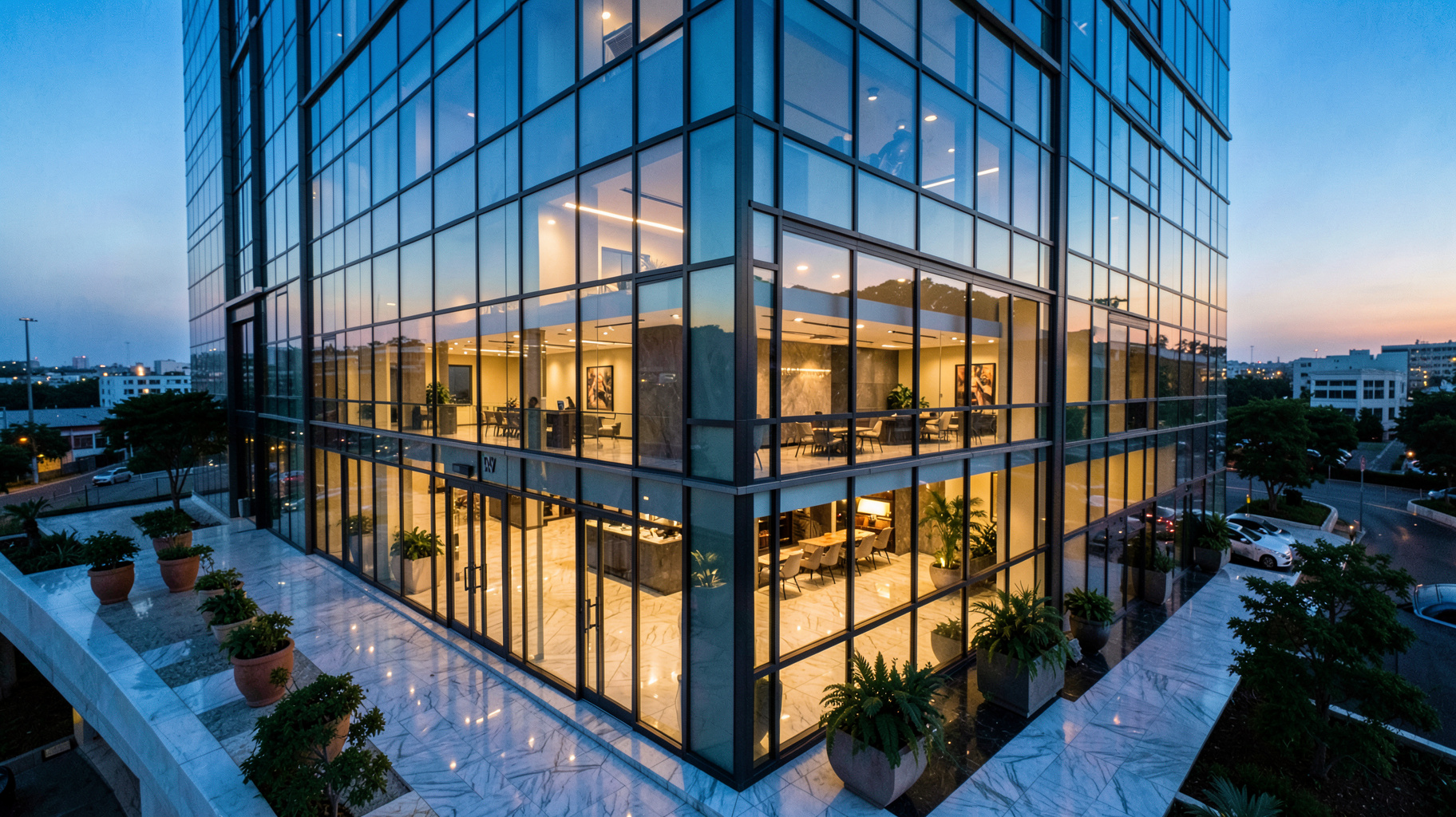


How Much Does AI Property Enhancement Actually Cost in 2026?
The cost of professional visual assets used to be a primary bottleneck for real estate agents, often ranging from $200 to $500 per property for a full suite of photos and virtual staging. Today, the shift toward AI property enhancement has collapsed these margins, bringing costs down to as little as $1 to $5 per image or monthly subscription models starting around $49. In my experience working with high-volume property managers, the real "cost" isn't the price per photo, but the lost opportunity of a listing sitting vacant for three extra weeks because the visuals didn't trigger an emotional response from buyers.

What Exactly Is AI Property Enhancement and How Is It Priced?
To understand the pricing, we first have to define what we are paying for. Most agents confuse simple filters with actual generative enhancement.
📚
Definition
AI property enhancement is the application of computer vision and generative adversarial networks (GANs) to modify real estate imagery. This includes virtual staging, day-to-dusk conversion, sky replacement, and object removal, all processed via artificial intelligence to maintain architectural integrity while maximizing aesthetic appeal.
Pricing for these services typically falls into three tiers: pay-per-image, subscription-based, and agency-managed. Pay-per-image is the traditional model, where a virtual staging photo might cost $15 to $40. However, the 2026 market has seen a massive pivot toward subscription models. According to a recent report by Gartner on AI adoption in professional services, the democratization of generative AI has shifted the value proposition from "labor per image" to "access to a toolset."
When you pay for AI property enhancement, you are essentially paying for the compute power and the proprietary training of the AI model. For instance, a "Day-to-Dusk" conversion requires the AI to understand the light physics of a specific room and simulate the Kelvin temperature of a sunset. This is far more complex than a brightness slider. I've found that the most cost-effective approach for agents handling more than five listings a month is a flat-fee subscription, which reduces the per-image cost to nearly zero over time.
Why Does Investing in AI Visuals Directly Impact Your Bottom Line?
The investment in AI property enhancement is not an aesthetic luxury; it is a financial strategy. The correlation between high-quality imagery and "Days on Market" (DOM) is documented and aggressive. Research from the National Association of Realtors has consistently shown that listings with professional photography sell faster and often for a higher premium.
When we analyze the data, the "cost" of not using AI enhancement becomes clear. A property that sits on the market for 30 days longer than average incurs holding costs—taxes, insurance, and maintenance—that far exceed the $100 spent on AI visuals. Furthermore, according to McKinsey's research on AI in marketing, personalized and high-quality visual content can increase lead conversion rates by up to 20%. In real estate, a 20% increase in lead volume on a $500,000 home can be the difference between a bidding war and a price reduction.
The business impact is twofold: speed and perception. First, AI allows for "Market-Ready" visuals in seconds. If a photographer uploads a raw file at 10 AM, AI property enhancement can have the listing live by 10:05 AM. Second, virtual staging allows you to target specific buyer personas without spending thousands on physical furniture rentals. If the neighborhood attracts young professionals, you use a minimalist AI stage; if it's a family suburb, you switch to a traditional style. This agility is where the real ROI lives.
How to Implement AI Property Enhancement in Your Workflow
Implementing these tools doesn't require a degree in data science, but it does require a strategic pipeline. The mistake I made early on—and that I see constantly—is treating AI as a "fix" for bad photography. AI cannot fix a blurry photo or a room with zero light; it enhances a solid foundation.
Here is the professional workflow for 2026:
- The Capture Phase: Use a wide-angle lens and a tripod. Ensure the room is decluttered. While AI can remove a stray trash can, the initial composition determines the final quality.
- The Enhancement Phase: Upload raw images to a platform like RealVisionAI Blog - AI Real Estate Photography & Virtual Staging. Here, you apply "global" fixes first: sky replacement for exteriors and color correction for interiors.
- The Staging Phase: Use virtual staging to fill empty rooms. I recommend starting with a "Neutral Modern" style to appeal to the widest possible audience.
- The Conversion Phase: Generate a "Twilight" version of the hero shot. Evening shots traditionally have higher click-through rates on MLS platforms.
- The Distribution Phase: Upload the enhanced set to the Multiple Listing Service (MLS) and social media simultaneously.
💡
Key Takeaway
The goal of AI enhancement is to remove "visual friction." Anything that distracts a buyer—an ugly grey sky, an empty room, or a dated couch—is friction. AI removes that friction in 12 seconds.
By using RealVisionAI Blog - AI Real Estate Photography & Virtual Staging, the technical barrier is removed. Instead of spending hours in Photoshop, you are managing a brand. The shift from "editor" to "curator" allows agents to spend more time closing deals and less time worrying about pixels.

Comparing AI Enhancement Options: Traditional vs. AI
Not all "AI" tools are created equal. Some are simple filters, while others are professional-grade engines. To decide where to allocate your budget, you need to look at the friction and output quality.
| Feature | Traditional Manual Editing | Generic/Cheap AI Tools | Professional AI (RealVisionAI) |
|---|---|---|---|
| Turnaround Time | 24–72 Hours | Instant | 12 Seconds |
| Cost per Image | High ($15–$50) | Low/Free | Moderate (Subscription) |
| Architectural Accuracy | High (Human Eye) | Low (Hallucinations) | High (Trained Models) |
| Scalability | Very Low | High | Very High |
| Best For | Ultra-Luxury Estates | Casual Social Posts | Professional Listings |
Most guides get this wrong by telling you to go with the cheapest option. However, in real estate, "cheap" often means "hallucinations." I've seen generic AI tools add three windows to a room or create a floating sofa. This isn't just an aesthetic failure; it's a liability. If a buyer arrives at a house and it looks nothing like the "enhanced" photo, you've lost their trust before they even step inside. Professional AI property enhancement uses computer vision to respect the actual walls and dimensions of the space.
Common Questions and Misconceptions About AI Costs
There are several myths circulating in the industry that lead agents to either overspend or avoid the technology entirely.
Myth 1: "AI staging is a scam because it's not 'real' furniture."
This is a misunderstanding of the buyer's journey. Virtual staging is not about deceiving the buyer; it is about helping them visualize the potential of a space. It is a tool for imagination. Most buyers struggle to imagine how a king-sized bed fits in an empty room. By providing that visual, you are providing a service, not a deception.
Myth 2: "I can just use a free AI app to do this."
Free apps usually lack the "architectural awareness" required for real estate. They might make the colors pop, but they cannot perform a professional "Day-to-Dusk" conversion that looks natural. When you use a tool that isn't specifically trained on property data, you risk creating images that look "uncanny" or fake, which actually decreases the perceived value of the home.
Myth 3: "AI enhancement will replace professional photographers."
This is the most common fear. In reality, AI enhances the photographer. A photographer who uses AI property enhancement can offer a "Premium Package" (including twilight shots and staging) without increasing their own labor hours. It turns a service provider into a scalable business.
Frequently Asked Questions
How much should I budget monthly for AI property enhancement?
For an average agent handling 2–5 listings per month, a budget of $50 to $150 is typically sufficient. This usually covers a subscription to a professional AI suite that allows for unlimited or high-volume enhancements. If you are a high-volume brokerage, you should look for enterprise tiers that allow multiple seats. The goal is to move away from "per-image" costs and toward a predictable monthly operational expense. This allows you to experiment with different staging styles on every property without worrying about the bill.
Is virtual staging more expensive than physical staging?
Yes, physically staging a home is exponentially more expensive. Physical staging involves renting furniture, paying for delivery, installation, and monthly rental fees, often costing between $2,000 and $10,000 depending on the home size. AI property enhancement reduces this cost to a fraction of a percent. While physical staging is still preferred for ultra-luxury homes ($5M+), AI staging is the gold standard for 95% of the residential market because it provides 90% of the emotional impact for 1% of the cost.
Will using AI enhancement affect my MLS compliance?
Most Multiple Listing Services (MLS) allow AI enhancement and virtual staging, provided they are disclosed. The industry standard is to include a small disclaimer in the photo description or as a watermark stating "Virtually Staged." As long as you aren't removing permanent structural defects (like a giant crack in the wall), AI property enhancement is viewed as a legitimate marketing tool. Always check your local board's rules, but generally, the focus is on transparency rather than the tool used.
How long does it take to see a return on investment (ROI)?
The ROI is usually realized the moment the listing goes live. Because enhanced photos increase the click-through rate (CTR) from search results, you get more eyes on the property faster. In my experience, listings with AI-enhanced "hero" images (the first photo) receive significantly more inquiries in the first 48 hours. When you reduce the time a property sits on the market, you save on carrying costs and increase the likelihood of a higher final sale price due to increased competition.
Can AI enhancement fix a poorly lit room?
AI can significantly improve exposure, balance shadows, and adjust white balance, but it cannot create detail where there is none. If a photo is "blown out" (pure white) or "crushed" (pure black), the AI is essentially guessing what was there. For the best results with AI property enhancement, always ensure your raw photos have a basic level of clarity. The AI is a "multiplier" of quality, not a replacement for a lens.
Final Thoughts on AI Property Enhancement
The financial landscape of real estate marketing has changed. The question is no longer "Can I afford AI property enhancement?" but "Can I afford to list a property without it?" When the cost of enhancing an image has dropped from $40 to a few cents per photo, the competitive advantage shifts to those who can produce high-volume, high-quality visuals instantly.
By integrating these tools, you stop selling a "house" and start selling a "lifestyle." Whether it is a cinematic twilight shot or a perfectly staged minimalist bedroom, these visuals trigger the emotional response that leads to a signed contract. If you are ready to stop waiting 72 hours for edits and start launching listings in seconds, explore the capabilities of RealVisionAI Blog - AI Real Estate Photography & Virtual Staging.
Recommended Readings
To deepen your understanding of these topics, we recommend reading the following articles:
- AI in Real Estate
- Ultimate AI Lead Generation for Real Estate Agents
- AI staging for realtors
- AI Virtual Staging by Property Type
Free Real Estate AI Visual Playbook 2026
Discover how top realtors boost listing engagement by 62% and close deals faster using AI photo enhancement and virtual staging.