

Which AI Property Enhancement Tool Should You Choose for 2026?
Listing a property with mediocre photos is essentially leaving money on the table. In my experience working with high-volume real estate agencies, the difference between a property that sits on the market for 60 days and one that triggers a bidding war in 48 hours often comes down to the visual narrative. Choosing the right approach to AI property enhancement depends entirely on whether you prioritize absolute photorealism, rapid turnaround, or cost-efficiency. For most professionals, the optimal choice is a specialized AI studio that balances cinematic quality with a 12-second delivery time, rather than relying on generic image editors or expensive manual retouching.

What Exactly is AI Property Enhancement?
When we discuss the technical side of visual optimization, we aren't just talking about applying a filter to a photo. We are talking about the application of computer vision and generative adversarial networks (GANs) to modify the physical attributes of a space within a digital image.
📚
Definition
AI property enhancement is the use of artificial intelligence and machine learning algorithms to automatically improve the visual quality of real estate imagery, including sky replacement, virtual staging, object removal, and lighting correction.
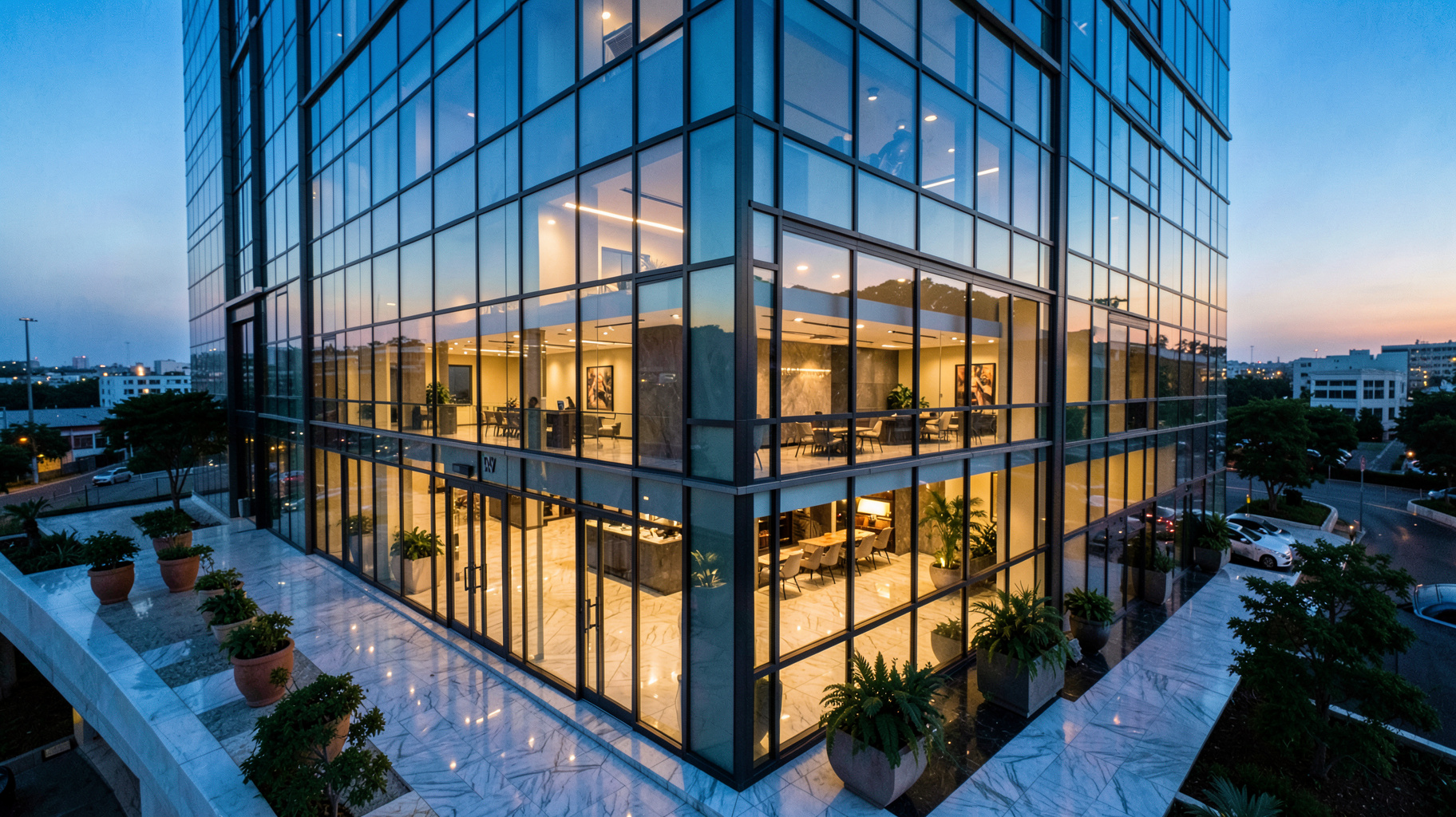
The process involves a sophisticated pipeline of image analysis. For instance, when performing a "Day-to-Dusk" conversion, the AI doesn't just darken the image; it analyzes the light sources, simulates the golden hour glow, and adjusts the interior warmth to create a believable twilight atmosphere. According to research from Gartner, the integration of generative AI into creative workflows has reduced production time by up to 70% for visual content creators, allowing real estate professionals to pivot from "editing" to "marketing" almost instantly.
The sophistication of these tools has evolved rapidly. Early iterations of AI editing often suffered from "hallucinations"—strange artifacts where a chair leg might merge with the floor. However, the 2026 standard focuses on structural integrity. Modern systems now use depth-mapping to ensure that virtually staged furniture respects the actual geometry of the room, preventing the "floating furniture" effect that plagued early adopters.
Why Does Visual Enhancement Directly Impact Your ROI?
The psychology of a home search begins with a thumbnail. In a digital-first market, your imagery is your first showing. If the lighting is flat or the room is empty, the buyer's brain subconsciously marks the property as "less desirable" before they even read the square footage.
The business impact is measurable. Data from the National Association of Realtors consistently indicates that listings with high-quality, professional photography sell faster and for higher prices. When you integrate AI property enhancement, you are essentially optimizing your conversion rate from "click" to "showing request."
For property managers, the stakes are even higher. A vacant apartment is a liability. According to a report by McKinsey on the digitalization of real estate, properties that utilize virtual staging to show "lifestyle potential" see a significant increase in lead generation compared to those showing empty rooms. The reason is simple: buyers struggle to visualize space. They cannot imagine a king-sized bed in a 12x12 room, but they can immediately react to a beautifully staged AI rendering of one.
Moreover, the cost of failure is high. Traditional physical staging can cost thousands of dollars per month in rental fees and labor. By switching to an AI-driven model, firms reduce their overhead while maintaining—or even increasing—the perceived value of the asset. If a listing stays on the market too long, it becomes "stale," often forcing the seller to accept lower offers just to close the deal. Professional enhancement prevents this decay by creating an immediate emotional connection.
How to Implement AI Enhancements Step-by-Step
Integrating these tools into your workflow should not be a chore. The mistake I made early on—and that I see constantly—is trying to over-edit. Many agents apply too many filters, resulting in images that look like CGI renders rather than real homes. This creates a trust gap when the buyer finally walks through the door.
To avoid this, follow this professional framework:
- The Base Capture: Start with clean, wide-angle shots. Even with AI, a blurry or extremely dark photo is harder to rescue. Use a tripod and ensure all lights are on.
- Sky and Grass Restoration: If the weather was gray during the shoot, use AI sky replacement. A bright, blue sky evokes positive emotions and makes the exterior look well-maintained.
- Virtual Staging and Decluttering: Remove old carpets or outdated furniture using AI object removal. Then, add modern, minimalist furniture that fits the target demographic of the neighborhood.
- Twilight Conversion: Convert a midday exterior shot to a "golden hour" image. This is a powerful psychological trigger that makes a home feel welcoming and prestigious.
- Quality Control: Review the edges. Ensure the AI hasn't blurred the corners of the walls or warped the window frames.
For those who want to bypass the learning curve, RealVisionAI Blog - AI Real Estate Photography & Virtual Staging provides a streamlined ecosystem where these steps happen in seconds. Instead of manually masking areas in a complex editor, you upload the photo and the AI handles the heavy lifting, delivering market-ready visuals in 12 seconds.
💡
Key Takeaway
The goal of AI enhancement is not to deceive the buyer, but to present the property in its best possible light. Accuracy in scale and lighting is more important than "perfection."

Comparing Your Options: Manual vs. Generic AI vs. Specialized Studios
When deciding which path to take, you generally have three options. Most people start with the cheapest and realize too late that it's the most expensive in terms of lost time and brand reputation.
| Feature | Traditional Manual Editing | Generic AI Tools (App-based) | Specialized AI Studios (RealVisionAI) |
|---|---|---|---|
| Turnaround Time | 24–72 Hours | Instant | 12 Seconds |
| Visual Quality | High (but inconsistent) | Low to Medium (Artifacts) | Professional/Cinematic |
| Cost per Image | High (Hourly/Per photo) | Low (Subscription) | Competitive/Scalable |
| Ease of Use | Requires Skill | Simple | One-Click Professional |
| Best For | Ultra-Luxury Estates | Low-budget rentals | High-volume professionals |
Here is the reality: Generic AI tools often treat a real estate photo like a social media post. They saturate the colors and sharpen the edges until the image looks "deep-fried." This is a disaster for professional branding. On the other hand, manual retouching is too slow for the 2026 market. If a lead comes in today, you cannot wait three days for a retoucher in another time zone to send back your photos.
The specialized approach, such as that offered by RealVisionAI Blog - AI Real Estate Photography & Virtual Staging, uses models trained specifically on architectural data. This means the AI knows the difference between a kitchen countertop and a bathroom tile, ensuring that reflections and textures remain realistic.
Common Questions and Misconceptions
There are several myths surrounding AI property enhancement that often hold agents back from adopting the technology.
Myth 1: "AI staging is deceptive and unethical."
Most guides get this wrong by claiming you must disclose every single AI tweak. In reality, AI enhancement is the modern equivalent of "cleaning the house" before an open house. As long as you aren't adding a bedroom that doesn't exist or removing a giant crack in the foundation, you are simply providing a visual representation of the home's potential.
Myth 2: "You need to be a tech expert to use these tools."
The barrier to entry has vanished. In my experience, the most successful agents are those who treat AI as a utility, not a hobby. If the tool requires more than three clicks to get a professional result, it's the wrong tool.
Myth 3: "AI looks fake and buyers can tell."
This was true in 2022. In 2026, the integration of computer vision and high-resolution textures means that the line between a real photo and an AI-enhanced one is nearly invisible to the naked eye. The key is using a tool trained on real estate data, not general art.
Myth 4: "It's too expensive for mid-range properties."
Actually, it's the opposite. AI is the great equalizer. It allows a mid-range listing to look like a luxury property, which allows the agent to justify a higher asking price. The ROI is immediate.
Frequently Asked Questions
Which AI property enhancement is best for virtual staging?
The best tool is one that offers a variety of design styles—such as modern, traditional, and minimalist—and ensures that the furniture is scaled correctly to the room. You should look for a solution that handles perspective and shadowing automatically. RealVisionAI Blog - AI Real Estate Photography & Virtual Staging is specifically designed for this, providing high-fidelity staging that doesn't look "pasted on," ensuring that the property looks inviting and realistic to potential buyers.
How long does it take to see results from AI-enhanced photos?
The results are typically immediate in terms of engagement. When you upload AI property enhancement visuals to a Multiple Listing Service (MLS) or social media, you will see a spike in "saves" and "clicks" within the first 24 hours. Because the images are more visually stimulating, they stop the scroll. This leads to a higher volume of inquiry emails and phone calls, shortening the average time-to-market for the property significantly.
Does AI enhancement affect the legal aspect of real estate listings?
As long as the enhancements are used for "aesthetic improvement" and not "structural deception," they are generally accepted. For example, changing a grey sky to blue or adding furniture to an empty room is standard industry practice. However, using AI to remove a permanent physical defect (like a large water stain on a ceiling) could be seen as misleading. Always ensure your enhancements reflect the actual state of the property's structure.
Can AI be used for outdoor property enhancement?
Absolutely. Outdoor enhancement is where AI truly shines. Common applications include "green grass" restoration for dormant winter lawns and "sky replacement" for overcast days. Additionally, "Day-to-Dusk" conversions are incredibly powerful for exterior shots, as they create an emotional sense of "home" and luxury that is nearly impossible to capture during the day without expensive lighting equipment.
Is a subscription-based AI tool better than paying per photo?
For most professional photographers and agents, a scalable model is superior. Paying per photo can become prohibitively expensive as your portfolio grows. A specialized platform like RealVisionAI Blog - AI Real Estate Photography & Virtual Staging allows you to process large volumes of images quickly without worrying about the cost of every single click, making it the most viable option for those managing multiple listings simultaneously.
Final Thoughts on AI Property Enhancement
Choosing the right tool for your business comes down to the balance of speed, quality, and authenticity. In a market where seconds count, the ability to turn a drab, empty room into a cinematic masterpiece in 12 seconds is a massive competitive advantage. Whether you are focusing on virtual staging to fill empty spaces or using twilight conversions to stop the scroll on the MLS, the goal remains the same: maximize the perceived value of the property.
If you are tired of waiting days for editors or struggling with generic apps that make your homes look like cartoons, it's time to move to a professional standard. RealVisionAI Blog - AI Real Estate Photography & Virtual Staging is built specifically for the demands of the modern real estate professional.
Stop letting poor visuals hold back your listings. Visit realvisionaire.com and experience the power of instant, high-fidelity AI property enhancement today.
Recommended Readings
To deepen your understanding of these topics, we recommend reading the following articles:
- AI in Real Estate
- Ultimate AI Lead Generation for Real Estate Agents
- AI staging for realtors
- AI Virtual Staging by Property Type
Free Real Estate AI Visual Playbook 2026
Discover how top realtors boost listing engagement by 62% and close deals faster using AI photo enhancement and virtual staging.