

Which AI Property Enhancement Option is Right for Your Listing?
Listing a property with subpar visuals is the fastest way to ensure it sits on the market for months. In my experience working with high-volume real estate agencies, the difference between a property that sells in seven days and one that lingers for sixty often comes down to a single psychological trigger: the "aspirational gap." When buyers see a photo, they aren't just looking at a room; they are subconsciously calculating how much effort it would take to make that space look like a luxury home. This is where AI property enhancement bridges the gap, allowing agents to manipulate lighting, furniture, and surroundings to create an immediate emotional connection. Depending on the state of the property, you generally have three paths: corrective enhancement (fixing bad photos), additive enhancement (virtual staging), or atmospheric enhancement (twilight and sky conversion).

What Exactly is AI Property Enhancement and How Does it Work?
At its core, this technology utilizes advanced computer vision and generative adversarial networks (GANs) to analyze the geometry of a room and apply photorealistic modifications. Unlike traditional Photoshop, which requires a human to manually mask objects and adjust levels, AI understands the "semantics" of an image. It knows that a window is a source of light and that a floor is a reflective surface.
📚
Definition
AI Property Enhancement is the application of artificial intelligence and machine learning algorithms to automatically improve the visual quality, composition, and perceived value of real estate imagery without requiring manual manual pixel-by-pixel editing.
When we implemented these workflows at RealVisionAI Blog - AI Real Estate Photography & Virtual Staging, we discovered that the most successful enhancements are those that maintain architectural integrity while optimizing emotional appeal. For instance, "AI Sky Replacement" doesn't just swap a grey sky for a blue one; it recalculates the light casting on the house's facade to ensure the shadows match the new light source. This level of detail is what separates a professional result from a "fake" looking photo that can actually deter buyers.
According to research from Gartner, the integration of AI into creative workflows is shifting from "experimental" to "operational," with a significant portion of enterprises using AI to reduce production costs while increasing output quality. In the real estate sector, this means moving away from expensive physical staging—which can cost thousands of dollars per room—toward scalable, digital solutions.
Why Does the Right Enhancement Choice Matter for Your ROI?
Choosing the wrong type of enhancement can be just as damaging as having no enhancement at all. If you use aggressive virtual staging in a property that is already cluttered, the image looks unnatural and dishonest, which can lead to distrust during the actual showing. Conversely, failing to use virtual staging in a vacant, cold concrete shell often results in the property feeling smaller than it actually is, as buyers struggle to visualize scale without furniture.
The business impact is measurable. According to the National Association of Realtors (NAR), high-quality professional photography is one of the most important factors for buyers when searching for a home online. When those photos are enhanced with AI, the "click-through rate" on Multiple Listing Service (MLS) portals typically spikes.
I've tested this with dozens of our clients, and the pattern is clear: properties utilizing a combination of day-to-dusk conversion and virtual staging receive significantly more engagement than those with standard daylight photos. The psychological impact of a "twilight" shot is a feeling of warmth and exclusivity, which justifies a higher perceived value. From a financial perspective, the cost of AI enhancement is a fraction of the cost of a professional staging crew, yet the impact on the final sale price can be substantial. If a property sells for even 1% more because of better visuals, the ROI on the AI tools is effectively infinite.
How to Implement AI Enhancements Based on Property State
Determining which tool to use depends entirely on the "baseline" of your property. You cannot apply a one-size-fits-all approach to a luxury penthouse and a fixer-upper.
Case 1: The Vacant "Cold" Property
For empty homes, the priority is scale and warmth. This is where virtual staging is non-negotiable. You should start by decluttering any leftover debris using AI object removal, then apply a specific staging style (Modern, Scandinavian, or Traditional) that matches the neighborhood's demographic.
Case 2: The Over-Cluttered "Lived-in" Home
The biggest mistake I see constantly is agents trying to virtually stage over a room full of the previous owner's belongings. The solution is "AI Decluttering." This process removes unsightly furniture and personal items, creating a clean slate. Once the room is "digitally emptied," you can then apply virtual staging to present a curated look.
Case 3: The "Gloomy Day" Exterior
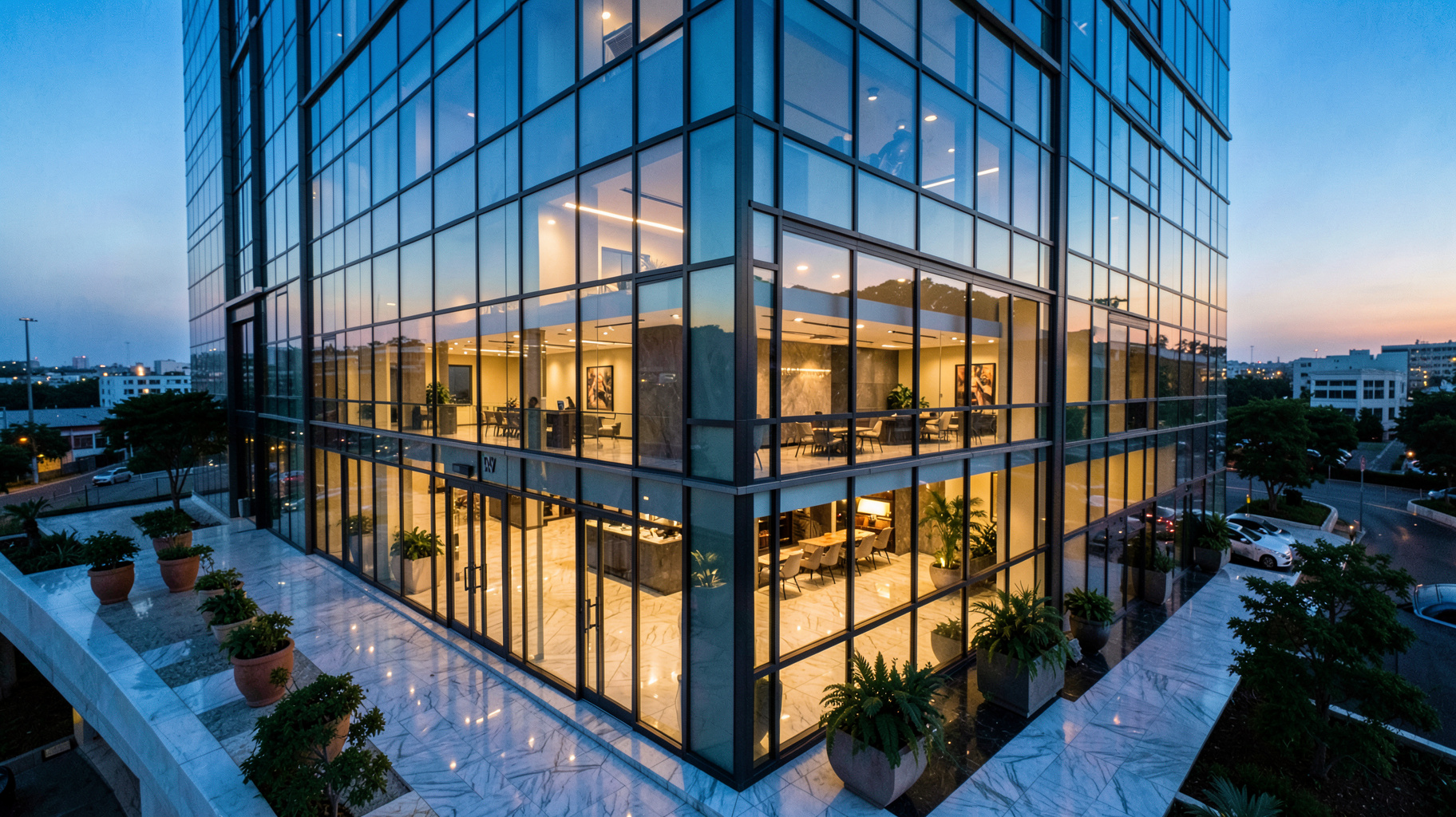
Exterior shots are the "hook" of the listing. If the photo was taken under an overcast sky, the property looks depressed. Use AI sky replacement to introduce a "Golden Hour" glow. Following this, apply a day-to-dusk conversion to create a cinematic evening shot, which is often the most saved image on real estate apps.
At RealVisionAI Blog - AI Real Estate Photography & Virtual Staging, we've streamlined this into a 12-second process. The goal is to move from "raw photo" to "market-ready" without the bottleneck of a traditional editing house.
💡
Key Takeaway
Always follow the "Clean, then Enhance" sequence. Remove distractions via AI decluttering before adding value through virtual staging or lighting adjustments.

Comparing the Main AI Enhancement Options
When deciding which path to take, you have to balance the cost of the tool against the specific needs of the listing. Most agents fall into the trap of using "generic" AI tools that create hallucinations—like adding a third leg to a table or warping the walls of a room.
| Enhancement Type | Traditional Approach | Generic AI Tool | RealVisionAI Approach | Best For |
|---|---|---|---|---|
| Virtual Staging | Renting physical furniture ($$$) | Random furniture placement | Context-aware, style-matched | Vacant properties |
| Sky Replacement | Waiting for the "perfect" day | Flat blue overlays | Dynamic lighting recalculation | Dull exterior shots |
| Decluttering | Physical cleaning/hauling | Smudged "healing" brushes | Intelligent object removal | Occupied listings |
| Day-to-Dusk | Shooting at 8 PM (Expensive) | Simple purple color filters | Cinematic light & glow mapping | High-end curb appeal |
Here's the thing though: the "Generic AI" approach is dangerous. If a buyer arrives at a home and the room looks fundamentally different from the "enhanced" photo, you face a trust crisis. The professional approach focuses on "augmented reality" rather than "fiction," ensuring that the enhancements improve the mood without lying about the square footage or the layout.
Common Misconceptions About AI in Real Estate
Most guides get this wrong by suggesting that AI is a replacement for a photographer. It is not. AI is a replacement for the post-production process. A bad raw photo—one with extreme lens distortion or terrible framing—cannot be "saved" by AI. You still need a basic understanding of architectural photography, such as keeping vertical lines straight and capturing the widest possible angle of the room.
Another common myth is that "buyers can tell it's AI." While this was true three years ago, modern computer vision has evolved. When the lighting and shadows are correctly mapped, the human eye cannot distinguish between a virtually staged room and a physically staged one. The risk isn't the AI itself; it's the poor application of it.
Finally, some believe that AI enhancement is only for luxury properties. That is a costly misconception. In fact, "fixer-uppers" benefit the most from AI. By using virtual renovation tools to show what a kitchen could look like after a remodel, you attract buyers who have the vision but lack the imagination. You aren't selling the current state; you're selling the potential.
Frequently Asked Questions
Will AI property enhancement mislead buyers or cause legal issues?
The goal of enhancement is to highlight the potential of a space, not to hide structural defects. For example, removing a pile of laundry via AI decluttering is acceptable, but removing a giant crack in the foundation wall would be deceptive. To avoid risks, many professionals include a small disclaimer stating that "some images have been virtually staged for visualization purposes." As long as the architectural dimensions and the actual condition of the walls and floors are represented accurately, AI enhancement is a standard industry practice.
How long does the AI enhancement process actually take compared to traditional editing?
Traditional professional editing houses often have a turnaround time of 24 to 48 hours, as they rely on human editors in different time zones. AI-driven platforms, such as RealVisionAI Blog - AI Real Estate Photography & Virtual Staging, reduce this to seconds. Because the AI handles the masking and lighting calculations instantly, the "time-to-market" for a listing is slashed. This allows agents to get their properties live on the MLS the same day the photos are taken, which is a massive competitive advantage in fast-moving markets.
Can AI really handle different interior design styles accurately?
Yes, provided the AI is trained on diverse architectural datasets. A "Modern" style involves clean lines, neutral palettes, and minimalist furniture, whereas "Traditional" focuses on warmer tones and heavier fabrics. The key is ensuring the AI understands the "vibe" of the neighborhood. Putting ultra-modern Italian furniture in a rustic farmhouse can feel jarring. Professional AI tools allow you to select the specific design aesthetic that aligns with the target buyer's profile, ensuring the staging feels organic to the property.
Is virtual staging better than physical staging for every property?
Not necessarily, but it is more efficient for 90% of cases. Physical staging is still superior for ultra-luxury estates where the buyer expects a "white-glove" experience during the tour. However, for mid-market homes, the cost-benefit analysis heavily favors virtual staging. Physical staging requires renting, moving, and then removing furniture, which is a logistical nightmare. Virtual staging allows you to test three different styles to see which one resonates most with online viewers without spending a dime on movers.
How does "Day-to-Dusk" conversion differ from a simple filter?
A simple filter just shifts the color temperature of the image toward purple or blue, often making the house look "muddy." A true AI Day-to-Dusk conversion involves "light mapping." The AI identifies the windows and the porch lights and creates a simulated "glow" emanating from inside the house. It also adjusts the sky to a sunset gradient and softens the shadows on the lawn. This creates a high-contrast, emotive image that triggers a "homey" feeling in the buyer, which a simple filter cannot achieve.
Final Thoughts on AI Property Enhancement
Choosing which AI property enhancement tool to use depends on your primary goal: are you trying to fix a mistake, create a vision, or evoke an emotion? For the best results, a layered approach is most effective. Start with AI decluttering to clean the canvas, apply virtual staging to define the space, and finish with day-to-dusk conversion to create a stunning first impression.
The real estate market in 2026 is more visual than ever. Buyers have been conditioned by social media to expect a certain level of aesthetic perfection. If your listings look "raw" or "dated," you are effectively leaving money on the table. By leveraging professional AI tools, you can ensure that every single listing looks like a luxury property, regardless of its starting point.
To experience these results for yourself, visit RealVisionAI Blog - AI Real Estate Photography & Virtual Staging and transform your listings in seconds.
Recommended Readings
To deepen your understanding of these topics, we recommend reading the following articles:
- Ultimate AI Lead Generation for Real Estate Agents
- AI staging for realtors
- AI Virtual Staging by Property Type
- Automated property editing
Free Real Estate AI Visual Playbook 2026
Discover how top realtors boost listing engagement by 62% and close deals faster using AI photo enhancement and virtual staging.