

What Exactly Is Commercial Real Estate Photography?
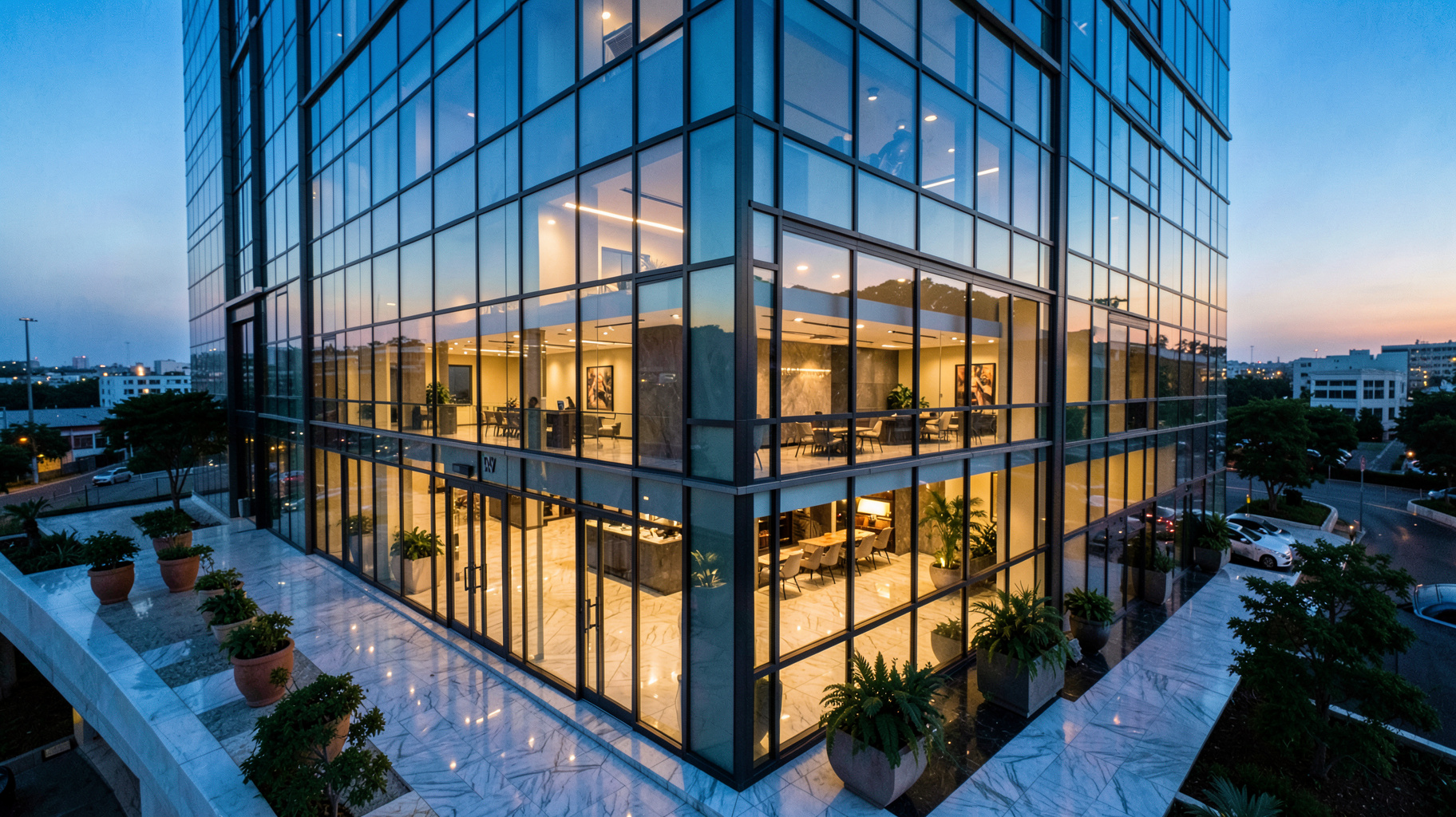
Empty warehouses, glass-walled skyscrapers, and sprawling retail complexes share one common challenge: they are notoriously difficult to capture in a way that conveys both scale and value. Professional commercial real estate photography is the specialized practice of capturing high-end imagery of non-residential properties to facilitate leasing, sales, or portfolio management. Unlike residential photography, which focuses on emotional "hominess," commercial imagery prioritizes utility, architectural precision, and the strategic flow of a business environment.
In my experience working with industrial developers, the most common failure is treating a 50,000-square-foot warehouse like a three-bedroom house. Commercial assets require a completely different lens—literally and figuratively. You aren't selling a dream of a cozy living room; you are selling efficiency, logistics, and revenue potential. For those looking to scale their visual assets, understanding the Key Benefits of AI Property Enhancement for Real Estate can bridge the gap between a raw photo and a market-ready listing.

The Core Concepts of Commercial Visuals
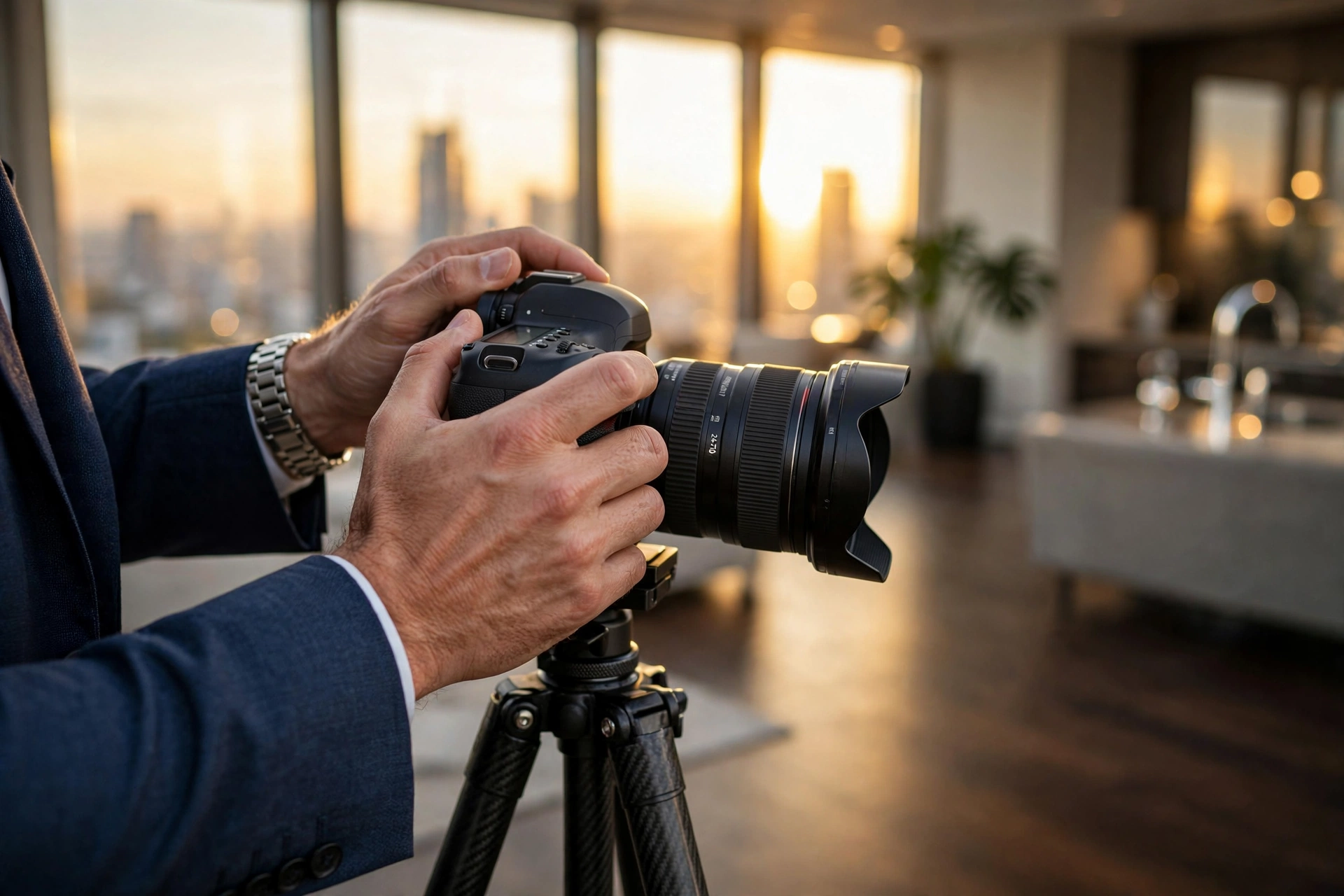
To understand the depth of this field, one must recognize that it is an intersection of architectural photography and corporate marketing. It involves the use of specialized equipment—such as tilt-shift lenses to prevent vertical convergence—and advanced lighting techniques to balance the harsh glare of industrial lighting with natural sunlight.
📚
Definition
Commercial Real Estate Photography is the professional capture of income-producing properties (offices, retail, industrial, hospitality) designed to highlight the property's investment potential, functional layout, and architectural merit.
One of the most technical aspects of this discipline is the management of "visual noise." In a commercial setting, this could be anything from unsightly HVAC ducts to cluttered loading docks. This is where the industry has shifted toward a hybrid model. While the initial capture is physical, the final delivery is increasingly digital. According to research from Gartner, the integration of AI in visual content creation has reduced production timelines by nearly 40% for enterprise-level marketing teams. This efficiency is vital because commercial deals move fast; a property that sits on the market for an extra two weeks due to poor photos represents a tangible loss in rental income.
The process typically involves three distinct phases: the site survey, the capture, and the post-production. The site survey is often overlooked but is where the battle is won. You must identify the "hero shot"—the one image that encapsulates the property's primary value proposition. For a retail center, it might be the anchor tenant's visibility from the main road. For a medical office, it is the accessibility and cleanliness of the lobby.
Why High-End Commercial Imagery Is a Financial Imperative
The financial stakes in commercial real estate are exponentially higher than in residential. A poorly lit photo of a retail space doesn't just "look bad"; it suggests a lack of professional management, which can lead potential tenants to negotiate lower lease rates.
Data from McKinsey suggests that high-quality visual storytelling in B2B transactions can increase lead conversion rates by up to 25% when buyers are in the early "discovery" phase. When a corporate tenant is browsing a Multiple Listing Service (MLS), they are scanning for specific indicators of quality: ceiling height, floor load capacity, and natural light. If those aren't immediately apparent, they move to the next listing.
Now here's where it gets interesting: the cost of vacancy. In the commercial sector, a vacancy is a bleeding wound. If a luxury office suite rents for $5,000 per month, every ten days of vacancy caused by a lack of professional visuals costs the owner nearly $1,700. This is why investing in Real Estate Visual Marketing: The 2026 Guide to AI-Driven Sales is no longer optional; it is a risk mitigation strategy.
The mistake I made early on—and that I see constantly now—is relying on "good enough" photos. I once worked with a client who used a high-end smartphone for an industrial park listing. The images were clear, but they lacked the scale and depth required to show the turn-radius for semi-trucks. The property sat for four months. After we implemented professional architectural photography and AI-driven enhancements, we had three qualified offers within two weeks. The visual evidence of functionality is what closes the deal.
Practical Application: From Capture to Conversion
Executing a commercial shoot requires a strategic workflow. You cannot simply walk in and start clicking. The process must be surgical.
- The Pre-Shoot Audit: Identify the target tenant. If you are targeting a tech firm, emphasize the open-plan areas and "breakout" zones. If you are targeting a logistics company, focus on the dock height and clear span of the warehouse.
- Lighting Synchronization: Commercial spaces often have a mix of fluorescent, LED, and natural light. This creates "color cast" issues. Using a tripod and bracketed exposures (HDR) is the industry standard to ensure that the view outside the window isn't a blown-out white void while the interior remains dark.
- The "Clean Sweep": In residential, you stage with furniture. In commercial, you "de-stage" by removing trash, correcting skewed signage, and ensuring floors are polished.
- AI Enhancement: This is the final, and perhaps most important, step. No matter how good the photo is, the sky might be gray, or a parking lot might look cracked.
This is where RealVisionAI Blog - AI Real Estate Photography & Virtual Staging becomes the obvious solution. Rather than spending thousands on a second shoot when the weather changes, AI allows for instant sky replacement and grass restoration. In 12 seconds, a drab industrial park can be transformed into a vibrant, sun-drenched asset.
💡
Key Takeaway
The goal of commercial photography is not "beauty" in the artistic sense, but "clarity" in the business sense. Every image must answer a specific question the tenant has about the property's utility.
For those managing large portfolios, the ability to implement Digital Staging Services: Scaling Real Estate Listings in 2026 allows them to show a vacant shell as a fully operational office or a modern medical clinic without spending a dime on physical furniture.

Choosing the Right Visual Approach
Not every property requires the same level of investment. A small storefront in a strip mall has different needs than a Class A corporate headquarters.
| Approach | Pros | Cons | Best For |
|---|---|---|---|
| Traditional Architecture Photography | Unmatched detail, perfect lighting, high prestige. | Very expensive, slow turnaround, rigid scheduling. | Luxury HQ, Hotel portfolios, Iconic buildings. |
| Generic/Budget AI Tools | Low cost, instant delivery. | Risk of "uncanny valley," distorted lines, lacks professional eye. | Low-end rentals, internal archives. |
| RealVisionAI Hybrid Model | Professional base + 12-second AI polishing, scalable. | Requires a baseline of decent raw photos. | Mid-to-high end commercial, fast-turnaround listings. |
That said, many professionals struggle to know when to pivot. If you are noticing that your click-through rates are dropping despite high traffic, it is likely a visual friction problem. You can determine When to Upgrade Your Real Estate Image Processing by analyzing the "bounce rate" of your listing pages. If users leave within five seconds, they aren't seeing the value they expected.
Common Misconceptions in Commercial Imaging
Most guides get this wrong by suggesting that "more photos are better." In the commercial world, this is a fallacy. Too many photos create "decision fatigue." A corporate broker doesn't want 100 photos; they want the 12 photos that prove the property meets the tenant's technical requirements.
Myth 1: Wide-angle lenses are always better.
While wide lenses show the whole room, overusing them creates a "fish-eye" effect that makes a space look distorted and dishonest. The goal is to show the space, not to warp reality. Using a tilt-shift lens or AI perspective correction is the professional way to handle this.
Myth 2: Virtual staging is "dishonest" in commercial.
On the contrary, a vacant 10,000-square-foot office is an abstract concept. Most tenants cannot visualize how to divide that space. Virtual staging provides a functional blueprint. As long as it is labeled as a conceptual rendering, it is a powerful tool for acceleration.
Myth 3: The exterior is the only thing that matters.
While the "hero shot" is usually the exterior, the "closing shot" is almost always the detail. A photo of a high-efficiency HVAC system or a reinforced concrete floor can be the deciding factor for an industrial tenant.
Frequently Asked Questions
How does commercial real estate photography differ from residential photography?
The primary difference lies in the objective: residential photography sells a lifestyle and an emotional connection, whereas commercial photography sells a business opportunity and functional utility. Residential shots focus on warmth, coziness, and personal space. Commercial shots prioritize scale, accessibility, zoning efficiency, and technical specifications. In commercial work, the photographer must understand things like "loading dock clearance" or "ceiling height," which are irrelevant in a home. This requires a more clinical approach to composition, focusing on clean lines and the structural integrity of the building.
What is the average ROI of investing in professional commercial visuals?
While it varies by asset class, the ROI is typically seen in two areas: a reduction in "days on market" (DOM) and a preservation of the asking price. According to industry benchmarks from professional real estate associations, listings with high-quality architectural imagery see a significant increase in initial inquiry rates. When a property is presented professionally, it reduces the "perceived risk" for the tenant. This often prevents the aggressive low-balling that occurs when a property looks neglected or poorly managed in its listing photos, directly protecting the owner's bottom line.
How often should commercial property photos be updated?
Photos should be updated whenever there is a significant change in the property's condition or the surrounding environment. This includes new signage, renovated interiors, or changes in landscaping. However, from a digital marketing perspective, updating images every 12 to 18 months is a smart move to avoid looking "stale" in the MLS. In 2026, the standard has shifted toward seasonal updates—capturing the property in both summer and winter to show its appeal year-round. Using AI Property Enhancement: Pricing and Value Guide can help you maintain this freshness without the cost of full reshoots.
Is drone photography essential for commercial real estate?
For any property larger than a standard retail storefront, drone photography is no longer a luxury; it is an essential requirement. Corporate tenants need to see the "macro" context: the proximity to highways, the ease of ingress and egress, and the overall site plan. An aerial shot provides a spatial understanding that ground-level photos cannot replicate. It allows a potential buyer to see the property's relationship to the rest of the neighborhood, which is a critical factor in commercial valuation and logistics planning.
Can AI truly replace a professional commercial photographer?
AI does not replace the photographer; it replaces the tedious parts of the post-production process. A professional is still needed to navigate the physical space, handle the lighting, and ensure the correct angles are captured. However, AI—specifically tools like those provided by RealVisionAI—eliminates the need for expensive, multi-day editing cycles. Instead of waiting a week for a retouching studio to fix a grey sky or remove a stray piece of equipment, AI does it in seconds. The future is a "hybrid" workflow: human capture, AI refinement.
Final Thoughts on Commercial Real Estate Photography
Mastering the visual presentation of a commercial asset is about more than just "taking pictures." It is about creating a visual argument for the property's value. When you combine the precision of architectural photography with the speed and flexibility of modern AI, you eliminate the friction between a vacant property and a signed lease.
Whether you are dealing with a boutique retail space or a massive industrial complex, the goal remains the same: provide absolute clarity to the investor. If you are ready to stop losing leads to outdated or low-quality imagery, it is time to integrate a system that works at the speed of business.
Explore the full capabilities of RealVisionAI Blog - AI Real Estate Photography & Virtual Staging to transform your listings in 12 seconds. For a more detailed look at the tools available, check out our AI Property Enhancement: A Comprehensive Comparison to find the best fit for your portfolio.
Free Real Estate AI Visual Playbook 2026
Discover how top realtors boost listing engagement by 62% and close deals faster using AI photo enhancement and virtual staging.