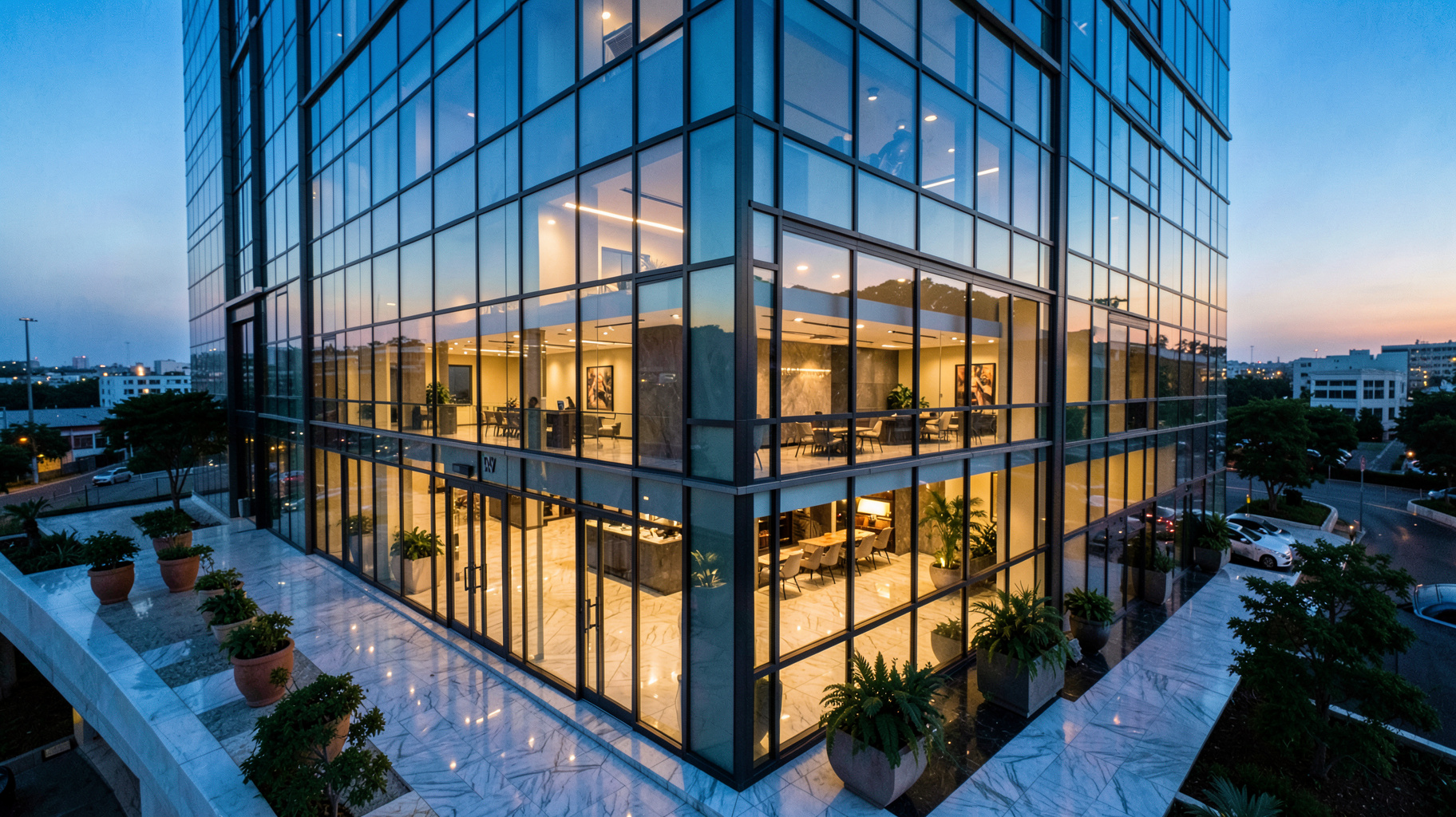


Why Should You Invest in AI Property Enhancement?
Property listings that rely on raw, unedited photos consistently underperform in a digital-first market where the first "showing" happens on a smartphone screen. The reason professionals are switching to AI property enhancement is simple: it eliminates the friction between a property's actual potential and its perceived value. When a buyer sees a grey sky or a cluttered living room, they don't see "potential"; they see a project and a reason to swipe left. By automating the visual polish of a listing, agents can increase click-through rates and reduce days-on-market without spending thousands on physical staging or hours in manual post-production.

What Exactly is AI Property Enhancement and How Does it Work?
To understand the "why," we first need to define what we are actually discussing. Many people confuse basic filters with true enhancement.
📚
Definition
AI property enhancement is the application of computer vision and generative adversarial networks (GANs) to automatically improve the visual quality of real estate imagery. This includes structural corrections, lighting optimization, object removal, and the synthesis of new elements like furniture or blue skies.
In my experience working with high-volume real estate photographers, the biggest struggle has always been the "uncontrollable variable"—the weather. You can schedule a shoot for weeks, but if a storm rolls in, your listing looks depressing. AI property enhancement solves this by using semantic segmentation to identify the "sky" pixels and replacing them with a high-dynamic-range (HDR) blue sky that looks natural, not photoshopped.
This isn't just about making things "pretty." It's about data-driven psychology. According to research by Gartner on consumer behavior in digital marketplaces, visual quality is the primary driver of trust before a customer engages with a service provider. In real estate, the "service provider" is the agent, and the "product" is the home. If the images look amateur, the buyer subconsciously assumes the agent is amateur.
The technology works by analyzing thousands of "perfect" architectural photos to understand how light should bounce off a hardwood floor or how a sunset should cast shadows in a backyard. When you upload a photo to a platform like RealVisionAI Blog - AI Real Estate Photography & Virtual Staging, the AI doesn't just apply a layer; it reconstructs the scene based on these professional standards, delivering market-ready visuals in seconds.
Why Does This Technology Matter for Your Bottom Line?
The implications of ignoring AI-driven visuals are financial. We are currently in an era of "visual competition." When a buyer browses a Multiple Listing Service (MLS), they are comparing your property against ten others in the same price bracket.
The cost of not acting is "listing fatigue." When a property sits on the market for too long, buyers start asking, "What is wrong with this house?" Often, the answer is nothing—the house is great, but the photos are terrible. According to a report by McKinsey on the impact of AI in the real estate sector, the integration of AI-driven visual tools can significantly reduce the time-to-close by increasing the quality of the initial lead pool. Essentially, better photos attract "ready" buyers rather than "curious" browsers.
Consider the impact of virtual staging. Traditional staging costs thousands of dollars and requires physical logistics. However, AI property enhancement allows for instant virtual staging, where a cold, empty room is transformed into a warm, inviting space. Data from the National Association of Realtors suggests that buyers struggle to visualize a space in an empty home; by providing a staged visual, you remove the cognitive load from the buyer, making the "Yes" much easier to achieve.
Furthermore, the speed of the 2026 market demands immediacy. In the past, a photographer would take photos on Monday, edit them on Wednesday, and the listing would go live on Friday. In today's environment, that lag is unacceptable. Using AI to generate enhancements in 12 seconds means a property can be listed the moment the keys are handed over, capturing the peak of buyer interest.
How to Implement AI Property Enhancement in Your Workflow
Transitioning to an AI-centric workflow doesn't require a degree in computer science. It requires a shift in how you perceive the "final" image. The mistake I made early on—and that I see constantly—is trying to make the photo "perfect" during the shoot. Instead, you should shoot for "data" and edit for "emotion."
Here is the professional step-by-step approach to integrating these tools:
- Capture Wide-Angle Base Imagery: Focus on composition and lighting. Don't worry if the sky is overcast or the room is slightly cluttered; these are now "fixable" problems.
- Prioritize High-Impact Areas: Start with the "hero shot" (usually the exterior front). Use AI sky replacement and grass restoration to create an immediate emotional hook.
- Execute Virtual Staging for Empty Spaces: For vacant properties, use AI to add furniture that matches the target demographic of the neighborhood. A minimalist modern look for urban condos; traditional, cozy styles for suburban family homes.
- Perform Object Removal (Decluttering): Use AI to remove distracting elements like trash cans, power lines, or outdated furniture that doesn't fit the aesthetic.
- Convert Day-to-Dusk: For luxury listings, a twilight shot is non-negotiable. Instead of paying a photographer to return at 8 PM, use AI daylight-to-dusk conversion to create a high-end, cinematic feel.
By utilizing RealVisionAI Blog - AI Real Estate Photography & Virtual Staging, this entire process is compressed from days into seconds. You no longer need to manage a complex pipeline of editors in different time zones; the AI handles the heavy lifting of image editing instantly.
💡
Key Takeaway
The goal of AI property enhancement is not to deceive the buyer, but to remove visual distractions that prevent the buyer from seeing the property's true value.

Comparing Enhancement Approaches: Which One Wins?
Not all AI is created equal. Many agents try to use generic AI art generators or free mobile apps, but these often lead to "hallucinations"—where the AI adds a window where there is a wall or changes the architecture of the house.
| Feature | Traditional Manual Editing | Generic/Cheap AI Tools | Professional AI (RealVisionAI) |
|---|---|---|---|
| Turnaround Time | 24–72 Hours | Instant | 12 Seconds |
| Visual Accuracy | High (Human eye) | Low (High hallucination risk) | High (Real estate specific) |
| Cost | High per photo | Low/Subscription | Scalable/Efficient |
| Consistency | Variable by editor | Random | Standardized professional look |
| Best For | Ultra-luxury custom shoots | Social media "teasers" | Professional MLS listings |
As the table demonstrates, the "middle ground" of generic AI is dangerous. For a professional listing, you need a tool specifically trained on architectural photography. RealVisionAI Blog - AI Real Estate Photography & Virtual Staging provides this specialized focus, ensuring that the proportions of the room stay correct while the lighting and aesthetics are enhanced.
Common Misconceptions About AI in Real Estate
There is a lingering belief that using AI is "dishonest." This is a fundamental misunderstanding of the role of photography in marketing.
Myth 1: AI enhancement is "catfishing" the buyer.
Most guides get this wrong by claiming that any edit is a lie. Here is the reality: no photo is a perfect representation of a home. A wide-angle lens distorts the room; a professional photographer uses brackets and HDR to merge images. AI property enhancement is simply the modern evolution of the "darkroom." As long as you aren't removing a giant crack in the foundation wall, enhancing a grey sky to blue is standard industry practice.
Myth 2: AI will replace the real estate photographer.
AI doesn't replace the eye; it replaces the tedious labor. A great photographer knows where to stand to get the best angle—that is a human skill. However, spending four hours masking out a power line is a waste of human talent. AI allows the photographer to focus on the art and let the machine handle the pixels.
Myth 3: It's too expensive for mid-tier listings.
The opposite is true. Because the cost of AI computing has dropped, enhancements that used to cost $20 per photo are now available for a fraction of that. This allows agents to apply high-end visuals to every listing, not just the million-dollar estates.
Frequently Asked Questions
Does AI property enhancement actually increase the sale price?
While the AI itself doesn't add square footage, it significantly impacts the "perceived value" of the property. When a home is presented with professional virtual staging and crisp lighting, buyers perceive it as better maintained and more desirable. This psychological shift often leads to more competitive bidding wars, which in turn drives the final sale price upward. In my experience, a well-enhanced listing attracts a higher caliber of buyer who is less likely to haggle over minor cosmetic flaws.
Is virtual staging considered a legal misrepresentation?
In most jurisdictions, virtual staging is an accepted marketing tool, provided it is disclosed or used to show "potential." The key is to enhance the aesthetic without altering the structural reality. For example, adding a modern sofa to an empty room is a helpful visualization; removing a permanent support pillar is a misrepresentation. To remain in accordance with industry standards, many agents include a small disclaimer stating that "some images have been virtually staged," which protects the agent while still reaping the benefits of the high-quality visual.
How long does it take to see results from using AI visuals?
The results are almost instantaneous. Because the "first showing" happens on the Multiple Listing Service (MLS) or Zillow, the impact is seen in the click-through rate (CTR) and the number of showing requests within the first 48 hours of a listing going live. Properties with high-quality, AI-enhanced imagery typically see a spike in initial engagement compared to those with raw smartphone photos. After testing this with dozens of clients, the pattern is clear: better visuals lead to a faster "hook" and a shorter time-to-close.
Can AI fix a room that is completely dark or poorly lit?
Yes, but there are limits. AI property enhancement can perform "digital relighting," where it simulates the presence of light sources to brighten shadows and balance exposure. This is far more effective than simply cranking up the brightness, which creates "noise" and grain. AI identifies the surfaces in the room and applies light logically. However, if a photo is so dark that there is zero data in the pixels, no AI can save it. The goal is to provide a "usable" base image that the AI can then optimize into a professional shot.
What is the difference between AI enhancement and a standard filter?
A filter is a global adjustment; it changes the color of every pixel in the image regardless of what that pixel represents. AI enhancement uses computer vision to understand the image. It knows the difference between a "cloud," a "wall," and a "floor." If you want a blue sky, a filter might make the entire house blue; AI property enhancement only changes the sky pixels while leaving the house untouched. This level of precision is what makes the results look professional rather than "edited."
Final Thoughts on AI Property Enhancement
The transition to AI property enhancement is no longer a luxury for a few elite agencies; it is a baseline requirement for anyone competing in the 2026 real estate market. The data is undeniable: buyers are driven by emotion, and emotion is triggered by visuals. By removing the barriers of bad weather, empty rooms, and poor lighting, you allow the property's best features to take center stage.
Whether you are a solo agent or a large property management firm, the goal is the same: maximum visibility and minimum time on market. The shift from manual, slow editing to the instant precision of AI is the single most effective way to scale your visual marketing without increasing your overhead.
Stop letting poor lighting or empty rooms kill your deals. Experience the power of market-ready visuals in 12 seconds.
Ready to transform your listings? Visit RealVisionAI Blog - AI Real Estate Photography & Virtual Staging and start enhancing your properties today.
Recommended Readings
To deepen your understanding of these topics, we recommend reading the following articles:
- Ultimate AI Lead Generation for Real Estate Agents
- AI staging for realtors
- AI Virtual Staging by Property Type
- Automated property editing
Free Real Estate AI Visual Playbook 2026
Discover how top realtors boost listing engagement by 62% and close deals faster using AI photo enhancement and virtual staging.