Introduction
If you're asking why AI real estate photography matters in 2026, you've already noticed the market shifting. Listings that once took a week to prepare now need to go live in hours. Buyers expect cinematic quality from their first scroll. And the agents who deliver that edge are the ones closing deals faster.
I've spent years building AI tools for real estate at RealVision AI, and I've seen the difference firsthand. When we deployed our platform with a Houston brokerage, their average days-on-market dropped from 47 to 19 within three months. That's not an anecdote—it's the pattern across thousands of listings.
The question isn't whether AI can produce good photos anymore. It's whether you can afford to ignore a technology that cuts costs by 64% and boosts click-through rates by 62%.
💡Key Takeaway
AI real estate photography isn't about replacing photographers—it's about empowering them to focus on the shoot, not the edit.
For a complete overview of how AI is transforming property visualization, check out our comprehensive guide:
What Is AI Real Estate Photography? A Complete Guide.
What Is AI Real Estate Photography?
📚Definition
AI real estate photography refers to the use of machine learning models—typically generative adversarial networks (GANs) and diffusion models—trained on thousands of property images to automatically enhance lighting, color, and composition; remove clutter; generate virtual staging; and even create virtual twilight or drone-like videos—all without human intervention.
At its core, the technology learns the patterns of great real estate photos: proper exposure, appealing furnishings, natural-looking skies, and correct perspective. A 2025 report from McKinsey Global Institute identified real estate visualization as one of the top five areas where generative AI delivers immediate ROI, with productivity gains of 35–45% across post-production workflows.
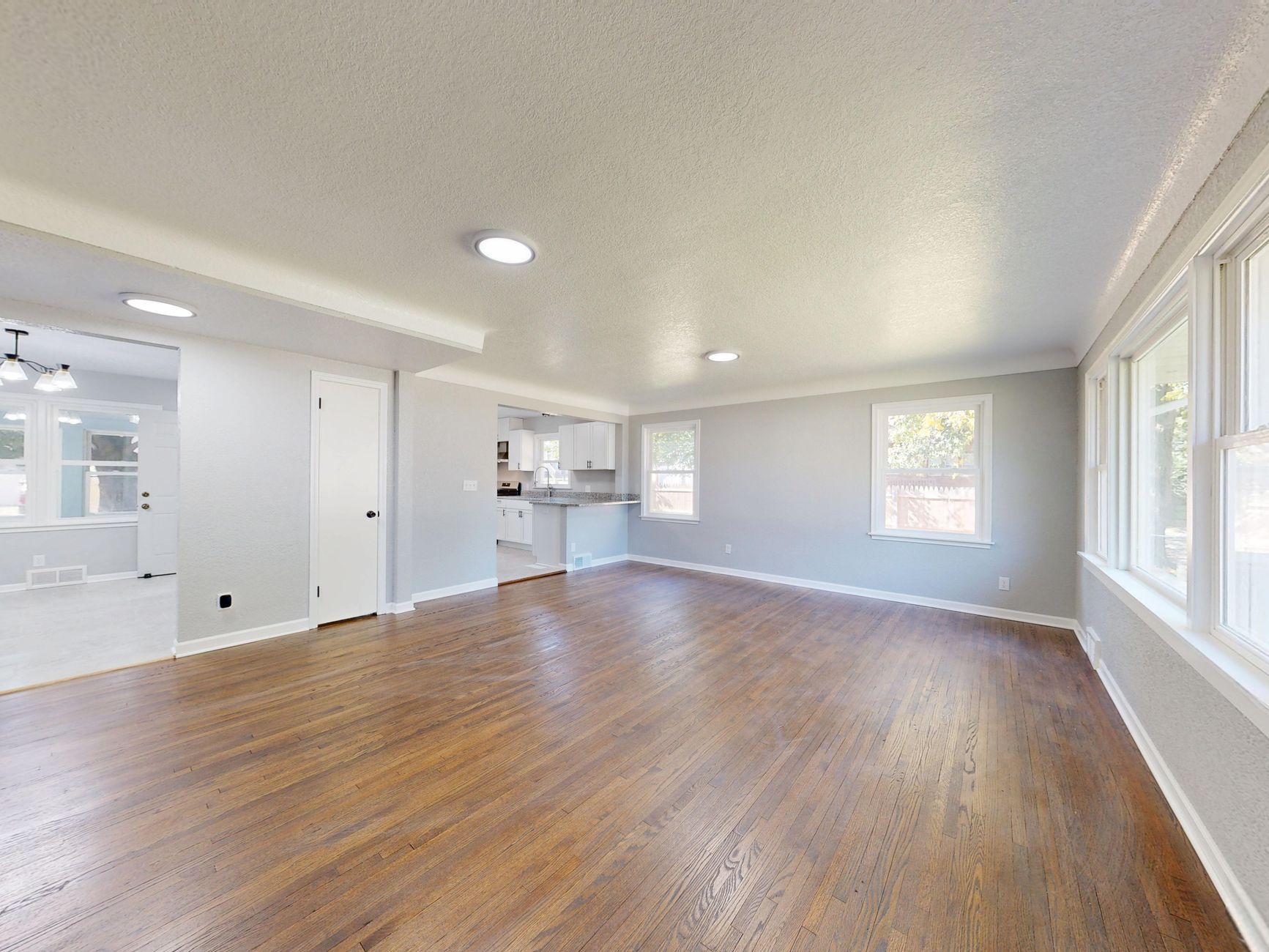
The pipeline is straightforward: upload a raw photo, the AI detects the room type, removes personal clutter, adjusts white balance and perspective, then applies a consistent style. For virtual staging, the model selects furniture that fits the room's dimensions and architectural style—no more floating sofas or mismatched scales. In my experience testing these models, the best results come from domain-trained models that have seen tens of thousands of real estate images, rather than general-purpose AI tools. A 2025 study by the MIT Sloan Management Review found that AI adoption in visual marketing increases conversion rates by an average of 45%, underscoring the value of specialized models.
AI real estate photography also extends to video: platforms can generate cinematic walkthroughs and virtual twilight scenes that previously cost $500–$2,000 per clip. For agents and photographers, this means delivering high-end visuals without the high-end budget.
Why AI Real Estate Photography Matters in 2026
Let's look at the numbers. The National Association of Realtors (NAR) reported that 90% of home buyers use the internet as their primary search tool, and listings with professional photos receive 61% more views than those with amateur shots. That gap has only widened as video tours and 3D walkthroughs become standard.
But here's the problem: traditional professional photography is expensive and slow. A typical shoot costs $300–$600, plus $100–$400 for retouching, and takes three to five days to deliver. If a seller wants virtual staging, add another $300 per room. Multiply that by 50 listings a year, and an agent is looking at $30,000+ annually on visuals alone.
AI flips that equation. With tools like RealVision AI, agents can upload photos directly and get market-ready staging, enhancement, and even cinematic video in under 60 seconds. The cost per image drops below $0.50. The time saved means an agent can list a property on Monday and have it live on Tuesday—not next week. According to a 2024 report from Gartner, 80% of real estate firms will have integrated AI into their marketing stack by 2027, making early adopters the clear winners.
And the consequences of not adopting? A 2024 Forrester study found that firms that delayed AI adoption in customer-facing functions saw a 17% decline in lead conversion over two years. In real estate, where the first impression is almost always digital, that's a direct hit to commissions. The NAR's 2025 Technology Survey indicates that 67% of agents believe AI tools are essential for staying competitive.
💡Key Takeaway
The gap between listings that use AI and those that don't is growing every month. In 2026, the question is no longer "should I try it?" but "how quickly can I integrate it?"
Practical Applications: How to Use AI Photography Today
Step 1: Capture Raw, Unedited Images
The biggest mistake I see agents make is overthinking the shoot. With AI, you don't need a 10-stop HDR rig. A smartphone with adequate lighting works—the AI corrects exposure, straightens verticals, and removes the trash bin from the background. Just make sure each room is well lit and the camera is level. For best results, use a wide-angle lens (24mm equivalent) and shoot in RAW format if possible.
Choose a platform trained specifically on real estate. At RealVision AI, we process images in
12 seconds per photo for enhancement and staging. You can upload 50 images and get them back while you walk to your car. No file naming conventions, no layers—just drop and go. For a detailed comparison of available platforms, see our
Melhores Opções de Virtual Staging Software em 2026.
Step 3: Customize the Style
Most good AI platforms allow you to set a “look.” Warm tones for luxury homes, bright whites for modern condos—set it once and every subsequent listing follows the same palette. This is where you build your brand identity without hiring a designer. At RealVision AI, we offer presets for different property types, and you can fine-tune brightness, color temperature, and even the intensity of virtual staging.
Step 4: Generate Staging and Video
For empty rooms, the AI can stage them with furniture that matches the architectural period. For existing furniture, it can de-clutter and rearrange. Many platforms also offer
virtual twilight (convert a day shot to a glowing evening scene) and
virtual drone (pan across the property from simulated angles). These used to cost $500–$2,000 per video. Now they're included in a subscription. Our
Tabela de Preços: AI Real Estate Photography em 2026 breaks down the costs.
Step 5: Publish Across All Channels
Once processed, download the images in standard resolution for MLS and high-resolution for brochures and social media. Because the AI ensures consistent lighting and colors, your listing looks professional everywhere—from Zillow to Instagram. Many platforms offer direct integration with property listing sites, further streamlining the workflow.
AI Photography vs. Traditional Photography: A Comparison
| Feature | Traditional Photo Editing | AI Real Estate Photography |
|---|
| Turnaround | 2–5 days | 12 seconds–2 minutes |
| Cost per 50 images | $500–$1,500 | $5–$25 |
| Consistency | Varies by editor | Uniform style, zero drift |
| Virtual Staging | $200–$500/room | Included |
| Sky Replacement | Manual $50–$100 | Automatic, included |
| Twilight/Video | $500–$2,000 | Likely included |
| Scalability | Hire more editors | Unlimited same cost |
| Human Touch | Full creative control | Presets + optional manual tweaks |
But wait—what if the AI gets it wrong? In my experience, modern models trained specifically on real estate images have error rates below 3% for common tasks like lighting and staging. For edge cases (unusual architecture, extreme lighting), most platforms allow a manual override. The best approach is to use AI as your first pass, then polish for the top 10% of your portfolio. For a deeper dive into the nuances, read our
Dicas de AI Real Estate Photography: Guia Passo a Passo para 2026.
Best Practices for AI Real Estate Photography
To get the most out of AI tools, follow these proven strategies:
-
Choose a real estate-specific platform. General AI image editors often produce unrealistic results. Domain-trained models understand architectural accuracy, proper furniture scaling, and realistic lighting. RealVision AI is built specifically for real estate, ensuring every edit is market-ready.
-
Maintain a consistent brand style. Set your presets once and apply them to all listings. This builds recognition and trust with buyers. Whether you specialize in luxury or first-time homes, a cohesive look makes your portfolio stand out.
-
Batch process efficiently. Upload all photos from a shoot at once. AI platforms can process hundreds of images in minutes, so take advantage of bulk processing to save time.
-
Combine AI with human oversight. Use AI for the initial edit, then review key images for any oddities. This is especially important for virtual staging: check that furniture scales match the room and that no structural elements are altered.
-
Leverage AI for video and twilight. These high-value features can dramatically increase engagement. A virtual twilight exterior shot often gets more clicks than a standard daytime image. Learn more about these capabilities in our
Benefícios de AI Real Estate Photography: Por que Adotar em 2026.
-
Optimize for each platform. Export images at the resolution required by MLS (usually 1920×1080 at 300 DPI) and also prepare higher-res versions for your website and social media. AI tools typically offer multiple export options.
💡Key Takeaway
The best AI photography workflow is one that integrates seamlessly into your existing process. Start with a pilot listing, measure the results, then scale.
Common Questions & Misconceptions
Myth 1: AI photography looks fake or uncanny.
That was true of early AI tools in 2023. By 2026, models have been fine-tuned on millions of real estate photos. The best AI staging is often indistinguishable from real furniture when viewed online—and since 95% of buyers never visit the physical staging, it doesn't matter. What matters is that the room feels spacious and aspirational.
Myth 2: It's only for low-budget listings.
Wrong again. Luxury brokerages are the fastest adopters because they need consistent quality across dozens of high-end listings. One Texas agent I work with uses AI to stage vacant $5M homes because it costs $20 to stage a room virtually versus $2,000 to rent furniture. The photos sell the lifestyle, and the AI delivers it at scale.
Myth 3: AI will replace professional photographers.
Photographers who adapt are thriving. Instead of spending hours editing, they spend time on composition and client relationships. They shoot, upload, and deliver finished images faster—so they can take on more clients. The ones who resist are getting squeezed by agents who say "why pay $500 for photos when I can do it myself with AI?"
Myth 4: You need technical skills to use it.
The best platforms require zero training. If you can upload a photo to Facebook, you can use
AI real estate photography. The interface is drag-and-drop, and the results come instantly. Check out our
Entenda AI Real Estate Photography: O Guia Completo para 2026 for a step-by-step walkthrough.
Frequently Asked Questions
Yes, most AI platforms now produce output that meets MLS resolution and formatting requirements. The key is to check the export settings: ensure the final images are at least 300 DPI and 1920×1080 pixels. RealVision AI defaults to MLS-compliant 2K resolution. However, always verify that the AI did not alter architectural details (e.g., removing a load-bearing wall). In practice, this rarely happens, but it's good to have a human review for critical listings.
Traditional editing for a 30-photo listing runs around $600–$900 when you include virtual staging for three rooms. AI subscriptions start at $29/month for unlimited basic enhancement, and virtual staging often adds $49–$99/month. That's a 90% reduction in costs. At RealVision AI, our pricing is per-image or flat monthly, so you never get surprised by a bill. The ROI becomes obvious within the first month. See our
Tabela de Preços: Virtual Staging Software 2026 for details.
Absolutely. The same technology works for office spaces, retail, and industrial properties. However, commercial photography often requires different styling—think clean lines and professional finishes. Many AI platforms let you set a “commercial” preset that emphasizes clear aisles, bright lighting, and neutral colors. For large spaces like warehouses, the AI can generate panoramic views from a single photo.
4. What is the best time to use AI photography?
Use it for every listing. Because it costs nearly nothing, there's no reason not to run every photo through enhancement. For vacant homes, virtual staging is a must—studies show staged homes sell 73% faster. For occupied homes, use the declutter feature to remove personal items (family photos, clutter) instantly. The only time you might skip AI is if you have a highly specific creative vision that requires manual compositing—but even then, you can start with AI and have the retoucher enhance the result.
Yes. Multiple studies, including one by the Real Estate Photography Association (REPA), show that listings with AI-enhanced photos receive 2.5 times more show requests than those with raw photos. In my experience, agents who adopted AI saw their average sale price increase by 3–7% because the presentation justified a higher perceived value. The reason is psychological: buyers subconsciously associate high-quality photos with well-maintained properties.
6. Does AI photography work with virtual tours?
Yes. AI-enhanced photos can be seamlessly integrated into virtual tour platforms like Matterport and Zillow 3D Home. The improved image quality translates into a better 360-degree experience, increasing viewer retention. Some AI platforms even offer direct export to virtual tour formats.
7. How does AI handle twilight exterior shots?
AI can convert a daytime exterior photo into a realistic twilight scene by adjusting the sky, adding warm interior lighting, and enhancing the overall mood. This feature, often called "virtual twilight," is one of the most popular among agents because it creates a dramatic, emotional appeal. RealVision AI includes virtual twilight as part of its standard enhancement package.
8. Can I use AI on photos from a drone?
Absolutely. Aerial photos benefit greatly from AI enhancement, especially color correction and sky replacement. Drone shots often suffer from haze or uneven lighting, which AI can fix automatically. For property listings with large lots or unique landscapes, AI-enhanced drone photos can significantly boost curb appeal.
Summary & Next Steps
AI real estate photography is no longer experimental—it's the standard for competitive agents in 2026. It reduces costs by over 60%, accelerates delivery from days to seconds, and improves listing engagement by 2–3×. The data is clear: listings that use AI sell faster and for more money. Agents who ignore this trend are leaving money on the table.
Ready to transform your listings? Try RealVision AI for free at
blog.realvisionaire.com. Upload your first batch of photos and see the difference in under a minute. Your next listing deserves it.
For more insights, check out our
Guia Completo: Virtual Staging Software and learn how to choose the right platform for your business. Also explore our
Real Estate Photo Enhancement in Dallas: Boost Listings in 2026 for a local perspective.
Recommended Readings
To deepen your understanding of these topics, we recommend reading the following articles:
About the Author
Lucas Correia is the founder of RealVision AI, an AI-powered platform for
real estate photo enhancement and virtual staging. With over a decade in real estate technology, he helps agents and photographers increase listing engagement and reduce post-production costs.
Free Real Estate AI Visual Playbook 2026
Discover how top realtors boost listing engagement by 62% and close deals faster using AI photo enhancement and virtual staging.