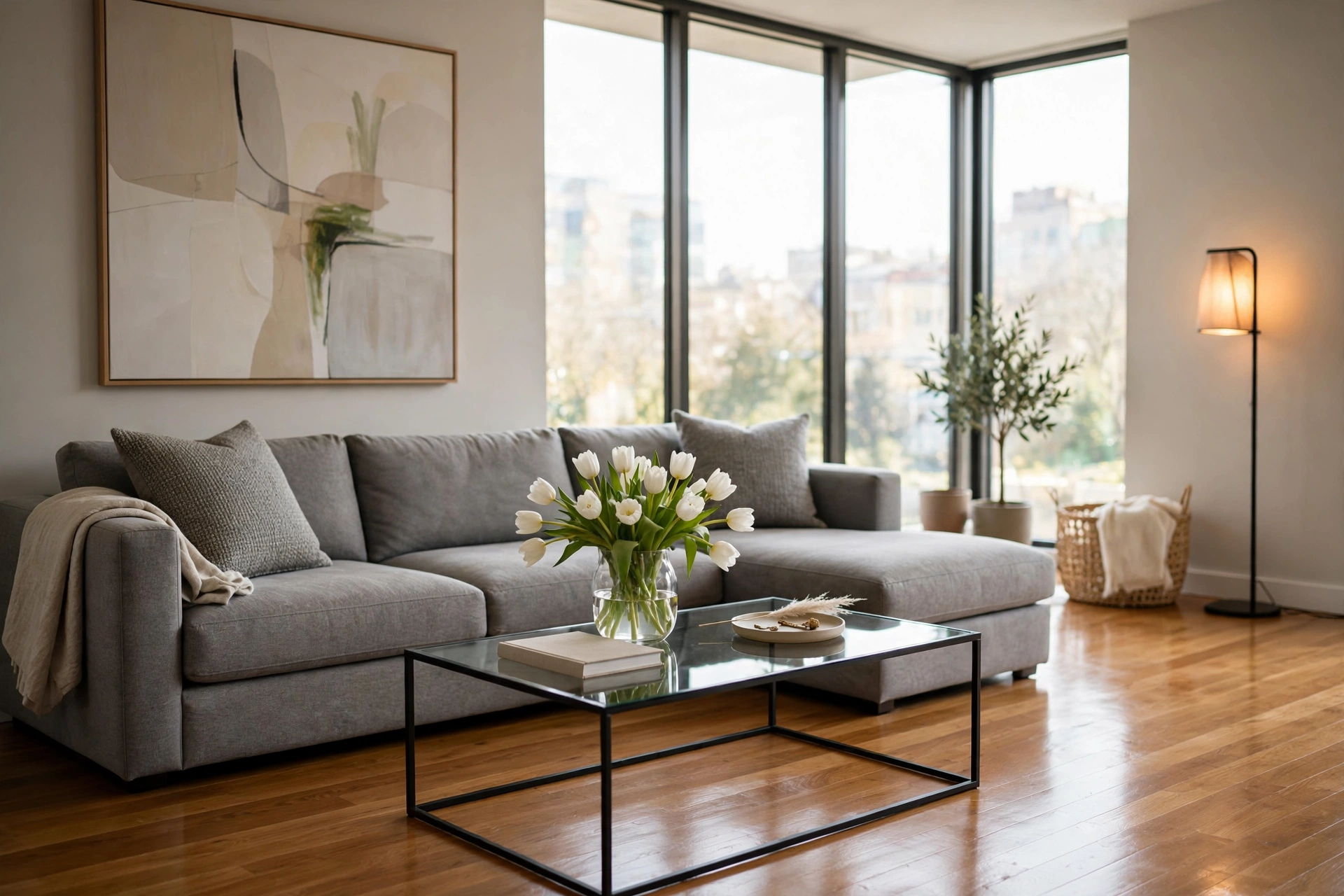


Which Residential Virtual Staging Option Is Right for Your 2026 Listings?
Empty rooms often feel smaller and colder than they actually are, leading buyers to struggle with spatial awareness and emotional connection. When deciding which residential virtual staging approach to use, the best choice depends on your budget, the property's condition, and the speed of your market. For high-volume agents, AI-driven automation is the clear winner for efficiency, while luxury listings often benefit from high-end hybrid designs.
In my experience working with high-turnover property managers, the biggest mistake I see is choosing a staging method based on price alone rather than the specific psychology of the buyer profile. A luxury penthouse requires a different visual language than a starter home, and using a generic "one size fits all" digital package often results in a sterile look that fails to convert clicks into showings. To maximize your ROI, you need to understand the trade-offs between manual design and automated intelligence.
For those navigating the broader landscape of image improvements, exploring the Key Benefits of AI Property Enhancement for Real Estate provides a necessary foundation for understanding how these tools impact buyer psychology.
What Exactly Is Residential Virtual Staging and How Does It Work?
📚
Definition
Residential virtual staging is the process of using computer software to digitally add furniture, decor, and architectural enhancements to photos of an empty or cluttered residential property, creating a realistic visualization of the home's potential.
At its core, this technology leverages computer vision and advanced rendering to map the geometry of a room. The software identifies walls, floors, and ceilings to establish a 3D plane, allowing digital assets—such as a mid-century modern sofa or a minimalist dining set—to be placed with correct perspective and lighting. This ensures that the furniture doesn't look like it is "floating" on the image, which was a common failure in early iterations of the technology.
Modern residential virtual staging has evolved beyond simple "sticker" placement. Today, it incorporates global illumination and ambient occlusion, meaning the digital furniture casts realistic shadows on the floor and reflects the actual light sources present in the original photograph. According to research by the National Association of Realtors, homes that are staged—whether physically or virtually—sell faster and often for more money because they remove the cognitive load from the buyer, who no longer has to imagine where their bed would fit.
The process generally follows three paths: fully manual (where a human designer handles every pixel), semi-automated (where a user picks from a library), and fully AI-driven (where the AI analyzes the room and suggests a design). In the current 2026 market, the shift toward AI is driven by the need for instant results. When we analyze the workflow of top-performing agents, the pattern is clear: those who can update their visuals in minutes rather than days capture more early-stage leads. If you are just starting, a Passo a Passo: AI Property Enhancement guide can help you bridge the gap between raw photos and market-ready listings.

Why Does Choosing the Right Staging Method Matter for Your Bottom Line?
The decision of which residential virtual staging tool to employ isn't just about aesthetics; it's about financial conversion. A listing with high-quality, staged visuals acts as a 24/7 salesperson. When a buyer scrolls through an MLS, they are making a binary decision: "Does this feel like home?" or "Is this a project?". If the room is empty, the brain registers it as a project.
The business impact is measurable. According to a report by Forbes, visual storytelling through AI-enhanced imagery can increase click-through rates on real estate portals by up to 40%. When you combine this with the fact that 95% of buyers start their search online, the cost of poor staging is effectively a lost opportunity for thousands of potential views. The risk of using low-quality or "uncanny valley" staging is that it can actually deter buyers by making the listing seem deceptive or cheap.
Now, here's where it gets interesting: the cost of physical staging can range from $2,000 to $5,000 per month for a mid-sized home, whereas virtual options cost a fraction of that. However, the real value is in the "time-to-market" metric. In a competitive 2026 real estate environment, a listing that sits empty for two weeks while waiting for a physical staging crew is a listing that is losing momentum.
Data from Gartner suggests that AI adoption in professional services is drastically reducing the "production gap"—the time between an event (the home becoming vacant) and the marketing of that event. By utilizing Digital Staging Services: Scaling Real Estate Listings in 2026, agents are seeing an average reduction in days-on-market by 15-20% compared to unstaged properties.
Practical Application: Implementing a Staging Strategy for Maximum ROI
To implement a winning strategy, you shouldn't treat every room the same. A "hybrid approach" is usually the most effective. This means using high-impact virtual staging for the main living areas and kitchens, while perhaps leaving utility rooms or bedrooms in a simpler, cleaner state.
Here is a professional workflow for deploying residential virtual staging:
- The "Clean Slate" Phase: Start with professional wide-angle photography. Ensure the rooms are decluttered. Even the best AI struggles if the room is filled with old newspapers and trash.
- Defining the Buyer Persona: Before picking a style, ask: "Who is buying this house?". A young professional couple wants a "minimalist/industrial" look. A growing family wants "traditional/cozy". Matching the style to the demographic is the difference between a sale and a "like".
- Executing the AI Enhancement: This is where tools like RealVisionAI Blog - AI Real Estate Photography & Virtual Staging become indispensable. Instead of waiting days for a designer, you can generate market-ready visuals in 12 seconds. The AI handles the perspective, the lighting, and the furniture placement automatically.
- Consistency Check: Ensure that the style is consistent across all rooms. It is jarring to have a futuristic living room and a rustic farmhouse kitchen in the same property.
- The A/B Test: For high-stakes properties, try listing one "hero image" as empty and one as staged to see which generates more inquiries.
💡
Key Takeaway
The most successful staging strategies prioritize "emotional resonance" over mere filling of space; the furniture must tell a story that aligns with the target buyer's lifestyle.
If you are unsure when to move from basic editing to full staging, checking our guide on Quando Usar AI Property Enhancement can provide a framework for making that decision based on property value and market speed.
Comparing Your Options: Manual vs. Generic AI vs. Professional AI
When deciding which path to take, you have to weigh the trade-offs between control, cost, and speed. Most agents start with the cheapest option, only to realize that the "uncanny" look of low-end AI actually hurts their brand equity.
| Feature | Traditional Physical Staging | Generic/Cheap AI Tools | Professional AI (RealVisionAI) |
|---|---|---|---|
| Setup Time | Days to Weeks | Minutes | Seconds (12s) |
| Cost | Very High ($$$$) | Low ($) | Moderate/Scalable ($$) |
| Realism | Absolute | Variable (Often "Fake") | High (Physics-based) |
| Flexibility | None (Static) | High (Easy to change) | Very High (Instant iteration) |
| Best For | Ultra-Luxury ($10M+) | Low-end rental flips | Professional RE Agents |
That said, the "Generic AI" approach often fails because it lacks a deep understanding of architectural photography. These tools often distort the walls or place furniture in a way that violates the laws of physics, which a trained eye (and a savvy buyer) will notice immediately.
In contrast, a professional approach integrates computer vision to ensure that the furniture is scaled correctly to the room's actual dimensions. This is why we emphasize the importance of using tools designed specifically for real estate rather than general image editors. For a deeper dive into the cost-benefit analysis, see the AI Property Enhancement: Pricing and Value Guide.

Common Questions and Misconceptions About Virtual Staging
Most guides on the internet get this wrong by suggesting that "more furniture is better." In reality, over-staging a room can make it feel smaller, which is the opposite of the intended goal. Here are the most common myths we encounter:
Myth 1: Virtual staging is "dishonest" and can lead to legal issues.
This is a common fear, but it's largely unfounded if handled correctly. The industry standard is to include a small disclaimer on the photo: "Virtually Staged." This informs the buyer that the images are for conceptual purposes. As long as you aren't digitally removing a permanent structural pillar or a giant crack in the wall, you are simply helping the buyer visualize the space.
Myth 2: You only need one staged photo per room.
This is a mistake. Buyers want to see the flow of the home. If you only stage the living room and leave the dining room empty, you break the "emotional loop." A cohesive set of staged images creates a mental journey, making the buyer feel like they are already living in the space.
Myth 3: AI staging is only for empty houses.
False. Some of the most powerful uses of residential virtual staging involve "virtual decluttering." In my experience, removing a tenant's cluttered furniture and replacing it with modern, neutral pieces is often more effective than staging a completely empty room. This is because it solves a problem (clutter) while providing a solution (style).
If you're wondering if this transition is worth the investment for your specific business model, we recommend reading Is AI Property Enhancement Worth It?.
Frequently Asked Questions
Which furniture style works best for residential virtual staging in 2026?
The most effective style depends entirely on the target demographic of the property. However, "Transitional" and "Modern Minimalist" are currently the safest and most high-converting options. Transitional style blends traditional comfort with modern lines, appealing to a wide age range. Modern Minimalism works exceptionally well for urban condos and luxury apartments. The key is to avoid overly niche styles (like Gothic or ultra-maximalist) unless the property itself has a very specific architectural theme. The goal is to create a "blank canvas" of luxury that allows the buyer to project their own life onto the space.
How does residential virtual staging impact the final sale price?
While it's impossible to attribute a specific dollar amount to a single photo, data from various industry bodies indicates that staged homes tend to sell at a premium compared to unstaged ones. This is because staging elevates the perceived value of the property. When a buyer sees a room perfectly curated, they subconsciously associate the home with a higher standard of living. This reduces the likelihood of "low-ball" offers and encourages buyers to bid closer to the asking price because the "potential" of the home has been proven visually, removing the risk and uncertainty associated with empty spaces.
Can I use virtual staging for small apartments or tiny homes?
Yes, and in many cases, it is actually more important for small spaces than for large ones. In a large home, a buyer can easily imagine how their furniture will fit. In a tiny home or a small apartment, buyers often worry that the space is too small. By using a professional virtual staging tool, you can demonstrate exactly how a space-saving furniture arrangement works. Using "scale-accurate" digital furniture allows you to prove that a queen-sized bed or a four-person dining table actually fits, which removes a major psychological barrier to purchase.
What is the difference between 2D and 3D virtual staging?
2D virtual staging involves adding furniture to a flat photograph. It is the most common and cost-effective method, perfect for MLS listings and social media. 3D virtual staging, however, involves creating a full digital twin of the room where the user can move through the space in a virtual tour. While 2D is great for attracting a click, 3D is designed to keep the buyer engaged longer. For most residential listings, high-quality 2D staging is sufficient, but for luxury estates, a 3D experience can be the deciding factor that separates a "maybe" from a "must-see."
How long does it typically take to get staged photos back?
The timeline varies wildly depending on the method. Traditional physical staging takes weeks to coordinate and execute. Manual virtual staging by a freelance designer usually takes 24 to 72 hours per image. However, the industry has shifted toward AI-powered solutions. With RealVisionAI Blog - AI Real Estate Photography & Virtual Staging, the turnaround time is reduced to approximately 12 seconds per photo. In a fast-moving market, this speed allows agents to list a property almost immediately after it becomes vacant, preventing the "stale listing" syndrome where a property loses interest because it has been on the market too long without updated visuals.
Conclusion
Choosing which residential virtual staging strategy to adopt is a balance of speed, realism, and buyer psychology. Whether you are managing a portfolio of rental condos or selling a luxury estate, the goal remains the same: remove the friction between the buyer and the property. By moving away from the slow, expensive tradition of physical staging and embracing the precision of AI, you can significantly increase your lead volume and shorten your sales cycle.
If you want to stop losing potential buyers to sterile, empty rooms, it's time to upgrade your visual toolkit. Experience the power of instant, professional-grade enhancements with RealVisionAI Blog - AI Real Estate Photography & Virtual Staging. Visit realvisionaire.com today to transform your listings in seconds. For more insights on optimizing your workflow, check out our guide on Real Estate Visual Marketing: The 2026 Guide to AI-Driven Sales.
Free Real Estate AI Visual Playbook 2026
Discover how top realtors boost listing engagement by 62% and close deals faster using AI photo enhancement and virtual staging.