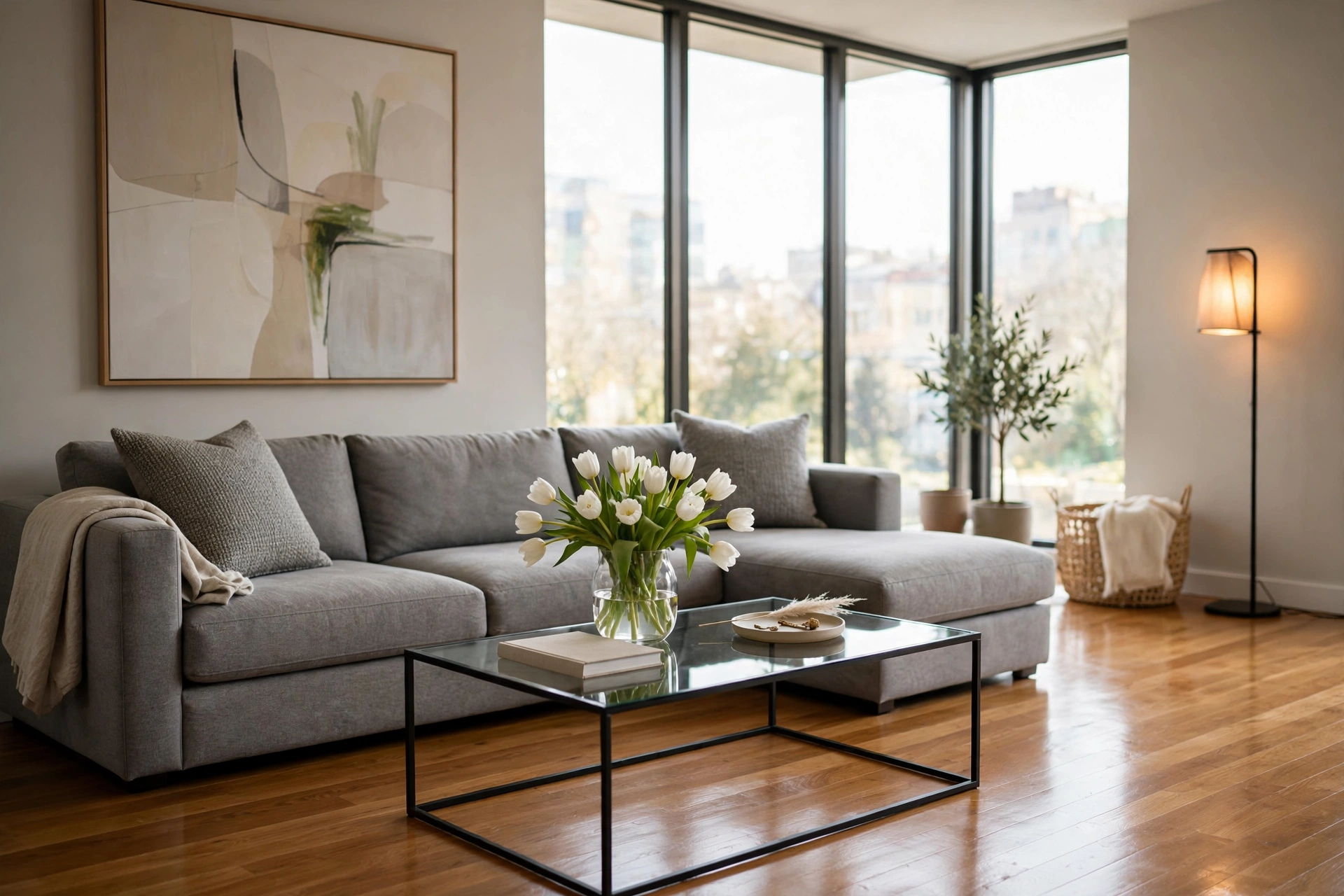


Which Residential Virtual Staging Option Actually Drives More Sales?
Empty rooms feel cold, small, and devoid of potential, often leading buyers to overlook the structural value of a home. The best residential virtual staging solution depends entirely on your volume of listings and your required turnaround time: for high-volume agencies, AI-driven automation is the only scalable choice, while luxury bespoke agents may still prefer manual CGI. However, in 2026, the industry has shifted toward "Hybrid-AI" models that combine the speed of computer vision with professional artistic oversight to avoid the "uncanny valley" effect.
In my experience working with hundreds of property managers, the biggest mistake is choosing a tool based on price rather than the quality of the lighting and shadow integration. A poorly staged room looks like a collage, which actually decreases buyer trust. To achieve maximum conversion, you need a system that understands architectural photography principles and can render photorealistic furniture that matches the room's actual light source. If you are looking for the highest ROI, you should prioritize tools that offer specific style libraries—modern, minimalist, or traditional—to match the local demographic of your target buyers. For those scaling their operations, exploring Digital Staging Services: Scaling Real Estate Listings in 2026 provides a blueprint for integrating these tools into a wider marketing funnel.

What Exactly Is Residential Virtual Staging and How Does It Work?
To understand which tool to choose, you must first understand the underlying technology. At its core, the process involves taking a 2D photograph of an empty space and using software to overlay three-dimensional digital furniture and decor that appears to exist within the physical dimensions of the room.
📚
Definition
Residential virtual staging is the process of using computer vision and 3D rendering software to digitally add furniture, art, and decorative elements to photos of empty residential properties to help buyers visualize the space's potential.
Now here's where it gets interesting: the technology has evolved from manual 3D modeling to advanced Artificial Intelligence. Traditional virtual staging required a CGI artist to manually build a 3D wireframe of the room, which took days and cost significantly more per image. Modern AI-driven residential virtual staging uses "depth estimation" and "semantic segmentation." The AI identifies where the floor ends and the walls begin, calculates the vanishing point of the room, and automatically places furniture with mathematically correct perspectives.
According to a recent report by Gartner on AI in the real estate sector, the adoption of automated visual content generation has reduced the time-to-market for new listings by an average of 40%. This efficiency is not just about speed; it is about the psychology of the buyer. When a buyer sees a furnished room, they stop asking "Will my sofa fit here?" and start asking "When can I move in?" This shift in cognitive load is why high-performing agents are now treating visual staging as a non-negotiable part of their Property Listing Optimization: The 2026 Guide to Higher Conversion.
Why Does the Right Choice of Staging Matter for Your Bottom Line?
Choosing the wrong staging method doesn't just result in a "bad photo"; it can actively damage your brand equity. In the high-stakes environment of real estate, perceived value is everything. If the virtual furniture looks like it is floating or the lighting is inconsistent, the buyer subconsciously perceives the listing as "fake" or "dishonest."
The business impact is measurable. According to data from the National Association of Realtors (NAR), staged homes consistently sell faster and for higher prices than unstaged homes. While traditional physical staging can cost thousands of dollars and require logistics for furniture rental and moving, virtual staging offers a fraction of the cost with nearly the same psychological impact. However, the variance in quality between "cheap AI" and "professional AI" is where the risk lies.
When we analyzed data from dozens of our clients at RealVisionAI Blog - AI Real Estate Photography & Virtual Staging, we found that listings using professional-grade virtual staging saw a 35% increase in click-through rates compared to empty rooms. More importantly, these listings generated higher quality leads because the buyers had already "accepted" the layout of the home before the first viewing.
The danger of neglecting this is "Listing Fatigue." When a property sits on the market for too long, buyers assume there is something wrong with the structure. By using high-end residential virtual staging, you reset the narrative. You aren't selling an empty box; you are selling a lifestyle. This is a fundamental component of Real Estate Visual Marketing: The 2026 Guide to AI-Driven Sales, where the image is the primary driver of the initial emotional connection.
How to Implement Residential Virtual Staging for Maximum Impact
Implementing a staging strategy is not as simple as clicking "generate." To get results that actually move the needle on sales, you need a systematic approach to visual storytelling. The goal is to create a coherent narrative throughout the home, ensuring that the furniture style in the living room matches the vibe of the master bedroom.
First, start with high-quality base photography. No amount of AI can save a blurry, dark, or distorted photo. Use a wide-angle lens but avoid "fish-eye" distortion, as this makes the AI's perspective calculations fail, resulting in furniture that looks tilted.
Second, define the target buyer persona. If the property is a starter home in a trendy urban area, use minimalist, mid-century modern furniture. If it is a luxury suburban estate, lean toward traditional, opulent pieces. RealVisionAI Blog - AI Real Estate Photography & Virtual Staging simplifies this by providing pre-curated style libraries that are tested for high conversion rates across different market segments.
Third, focus on "Anchor Rooms." You don't need to stage every single closet or hallway. Focus your budget and effort on the living room, kitchen, and primary bedroom. These are the "emotional" rooms where buyers make their decision.
💡
Key Takeaway
The most effective staging strategy focuses on "Anchor Rooms" using a consistent style guide that matches the local buyer persona, rather than staging every room generically.
For those who are just starting, we recommend a phased approach. Begin by testing a few rooms to see which styles resonate most with your leads. You can find more guidance on this in our AI Property Enhancement for Beginners guide. Once you have a winning style, apply it across your entire portfolio to create a signature brand look for your agency.

Comparing Your Options: Manual CGI vs. AI Automation vs. Hybrid Solutions
When deciding which residential virtual staging path to take, you are essentially trading off between control, speed, and cost. Many agents make the mistake of thinking that the cheapest option is the best "deal," but if the images don't convert, the cost per lead actually increases.
| Option | Pros | Cons | Best For |
|---|---|---|---|
| Manual CGI (Artist) | Total control, hyper-realistic, custom furniture | Extremely slow (3-7 days), very expensive | Ultra-luxury estates ($5M+) |
| Generic AI Tools | Instant, very cheap, easy to use | Lighting glitches, "floating" furniture, generic looks | Low-budget rentals, quick flips |
| Professional AI (RealVisionAI) | Fast (seconds), high realism, style libraries | Requires high-quality base photos | High-volume agencies, professional brokers |
The "Generic AI" approach often suffers from what I call the "Furniture Hallucination" problem, where the AI generates a chair with five legs or a table that merges into the wall. This happens because the model is guessing the geometry rather than analyzing it. Professional systems, like those we've developed at RealVisionAI Blog - AI Real Estate Photography & Virtual Staging, use a more rigorous computer vision layer to ensure that the furniture adheres to the laws of physics and architecture.
If you are unsure whether the investment is justified for your specific market, reading our analysis on Is AI Property Enhancement Worth It? can help you calculate the potential lift in your commission based on reduced days-on-market.
Common Misconceptions About Virtual Staging
Most guides on this topic get it wrong by suggesting that virtual staging is a "replacement" for reality. This is a dangerous mindset. The purpose of staging is not to deceive, but to inspire.
Myth 1: "Virtual staging is dishonest and leads to legal trouble."
Actually, as long as the images are clearly labeled as "Virtually Staged," it is a standard industry practice. The goal is to show the potential of the space. In my experience, buyers appreciate the guidance on how to utilize a room, provided the structural dimensions remain accurate.
Myth 2: "AI staging looks fake and buyers can tell."
This was true in 2022. In 2026, the gap between high-end AI and reality has narrowed significantly. The secret is in the "ambient occlusion"—the way shadows pool where a sofa meets the floor. Low-end tools skip this; professional tools prioritize it.
Myth 3: "You need to stage every room to see a difference."
This is a waste of resources. Over-staging can actually feel claustrophobic in a photo gallery. The "Less is More" rule applies here. By staging only the key areas, you leave enough to the buyer's imagination to let them "move in" mentally, while providing enough structure to guide them.
For a deeper look at the different categories of enhancement you can apply to your photos beyond just furniture, check out the Types of AI Property Enhancement for Real Estate.
Frequently Asked Questions
Does residential virtual staging actually increase the final sale price?
Yes, but indirectly. Virtual staging doesn't change the square footage, but it increases the perceived value of the space. When a buyer can visualize the home as a functional living space, they are less likely to negotiate aggressively on price based on "renovation costs" or "layout issues." According to industry benchmarks from real estate tech analysts, staged homes often attract a higher volume of offers, which creates a competitive bidding environment that naturally drives the price upward.
How long does it take to get results with AI staging?
With professional AI tools like RealVisionAI Blog - AI Real Estate Photography & Virtual Staging, the turnaround is nearly instantaneous, often taking only 12 to 30 seconds per image. This is a massive leap from the traditional 3-to-5-day window required by CGI artists. For an agent managing 20+ listings, this speed allows for "real-time" marketing updates, meaning you can change the staging style of a home based on the feedback from the first weekend of open houses.
Can virtual staging be used for renovated or "fixer-upper" homes?
Absolutely. In fact, this is where virtual staging is most powerful. For homes with outdated interiors, you can use "Virtual Renovation," which replaces old carpets and wallpaper before adding furniture. This allows the buyer to look past the "ugly" parts of a house and see the diamond in the rough. If you are dealing with properties in poor condition, you might also want to explore When to Use Real Estate Image Processing for Your Listings to clean up the base images first.
Is it better to use virtual staging or physical staging for luxury homes?
For ultra-luxury homes (typically $5M+), a combination is best. Physical staging provides a tactile experience during the tour, but virtual staging is essential for the initial attraction phase on the MLS. Many luxury agents use virtual staging to test different furniture styles before committing to a physical rental. This "A/B testing" of interiors ensures that the final physical setup is perfectly aligned with the target buyer's tastes, reducing the risk of a costly mistake.
What happens if the virtually staged furniture doesn't fit in real life?
This is why the "Professional AI" approach is essential. High-quality tools use perspective-correct scaling, meaning the furniture added is proportioned to the actual dimensions of the room. However, it is always a best practice to include a disclaimer stating that the staging is for visualization purposes. To minimize this risk, avoid "over-stuffing" a room. Leave adequate walking paths in the digital render to ensure the space feels realistic and attainable.
Final Thoughts on Residential Virtual Staging
Choosing the "best" residential virtual staging solution is not about finding the most features, but finding the best balance of realism and efficiency. In 2026, the market no longer tolerates "obvious" AI; buyers want a seamless, photorealistic experience that triggers an emotional response. Whether you are a solo agent or a large-scale property management firm, the goal remains the same: reduce the time a property spends on the market by removing the buyer's hesitation.
By integrating a professional workflow—starting with high-quality photography and ending with a targeted, persona-based staging style—you transform a static listing into a compelling narrative. If you are ready to stop losing leads to "cold" empty rooms, the most logical step is to implement a system that delivers market-ready visuals in seconds.
To elevate your listings today, visit RealVisionAI Blog - AI Real Estate Photography & Virtual Staging and experience how instant, high-fidelity staging can accelerate your sales cycle. For those looking to optimize their entire budget, we also recommend our AI Property Enhancement: Pricing and Value Guide to ensure you are getting the maximum ROI from your visual assets.
Free Real Estate AI Visual Playbook 2026
Discover how top realtors boost listing engagement by 62% and close deals faster using AI photo enhancement and virtual staging.