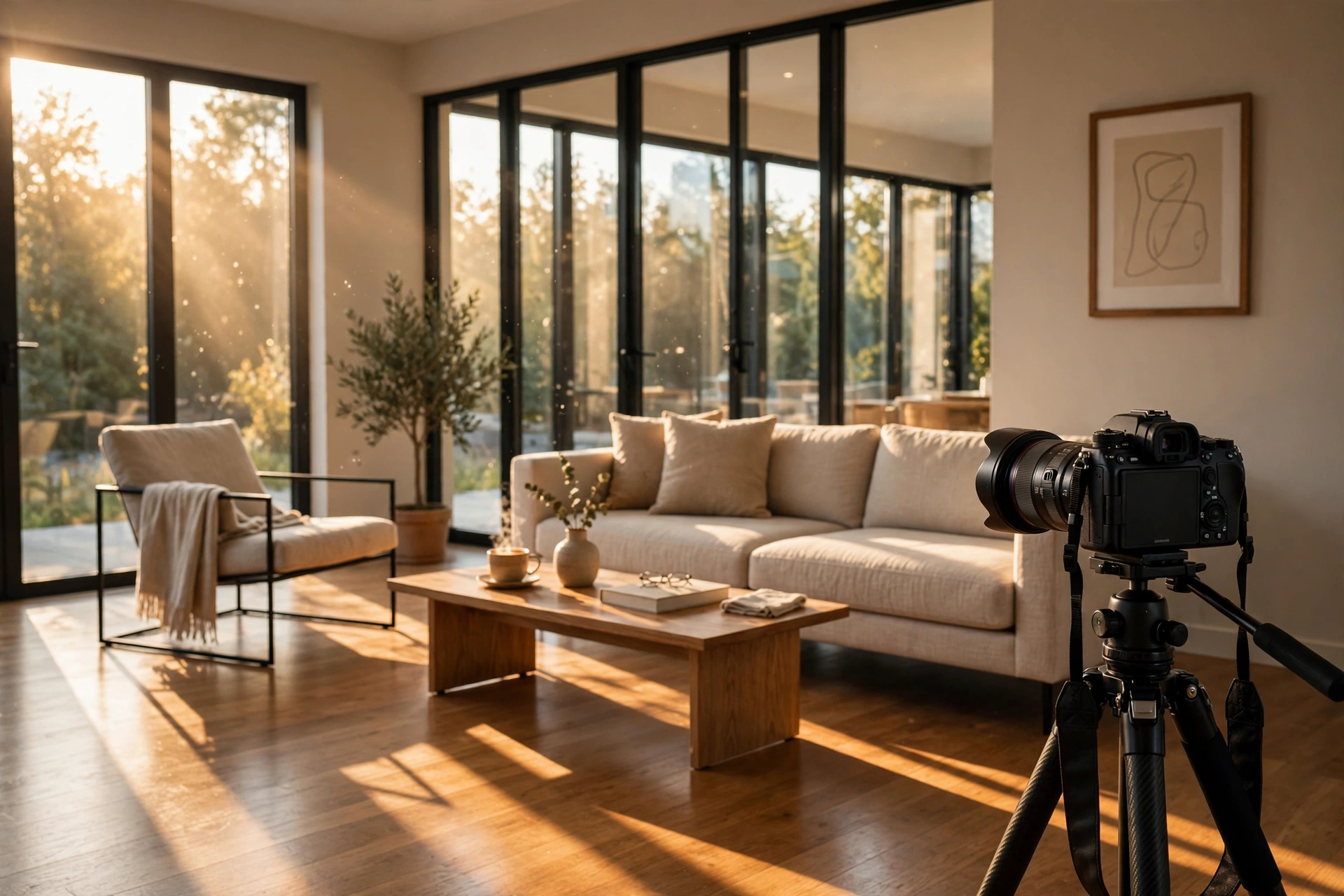


What is Residential Virtual Staging and How Does It Work?
Empty rooms often feel smaller and colder than they actually are, which creates a psychological barrier for potential buyers. This is where residential virtual staging comes into play; it is the process of using advanced computer vision and AI to digitally insert high-quality furniture, decor, and lighting into photos of vacant properties. Instead of spending thousands of dollars renting physical furniture, agents use software to create an aspirational lifestyle image that helps buyers visualize how a space can actually function.
In my experience working with luxury listing agents, the biggest hurdle isn't the price of the home, but the "imagination gap." Most buyers cannot look at a white-walled empty room and mentally place a sectional sofa or a dining set there. By implementing digital staging services, we eliminate that friction, turning a sterile environment into a home that evokes emotion and desire.
📚
Definition
Residential virtual staging is a digital interior design technique where 3D models of furniture and decor are rendered into 2D photographs of vacant real estate to create a realistic, lived-in appearance.
To understand the depth of this technology, we must look at it as more than just "Photoshop." Modern virtual staging relies on AI-driven depth mapping. The software analyzes the perspective, vanishing points, and lighting sources of the original photograph to ensure that the digital furniture doesn't look like it's "floating" on the image. According to research by the National Association of Realtors (NAR), a significant percentage of buyers struggle to visualize the potential of a vacant home, making these visual cues essential for conversion in a digital-first market.

Why Does Residential Virtual Staging Matter for Modern Real Estate?
The primary reason virtual staging is essential today is the shift in consumer behavior; the "first showing" now happens on a smartphone screen, not at the front door. If a listing photo is uninspiring, the buyer swipes left and never schedules a visit. Using residential virtual staging allows a property to compete with professionally staged homes at a fraction of the cost and time.
When we analyze the business impact, the numbers are stark. Traditional physical staging for a mid-sized home can cost between $2,000 and $5,000 per month, plus the logistical nightmare of moving trucks. In contrast, AI-powered staging costs a few dollars per image and takes seconds. Beyond the cost, there is a massive impact on the "Days on Market" (DOM) metric. Properties that look lived-in and curated tend to attract more clicks on the Multiple Listing Service (MLS), which creates a sense of urgency and competition among buyers.
According to a report from McKinsey & Company on the impact of AI in consumer industries, the use of hyper-realistic visualization tools significantly reduces the sales cycle by aligning consumer expectations with the final product more accurately. When a buyer can see a "modern minimalist" or "industrial" layout, they are more likely to feel an immediate connection to the space. This is not about tricking the buyer; it is about presenting the property's highest and best use.
Furthermore, the psychological effect of "emotional anchoring" is powerful. A vacant room feels like a commodity; a staged room feels like a destination. For those wondering why use AI property enhancement for real estate, the answer lies in this emotional transition. By presenting a curated aesthetic, you aren't just selling square footage; you are selling a lifestyle. If the room looks like a place where a family can gather for dinner or a professional can focus in a home office, the perceived value of the home increases.
How to Implement Residential Virtual Staging for Maximum ROI?
Implementing a staging strategy requires more than just adding a random couch to a room. To get the highest return on investment (ROI), you must follow a strategic workflow that aligns with the target buyer persona of the specific property.
First, start with high-quality, wide-angle photography. If the base photo is blurry or poorly lit, even the best AI will struggle to make the furniture look natural. This is where real estate image processing becomes the foundation; you need a clean, bright canvas before you start adding digital elements.
Second, define the "Design Language." Are you selling a bachelor pad in the city or a family home in the suburbs? A sleek, leather sofa and a glass coffee table work for the former, while a plush oversized sectional and warm textiles work for the latter. The goal is to make the space feel aspirational but attainable.
Third, use a professional AI studio like RealVisionAI Blog - AI Real Estate Photography & Virtual Staging. The platform allows you to generate market-ready visuals in 12 seconds, removing the traditional 48-hour wait time associated with manual designers. This speed allows agents to pivot their marketing strategy almost instantly if the initial feedback on a listing is lukewarm.
💡
Key Takeaway
Successful virtual staging is about "visual storytelling," not just filling space. The furniture choices must reflect the demographic of the most likely buyer to accelerate the closing process.
Fourth, maintain transparency. It is a best practice to include a small disclaimer in the listing description stating that "some images have been virtually staged." This builds trust with the buyer and prevents any feelings of deception when they enter the physical space.
Finally, optimize your distribution. Don't just put these images on the MLS. Use them in social media carousels, email blasts, and targeted ad campaigns. When you combine these visuals with a broader real estate visual marketing strategy, you create a cohesive brand image for the property that justifies a premium asking price.

What Are the Best Options for Staging Your Property?
Not every property requires the same approach. Depending on the budget, timeline, and condition of the home, you might choose between traditional staging, basic AI tools, or a professional AI-driven studio.
The mistake I see constantly is agents using "cheap" AI tools that produce "hallucinations"—furniture that is floating, distorted, or doesn't follow the laws of physics. This actually hurts the brand of the agent because it looks unprofessional. A professional approach ensures that the lighting on the digital sofa matches the sunlight coming through the window.
| Approach | Cost | Speed | Quality | Best For |
|---|---|---|---|---|
| Traditional Physical Staging | Very High ($$$$) | Slow (Days) | Perfect | Ultra-Luxury homes ($5M+) |
| Generic AI Tools | Low ($) | Instant | Variable/Low | Low-budget, fast flips |
| RealVisionAI Studio | Mid ($$) | 12 Seconds | Professional | Professional Agents & Scale |
When deciding which path to take, consider the "Cost per Impression." A physical staging setup might cost $3,000, but it only benefits the people who physically walk through the door. A high-end virtual staging setup costs significantly less but impacts every single person who views the listing online. For the vast majority of residential properties, the digital-first approach offers a much higher ROI.
If you are unsure where to start, checking out the types of AI property enhancement for real estate can help you understand that virtual staging is often part of a larger suite of tools, including sky replacement and grass restoration, which together create a "perfect" first impression.
Common Misconceptions About Virtual Staging
Most guides get this wrong by suggesting that virtual staging is a "cheap substitute" for the real thing. In reality, it is a strategic marketing tool with capabilities that physical staging simply cannot match.
Myth 1: Virtual staging looks "fake" or like a video game.
This was true ten years ago. However, with the advent of computer vision and neural rendering, the shadows and textures are now nearly indistinguishable from real photos. As long as you use a professional service like RealVisionAI Blog - AI Real Estate Photography & Virtual Staging, the results are photorealistic.
Myth 2: It is deceptive to the buyer.
Some believe that adding furniture is "lying" about the space. On the contrary, an empty room is often a lie because it doesn't show how the room functions. By showing a possible layout, you are providing a service to the buyer. Transparency is the key here; a simple note in the description solves any ethical concerns.
Myth 3: It only works for empty houses.
Actually, "Virtual Decluttering" is a sister technology to staging. If a house is filled with the owner's old, mismatched furniture, AI can remove those items and replace them with modern pieces. This is often more important than staging an empty room because it removes the visual "noise" that distracts buyers from the home's architecture.
Myth 4: It's only for luxury listings.
Many agents think this is only for million-dollar mansions. In reality, entry-level homes often need this the most. First-time buyers often struggle the most with spatial visualization. Giving them a clear idea of how a modest living room can look modern and cozy can be the difference between a stagnant listing and a bidding war.
Frequently Asked Questions
Is residential virtual staging legal and ethical for MLS listings?
Yes, virtual staging is widely accepted and legal across most real estate markets. The ethical standard is transparency. Most Multiple Listing Services (MLS) allow virtually staged photos as long as they do not fundamentally alter the architecture of the home—such as removing a permanent wall or hiding a major structural defect. The industry standard is to clearly label these images as "Virtually Staged" in the photo captions or the property description. This ensures that buyers have a realistic expectation of the home's physical state while still benefiting from the aspirational quality of the visuals.
How long does it take to get virtually staged photos back?
The turnaround time depends entirely on the technology used. Traditional graphic designers may take 48 to 72 hours to manually mask and render a room. However, modern AI-driven platforms, such as RealVisionAI Blog - AI Real Estate Photography & Virtual Staging, have reduced this time to as little as 12 seconds. This shift is fundamental for agents who need to get a listing live immediately after a photoshoot. In a competitive market, waiting three days for edited photos can mean the difference between capturing a weekend surge of interest or missing the window entirely.
Does virtual staging actually increase the final sale price of a home?
While it is difficult to attribute a specific dollar amount to staging alone, the data shows that staged homes typically sell faster and often for a higher price. This is because the "perceived value" is higher. According to industry trends observed by property management firms, homes that allow buyers to visualize a high-end lifestyle tend to receive more competitive offers. When buyers are emotionally invested in how they will live in the space, they are less likely to haggle over minor repairs and more likely to bid based on the emotional appeal of the "home" rather than the "house."
Can you virtually stage a room that already has some furniture in it?
Yes, this is a process often called "Virtual Decluttering" or "Hybrid Staging." Using advanced image editing and AI, a professional can remove unwanted objects—such as old carpets, dated furniture, or personal clutter—and replace them with modern, neutral pieces. This is particularly effective for properties where the current owner has a very specific or dated style that might alienate a broad range of buyers. It allows the agent to "neutralize" the space, making it a blank canvas that appeals to the widest possible audience.
What is the difference between 3D tours and virtual staging?
These are two different but complementary tools. A 3D tour (like Matterport) provides a spatial map and a "walk-through" experience, allowing the buyer to understand the flow of the house. Virtual staging, however, is about the "look and feel" of a specific room. A 3D tour of an empty house can still feel cold and cavernous. The most effective strategy is to use high-quality, virtually staged 2D photos to grab attention and emotion, and then use a 3D tour to provide the factual spatial layout. Together, they form a complete digital twin of the property.
Final Thoughts on Residential Virtual Staging
In a market where attention is the most valuable currency, residential virtual staging is no longer a luxury—it is a necessity. The ability to transform a cold, empty space into an inviting home in a matter of seconds gives agents a massive competitive advantage. By removing the "imagination gap," you reduce the friction between the first click and the final signature.
Whether you are dealing with a luxury estate or a modest condo, the goal remains the same: evoke an emotional response. The integration of artificial intelligence and computer vision has made this process accessible, affordable, and incredibly fast. If you are still relying on empty room photos, you are leaving money on the table and letting your listings blend into the noise.
To elevate your listings and start converting more viewers into buyers, explore the professional tools available at RealVisionAI Blog - AI Real Estate Photography & Virtual Staging. For more insights on optimizing your visual strategy, check out our AI Property Enhancement Pricing Guide to see how to budget for your next project.
Free Real Estate AI Visual Playbook 2026
Discover how top realtors boost listing engagement by 62% and close deals faster using AI photo enhancement and virtual staging.