

When Should You Deploy AI Property Enhancement?
High-resolution photography is no longer a luxury; it is the baseline for survival in a market where the first showing happens on a smartphone screen. In my experience working with high-volume agencies, the biggest mistake I see is waiting until a property fails to sell before trying to "fix" the photos. The optimal time to use AI property enhancement is the moment the raw files are captured, specifically when the physical state of the property or the environmental conditions (lighting, weather, clutter) create a gap between the home's actual value and its visual perception. Whether it is a gray sky over a luxury villa or an empty living room that feels cold and uninviting, AI interventions should be proactive, not reactive.

What Exactly is AI Property Enhancement and How Does it Work?
To understand when to use these tools, we must first define the scope of the technology.
📚
Definition
AI property enhancement is the application of computer vision and generative artificial intelligence to modify architectural imagery, removing visual distractions, correcting environmental flaws, and adding digital assets to increase the perceived value of a real estate listing.
Unlike traditional Photoshop work, which requires a human editor to manually mask layers and adjust curves for hours, AI property enhancement utilizes neural networks trained on millions of high-end architectural photographs. It recognizes the difference between a "cloudy sky" and a "blue sky" or an "empty room" and a "staged room" almost instantaneously.
When we developed the workflows at RealVisionAI Blog - AI Real Estate Photography & Virtual Staging, we discovered that the most effective enhancements happen at the intersection of lighting and composition. For instance, a "Day-to-Dusk" conversion isn't just a filter; it is a complex recalculation of light sources. The AI identifies the windows and light fixtures, simulates the glow of interior lights, and shifts the exterior color temperature to the "golden hour" palette.
According to research by Gartner, the integration of AI into creative workflows is shifting from "assistance" to "automation," with a significant percentage of visual content now being AI-augmented to meet the speed of digital consumption. In the real estate sector, this means that the time between the photo shoot and the MLS upload is shrinking from days to seconds, allowing agents to capitalize on "hot" leads while the property is still fresh in the buyer's mind.
Why Does Timing Matter for Visual Enhancement?
The psychological impact of a listing's first image is immediate and often irreversible. If a potential buyer scrolls past a property because the exterior looks gloomy or the rooms look vacant, they rarely return to the listing once the photos are updated. This is where the "When" becomes a business metric.
Data from the National Association of Realtors (NAR) has consistently shown that professional photography is a primary driver for lead generation. When you deploy AI property enhancement at the start of a campaign, you are essentially optimizing your conversion rate from "impression" to "click."
The business impact of poor timing is measurable. A property that sits on the market for an extra 14 days due to poor visuals doesn't just cost the seller time; it costs the agent credibility. In my experience, properties that utilize virtual staging and sky replacement in the first 24 hours of listing receive significantly more inquiries than those that are updated halfway through the listing period.
Furthermore, McKinsey's reports on AI adoption in the enterprise sector highlight that the "first-mover advantage" in AI implementation leads to operational efficiencies that competitors cannot easily replicate. In real estate, the efficiency isn't just in the cost of the photo, but in the speed of the sale. If you can turn a drab, cluttered apartment into a minimalist masterpiece in 12 seconds, you are reducing the "Days on Market" (DOM) metric, which is the gold standard for agent performance.
Practical Application: The Triggers for AI Enhancement
Identifying the exact trigger for when to apply AI property enhancement depends on the specific "pain point" of the image. Here are the most common scenarios where AI intervention is mandatory.
1. The "Gray Sky" Trigger
Nothing kills a curb appeal faster than a flat, gray, overcast sky. This makes the property look depressing and reduces the contrast of the building. Use AI sky replacement immediately after the shoot if the weather wasn't perfect. A bright, blue sky with soft clouds creates an emotional connection of "home" and "optimism."
2. The "Empty Shell" Trigger
Empty rooms are notoriously difficult to photograph. They often look smaller than they are because there is no scale, and they feel cold. This is the optimal time for virtual staging. By adding modern furniture, you help the buyer visualize the functionality of the space.
3. The "Clutter Chaos" Trigger
Working with "lived-in" homes is a constant struggle. When a seller refuses to declutter, the photos become a catalog of their personal belongings rather than a showcase of the architecture. This is where AI object removal and decluttering come in. Instead of spending hours moving furniture during the shoot, you can remove the unsightly gym equipment or old magazines in post-production.
4. The "Bad Lighting" Trigger
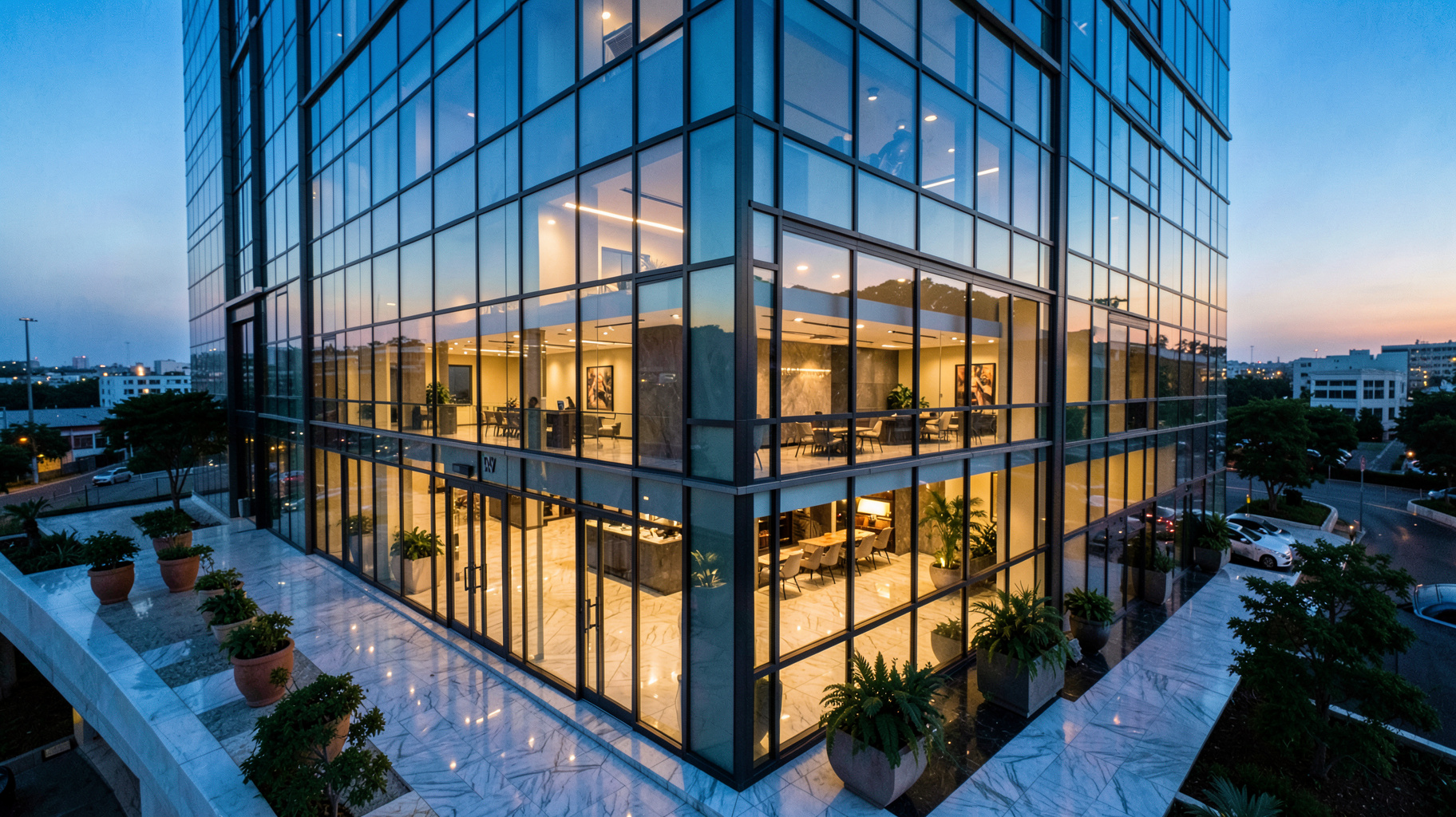
Mid-day sun creates harsh shadows, while evening shoots can be too dark. When the lighting is "off," deploy Day-to-Dusk conversion. This transforms a standard daytime shot into a cinematic twilight image, which is statistically proven to attract more clicks on platforms like Zillow or Realtor.com.
💡
Key Takeaway
Do not wait for the market to tell you your photos are bad. Use AI enhancement as a preventative measure to ensure every single listing is "market-ready" before it ever goes live.
For those managing dozens of properties, the manual approach to these triggers is impossible. This is why we built RealVisionAI Blog - AI Real Estate Photography & Virtual Staging to handle these triggers in 12 seconds. The goal is to remove the friction between the camera click and the listing upload.

Choosing the Right Enhancement Path: A Comparison
Not every property requires the same level of AI intervention. Depending on the property's condition and the target audience, you may choose different paths.
| Scenario | Traditional Manual Editing | Generic AI Tools | RealVisionAI Professional Approach | Best For |
|---|---|---|---|---|
| Empty Luxury Condo | Expensive, takes 48h for staging | Low-res, "fake" looking furniture | High-fidelity, style-matched virtual staging | High-ticket sales |
| Suburban Home/Gray Sky | Manual masking, slow | Over-saturated, "cartoon" skies | Naturalistic, lighting-matched sky replacement | Fast-turnaround listings |
| Lived-in Rental | Impossible to "clean" manually | Smudges artifacts into the image | Precision AI decluttering and object removal | Property management |
| Night/Twilight Shot | Requires expensive evening shoot | Flat color shift (looks purple) | Full Day-to-Dusk light simulation | Luxury curb appeal |
Here's the thing though: many agents try to use generic AI tools and end up with "uncanny valley" images where the furniture looks like it's floating or the sky looks like a postcard from the 1990s. Professional AI enhancement isn't just about applying a filter; it is about maintaining the geometric integrity of the architecture.
Common Questions and Misconceptions
Most guides on AI in real estate get this wrong by suggesting that AI is a replacement for a photographer. This is a dangerous misconception. AI is not a replacement for the eye of a professional; it is a superpower for the professional's output.
Myth 1: "AI enhancement is deceptive or unethical."
Some argue that virtual staging is "lying" to the buyer. In reality, it is providing a "vision" of potential. As long as the structural elements of the room remain accurate, virtual staging is a tool for communication. Most jurisdictions allow it, provided it is clearly labeled as "virtually staged." It is no different than a builder showing a 3D render of a house that hasn't been built yet.
Myth 2: "I can just use a free AI app to do this."
The mistake I made early on—and that I see constantly—is trusting low-tier AI apps. These tools often hallucinate details, adding windows where there are walls or creating furniture with five legs. When you are selling a million-dollar property, "almost right" is actually wrong. Professional-grade AI, like that found in RealVisionAI Blog - AI Real Estate Photography & Virtual Staging, uses constraints to ensure architectural accuracy.
Myth 3: "AI enhancement only works for luxury homes."
Actually, AI enhancement is perhaps more important for "average" or "fixer-upper" homes. A luxury home already looks good. A mid-range home with a messy kitchen and a gray sky looks like a liability. AI allows these properties to compete on a visual level, attracting a wider pool of buyers who might have otherwise skipped the listing.
Frequently Asked Questions
When is the absolute best time to apply AI property enhancement?
The absolute best time is immediately after the photo session and before the listing is published to any public platform. By integrating AI property enhancement into your initial workflow, you ensure that the "first impression" is perfected. Waiting until a property has been on the market for two weeks to "refresh" the photos sends a signal to buyers that the property is stagnant or undesirable. Proactive enhancement creates an immediate sense of urgency and desire.
Can AI property enhancement actually increase the final sale price?
Yes, indirectly but significantly. While AI doesn't change the square footage, it changes the perceived value. According to industry benchmarks, staged homes often sell faster and for more money than unstaged ones because they remove the mental "work" the buyer has to do to imagine the space. When you use AI to declutter a room or add high-end furniture, you are positioning the property in a higher psychological bracket, which gives the seller more leverage during negotiations.
Is it better to use AI for sky replacement or just wait for a sunny day?
In a professional real estate business, waiting for the "perfect day" is a luxury you cannot afford. Weather is unpredictable, and your clients want their homes on the market now. AI sky replacement is the industry standard because it provides consistency across all your listings. If one house has a sunset and the next has a storm, your portfolio looks haphazard. AI allows you to maintain a consistent, high-end "brand look" regardless of the actual weather during the shoot.
How do I know if a property needs virtual staging or just basic editing?
The trigger for virtual staging is "lack of scale and warmth." If a room is empty, it needs staging. If a room is furnished but looks dark, outdated, or cluttered, it needs basic AI editing and decluttering. A good rule of thumb: if the room is empty, stage it. If the room is messy, declutter it. If the room is beautiful but the light is bad, enhance the lighting. Each tool solves a different psychological barrier for the buyer.
Will AI property enhancement make my listings look "fake" to experienced buyers?
Only if the tools used are low-quality. The key to avoiding the "fake" look is lighting consistency. Inexperienced AI tools just "paste" an image on top of another. Professional AI, such as that used by RealVisionAI Blog - AI Real Estate Photography & Virtual Staging, analyzes the existing light sources in the room and adjusts the added furniture or sky to match those shadows and highlights. When the light is consistent, the brain perceives the image as a real photograph.
Final Thoughts on AI Property Enhancement
The window of opportunity to capture a buyer's attention is shorter than ever. If you are still relying on the hope that the weather will be perfect or that a seller will magically clean their entire home before a shoot, you are leaving money on the table. AI property enhancement is the bridge between the reality of a property and its maximum market potential.
Whether it is transforming a bleak winter exterior into a sunny spring day or turning a vacant warehouse into a chic loft, the timing is simple: do it before the world sees the listing. By automating these enhancements, you move from being a photographer or agent who "takes pictures" to a visual strategist who "creates desire."
To experience this speed and quality firsthand, explore the tools at RealVisionAI Blog - AI Real Estate Photography & Virtual Staging, where we turn raw images into market-ready assets in 12 seconds. Stop waiting for the perfect conditions and start creating them.
Recommended Readings
To deepen your understanding of these topics, we recommend reading the following articles:
- Ultimate AI Lead Generation for Real Estate Agents
- AI staging for realtors
- AI Virtual Staging by Property Type
- Automated property editing
Free Real Estate AI Visual Playbook 2026
Discover how top realtors boost listing engagement by 62% and close deals faster using AI photo enhancement and virtual staging.