
How Much Does AI Real Estate Photography Actually Cost in 2026?
The cost of AI real estate photography typically ranges from $1.00 to $15.00 per image, depending on the complexity of the edit, such as whether you need simple color correction or full-scale virtual staging. While traditional professional photography packages can cost hundreds of dollars per property, AI-driven solutions allow agents to scale their visual marketing by reducing the cost per asset by up to 90%. In my experience working with high-volume property managers, the biggest shift isn't just the lower price point, but the collapse of the turnaround time from 48 hours to nearly instantaneous delivery.

What Exactly is AI Real Estate Photography and How is it Priced?
To understand the pricing, we first have to define what is actually happening under the hood. Most "AI" services are not just filters; they are sophisticated computer vision systems that analyze spatial geometry and lighting.
📚
Definition
AI Real Estate Photography refers to the use of artificial intelligence and machine learning algorithms—specifically generative adversarial networks (GANs) and diffusion models—to enhance, edit, or completely synthesize architectural imagery to make a property more appealing to buyers.
The pricing models for these services generally fall into three categories: Pay-per-Image, Subscription-based, and Hybrid Credits. Pay-per-image is common for freelancers who only have one or two listings a month. Subscriptions are the gold standard for agencies, offering a fixed monthly cost for a set number of "credits."
According to a report by Gartner, the adoption of generative AI in creative workflows is projected to reduce production costs for digital assets by over 40% by 2026, as the need for manual retouching diminishes. When you pay for AI real estate photography, you aren't paying for the photographer's time on site; you are paying for the compute power and the proprietary training of the model that ensures a sofa looks like a sofa and not a distorted blob.
The mistake I made early on—and that I see constantly among new agents—is assuming that the cheapest "free" AI tools are sufficient. Free tools often lack the architectural precision required for a Multiple Listing Service (MLS) upload. They may hallucinate walls or distort the floor plan, which can lead to legal disputes if a buyer feels the property was misrepresented. Professional-grade AI, like what we provide at RealVisionAI Blog - AI Real Estate Photography & Virtual Staging, prioritizes structural integrity over mere "filters."
Why Does Investing in AI Visuals Impact the Bottom Line?
The cost of AI real estate photography should not be viewed as an expense, but as a conversion optimization strategy. In the real estate world, the "first showing" happens on a smartphone screen. If the photos are dark, cluttered, or empty, the user scrolls past.
Data from the National Association of Realtors (NAR) consistently indicates that the quality of listing photos is one of the top factors in whether a buyer decides to visit a property in person. When properties are virtually staged using AI, they typically spend fewer days on the market. For example, a property that might sit for 60 days empty could sell in 30 days if the buyer can visualize themselves in the space.
Beyond the speed of sale, there is the psychological impact of "perceived value." A home with professional AI enhancements—such as a perfect "golden hour" sky replacement or a decluttered living room—can often command a higher asking price. According to research from Harvard Business Review on digital consumer behavior, high-quality visual storytelling increases a consumer's willingness to pay a premium for a service or product. In real estate, this translates to a higher perceived property value.
Now, here's where it gets interesting: the ROI isn't just in the sale price, but in the reduction of "waste" visits. When a property is accurately and beautifully presented through AI real estate photography, you attract buyers who are actually interested in the style and layout of the home, rather than "looky-loos" who are surprised by the actual condition of the property upon arrival. This saves the agent hours of unproductive travel and showing time.
How to Implement AI Enhancements for Maximum ROI
If you are looking to integrate AI into your workflow, you don't need to be a tech expert. The process has evolved from complex software to simple "upload and generate" interfaces.
- Capture the Base Image: Even when using AI, start with a clean, wide-angle shot. AI can fix lighting and remove clutter, but it cannot "invent" a room that wasn't photographed. Use a tripod to ensure a stable base.
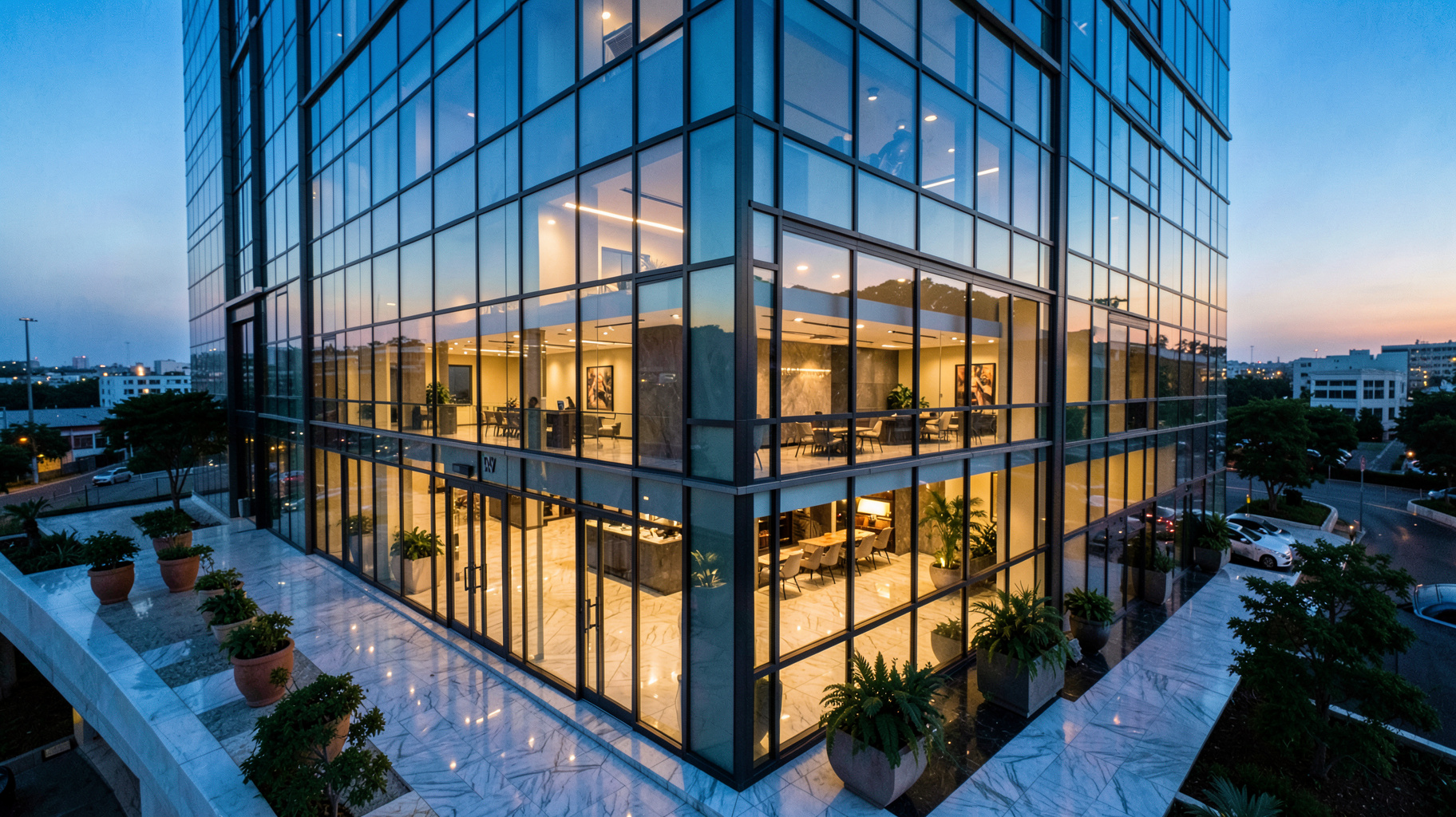
- Select the Enhancement Path: Determine if the property needs "Day-to-Dusk" conversion (perfect for exteriors), "Virtual Staging" (for empty rooms), or "Object Removal" (for dated furniture).
- Processing via RealVisionAI Blog - AI Real Estate Photography & Virtual Staging: This is where the heavy lifting happens. Instead of spending five hours in Photoshop, you upload your images to a platform like RealVisionAI Blog - AI Real Estate Photography & Virtual Staging. The system analyzes the room's dimensions and lighting in seconds, allowing you to apply a "modern" or "minimalist" staging style that fits the local market.
- Quality Assurance (QA): Always check for "AI artifacts." Ensure that the legs of the virtual furniture touch the floor naturally and that the shadows align with the light sources in the room.
- Distribution: Upload the enhanced visuals to the MLS, Zillow, and social media platforms simultaneously to create a cohesive brand image for the listing.
💡
Key Takeaway
The most effective use of AI in real estate is not to replace the photograph, but to remove the "friction" that prevents a buyer from imagining their life in the home.

Comparing Your Options: Traditional vs. Cheap AI vs. Professional AI
When deciding where to spend your budget, you have to choose between three distinct tiers of service. Many agents make the mistake of choosing the cheapest option, only to find the results look "fake" or uncanny.
| Feature | Traditional Photography | Generic/Cheap AI Tools | Professional AI (RealVisionAI) |
|---|---|---|---|
| Cost | High ($200 - $600 per home) | Very Low ($0 - $10/mo) | Moderate (Per image/Credit) |
| Turnaround | 2 - 5 Business Days | Instant | 12 Seconds |
| Accuracy | High (Physical Reality) | Low (High Hallucination) | High (Spatially Aware) |
| Scalability | Low (Requires human travel) | High | High |
| Quality | Professional | Amature/Distorted | Cinematic & Market-Ready |
| Best For | Ultra-Luxury Estates | Low-budget experiments | Fast-moving residential listings |
That said, the traditional approach still has a place for $10M+ mansions where a physical crew is required for custom lighting. However, for 95% of the residential market, the Professional AI approach is the only one that balances speed, cost, and quality.
Common Questions and Misconceptions About AI Pricing
Most guides get this wrong by claiming that AI is "free" or "virtually zero cost." This is a fallacy. While the cost of a single image is low, the cost of quality is where the distinction lies.
Myth 1: "I can just use a free AI generator to stage my homes."
The reality is that free generators often ignore perspective. You'll end up with a sofa that looks like it's floating or a table that is slanted at a 45-degree angle. This doesn't just look bad; it makes the agent look unprofessional. Professional AI real estate photography uses "depth mapping" to ensure furniture sits correctly in a 3D space.
Myth 2: "AI photography is deceptive and illegal."
This is a common fear, but there is a clear line between "enhancing" and "misrepresenting." Removing a trash can from a kitchen or adding a virtual sofa to an empty room is widely accepted as a marketing tool, similar to how a home stager would bring in physical furniture. It becomes an issue only if you remove a permanent structural defect (like a giant hole in the wall).
Myth 3: "AI is only for empty homes."
Actually, some of the most powerful AI tools are for occupied homes. "Virtual Decluttering" allows you to take a photo of a messy room and use AI to remove the clutter, leaving a clean, neutral space. This is often cheaper than paying a homeowner to clean their house or paying a professional organizer.
Frequently Asked Questions
How much should I budget for AI real estate photography per listing?
For a standard 3-bedroom home, you should budget between $20 and $60 for AI enhancements. This typically covers 10 to 15 key images, including a mix of virtual staging for the main living areas and exterior enhancements like sky replacement and grass greening. While some individual images may only cost a few dollars, the value comes from a cohesive "look" across the entire gallery. Investing this amount is a fraction of the cost of a traditional professional shoot, which can easily exceed $300.
Is virtual staging more expensive than physical staging?
Virtual staging is exponentially cheaper. Physical staging requires renting furniture, paying movers to transport and arrange pieces, and paying a monthly rental fee for the furniture. This can cost anywhere from $1,000 to $5,000 per property. In contrast, AI-powered virtual staging costs a few dollars per image and can be changed instantly. If a buyer doesn't like "Modern" style, you can switch the room to "Traditional" in 12 seconds using RealVisionAI Blog - AI Real Estate Photography & Virtual Staging, without moving a single piece of furniture.
Do AI-enhanced photos actually increase the selling price?
While AI doesn't change the physical structure of the home, it increases the "emotional value" and the number of qualified leads. According to data from various real estate marketing studies, listings with high-quality, staged visuals receive significantly more clicks. More clicks lead to more showings, and more showings lead to more competitive offers. In a competitive bidding war, the property that looked the best online often secures the highest offer because the buyer had already formed a positive emotional connection before stepping foot inside.
How long does it take to get AI-enhanced photos back?
The turnaround time is the biggest advantage of this technology. Traditional photographers require time to travel, shoot, and then spend hours in post-production. AI real estate photography reduces this to seconds. When using a professional studio like RealVisionAI Blog - AI Real Estate Photography & Virtual Staging, the process is nearly instant. You upload the raw photo, select your desired enhancement (like "Day-to-Dusk"), and the AI generates the final image in roughly 12 seconds. This allows agents to get listings live on the MLS the same day they visit the property.
Can AI fix photos that were taken in bad weather?
Yes, this is one of the most common uses of the technology. AI sky replacement and "grass restoration" can turn a gloomy, gray rainy day into a bright, sunny afternoon. The AI doesn't just "paste" a blue sky; it adjusts the lighting on the house and the ground to match the new sky, ensuring the image looks natural. This is a fundamental part of AI real estate photography, as the exterior "curb appeal" image is the most important photo in any listing.
Final Thoughts on AI Real Estate Photography Costs
The financial landscape of property marketing has shifted. We are moving away from the era of expensive, slow-turnaround photography and into an era of instant, high-fidelity visual assets. When you analyze the cost of AI real estate photography, don't just look at the price per image; look at the cost of a listing sitting empty for an extra two weeks.
The efficiency gained by using tools like RealVisionAI Blog - AI Real Estate Photography & Virtual Staging allows you to focus on what actually matters: negotiating deals and closing sales. By spending a small amount on AI enhancements, you are effectively buying a "digital storefront" that works for you 24/7, attracting the right buyers and justifying a higher asking price.
If you're ready to stop waiting days for your photos and start winning more listings, it's time to automate your visual workflow.
Visit realvisionaire.com to experience market-ready listing visuals in just 12 seconds.
Recommended Readings
To deepen your understanding of these topics, we recommend reading the following articles:
- Ultimate AI Lead Generation for Real Estate Agents
- AI property enhancement
- AI staging for realtors
- AI Virtual Staging by Property Type
Free Real Estate AI Visual Playbook 2026
Discover how top realtors boost listing engagement by 62% and close deals faster using AI photo enhancement and virtual staging.