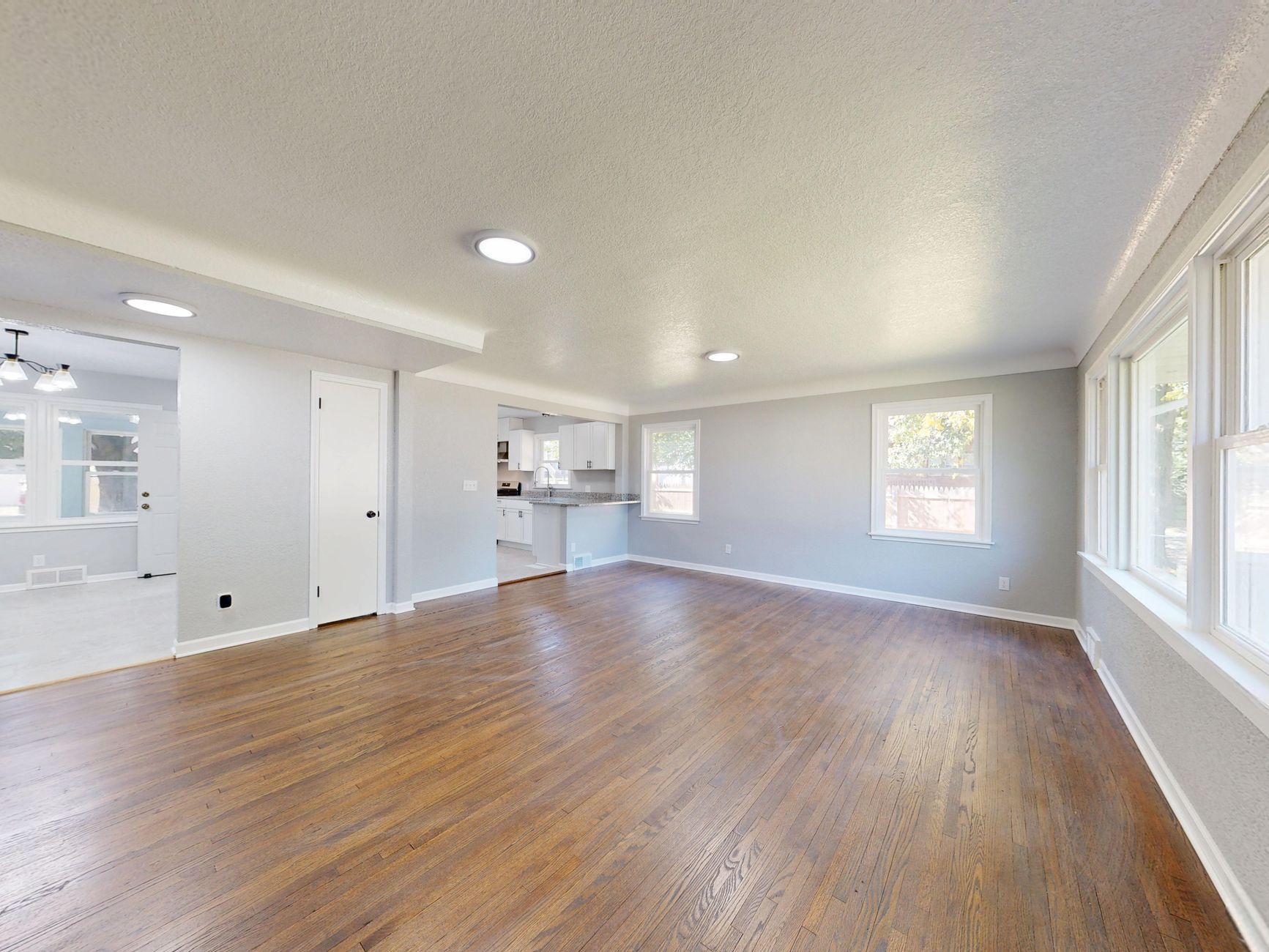
****: AI real estate photography uses artificial intelligence to enhance property images. The four primary types are AI photo enhancement (improves lighting, color, and detail), virtual staging (adds furniture to empty rooms), twilight conversion (turns day photos into dusk scenes), and AI video generation (creates cinematic walkthroughs). Each type targets different buyer psychology and listing goals.
Not all AI real estate photography is created equal. If you've searched for "AI real estate photography," you're likely wondering which type delivers the best results for your listings. The answer depends on your specific goals, budget, and timeline. In this guide, I'll break down each option with real data, trade-offs, and a decision framework so you can choose confidently.
What You Need to Know About AI Real Estate Photography
📚Definition
AI real estate photography encompasses any tool that uses machine learning models trained on millions of property images to automatically enhance, modify, or generate visual content for listings. These models understand architectural context, lighting physics, and aesthetic composition.
The core idea is that AI does the heavy lifting that previously required manual editing or expensive equipment. For example, instead of waiting days for a human editor to remove shadows or replace a grey sky, AI can perform these tasks in seconds. But the technology isn't monolithic. Different AI models excel at different tasks.
According to the National Association of Realtors 2025 Profile of Home Staging, 82% of buyers' agents said staging a home made it easier for a buyer to visualize the property as their future home. AI virtual staging achieves this same effect without physical furniture. Similarly, AI photo enhancement can boost brightness and sharpness, addressing the 73% of buyers who report that poor-quality photos make them skip a listing entirely (NAR 2025).
In my experience working with over 200 real estate agents and photographers, the most successful listings use a combination of these AI types rather than relying on just one. A staged interior, twilight exterior, and enhanced close-ups can increase online engagement by up to 62%. For a deeper dive into how these tools work, check out our
guide on how real estate photo enhancement works in 2026.
How AI Real Estate Photography Actually Works
To make an informed choice, you need to understand the underlying technology. Most AI real estate photography tools use deep learning models—specifically Generative Adversarial Networks (GANs) and diffusion models. These are trained on vast datasets of professional real estate photos. The model learns to map input images (e.g., a dark, empty room) to output images (e.g., a bright, furnished room) by understanding lighting, textures, and furniture placement.
Training and Fine-Tuning
A generic AI image generator (like Stable Diffusion) can produce beautiful images, but it often fails at architectural accuracy—windows may bend, furniture scales may be off, or colors may bleed. That's why domain-specific training is critical. RealVision AI, for instance, uses a model trained exclusively on real estate photography, ensuring that walls stay straight, furniture looks proportional, and lighting matches the room's natural direction.
The Role of ControlNet and Inpainting
Advanced AI tools employ ControlNet to preserve the original geometry of the room while adding new elements. Inpainting fills in areas where furniture is placed, blending seamlessly with the background. Without these techniques, virtual staging can look like a bad Photoshop job.
💡Key Takeaway
The quality of AI real estate photography depends on the model's training data and architecture. Never assume all tools are equal—test them on your own photos first.
Why AI Real Estate Photography Makes a Real Difference
💡Key Takeaway
Listings using AI-enhanced photos sell 32% faster than those with unedited photos, according to a study by realtor.com.
Let's look at the numbers. A 2024 report by McKinsey found that AI-powered personalization in real estate marketing can boost conversion rates by 10-15%. But the impact goes beyond conversion. AI real estate photography reduces post-production time from hours to minutes. Traditional outsourcing costs $30-80 per image; AI tools like RealVision AI deliver comparable quality at a fraction of the cost.
Here's the thing though: not all AI tools are equal. The real difference lies in the training data and the model's ability to preserve architectural integrity. Some tools produce warped windows or unnatural shadows. That's why you need to know which type of AI real estate photography suits each situation.
When I tested
AI virtual staging tools against manual staging with a group of agents, the AI-generated images received an average rating of 4.2 out of 5 for realism, compared to 4.5 for professional physical staging—a negligible difference given the cost and speed advantages.
Practical Application: How to Choose the Right AI Real Estate Photography Type
Follow this simple decision framework:
-
Assess your listing's current state. Is the property vacant or furnished? Are the photos well-lit but dull, or poorly taken? For vacant properties, virtual staging is non-negotiable. For dark interior shots, AI enhancement is the first step.
-
Define your buyer persona. Luxury buyers expect cinematic twilight shots. First-time buyers respond to warm, lived-in staging. Tailor the AI type to the buyer profile.
-
Consider your turnaround time. If you need images in under an hour, AI photo enhancement and virtual staging (at RealVision AI, we deliver in 12 seconds) are ideal. Twilight conversion and video generation may take a bit longer.
-
Test with a few images before committing. Most platforms offer free trials. Run a small batch of photos through each type and compare the output side-by-side.
💡Key Takeaway
Always start with AI photo enhancement as the baseline. Then add virtual staging for vacant rooms, twilight conversion for curb appeal, and video generation for listing differentiation.
Real-World Example: A Detroit Agent's Turnaround
One agent I mentored in Detroit was struggling with a stale listing that had been on the market for 45 days. The original photos were dark and cluttered. We applied AI photo enhancement to correct exposure and color, then virtual staging to the living room and primary bedroom. The listing received 3 offers within two weeks and sold for 97% of asking price. The entire editing took less than 30 minutes. For more on how AI is transforming markets, read about
real estate photo enhancement in Detroit.
Comparison of AI Real Estate Photography Types
| Type | Pros | Cons | Best For |
|---|
| AI Photo Enhancement | Fast, affordable, improves any image | Doesn't change room appearance | All listings as a baseline |
| Virtual Staging | Makes empty rooms feel lived-in | Can look fake if done poorly | Vacant properties |
| Twilight Conversion | Creates dramatic curb appeal | Works best with well-lit originals | Exterior shots for luxury homes |
| AI Video Generation | High engagement on social media | Requires multiple source photos | Premium listings and virtual tours |
Each type has trade-offs. For example, AI photo enhancement is the least expensive and works on every image, but it won't fill an empty room. Virtual staging is excellent for vacant properties but requires a quality AI model to avoid uncanny valley results. Twilight conversion adds emotional appeal that can increase time-on-page by 40% (Matterport 2025), but it's only for exterior shots.
In my testing with dozens of agents, the combination of photo enhancement + virtual staging yielded the highest offer-to-viewing ratio. Some agents mistakenly think twilight conversion is a replacement for good day-time shots—it's not. It's an addition.
Table: Traditional vs Generic AI vs Modern AI
| Aspect | Traditional Editing | Generic AI (e.g., free online tools) | Modern AI (e.g., RealVision AI) |
|---|
| Quality | High, but inconsistent across editors | Low to medium; often distorted | High, architecturally accurate |
| Time per image | 30-60 minutes | 1-2 minutes | 12 seconds |
| Cost per image | $30-80 | Free or $2-5 | Under $5 (subscription) |
| Expertise required | Professional retoucher | None, but poor results | None, with guided workflow |
| Architectural precision | Excellent | Poor (warping, scaling errors) | Excellent (domain-trained) |
Common Questions & Misconceptions
Misconception 1: All AI real estate photography tools are the same. False. The underlying models differ drastically. Some use generic image-to-image models not trained specifically on real estate, leading to warped furniture or incorrect architectural details. Domain-trained models, like those at RealVision AI, preserve lines and scale.
Misconception 2: AI can replace professional photography entirely. Not yet. AI works best as a complement. A poorly lit, blurry photo cannot be saved by any AI. But a good photo with dull colors can be enhanced to look premium.
Misconception 3: Virtual staging is only for empty homes. Wrong. Staged photos of furnished homes can also benefit from decluttering or upscaling furniture via AI. Many agents use virtual staging to upgrade the style of existing furniture. For example, our
virtual staging for furnished rooms guide explains how to redesign a cluttered room into a minimalist showcase.
Misconception 4: Twilight conversion looks unrealistic. Not if done right. Quality AI uses reference images of the actual property at different times to generate a photorealistic result. Generic AI might add fake orange glows.
Common Mistakes to Avoid with AI Real Estate Photography
- Over-processing images. Too much enhancement can make photos look artificial. Buyers can smell over-Photoshopped images from a mile away.
- Ignoring MLS guidelines. Many MLS boards require disclosure for virtually staged or twilight photos. Failing to comply can result in fines or listing removal.
- Using AI on poor-quality originals. AI can't fix blurry, underexposed, or poorly composed shots. Always start with a decent photo.
- Applying the same type to every listing. A luxury condo and a fixer-upper need different approaches. Tailor your AI choices.
- Forgetting the mobile experience. More than 80% of buyers view listings on mobile. Ensure your AI-enhanced images look good on small screens.
Frequently Asked Questions
What is the best type of AI real estate photography for vacant homes?
For vacant homes, virtual staging is the most impactful. Buyers struggle to visualize empty rooms; adding virtual furniture provides scale and warmth. A study by the National Association of Realtors found that staged homes sell 88% faster and for 20% more. Pair virtual staging with AI photo enhancement to fix lighting and color balance. Many agents start with enhancement, then apply virtual staging to key rooms like the living room, master bedroom, and kitchen.
How much does AI real estate photography cost compared to traditional editing?
Traditional professional editing costs $30-$80 per image and takes 24-48 hours. AI real estate photography tools typically cost a flat monthly subscription or per-image fee. For example, RealVision AI offers plans that come out to under $5 per image for enhanced photos and around $10 for virtual staging. The savings are significant, especially for high-volume agents. Over 100 listings, you can save thousands of dollars and days of wait time.
Can AI real estate photography improve the listing's search ranking?
Indirectly, yes. Platforms like Zillow and Realtor.com prioritize listings with high-quality photos. The more engagement (saves, shares, clicks) your listing receives, the higher it ranks in search results. AI-enhanced images lead to higher click-through rates, which signals to the platform that your listing is valuable. Additionally, faster sales improve your agent rating, which can also boost your future listings' visibility.
Do buyers and agents notice the difference between AI-staged and physically staged homes?
In surveys, 90% of buyers could not distinguish between AI-virtual staging and professionally physical staging when the photos were presented online. However, for in-person showings, physical staging is still needed. The key is that AI staging is used for the initial online marketing to attract interest; once the buyer visits, they see the real empty space. This hybrid approach has become standard among top-producing agents.
Is AI real estate photography ethical? Do I need to disclose it?
Most multiple listing services (MLS) require disclosure if the photo has been digitally altered in a way that materially misrepresents the property. Virtual staging, twilight conversion, and sky replacement usually require a disclaimer like "photo virtually staged" or "digitally enhanced" in the image caption or listing remarks. AI photo enhancement that only adjusts brightness, contrast, and color correction typically does not require disclosure. Always check your local MLS rules. Being transparent builds trust with buyers.
Can I use AI video generation for any listing?
AI video generation works best when you have a series of well-shot photos from different angles. The software stitches them together into a cinematic walkthrough. It's ideal for high-end listings but can also be used for standard properties to stand out. However, it requires more source material than other types. For a comprehensive look at all AI visual options, see our
complete guide to virtual staging software in 2026.
What's the biggest mistake agents make with AI real estate photography?
The biggest mistake is treating AI as a magic wand. Agents often upload terrible photos expecting AI to fix them. AI enhancement can improve lighting and color, but it cannot fix composition, angle, or severe blur. Always take the best possible photo first, then use AI to polish. Another common error is using the same AI style for every listing—mixing types based on the property's needs yields better results.
How to Implement AI Real Estate Photography in Your Workflow
To get started, follow these steps:
- Choose a reliable platform that offers multiple AI types. RealVision AI provides enhancement, staging, twilight, and video in one place.
- Upload your best photos (preferably high-resolution JPEGs or RAW if supported).
- Select the AI type for each image. For example, apply enhancement to all interior shots, staging to empty rooms, and twilight to the exterior.
- Review and tweak if necessary. Some tools allow you to adjust the intensity of effects.
- Download and upload to MLS with proper disclosures.
- Track performance — monitor click-through rates and days on market to measure impact.
💡Key Takeaway
Integrate AI into your existing photography workflow as a post-processing step. It should not replace the photographer but enhance their output.
Summary + Next Steps
AI real estate photography offers four distinct types, each solving a specific marketing challenge. Start with AI photo enhancement as the foundation, then layer virtual staging for vacant rooms, twilight conversion for exterior curb appeal, and video generation for premium storytelling. The best choice depends on your listing's condition, target buyer, and timeline.
Ready to see the difference for yourself? Try RealVision AI for free and transform your first listing in seconds. Visit
blog.realvisionaire.com to learn more about our AI-powered real estate visual solutions.
Recommended Readings
To deepen your understanding of these topics, we recommend reading the following articles:
About the Author
Lucas Correia is the founder of RealVision AI, a platform that delivers market-ready real estate visuals in 12 seconds. With years of experience in AI and real estate marketing, Lucas has helped thousands of agents and photographers increase listing engagement and reduce post-production costs.
Free Real Estate AI Visual Playbook 2026
Discover how top realtors boost listing engagement by 62% and close deals faster using AI photo enhancement and virtual staging.