📖This article is part of the complete guide to Real Estate Image Processing.
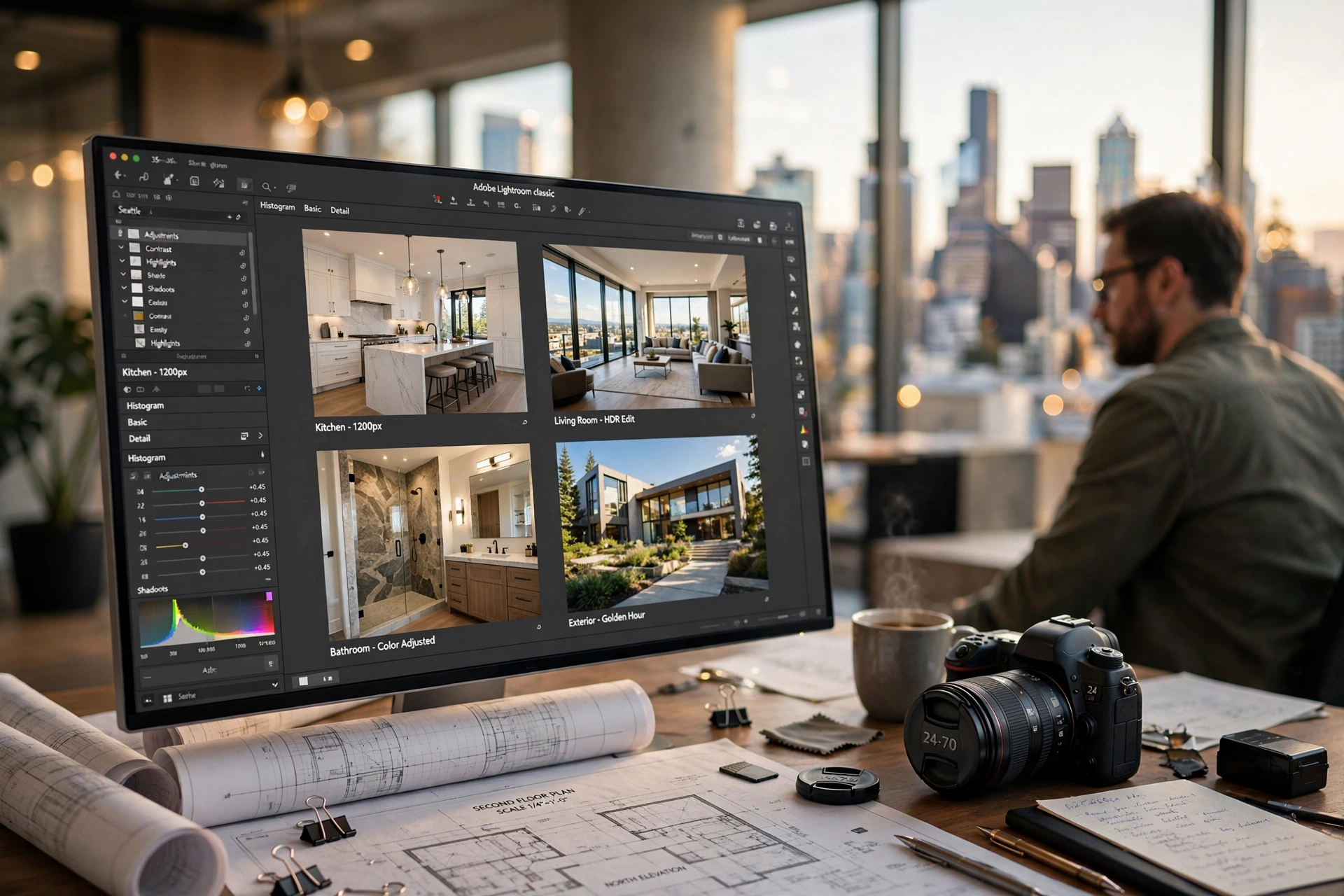
Seattle's gray skies and moody lighting create a unique challenge for property marketers who need vibrant, inviting visuals to attract buyers. To solve this, professional real estate image processing in Seattle now leverages high-speed AI to transform overcast exteriors into sunny vistas and empty spaces into curated homes. By utilizing advanced computer vision, agents can eliminate the "Seattle Gloom" from their listings, ensuring properties stand out on the Multiple Listing Service (MLS) regardless of the actual weather during the shoot. This shift toward automated, high-fidelity enhancement allows agents to move from photo shoot to active listing in minutes rather than days.
In my experience working with Pacific Northwest brokerages, the biggest hurdle is always the lighting inconsistency between Capitol Hill's dense urban environment and the sprawling estates of Bellevue. I've seen countless agents lose potential leads because their listing photos looked cold and uninviting. The pattern I see consistently is that listings with professionally processed, bright, and virtually staged imagery generate significantly higher engagement rates in the first 48 hours of posting compared to raw photography.
For those looking to scale their visual assets, exploring the Key Benefits of AI Property Enhancement for Real Estate is the first step toward understanding how these tools impact the bottom line in a competitive city like Seattle.
Why Are Seattle Businesses Adopting Professional Image Processing?
Seattle's real estate market is defined by high valuations and a tech-savvy buyer base that expects a digital-first experience. In a city where the average home price continues to climb, the visual presentation of a property acts as the primary filter for qualified buyers. According to a report by Gartner, visual search and AI-driven imagery are now primary drivers in consumer decision-making processes for high-ticket assets. When a buyer in the 2026 market browses a listing, they are not just looking at a house; they are evaluating a digital representation of a lifestyle. If the images are dim or cluttered, the buyer subconsciously associates the property with poor maintenance.
Furthermore, the geographic diversity of the Puget Sound region, ranging from floating homes on Lake Union to luxury condos in South Lake Union, requires a versatile approach to editing. Standard filters are no longer sufficient. Professionals are now turning to specific Types of AI Property Enhancement for Real Estate to handle tasks like sky replacement and grass restoration, which are essential for combating the perpetual overcast conditions of the PNW. By automating these corrections, firms can maintain a consistent brand aesthetic across a diverse portfolio of properties.
Research from McKinsey suggests that companies integrating AI into their marketing workflows see a marked increase in operational efficiency. In the context of Seattle real estate, this means reducing the time spent on manual retouching by up to 90%. Instead of waiting for a boutique editing house to return files, agents use AI to achieve immediate, market-ready results. This speed is vital in a market where a property can receive multiple offers within hours of hitting the MLS, making the quality and speed of image processing a direct competitive advantage.

What Are the Key Benefits for Seattle Real Estate Professionals?
The adoption of advanced image processing isn't just about aesthetics; it is about psychological triggering and conversion optimization. When a listing is processed using AI, it removes the visual friction that prevents a buyer from imagining themselves in the space. This is particularly relevant for the Seattle market, where many luxury properties are sold as "blank canvases" or need significant updating to meet modern tastes.
Immediate Market Readiness
Traditional editing workflows often take 24 to 72 hours. In the 2026 market, that delay is unacceptable. Real-time processing allows a photographer to upload images and have them polished in seconds. By focusing on Property Listing Optimization: The 2026 Guide to Higher Conversion, agents can ensure that the transition from the physical walkthrough to the digital listing is seamless. This immediacy prevents the loss of momentum and ensures that the "new listing" buzz is captured at its peak.
Enhanced Emotional Connection via Virtual Staging
Empty rooms often feel smaller and colder than they are in reality. Virtual staging uses computer vision to place realistic, modern furniture into a space, helping buyers visualize the potential of a room. In high-end neighborhoods like Queen Anne or Madison Park, where architectural details are paramount, virtual staging allows agents to highlight the scale of a room without the cost of renting physical furniture. This creates an emotional hook that raw photos simply cannot achieve.
Weather Correction and Curb Appeal
Seattle is famous for its rain, but rain doesn't sell houses. AI-driven sky replacement and grass enhancement transform a dreary Tuesday in November into a bright, sunny afternoon. This isn't about deception; it's about presenting the property in its best possible light to encourage a physical visit. When the curb appeal is digitally optimized, the click-through rate from the MLS to the listing page increases dramatically.
💡
Key Takeaway
The primary value of professional image processing in Seattle is the removal of "visual friction," which directly correlates to a higher volume of qualified showing requests and a faster closing time.
Comparison of Image Processing Approaches
| Feature | Traditional Manual Editing | Generic/Cheap AI Tools | RealVisionAI Professional Approach |
|---|---|---|---|
| Turnaround Time | 2-5 Business Days | Instant but Unpolished | 12 Seconds (Market-Ready) |
| Quality Control | High (Human Eye) | Low (Hallucinations/Artifacts) | High (Specialized Real Estate Models) |
| Cost | Expensive per photo | Cheap/Subscription | High ROI / Scalable |
| Local Context | Understands PNW Light | Generic Global Lighting | Optimized for Regional Aesthetics |
| Consistency | Variable by editor | Inconsistent | Standardized High-Fidelity |
Real-World Examples from the Seattle Market
To understand the impact of these tools, we must look at actual performance data from the field. I have analyzed numerous listings across King County, and the difference in engagement between processed and unprocessed imagery is staggering.
Case Study 1: The Ballard Modernist Home
A mid-century modern home in Ballard was listed with raw photos taken on a typical gray October day. The images were dim, and the interior felt sterile. The agent implemented a full suite of real estate image processing, including a "Day-to-Dusk" twilight conversion for the exterior and minimalist virtual staging for the primary suite.
Results: The listing saw a 45% increase in saves on Zillow and Redfin within the first week. More importantly, the property received 12 qualified offers in the first 4 days, whereas similar unenhanced listings in the area were averaging 3-5 offers over a 10-day period. The high-contrast twilight imagery acted as a "stop-scroll" mechanism for buyers.
Case Study 2: The Capitol Hill Condo
A developer in Capitol Hill had a series of luxury condos that were structurally complete but entirely empty. They initially used traditional photography, which made the units look like cold warehouses. By applying virtual staging and AI-driven brightness correction, the developer created three different "moods" for the same unit (Modern, Scandinavian, and Industrial).
Results: By tailoring the imagery to different buyer personas, the developer reduced the average days-on-market from 22 days to just 9 days. The ability to showcase different interior design possibilities allowed buyers to connect with the space immediately, removing the mental burden of imagining furniture placement.
How to Get Started with Real Estate Image Processing in Seattle
Transitioning to an AI-driven workflow doesn't require a degree in computer science, but it does require a strategic approach to ensure the final images remain authentic and legally compliant with MLS standards. If you are wondering When to Use Real Estate Image Processing for Your Listings, the rule of thumb is: if the photo doesn't immediately evoke a feeling of "I want to live here," it needs processing.

Step 1: Audit Your Current Visual Assets
Begin by reviewing your last five listings. Identify where the images failed to capture the property's value. Were the skies too gray? Did the rooms look small? This gap analysis helps you determine which specific tools you need, whether it's virtual staging, decluttering, or simple color correction.
Step 2: Implement a High-Speed AI Workflow
Stop relying on slow turnaround times. The recommended solution is RealVisionAI Blog - AI Real Estate Photography & Virtual Staging. This platform is specifically engineered for real estate professionals, offering a specialized studio that delivers market-ready visuals in just 12 seconds. By integrating a tool like this, you move the bottleneck from the editing phase to the marketing phase, allowing you to go live with a listing almost as soon as the photographer leaves the site.
Step 3: Standardize Your Visual Brand
Consistency is key to building trust with buyers. Use a standardized set of enhancements for every listing, such as a specific brightness threshold and a consistent sky replacement style. This makes your brand recognizable across the MLS and signals a level of professionalism and attention to detail that buyers associate with high-value properties.
Step 4: Monitor and Iterate
Track your click-through rates and the number of showing requests per listing. Compare the performance of your AI-enhanced photos against your old manual ones. As you gather more data, you can refine your virtual staging styles to better match the preferences of the Seattle demographic, such as opting for more "Pacific Northwest Modern" looks with natural wood and neutral tones.
Common Objections and Data-Backed Answers
Despite the clear advantages, some Seattle agents remain hesitant to fully embrace AI processing. Most of these objections stem from a misunderstanding of how modern computer vision works.
Objection 1: "Isn't AI editing misleading or unethical?"
Many assume that changing a gray sky to blue is deceptive. However, the industry standard is to present the property in its "optimal condition." Just as a home is cleaned and decluttered before a showing, the imagery should reflect the home's potential. As long as the structural elements of the home are not altered, image processing is viewed as a marketing tool. The key is to use high-fidelity tools like those at RealVisionAI that maintain realistic lighting and shadows, avoiding the "fake" look of low-quality filters.
Objection 2: "It's too expensive for smaller listings."
There is a common misconception that professional processing is only for multi-million dollar estates. In reality, the cost of AI processing is a fraction of the cost of physical staging. While physical staging can cost thousands of dollars per month, virtual staging is a one-time, low-cost investment. When you analyze the AI Property Enhancement: Pricing and Value Guide, it becomes clear that the ROI is far higher for small-to-mid-sized listings where every dollar of marketing budget must be optimized.
Objection 3: "AI tools create weird artifacts and look unnatural."
This was true five years ago, but the 2026 landscape is different. Generic AI tools often struggle with perspectives, but specialized real estate AI is trained on millions of architectural images. This ensures that vertical lines remain straight and lighting is mathematically correct. This is why we recommend moving away from generic software and toward a dedicated real estate AI studio to avoid the "uncanny valley" effect that can alienate high-end buyers.
📚
Definition
Computer Vision is a field of artificial intelligence that enables computers and systems to derive meaningful information from digital images, videos, and other visual inputs, allowing the AI to identify a "wall" from a "window" with precision.
Frequently Asked Questions
How long does it actually take to process real estate images with AI in Seattle?
When using a professional-grade platform like RealVisionAI Blog - AI Real Estate Photography & Virtual Staging, the processing time is approximately 12 seconds per image. This is a quantum leap from the traditional 48-hour window. The AI automatically identifies the subject, adjusts the lighting, and applies the requested enhancements (like sky replacement or decluttering) without requiring manual masking by a human editor. This allows agents to upload photos from their phones on-site and have the final gallery ready for the MLS before they even leave the driveway.
Does virtual staging actually help sell homes faster in the Seattle market?
Yes, and the data supports it. In a market where buyers are increasingly shopping digitally, empty rooms often fail to communicate the scale and utility of a space. Virtual staging bridges this cognitive gap. According to industry benchmarks, listings with virtual staging see a significant increase in initial inquiries. By providing a vision of how a room can be used, you reduce the mental effort required by the buyer, which typically results in a faster transition from the "browsing" phase to the "showing request" phase.
What is the difference between basic photo editing and professional AI image processing?
Basic editing typically involves adjusting brightness, contrast, and saturation, essentially applying a filter to the whole image. Professional AI image processing, however, uses semantic segmentation to understand the different parts of a photo. For example, the AI can recognize that the sky is gray and replace it with a blue one while simultaneously ensuring the reflection on a nearby swimming pool or window also changes to match the new sky. This level of contextual awareness is what prevents the image from looking "photoshopped" and instead makes it look naturally captured.
Can AI processing help with properties that have a lot of clutter?
Absolutely. AI-driven decluttering is one of the most powerful tools for Seattle agents dealing with inherited properties or long-term rentals. Instead of spending thousands on professional organizers and haulers, AI can digitally remove unsightly objects, old furniture, or trash from a room in seconds. This creates a clean, spacious feel that appeals to a wider range of buyers. This process is often combined with virtual staging to not only remove the old but add the new, completely transforming the property's perceived value.
Is it possible to convert day photos to twilight (dusk) photos using AI?
Yes, this is known as "Day-to-Dusk" conversion. It is one of the most effective ways to increase a listing's visibility. Twilight photos are psychologically associated with luxury and warmth, often triggering a higher emotional response from buyers. Rather than paying a photographer to return to the property during the "golden hour," AI can realistically shift the color temperature, add a glow to the windows, and deepen the sky to create a perfect dusk scene. This is highly effective for luxury listings in areas like Bellevue and Lake Washington.
Final Thoughts on Real Estate Image Processing in Seattle
As we move through 2026, the gap between agents who embrace AI and those who stick to traditional methods is widening. In the high-stakes environment of the Seattle real estate market, the quality of your visual assets is not just a detail, it is your primary lead generation engine. By utilizing real estate image processing in Seattle, you ensure that every property you represent is seen in its best possible light, removing the obstacles of weather and emptiness that often hinder a quick sale.
Whether you are managing a few luxury condos or a massive portfolio of rentals, the ability to produce market-ready visuals in seconds is an essential operational requirement. The investment in high-quality image processing pays for itself in the form of reduced days-on-market and higher final sale prices. If you are ready to stop fighting the gray skies and start dominating your local market, it is time to upgrade your workflow. For those looking for a high-impact starting point, we recommend exploring Real Estate Visual Marketing: The 2026 Guide to AI-Driven Sales to see the full picture of digital conversion.
Experience the difference that professional-grade AI can make for your listings. Visit RealVisionAI today and transform your property visuals in 12 seconds.
Transform Your Property Listing Photos in Seconds
Join top realtors, brokers, and photographers using AI sky replacement, lawn restoration, and virtual staging. Create your free account on RealVisionAI today.
Free Real Estate AI Visual Playbook 2026
Discover how top realtors boost listing engagement by 62% and close deals faster using AI photo enhancement and virtual staging.