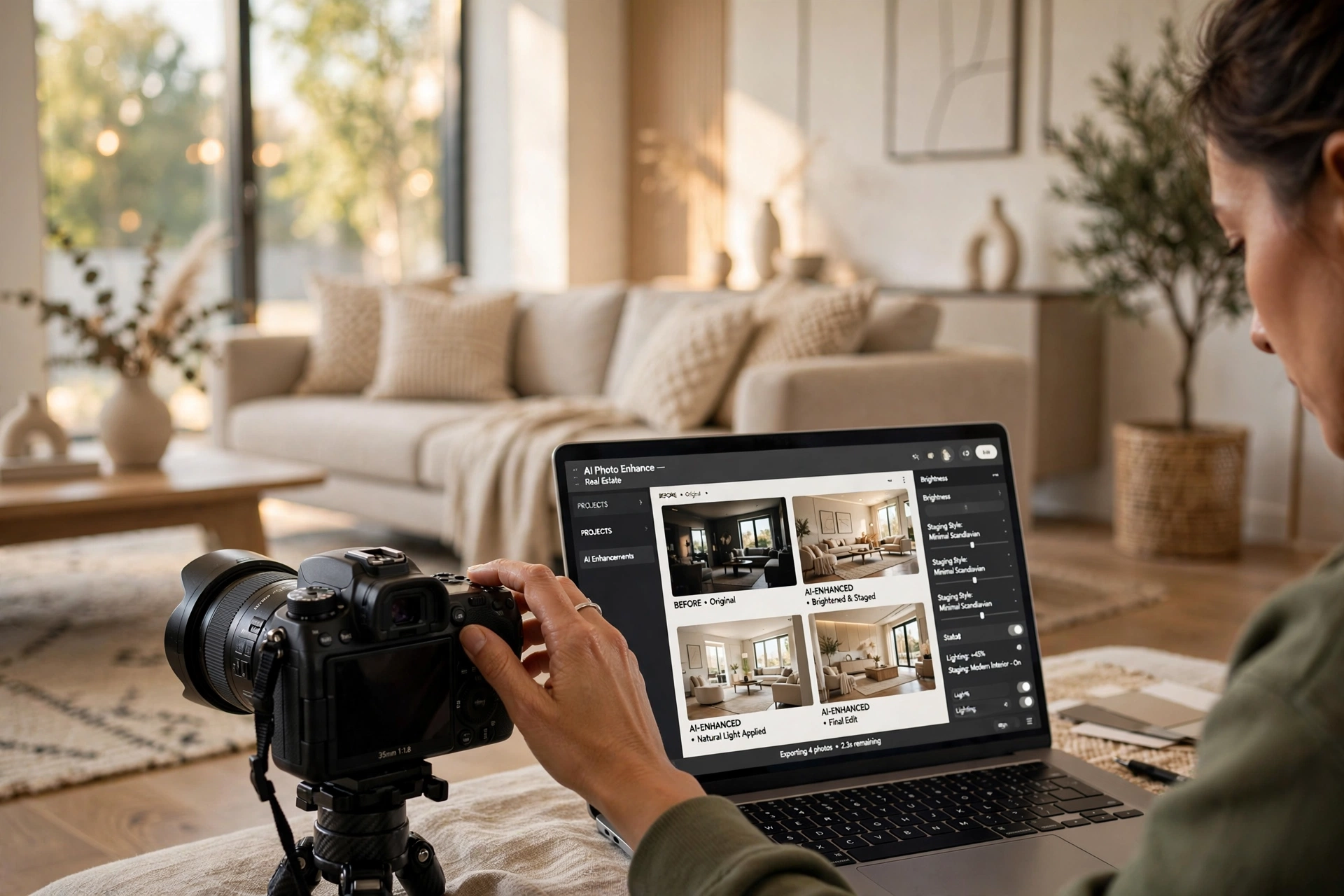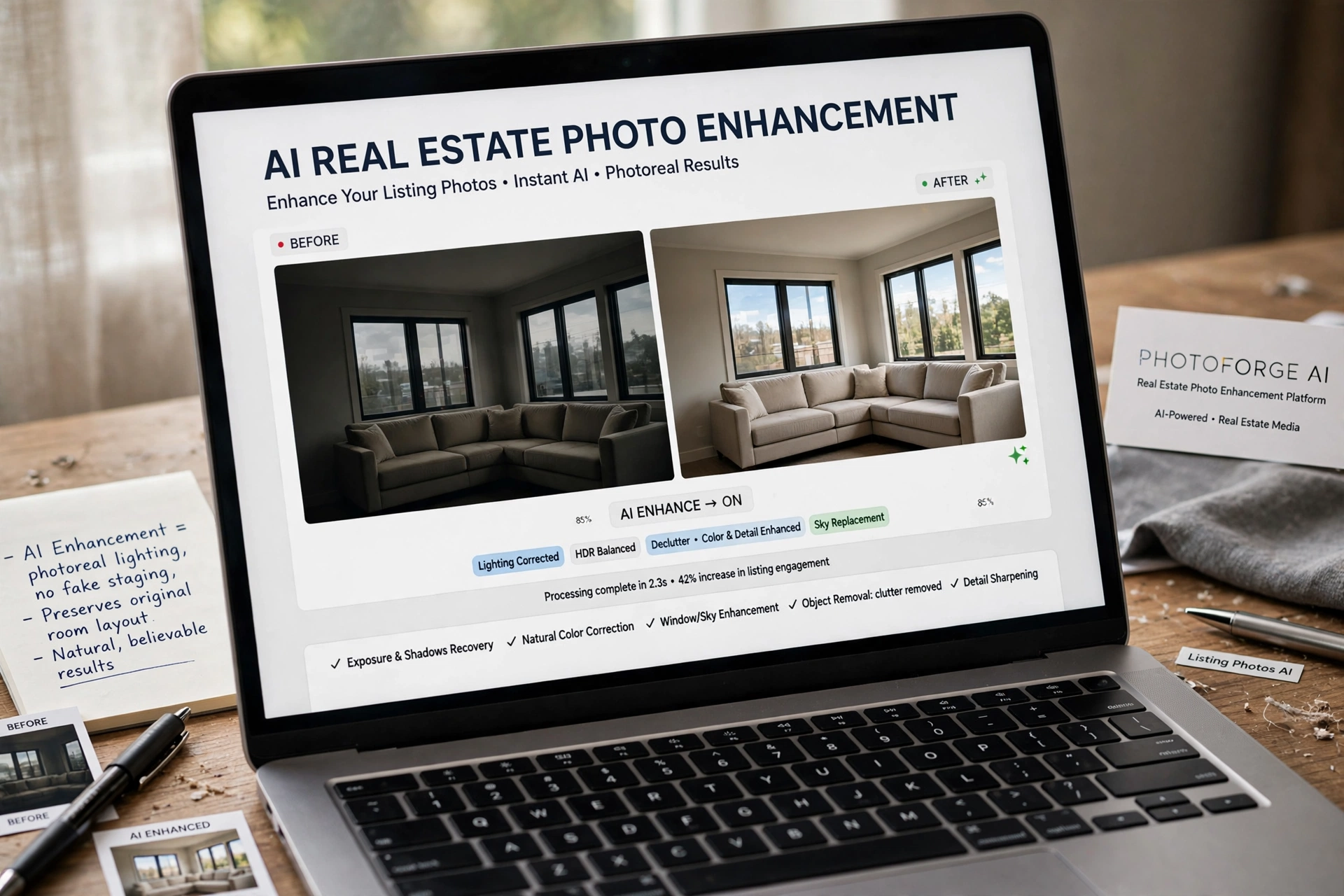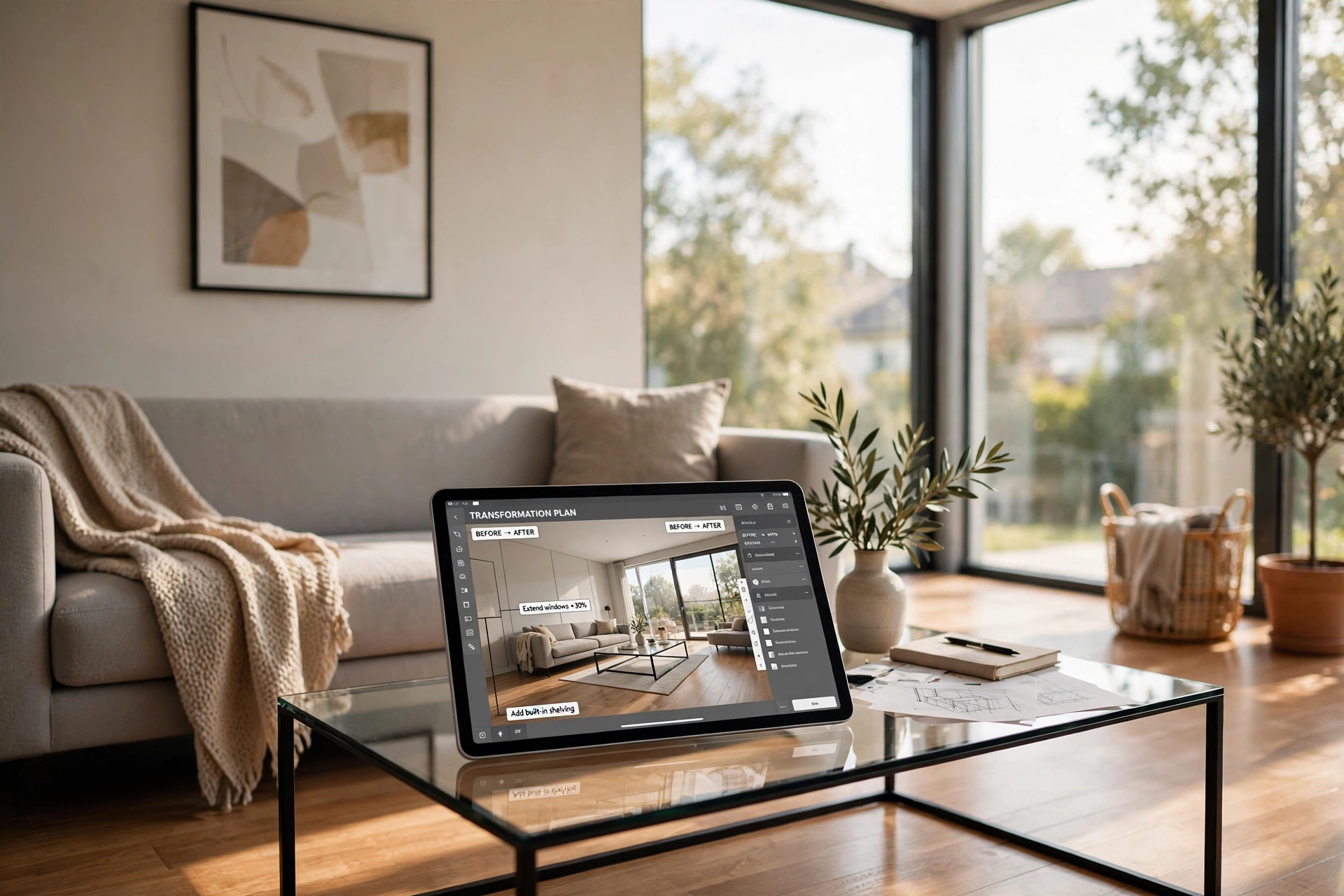
Empty rooms are psychological barriers to sales. In my experience working with high-volume brokerages, an empty living room doesn't look like a 'blank canvas' to a buyer; it looks like a cold, echoing space that lacks a sense of home. When a listing sits for 45 days without an offer, the problem is rarely the price, it is the failure of the buyer's imagination. This is where digital staging real estate transforms a stagnant listing into a competitive asset by providing an aspirational vision of the property.
For a comprehensive overview of this technology and how it integrates into a modern marketing stack, explore our guide on digital staging real estate.
What is Digital Staging Real Estate?
📚
Definition
Digital staging real estate is the process of using artificial intelligence and computer vision to virtually add furniture, decor, and architectural enhancements to photos of empty or outdated properties.
Digital staging real estate is a sophisticated application of image editing and AI that allows agents to populate a vacant space with high-end furniture without moving a single physical chair. Unlike traditional staging, which requires renting furniture and coordinating deliveries, this process happens entirely in a digital environment. By leveraging deep learning models, the software analyzes the perspective, lighting, and scale of a room to place objects that look naturally integrated into the space.
In 2026, the technology has evolved beyond simple 2D overlays. Modern systems now use generative AI to ensure that shadows cast by virtual furniture align perfectly with the existing light sources in the photograph. This level of precision is essential because if a buyer detects a 'fake' look, trust in the listing drops immediately. When we developed the core processing engine at RealVisionAI Blog - AI Real Estate Photography & Virtual Staging, we found that the difference between a 'good' render and a 'sale-winning' render is the accuracy of the ambient occlusion, the way light wraps around the base of a sofa or a coffee table.

This process is fundamentally about psychology. A staged home creates an emotional connection. According to research from the National Association of Realtors (NAR), staged homes generally sell faster and for more money because they help buyers visualize the lifestyle they are purchasing, not just the square footage. By utilizing Virtual Furniture Staging in Miami, agents can target specific demographic tastes, such as adding a coastal modern aesthetic for a beachfront condo, which would be prohibitively expensive to do physically.
Why Does Digital Staging Matter for Your Business?
Digital staging real estate matters because it eliminates the financial risk associated with physical staging while maximizing the visual impact of a listing. The primary reason this is essential in 2026 is the shift toward 'digital-first' discovery. Most buyers have already decided whether to visit a property based on the photos they see on a Multiple Listing Service (MLS) or a social media feed. If the photos are sterile, the property is often skipped entirely.
From a ROI perspective, the numbers are stark. Physical staging for a standard 3-bedroom home can cost anywhere from $2,000 to $5,000 per month. In contrast, AI-driven digital staging costs a fraction of that and can be deployed in seconds. As noted by the Real Estate Technology Council, the adoption of AI-driven visual tools has reduced the average 'days on market' by nearly 12% for properties that utilize high-fidelity virtual enhancements.
Furthermore, digital staging allows for "A/B testing" of interior styles. For a property in a transitional neighborhood, an agent might want to showcase one room in a 'Traditional' style to attract families and another in a 'Modern Industrial' style to attract young professionals. This versatility is impossible with physical furniture. By implementing strategies like Virtual Furniture Staging in Atlanta, agents can tailor their marketing to the specific psychographics of the local buyer pool.
Another critical benefit is the ability to handle "unstageable" properties. Consider a home with severe hoarding issues or a completely gutted interior. Physical staging is impossible here, but digital staging real estate can remove clutter and add furniture to show the potential of the space. This transforms a 'fixer-upper' into a 'vision,' significantly increasing the number of initial inquiries.
How to Execute Digital Staging for Maximum Impact?
To achieve professional results, you cannot simply drop a PNG of a sofa into a photo. The approach must be methodical to ensure the image remains an honest representation of the property while maximizing its appeal. The first step is capturing high-quality, wide-angle photography. If the base photo is blurry or poorly lit, the digital furniture will look like a sticker on a postcard.
Once the photos are captured, the next step is selecting the correct furniture style. This is where market research is vital. In a luxury market, minimalist and high-contrast palettes typically perform better. In a suburban family market, warmth and comfort, think plush sectionals and soft rugs, are the priority. For those scaling their operations, using Virtual Furniture Staging in Boston can help in identifying which styles resonate most with high-net-worth buyers in urban centers.
After selecting the style, the furniture must be placed according to the rules of interior design. This means maintaining proper "traffic flow" in the virtual room. If you place a virtual dining table too close to a wall, the room looks smaller, which is counterproductive. A professional AI tool like RealVisionAI Blog - AI Real Estate Photography & Virtual Staging handles these spatial relationships automatically, ensuring the scale is mathematically correct relative to the room's dimensions.
Finally, the images must be optimized for the web. Large, uncompressed files slow down page load times, which negatively impacts your search engine optimization. Once the digital staging is complete, use a modern image compressor to ensure the listing loads instantly on mobile devices. For agents managing properties in diverse markets, incorporating Virtual Furniture Staging in Raleigh allows for a standardized, high-end look across an entire portfolio, regardless of the physical state of the homes.
Digital Staging vs. Traditional Staging vs. Cheap AI
Not all staging is created equal. There is a massive divide between the legacy method, the low-cost automated tools, and professional-grade AI staging.
| Feature | Traditional Staging | Generic/Cheap AI | Professional Digital Staging |
|---|---|---|---|
| Setup Time | Days to Weeks | Minutes | Seconds |
| Cost | High ($2k - $5k+) | Very Low | Moderate/Scalable |
| Visual Accuracy | Perfect | Low (Perspective errors) | High (AI Perspective Analysis) |
| Flexibility | Low (One style only) | High (Fast but ugly) | High (Curated Styles) |
| ROI Impact | High (if done right) | Low (can look fake) | Very High (Professional appeal) |
Generic AI tools often suffer from "hallucinations," where a chair might merge into a wall or a table might float two inches off the floor. These errors are red flags to sophisticated buyers and can make a listing look deceptive. The professional approach used by RealVisionAI Blog - AI Real Estate Photography & Virtual Staging utilizes computer vision to map the floor plane and wall boundaries, ensuring every object sits firmly on the ground with appropriate contact shadows.

Common Mistakes to Avoid in Digital Staging
One of the most frequent errors I see is "over-staging." This occurs when an agent fills every corner of a room with virtual furniture, leaving no breathing room. The goal is to suggest a lifestyle, not to create a furniture catalog. If a room feels crowded, the buyer subconsciously perceives the property as smaller than it actually is. Always leave a clear path of travel in the image to emphasize space.
Another critical mistake is ignoring the lighting of the original photo. If the photo was taken on a cloudy day with cool, blue tones, but the virtual furniture is rendered with warm, golden-hour lighting, the image will look disjointed. The lighting of the furniture must match the ambient light of the room. This is why professional-grade tools are superior; they analyze the color temperature of the original image and apply the same palette to the added assets.
Avoid using unrealistic furniture for the property's price point. Putting a $20,000 virtual Italian leather sofa in a starter home creates a cognitive dissonance for the buyer. They will feel the image is "dishonest," which erodes trust. Instead, match the furniture quality to the neighborhood's average home value. For instance, when using Virtual Furniture Staging in Nashville, you should align the aesthetic with the specific vibe of the neighborhood, whether it's high-end luxury in Belle Meade or trendy industrial in East Nashville.
Lastly, avoid failing to disclose that images are digitally staged. While it is a powerful marketing tool, transparency is key to maintaining professional ethics. A simple watermark or a caption stating "Virtually Staged" protects the agent from claims of misrepresentation while still allowing the buyer to enjoy the vision. This is especially important for those using Virtual Furniture Staging in Detroit to revitalize urban listings.
💡
Key Takeaway
The success of digital staging depends on the balance between aspirational beauty and realistic representation. Over-staging or using mismatched lighting ruins the illusion and can repel buyers.
Frequently Asked Questions
Is digital staging considered misleading in real estate?
Digital staging is generally not considered misleading as long as it is disclosed to the buyer. The purpose is to help buyers visualize the potential of a space, not to hide structural defects. Most Multiple Listing Services (MLS) allow virtually staged photos as long as there is a clear disclaimer. It is fundamentally different from "virtual renovation" (which removes walls or changes flooring), as furniture is transient and can be easily moved or changed. To maintain ethics, always ensure the furniture doesn't hide significant damage to the walls or floors.
How long does it take to digitally stage a property?
Using legacy manual methods, a graphic designer might take 24 to 48 hours per image. However, with the implementation of generative AI and computer vision, this has been reduced to seconds. At RealVisionAI Blog - AI Real Estate Photography & Virtual Staging, the processing time for a standard room is approximately 12 seconds. This allows agents to upload photos and receive staged versions almost instantly, which is essential for fast-moving markets where a listing needs to go live within hours of the photography session.
Which rooms should be digitally staged first?
Prioritize the "money rooms": the living room, primary bedroom, and kitchen/dining area. These are the spaces where buyers spend the most time imagining their lives. The living room is the most important because it sets the tone for the rest of the house. If the living room looks inviting and spacious, the buyer is more likely to forgive a smaller secondary bedroom. For properties in expanding cities, using Virtual Furniture Staging in Phoenix often starts with the outdoor living spaces to highlight the local climate and lifestyle.
Can digital staging work for commercial real estate?
Absolutely. In fact, it is often more effective in commercial real estate because commercial spaces (like warehouses or shells of offices) are often completely empty and visually boring. Digital staging can turn a vacant 2,000-square-foot shell into a vibrant co-working space or a modern medical clinic. This helps potential tenants understand the scale and utility of the space. It is a far more cost-effective alternative to building a physical model unit or paying for expensive 3D architectural renders.
Does digital staging actually increase the final sale price?
While it is difficult to isolate a single variable, the data strongly suggests a positive correlation. By increasing the emotional appeal and the number of qualified leads, digital staging creates more competition among buyers. More competition typically leads to higher offers. According to industry benchmarks, staged homes often see a price premium of 1% to 5% compared to empty homes, simply because the buyer is not calculating the "cost and effort" of furnishing the space in their head.
Conclusion
Digital staging real estate is no longer a luxury for high-end listings; it is a fundamental requirement for any agent who wants to remain competitive in 2026. By removing the psychological friction of an empty room and replacing it with a curated vision of a home, you effectively lower the barrier to entry for your buyers. The transition from physical staging to AI-driven digital solutions allows for unprecedented scalability, reducing costs while increasing the speed of the sale.
Whether you are managing luxury condos or residential flips, the ability to generate market-ready visuals in seconds is a massive operational advantage. If you are looking to scale your listings and maximize your ROI, it is time to move away from manual editing and embrace the precision of artificial intelligence. For a deeper dive into the strategies and tools needed to dominate your local market, return to our complete guide on digital staging real estate and start transforming your empty spaces into high-value assets with RealVisionAI Blog - AI Real Estate Photography & Virtual Staging.
Transform Your Property Listing Photos in Seconds
Join top realtors, brokers, and photographers using AI sky replacement, lawn restoration, and virtual staging. Create your free account on RealVisionAI today.
Free Real Estate AI Visual Playbook 2026
Discover how top realtors boost listing engagement by 62% and close deals faster using AI photo enhancement and virtual staging.