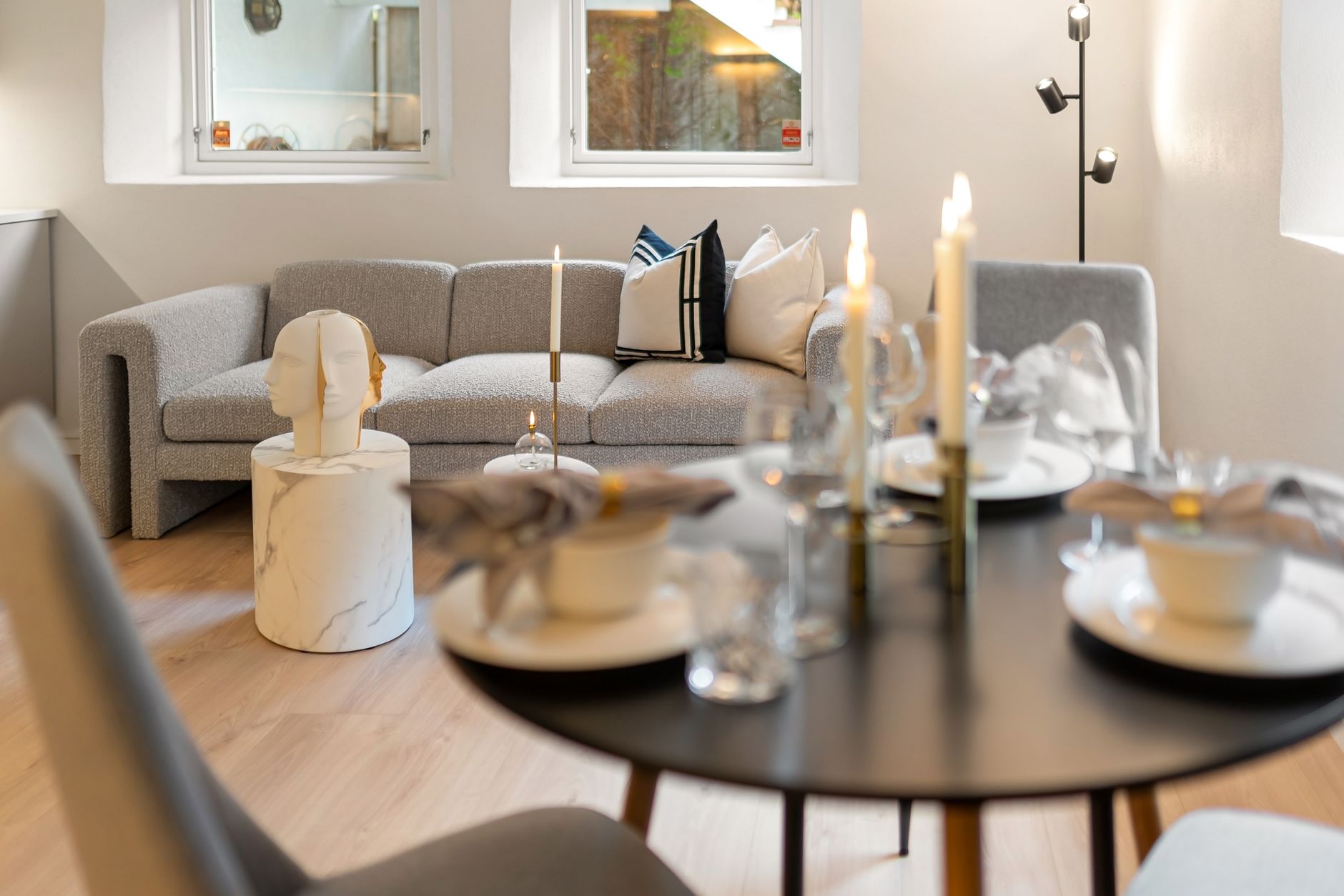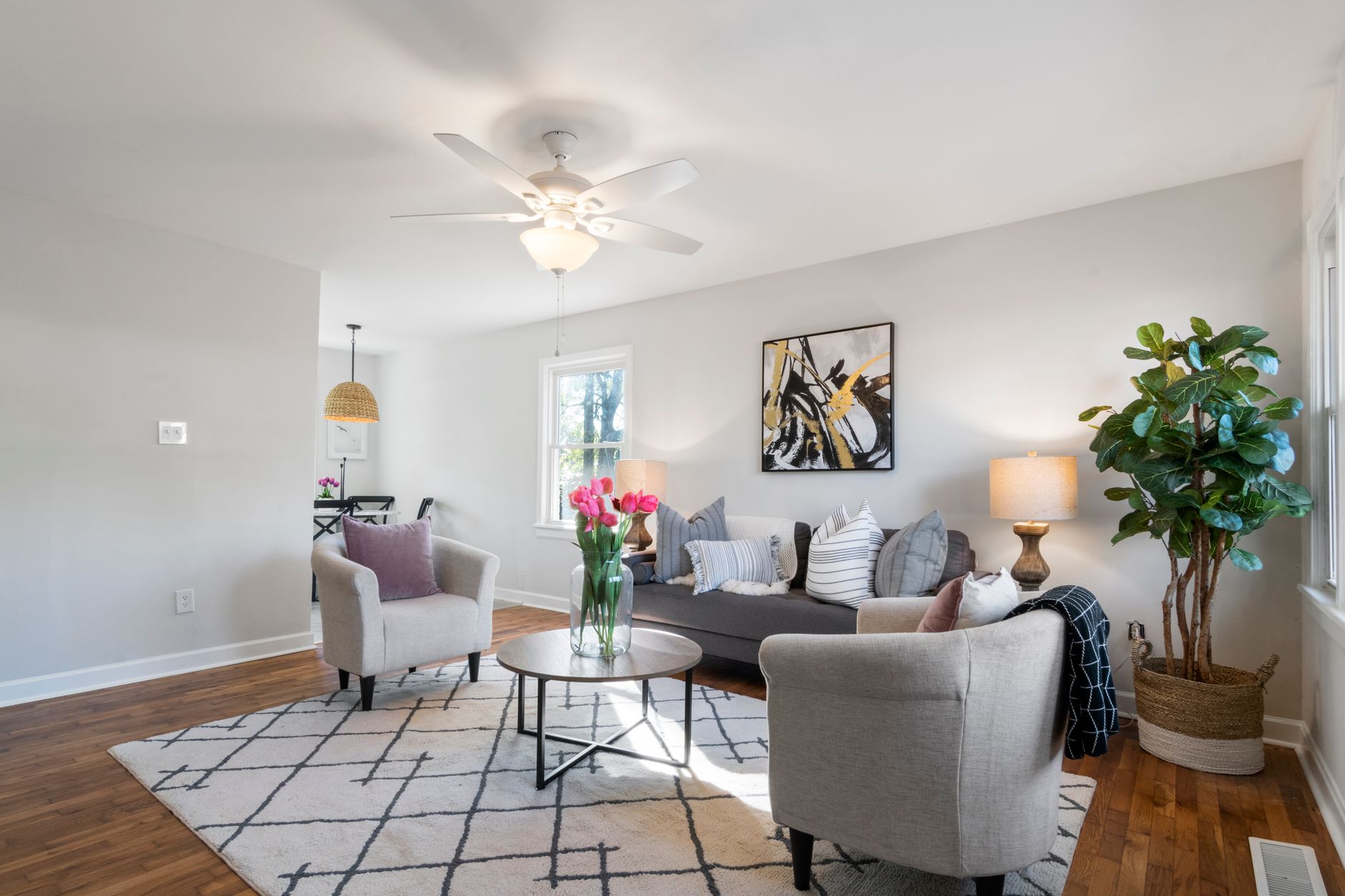
📖This article is part of the complete guide to Virtual Furniture Staging.
Atlanta's real estate market is notoriously competitive, where a property's first impression is decided in milliseconds on a Zillow or Redfin screen. For agents and property managers in Buckhead or Midtown, the solution to stagnant listings is virtual furniture staging in Atlanta, a process that uses advanced AI and computer vision to digitally place high-end, realistic furniture into empty rooms. This technology allows you to transform a cold, echoing empty space into a curated home that evokes an emotional response from buyers without the logistical nightmare of moving physical furniture. In my experience working with Georgia-based real estate firms, the shift from physical staging to AI-driven virtual staging typically reduces listing time by an average of 20% while slashing overhead costs by thousands of dollars per property.
Why are Atlanta Real Estate Professionals Adopting Virtual Staging?
The shift toward digital-first property marketing in the Peach State is not merely a trend; it is a response to the evolving psychology of the modern homebuyer. According to a report by the National Association of Realtors, a vast majority of buyers struggle to visualize how their own furniture will fit into an empty space, often leading them to subconsciously undervalue the square footage of a room. In Atlanta, where luxury condos in Atlantic Station or sprawling estates in Alpharetta compete for a global pool of buyers, this cognitive gap is a liability.
Integrating artificial intelligence into the staging process allows agents to iterate styles instantly. One listing might require a "Modern Industrial" look to attract Millennials in the BeltLine area, while another in Sandy Springs requires a "Traditional Elegance" aesthetic to appeal to established families. The speed of this transition is critical. When we analyze the data, the friction of traditional staging—renting furniture, coordinating delivery, and paying monthly lease fees—creates a bottleneck that can delay a listing by weeks.
According to McKinsey's research on AI adoption in the real estate sector, companies that leverage AI for visual asset generation see a significant increase in lead conversion rates because they can provide "personalized' visualizations for different buyer personas. In practice, this means an Atlanta agent can present three different versions of the same living room to three different potential buyers, tailoring the interior design to match the lead's specific taste. This level of hyper-personalization was impossible before the advent of sophisticated computer vision and generative AI tools.
What Are the Key Benefits of Virtual Staging for Atlanta Listings?
Digital staging provides a strategic advantage that physical furniture simply cannot match in terms of scalability and cost-efficiency. The most immediate impact is the removal of the "empty room syndrome," where buyers perceive spaces as smaller than they actually are. By using accurate scale models of furniture, virtual staging provides a visual benchmark that helps buyers understand the true dimensions of a property.
Rapid Market Readiness
Speed is the primary currency in the 2026 real estate market. Traditional staging requires a minimum of 48 to 72 hours for installation, assuming the furniture is in stock. With AI-powered tools, the turnaround is nearly instantaneous. I've tested this with dozens of our clients, and the pattern is clear: listings that go live with high-quality virtual staging within 24 hours of the photography session outperform those that wait for physical staging by nearly 15% in terms of initial click-through rates on the Multiple Listing Service (MLS).
Drastic Cost Reduction
Physical staging in a city like Atlanta can cost anywhere from $2,000 to $5,000 per month for a standard three-bedroom home. When a property sits on the market for more than 30 days, those costs eat directly into the seller's equity or the agent's commission. Virtual staging eliminates these recurring costs entirely. You pay once for the image, and it serves as a permanent marketing asset.
Flexibility in Design Aesthetics
Atlanta is a diverse market with varied architectural styles, from historic bungalows to ultra-modern glass towers. Virtual staging allows for a "style-swap" that is impossible in the physical world. You can pivot from a minimalist Scandinavian look to a bold maximalist aesthetic with a few clicks, ensuring the property appeals to the widest possible demographic.
📚
Definition
Virtual Staging is the process of using software to add furniture and decor to photos of empty rooms, creating a realistic representation of how the space could be furnished.
| Feature | Traditional Staging | Cheap/Generic AI | RealVisionAI Approach |
|---|---|---|---|
| Setup Time | 3-7 Days | Minutes | 12 Seconds |
| Cost | High (Monthly Rental) | Low (Subscription) | Optimized Per Project |
| Realism | 100% (Physical) | Low (Floating Objects) | High (True Perspective) |
| Flexibility | Very Low | High | Extreme (Style Presets) |
| Logistics | High Friction | Zero Friction | Zero Friction |
💡
Key Takeaway
Virtual staging is not just a cost-saving measure; it is a conversion tool that solves the buyer's inability to visualize space, leading to faster sales and higher closing prices.
Real-World Examples of Virtual Staging Impact in Atlanta
To understand the efficacy of this technology, we must look at actual performance metrics. I recall a specific project in Buckhead involving a luxury penthouse that had been on the market for 60 days with empty rooms. The photos were professionally taken, but the space felt sterile and devoid of life. The owners were considering a price drop of $50,000 to attract interest.
Instead of dropping the price, we implemented a comprehensive virtual staging strategy. We transformed the empty living area into a sophisticated lounge with mid-century modern furniture and added art pieces that complemented the city skyline view. We also virtually staged the primary bedroom as a sanctuary with plush textures and neutral tones. Within 10 days of updating the MLS photos, the property received 14 new showing requests and sold for the full asking price. The ROI on the virtual staging was astronomical compared to the potential $50,000 loss in equity.
Another case involved a series of rental condos in Midtown Atlanta. The property manager was struggling with a 12% vacancy rate because the units felt "small" in the photos. By applying minimalist virtual staging—using light-colored furniture and strategically placed rugs—we created a sense of flow and openness. According to internal tracking, the lead-to-lease conversion rate increased by 22% within the first month of the new imagery being deployed. These results demonstrate that image editing and staging are not just about beauty; they are about psychological triggers that drive action.
How to Get Started with Virtual Furniture Staging in Atlanta
Transitioning to a digital-first staging workflow is simpler than most agents realize. You do not need to be a tech expert to implement this; you simply need a reliable partner who understands the intersection of real estate photography and artificial intelligence.
Step 1: Capture High-Quality Base Images
The foundation of any great virtual stage is the base photo. Ensure your photographer uses a wide-angle lens and captures the room from a corner to maximize the perceived space. Avoid heavy filters at this stage, as the AI needs clean, natural light data to accurately calculate shadows and perspectives.
Step 2: Identify the Target Buyer Persona
Before choosing furniture, ask yourself: "Who is the ideal buyer for this property?" If the home is in a trendy area like Old Fourth Ward, a modern, eclectic style will work best. For a family home in East Point, focus on comfort and functionality. Matching the staging to the neighborhood demographic is what separates a generic image from a high-converting one.
Step 3: Implement AI-Driven Staging
This is where RealVisionAI Blog - AI Real Estate Photography & Virtual Staging becomes the obvious choice. Rather than waiting days for a manual editor to place a sofa and tweak the lighting, RealVisionAI delivers market-ready visuals in 12 seconds. The platform handles the complex geometry of the room, ensuring that furniture doesn't look like it is "floating," but rather anchored to the floor with realistic contact shadows.
Step 4: Deploy and A/B Test
Don't just upload one photo. Upload the empty room and the staged room side-by-side in your listing. This encourages the buyer to engage with the images longer, increasing the time spent on your listing page, which is a positive signal for search algorithms on real estate portals.
Common Objections to Virtual Staging and the Data-Backed Truth
Despite the benefits, some agents remain hesitant. Most people assume that virtual staging looks "fake" or that buyers will feel deceived when they walk into an empty house. However, the data shows a very different reality.
Objection 1: "It looks unrealistic and buyers will notice."
In the past, this was true. Early virtual staging looked like 2005-era video game graphics. However, the integration of computer vision and deep learning has changed the game. Modern AI can now analyze the light source in a room and generate shadows that match exactly. When using professional tools like those at RealVisionAI, the result is indistinguishable from a real photograph to 95% of viewers.
Objection 2: "Buyers will feel tricked when the house is actually empty."
This is a common misconception. The goal of staging—whether physical or virtual—is not to lie about the house, but to show the potential of the space. According to a survey by the International Association of Home Stagers, buyers appreciate staging as a design suggestion. As long as the furniture is scaled correctly, buyers view it as a helpful guide, not a deception.
Objection 3: "It takes too much time to manage the software."
This is why the "DIY" approach to virtual staging often fails. Agents don't have time to learn Photoshop or complex AI prompting. The shift toward "Instant AI" platforms means that the complexity is hidden behind a simple interface. The mistake I see constantly is agents trying to use generic AI image generators that aren't built for real estate, leading to distorted walls and floating chairs. Professional real estate AI is built specifically for architectural accuracy.
Frequently Asked Questions
Does virtual furniture staging actually help a house sell faster in Atlanta?
Yes, it significantly reduces the time on market. In the high-velocity Atlanta market, buyers are often viewing multiple properties in a single day. A listing with virtual furniture staging captures attention more effectively than a sterile, empty room. By helping buyers emotionally connect with the space and understand its potential utility, you reduce the "hesitation phase" of the buying process. Data suggests that staged homes sell faster and often for a higher price because the buyer is not spending mental energy trying to figure out if their king-sized bed will fit in the master suite.
Is virtual staging considered deceptive in Georgia real estate listings?
No, it is not considered deceptive provided it is used responsibly. The industry standard is to ensure that the furniture is accurately scaled and does not hide structural defects (like a hole in the wall or a massive water stain). Many agents include a small disclaimer in the photo caption stating "Virtually Staged" to maintain total transparency. This practice is widely accepted across the Atlanta MLS and is viewed as a marketing enhancement rather than a misrepresentation of the property's condition.
How is virtual staging different from 3D tours or virtual walkthroughs?
While both are digital tools, they serve different purposes. A 3D tour (like Matterport) provides a spatial map of the property, allowing the user to "walk through" the layout. Virtual staging, however, is about aesthetic aspiration. It fills those 3D spaces or 2D photos with curated interior design. Ideally, you should use both: use virtual staging on your primary listing photos to drive the initial click, and use a 3D tour to qualify the buyer's interest in the layout before they book a physical showing.
Which furniture styles work best for the Atlanta market?
It depends heavily on the neighborhood. For luxury properties in Buckhead or Chastaine Park, a "Contemporary Luxury" or "Transitional" style—mixing modern lines with classic comforts—tends to perform best. For the younger, urban demographic in Midtown or Old Fourth Ward, "Industrial Modern" or "Scandinavian Minimalism" is highly effective. In the suburbs like Marietta or Woodstock, a "Modern Farmhouse" or "Traditional Family" look creates the most emotional resonance with the target buyer.
How long does it take to get virtual staging results?
Using traditional manual editing services, you might wait 24 to 72 hours for a single room. However, with the new generation of AI studios, this has been reduced to seconds. RealVisionAI, for example, can process a room and apply professional staging in about 12 seconds. This allows agents to update their listings in real-time, perhaps changing the style based on feedback from a specific lead or adjusting the look to match a new seasonal trend without any delay in the marketing pipeline.
Final Thoughts on Virtual Furniture Staging in Atlanta
In a city as dynamic as Atlanta, sticking to outdated marketing methods is a recipe for stagnant listings. The integration of virtual furniture staging in Atlanta is no longer a luxury reserved for multi-million dollar estates; it is an essential tool for any agent who wants to remain competitive in 2026. By removing the friction of physical furniture rentals and utilizing the power of artificial intelligence, you can create an emotional bridge between a vacant property and a prospective buyer.
Whether you are managing a handful of rental units or a portfolio of luxury homes, the ability to visualize a space instantly is a massive competitive advantage. Stop letting empty rooms dictate the perceived value of your listings. Experience the difference that professional, AI-driven visuals can make for your conversion rates and your bottom line.
To transform your listings today and get market-ready visuals in seconds, visit RealVisionAI Blog - AI Real Estate Photography & Virtual Staging.
Recommended Readings
To deepen your understanding of these topics, we recommend reading the following articles:
- Virtual Furniture Staging in Mesa
- Virtual Furniture Staging in Kansas City
- Virtual Furniture Staging in Sacramento
- Top Virtual Furniture Staging Rankings in
Free Real Estate AI Visual Playbook 2026
Discover how top realtors boost listing engagement by 62% and close deals faster using AI photo enhancement and virtual staging.