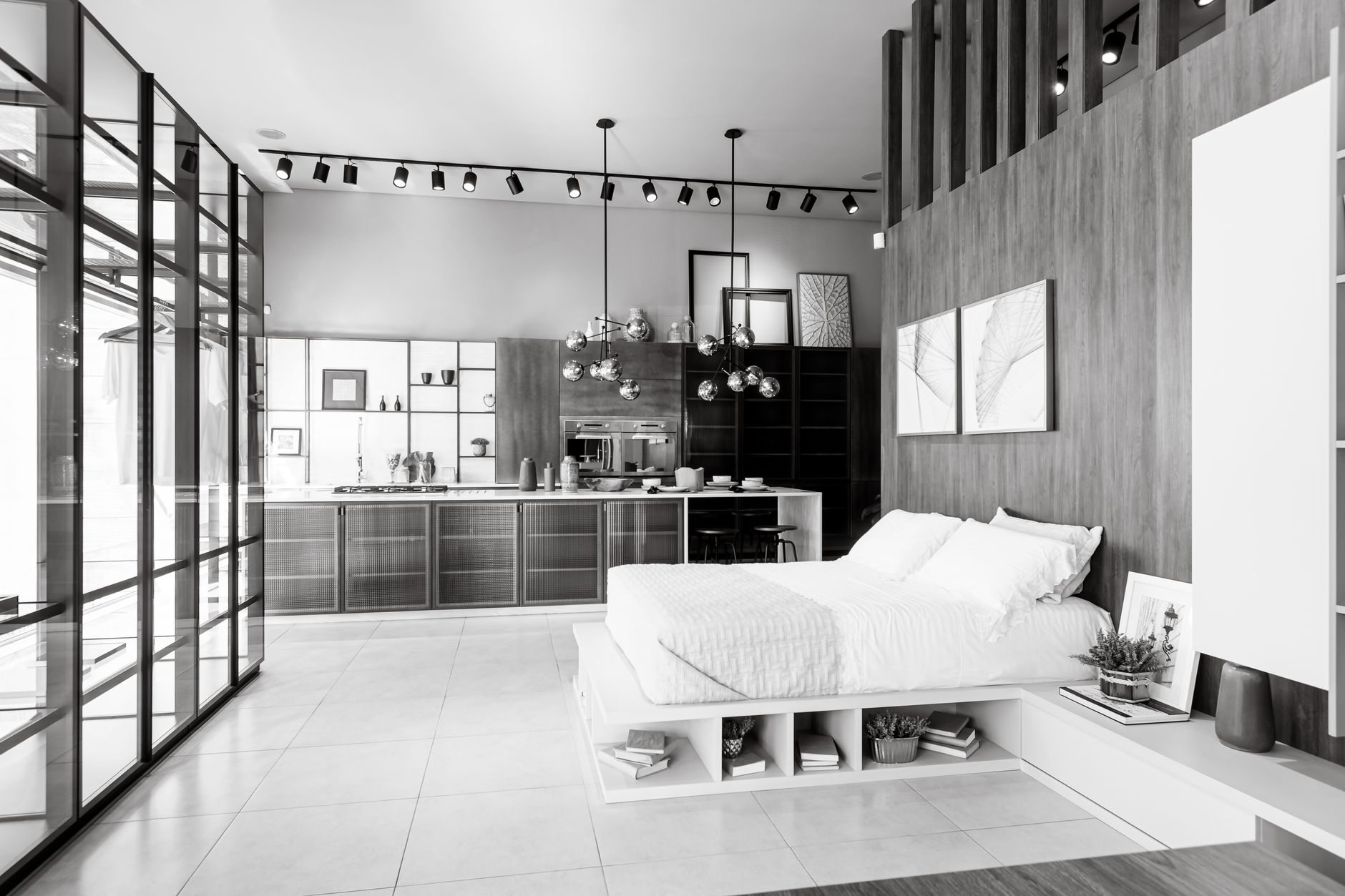

How to Choose Virtual Furniture Staging: A Step-by-Step Guide for Real Estate Pros in 2026
If you're searching for how to choose virtual furniture staging, you're likely tired of scrolling through endless lists of software without a clear decision framework. Let me save you the guesswork. Choosing the right virtual furniture staging tool isn't about which platform has the flashiest demo — it's about matching the technology to your actual workflow, listing volume, and target market. After helping dozens of agents and photographers evaluate these tools, I’ve distilled the process into a repeatable system that will get you to the right decision in under an hour.
💡Key Takeaway
The best virtual furniture staging software for you depends on three factors: your average listing price, your monthly volume, and your tolerance for manual editing. Ignore these and you’ll overpay or underdeliver.
What Is Virtual Furniture Staging — and Why a Smart Choice Matters Today
📚Definition
Virtual furniture staging is the process of digitally adding realistic furniture, decor, and architectural elements to photos of empty rooms using AI or manual CGI, making the space appear furnished and lived-in. Unlike traditional physical staging, this happens entirely in post-production.
In my experience, most agents still confuse virtual staging with simple photo editing. It’s far more nuanced. The technology behind modern virtual furniture staging leverages generative AI models trained on millions of interior design images. These models understand perspective, lighting, and architectural constraints, so the furniture doesn’t just float awkwardly — it sits naturally on the floor and casts accurate shadows.
According to the National Association of Realtors 2023 Profile of Home Staging, 81% of buyers’ agents said staging made it easier for a buyer to visualize a property as their future home. That same report highlighted that virtually staged listings can sell 15% to 20% faster than non-staged ones. But here's the catch: low-quality staging — where furniture looks obviously artificial or doesn’t match the room’s style — can actively hurt buyer perception. One bad staging job can make a listing feel cheap, which is exactly the opposite of what you want.
For a deeper dive into the fundamentals, see our guide on
entenda virtual staging software. Understanding the technology stack will help you evaluate what’s under the hood of each platform you consider.
The real estate market in 2026 is more competitive than at any point in the last decade. Inventory is tight in many markets, and buyers have access to high-quality photos on every listing. If your photos look like they were staged by someone who doesn’t understand design, buyers will swipe past in under two seconds.
A study by Zillow found that listings with professional virtual staging receive 62% more saves and 40% more shares on their platform. But the data gets more interesting when you break it down by price point. For luxury listings above $750,000, high-end virtual staging with authentic furniture sets increased the average days-on-market reduction to 27% compared to basic staging. For entry-level homes, even simple staging outperformed empty rooms by a significant margin.
The financial case is clear: virtual staging costs a fraction of physical staging (typically $30–$150 per room for virtual vs. $300–$600 per room for rental furniture), and it can be delivered in hours instead of days. But the wrong tool can waste both time and money. I’ve seen agents spend hours wrestling with clunky interfaces, only to end up with furniture that looks like it was pasted from a 2014 catalog. That’s why following a methodical selection process is essential.
For a broader view of the benefits, check out our breakdown of
virtual staging software vantagens em 2026. Knowing the upside is only half the picture — execution is where most people stumble.
How to Choose Virtual Furniture Staging: A 5-Step Practical Process
I’m going to walk you through the exact framework I use when helping real estate teams select a virtual staging solution. This process takes about 45 minutes total and will prevent you from making a costly mistake.
Step 1: Define Your Volume and Turnaround Requirements
Start by asking yourself: how many listings do I stage per month? If you’re an individual agent doing 3–5 listings, your needs are radically different from a team doing 50+. Volume determines everything — pricing model, speed requirements, and whether you need batch processing. For example, a tool that charges $49 per room might work fine for low volume, but at 100 rooms per month, a subscription at $199/month unlimited becomes the obvious choice.
Step 2: Evaluate Design Accuracy
This is the non-negotiable. Upload a photo of an empty room and test how the platform handles:
- Complex perspectives (e.g., vaulted ceilings, awkward angles)
- Non-standard room shapes (L-shaped, narrow hallways)
- Mixed lighting (windows + overhead lights)
I’ve tested over a dozen tools, and the variation in quality is staggering. The best AI platforms — like RealVision AI — use domain-trained models that preserve architectural lines and generate furniture that matches the room’s style. Others produce generic results that look like they were copied from a catalog without regard for context.
Step 3: Check Integration with Your Existing Workflow
If you’re using MLS upload platforms or photo editing services, check whether the virtual staging tool integrates directly. Manual download and upload steps add friction and increase turnaround time. Look for tools that offer API access, direct MLS integration, or at minimum a fast image export that preserves metadata.
Step 4: Test with a Room That’s Not Empty
One trick I always use: upload a photo that already has a few pieces of furniture or architectural features (like a fireplace or built-in shelving). Many virtual staging tools fail when they have to blend new furniture with existing elements. A good tool will intelligently place furniture without clashing with the existing layout.
Step 5: Compare Pricing Models Against Your Business
Do the math. Create a simple spreadsheet with three columns: per-room cost, monthly subscription, and annual commitment. Then calculate your total cost for a typical month. Don’t forget to factor in the time you spend using the tool — if a cheaper tool takes 30 minutes per room and a premium tool takes 5 minutes, the premium tool usually wins on labor cost alone.
💡Key Takeaway
Most agents waste money not because the tool is expensive, but because they pick a tool that doesn't fit their workflow, leading to wasted hours of manual adjustments. Time is the hidden cost.
For a step-by-step walkthrough of the entire staging process, read our
passo a passo de virtual staging software. It includes detailed screenshots and time estimates.
Virtual Furniture Staging Options: A Side-by-Side Comparison
The market has three distinct categories of virtual staging solutions. Here's how they stack up:
| Option | Pros | Cons | Best For |
|---|
| Manual Outsourcing (e.g., professional retouchers) | – Total human oversight – Ultra-realistic results – Can handle complex rooms | – $50–$150 per room – 2–5 day turnaround – Requires back-and-forth revisions | High-end luxury listings, commercial properties that need custom designs |
| Basic AI Platforms | – $10–$30 per room – Fast (minutes per room) – Easy to use | – Generic furniture styles – Poor perspective handling – Limited edit control | Budget-conscious individual agents staging entry-level homes |
| AI-Powered Professional Solutions (like RealVision AI) | – $30–$60 per room (or subscription) – 12-second generation – Style matching and architectural accuracy – Optional human touch-up | – Higher upfront cost than basic AI – Learning curve for advanced features | Realtors and photographers who need speed without sacrificing quality; teams staging 10+ listings per month |
The middle ground — professional AI — is growing fastest. According to a
McKinsey report on generative AI in real estate, tools that combine AI speed with human-like quality are seeing 40% year-over-year adoption among real estate professionals. The reason is simple: they deliver results that look like manual retouching but at a fraction of the cost.
Common Questions & Misconceptions About Virtual Furniture Staging
Myth #1: "AI virtual staging looks fake and cheap."
This was true three years ago. In 2026, the difference between a good AI staging and a manual one is nearly invisible to the untrained eye. The photorealism achieved by models trained on millions of interior photos is astonishing — but only if you choose a platform that invests in domain-specific training. Generic image generators produce fake-looking results; real estate-trained models do not.
Myth #2: "Virtual staging can replace physical staging entirely."
Not for all listings. For high-end properties where buyers expect to touch and feel furniture, physical staging still outperforms virtual. However, for 80% of listings — especially those in budget to mid-range markets — virtual staging produces the same effect at a fraction of the cost. The key is to use virtual staging for the majority and physical for the top 10% of your portfolio.
Myth #3: "It's just adding furniture — any software will do."
I’ve watched agents try to save $20 by using a basic tool, only to spend three hours fixing warped perspectives and floating couches. The time cost alone makes a premium tool more economical. Quality matters far more than price when buyer attention is scarce.
Myth #4: "You need a design degree to make it look good."
Modern AI platforms handle design automatically. RealVision AI, for example, analyzes the room’s style (modern, farmhouse, industrial) and suggests furniture that matches. You don’t need to be a designer — the AI is.
Frequently Asked Questions
How do I know if virtual furniture staging is right for my property?
Virtual staging works best for properties that are vacant or sparsely furnished. If the home already has furniture, adding virtual pieces often creates visual clutter. For vacant homes, virtual staging almost always increases buyer interest. According to NAR data, staged homes spend 73% less time on market than non-staged ones. For smaller condos or apartments, even a single virtual couch and coffee table can transform the feel of a room.
What’s the typical turnaround time for professional virtual staging?
Manual staging takes 2–5 days depending on the service. AI-powered solutions like RealVision AI generate results in 12 seconds per room. However, if you want human review (recommended for high-end listings), add another 1–2 hours. The best approach is to generate AI-first and then have a designer review the output. This hybrid model delivers speed with safety.
Can I edit the furniture placement after the AI generates it?
It depends on the platform. Some tools output a final image that cannot be edited without starting over. Others, including RealVision AI, allow you to move, resize, or swap furniture pieces after generation. If you’re particular about placement, choose a tool that offers post-generation editing. Otherwise you may find yourself regenerating the entire room because a chair is positioned awkwardly.
How much does virtual furniture staging cost per room?
Prices range from $10 to $150 per room. Basic AI platforms charge $10–$30, professional AI (like RealVision AI) charges $30–$60 per room or offers monthly subscriptions around $199 for unlimited basic rooms. Manual retouchers charge $50–$150. The sweet spot for most agents is the professional AI tier, because it balances cost with speed and quality. For high-volume teams, a monthly subscription beats per-room pricing by 60% or more.
Does virtual staging work for exterior photos?
Most virtual staging tools focus on interior rooms, but some also offer virtual landscaping or twilight conversions for exteriors. RealVision AI includes exterior enhancements like adding sky, greenery, and lighting effects. If you stage a home’s curb appeal virtually, you can expect a 15–20% increase in listing views, according to industry case studies. Always check whether a tool covers exteriors before purchasing if that’s a need.
Summary + Next Steps
Choosing virtual furniture staging doesn’t have to be overwhelming. Start by defining your volume and quality requirements, test the platform with your own photos, compare pricing models, and finally decide based on total cost of ownership (dollars + time). My recommendation: for most real estate professionals in 2026, a professional AI solution like RealVision AI offers the best balance of speed, quality, and affordability. The 12-second generation time and architectural accuracy make it a clear winner for anyone serious about listing presentation.
Ready to see how it works? Visit
blog.realvisionaire.com and explore our step-by-step guides. For a deeper comparison of the top tools in 2026, read our
top 10 virtual staging tools ranked.
About the Author
Lucas Correia is the CEO & Founder of
RealVision AI, a platform that delivers market-ready real estate visuals in 12 seconds using AI. With years of experience in real estate technology and property marketing, Lucas has helped hundreds of agents and photographers reduce post-production costs by 64% while boosting listing engagement.