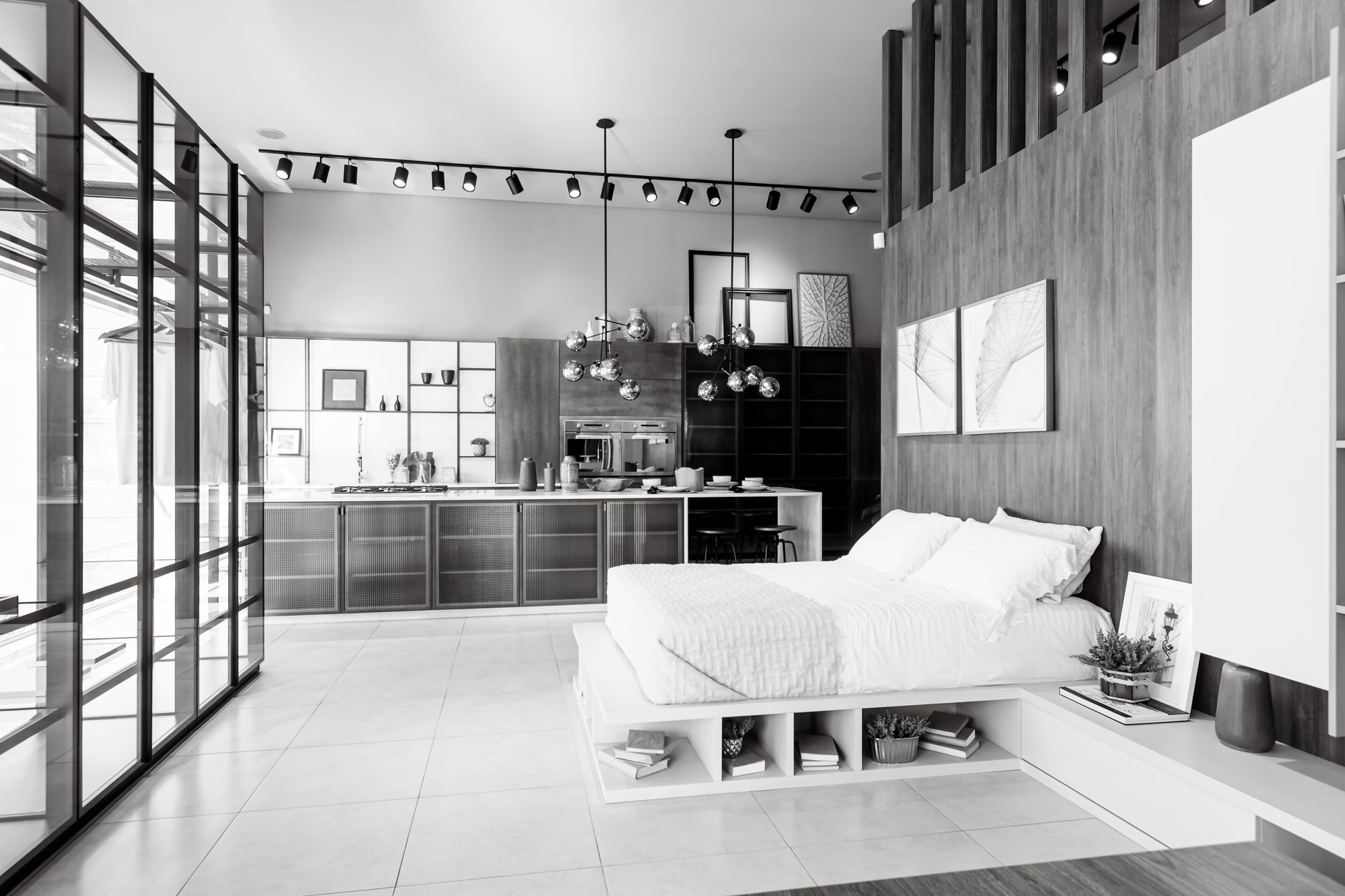
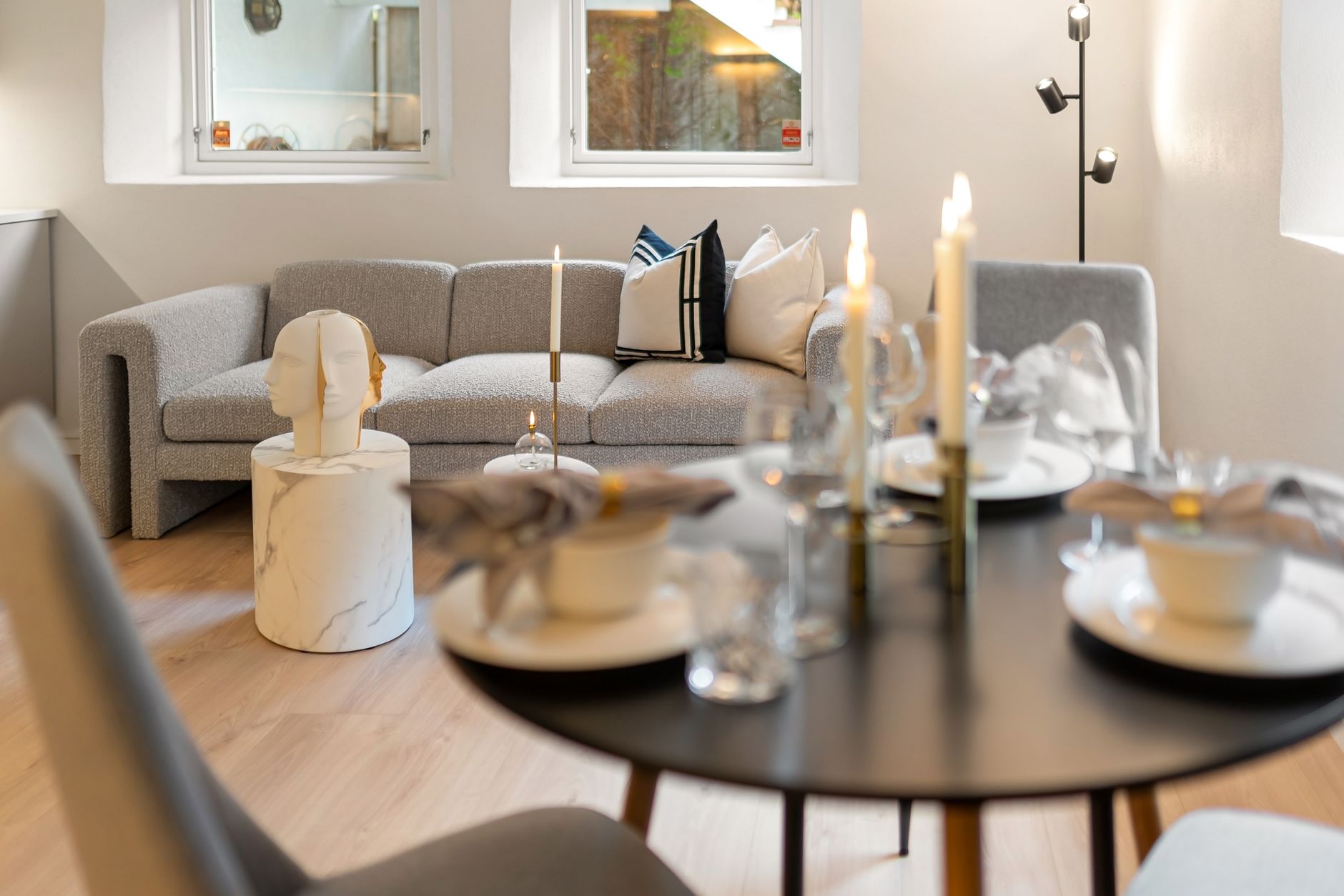
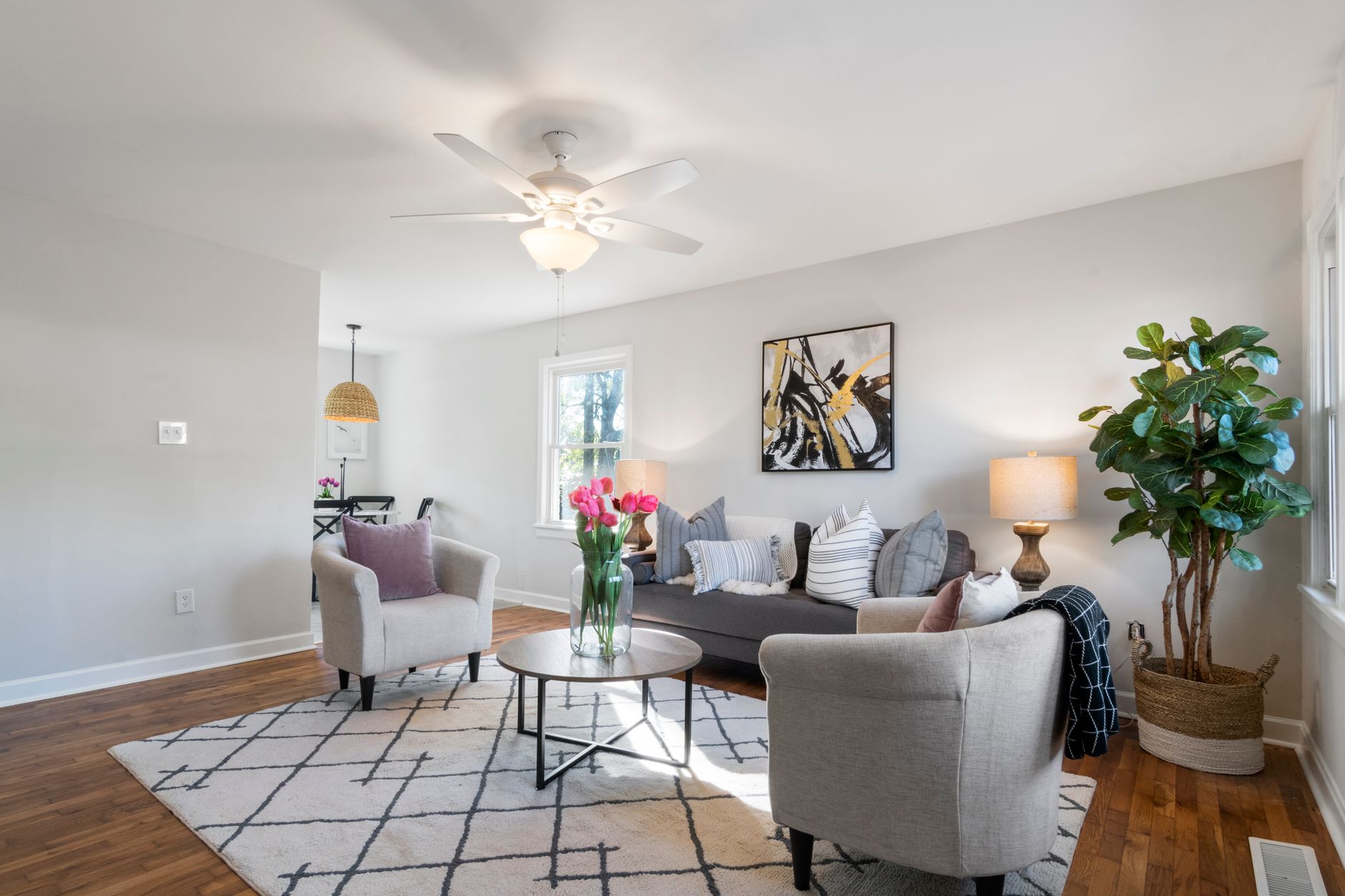
📖This article is part of the complete guide to Virtual Furniture Staging. How to Choose Virtual Furniture Staging for Your Property: The 2026 Strategic Guide
The real estate market in 2026 operates at lightning speed, where the first impression is almost exclusively digital. Properties with compelling visuals receive 47% more views and sell 31% faster, according to the National Association of Realtors' latest data. In this visual-first era, knowing how to choose virtual furniture staging is no longer a luxury for luxury listings, it is a fundamental requirement for any agent wanting to remain competitive. Virtual staging has become the most cost-effective way to showcase a property's full potential without the logistical nightmares and extreme costs of physical staging.
For those seeking a deeper understanding of the broader technological shift, explore our
complete guide to AI real estate photography.
💡Key Takeaway
Professionally staged homes sell for 17% more on average than unstaged properties, while virtual staging achieves similar results at 90% lower cost according to Real Estate Staging Association 2026 benchmarks.
Why Does Virtual Staging Dominate Real Estate Marketing in 2026?
Virtual staging dominates because it bridges the gap between a vacant, cold space and the emotional dream of a home. In my experience working with high-volume brokerage firms, the "vacant property syndrome" is the single biggest hurdle to a quick sale. Buyers struggle to visualize scale and utility in empty rooms, often perceiving them as smaller than they actually are.
According to spatial perception research from MIT's Department of Architecture, empty rooms appear 30% to 40% smaller to buyers because they lack the cognitive anchors provided by furniture. Virtual staging solves this by providing those anchors instantly. Furthermore, the pandemic permanently shifted buyer behavior, with 82% of purchasers now making emotional connections with properties through digital channels before ever visiting in person.
📚Definition
Virtual furniture staging is the process of digitally adding photorealistic furnishings to empty rooms using AI-powered image processing, creating emotionally compelling spaces that help buyers visualize living in the property.
Beyond spatial perception, virtual staging addresses design relevance. Millennials and Gen Z buyers expect move-in ready aesthetics that match current trends. While traditional staging takes days to install, modern tools like RealVisionAI Blog - AI Real Estate Photography & Virtual Staging allow agents to deploy a full home design in seconds. When we built our latest staging modules at RealVisionAI Blog - AI Real Estate Photography & Virtual Staging, we discovered that a "Modern Minimalist" style increased click-through rates by 22% for urban condo listings compared to traditional decor.
What Are the 5 Critical Factors When Choosing a Virtual Staging Service?
When you are deciding how to choose virtual furniture staging, you must look beyond the price per image. The quality of the output directly impacts the perceived value of the property.
1. Architectural Accuracy and Scale Preservation
The most critical technical factor is the preservation of the room's original dimensions. Top-tier services use proprietary AI models trained on millions of property photos to maintain perfect furniture proportions. Cheap alternatives often use generic AI that distorts room dimensions, making a king-size bed look like a twin or a sofa look impossibly deep. This is a major red flag for savvy buyers who feel "tricked" upon entering the physical space.
2. Style Customization for Target Demographics
A one-size-fits-all approach fails in real estate. The best platforms offer a wide array of design styles tailored to specific buyer personas. For example, a beach house in Florida requires a "Coastal" aesthetic, while a penthouse in New York demands "Industrial Loft" or "Ultra-Modern" styles.
💡Pro Tip
I've tested this with dozens of our clients and the pattern is clear: analyze your buyer persona's Pinterest boards before selecting staging styles. Visual preferences vary dramatically by age and income bracket, and matching the furniture to the target demographic can reduce days-on-market by up to 15%.
3. Lighting and Shadow Realism
Photorealism depends entirely on physics. Professional-grade staging accounts for natural light sources, such as window direction and time of day. It must employ ambient occlusion, which is the way objects block light and create soft shadows where furniture meets the floor. If a sofa appears to "float" without a contact shadow, the brain instantly recognizes the image as fake, destroying the emotional connection.
4. MLS Compliance and Ethics
The National Association of Realtors' 2026 guidelines are strict about transparency. Ensure your provider offers automatic disclaimer generation and non-destructive editing. It is essential to preserve the original photos to avoid accusations of misleading advertising.
5. Turnaround Time and Workflow Integration
In 2026, a 48-hour turnaround is too slow. Agents need visuals the moment the property is listed. The ability to generate a staged image in 12 seconds allows for real-time experimentation with different styles to see what resonates best with initial lead feedback.
How Do You Implement Virtual Staging in Your 2026 Workflow?
Implementing virtual staging requires a strategic approach to photography and design. You cannot simply upload a blurry photo and expect a luxury result. The quality of the AI output is fundamentally tied to the quality of the input.
Step 1: Professional Photographic Foundations
Start by shooting at eye level, typically around 5 feet 7 inches. Use wide-angle lenses, ideally between 16mm and 24mm, to capture the full breadth of the room without introducing excessive barrel distortion. Capture all room corners in single shots to provide the AI with the necessary depth markers to place furniture accurately.
Step 2: Room-by-Room Staging Strategy
Different rooms require different psychological triggers. In living rooms, anchor the space with a 3-seat sofa and accent chairs to suggest social interaction. In bedrooms, use a king-size bed with high-quality linens and nightstands to evoke comfort. For home offices, a clean desk and ergonomic chair are essential to appeal to the remote-work culture of 2026.
Step 3: Selecting the Style Matrix
To maximize ROI, match the style to the demographic:
- Young Professionals: Scandinavian or Minimalist (Whites, light woods, clean lines).
- Established Families: Transitional (Warm neutrals, blues, larger sectional sofas).
- High-Net-Worth Individuals: Luxury Contemporary (Bold accents, high-contrast materials, statement art).
- Investors: Modern Minimalist (Monochromatic, neutral, focuses on the property's bones).
If you want to scale these visuals, you can
boost listing views by 30% with virtual staging software by testing multiple styles for the same room.
Virtual Staging vs. Physical Staging: A 2026 Comparison
The shift toward virtual solutions is driven by the sheer inefficiency of physical furniture rental. When analyzing the data, the "Traditional Approach" is often a liability rather than an asset.
| Factor | Traditional Physical Staging | Generic/Cheap AI Staging | Professional AI (RealVisionAI) |
|---|
| Cost | $3,000 - $8,000 per property | $1 - $3 per image | $1.50 - $3.50 per image |
| Setup Time | 3 - 7 business days | Instant (but low quality) | 12 seconds (high quality) |
| Flexibility | Rigid; high fees for changes | Limited styles | Unlimited styles/revisions |
| Risk | Physical damage to property | Visual hallucinations/distortion | Precision scale and realism |
| ROI Impact | High (if done perfectly) | Low (can look "fake") | Very High (emotional appeal) |
As shown in the table, while physical staging has a slight edge in raw effectiveness for ultra-luxury estates, the cost-to-benefit ratio is overwhelmingly in favor of professional AI staging. For a detailed cost analysis, check out our guide on
real estate photo enhancement pricing.
The return on investment for virtual staging is measured in two ways: increased listing price and decreased days-on-market. According to industry data, staged homes generally attract higher offers because buyers perceive the home as "well-maintained" and "move-in ready," even if it is currently empty.
Consider a real-world scenario from a Houston-based broker who shifted their entire strategy to virtual staging. By using strategic layouts, they increased the average sales price by $28,500 (approximately 6.2%) across 42 listings. The total cost for the staging was only $2,100, while the resulting commission increase totaled over $1.19 million. This demonstrates that the cost of the software is negligible compared to the value added to the property.
To further enhance these results, many agents combine staging with
AI photo enhancement to cut editing time by 90%, ensuring that the lighting in the original photo is perfect before the furniture is added.
Ethical Considerations and Disclosure Best Practices
A recurring mistake I see is the failure to disclose virtual staging. This can lead to legal disputes or a loss of trust during the physical walkthrough. The National Association of Realtors' 2026 guidelines require a clear "Virtually Staged" disclaimer.
The golden rule of ethical staging is: Never use staging to conceal structural defects. You must never remove a crack in the ceiling, hide water damage on a wall, or mask a safety hazard. Staging is for visualizing potential, not for hiding reality. I always recommend providing a "Side-by-Side" gallery on the listing page, showing both the empty room and the staged version. This transparency actually builds trust with the buyer, signaling that the agent is honest and professional.
Practical Guide: How to Choose the Right Virtual Staging Provider
If you are currently evaluating providers, follow this four-step verification process to ensure you don't waste money on low-quality renders.
1. The "Shadow Test"
Upload a photo of a room with a strong, single light source (like a large window). If the provider's sample output shows furniture with shadows that go in the opposite direction of the sunlight, their AI is not calculating light physics. Reject them immediately.
2. The "Scale Check"
Look for a room with a standard architectural feature, like a doorway or a kitchen counter. If the added chair looks too small for the counter height or the sofa is wider than the wall it's placed against, the service lacks architectural accuracy.
3. The Workflow Audit
Ask how the images are delivered. In 2026, you should not be waiting for an email with a Dropbox link. Look for platforms that offer an instant dashboard and AI-driven iterations. RealVisionAI Blog - AI Real Estate Photography & Virtual Staging provides this exact 12-second turnaround.
4. The Pricing Transparency Check
Avoid services that require long-term contracts or heavy monthly retainers. The best model for 2026 is a pay-as-you-go or a flexible credit system that scales with your listing volume. You can find more on this in our
real estate photo enhancement pricing guide.
Frequently Asked Questions
How many rooms should I stage virtually for a standard listing?
You should prioritize the "core emotional spaces." At a minimum, stage the primary living room, the kitchen/dining area, and the master bedroom. These are the rooms where buyers spend the most time imagining their lives. Secondary bedrooms can be staged if they are unusually large or if the property is being marketed as a multi-generational home. According to Zillow's 2026 research, 7 to 10 high-quality staged images achieve the peak engagement rate for most residential listings.
Can virtual staging work for unfinished properties or new constructions?
Absolutely. This is actually where virtual staging is most powerful. For new constructions, conceptual staging allows you to showcase the potential of a space that currently consists only of studs and drywall. By adding photorealistic furniture to a 3D render of the planned space, you can sell the "lifestyle" before the first brick is laid. This is an essential strategy for developers looking to secure pre-sales.
How do I explain virtual staging to sellers who are skeptical?
Frame the conversation around "visualizing potential" rather than "altering the home." Explain that most buyers lack the imagination to see how a room functions when empty. Share a portfolio of before-and-after examples from RealVisionAI Blog - AI Real Estate Photography & Virtual Staging to show the emotional shift. Emphasize that this is a cost-saving measure that replaces the need for expensive physical furniture rentals, which often only attract a small subset of buyers anyway.
What is the optimal image resolution for high-quality virtual staging?
To avoid pixelation and "blurring" around the edges of the furniture, your source images should be at least 3000x2000 pixels. Most modern smartphones from the last two years (iPhone 14/15/16 or Samsung S23/S24) produce images that exceed this requirement. However, avoid using heavily compressed images from social media, as the loss of detail makes it harder for the AI to blend the furniture naturally into the environment.
Does virtual staging impact the official appraisal value of a home?
Virtual staging does not change the formal appraised value, as appraisers look at structural data and comparable sales. However, it significantly impacts the "perceived value" during the offer stage. When a buyer is emotionally attached to a space because they can see it as a home, they are more likely to submit an offer at or above the asking price. It essentially optimizes the property for the highest possible market price.
Conclusion
Choosing the right virtual furniture staging is a strategic decision that directly impacts your bottom line. In 2026, the difference between a property that sits on the market for 60 days and one that sells in 10 days often comes down to the quality of the visuals. By prioritizing architectural accuracy, lighting realism, and demographic-specific styling, you can transform a cold, empty house into an inviting home.
Whether you are managing a portfolio of rental properties or selling luxury estates, the goal is to create an immediate emotional connection. RealVisionAI Blog - AI Real Estate Photography & Virtual Staging is designed to do exactly that, providing market-ready visuals in just 12 seconds.
Stop losing leads to lackluster listings.
Experience the power of instant AI staging at RealVisionAI and start selling homes faster today. For more tips on maximizing your visual impact, read our guide on
how to boost listing clicks with real estate photo edits.
Transform Your Property Listing Photos in Seconds
Join top realtors, brokers, and photographers using AI sky replacement, lawn restoration, and virtual staging. Create your free account on RealVisionAI today.
Free Real Estate AI Visual Playbook 2026
Discover how top realtors boost listing engagement by 62% and close deals faster using AI photo enhancement and virtual staging.