What Is AI Real Estate Photography and How Does It Work?
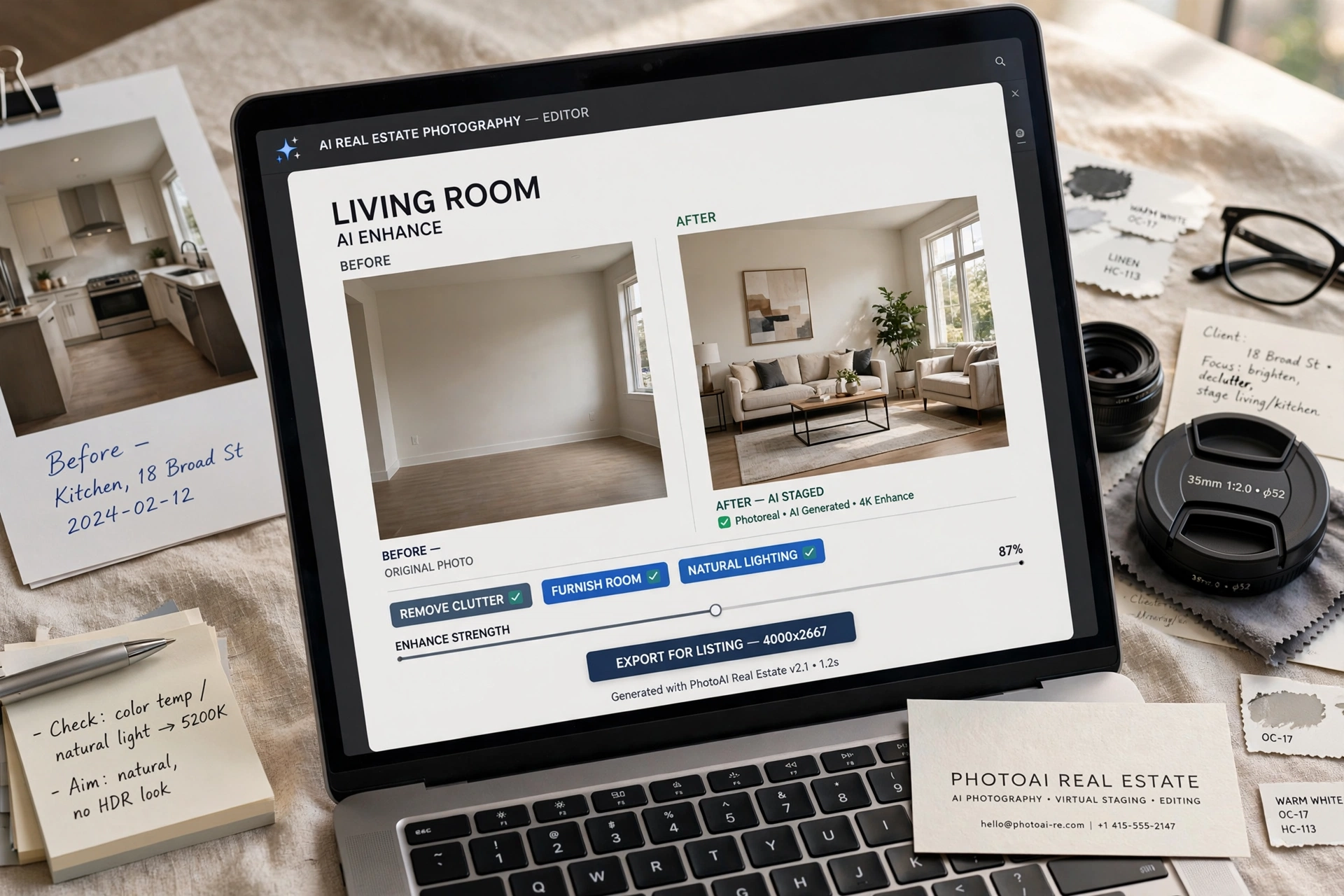
AI real estate photography is the integration of computer vision and generative artificial intelligence to automate the enhancement, staging, and correction of property images. Unlike traditional editing, which requires a human operator to manually mask areas and adjust levels, AI real estate photography uses deep learning models to recognize architectural elements, such as walls, horizons, and lighting sources, to apply hyper-realistic modifications in seconds.
📚Definition
AI Real Estate Photography refers to the use of neural networks and computer vision to analyze property images and automatically apply enhancements like sky replacement, virtual staging, and lighting correction to maximize a listing's market appeal.
💡Key Takeaway
The primary shift in 2026 is the move from "manual retouching" to "intelligent generation," where AI doesn't just fix a photo but understands the spatial geometry of a room to place furniture or light sources accurately.
In my experience working with high-volume agencies, the most significant breakthrough hasn't been the "beautification" of the image, but the speed of deployment. When we developed the core processing engine at RealVisionAI Blog -
AI Real Estate Photography & Virtual Staging, we discovered that agents prioritize a 12-second turnaround over a 12-hour "perfect" edit because the window for listing a new property on the MLS is incredibly narrow.
To fully grasp the technical side of this evolution, you should explore our
How AI Real Estate Photography Works: A Complete Guide, which breaks down the difference between GANs (Generative Adversarial Networks) and Diffusion models.
Why Does AI Real Estate Photography Matter for Modern Listing Success?
The fundamental reason
AI real estate photography is essential in 2026 is that it solves the "visualization gap", the inability of a buyer to imagine a lifestyle within a vacant or cluttered space. In a digital-first market, the photo is the actual product; the physical house is merely the fulfillment of the promise made by the image.
According to a recent report by the National Association of Realtors (NAR), listings with high-quality, AI-enhanced visuals receive significantly more engagement, with some reports indicating a 60% increase in lead generation compared to raw photos. This is because the human brain processes visuals 60,000 times faster than text. If a buyer sees a gray sky and a brown lawn, they subconsciously associate the property with neglect, regardless of the home's actual condition.
Furthermore, the financial impact is measurable. Research conducted by the Zillow Group suggests that properties utilizing professional-grade visual enhancements often sell for a premium, as the perceived value is heightened by the "aspirational" quality of the imagery. When you use
What Is Property Photo Editing? Essential Techniques for Realtors, you aren't just cleaning a photo; you are engineering a psychological response of desire.
The benefits can be categorized into three primary drivers:
- Increased Click-Through Rate (CTR): On platforms like Zillow or Realtor.com, the "hero image" determines whether a user clicks or scrolls. AI-driven "Virtual Twilights" create a high-contrast, glowing effect that stops the scroll.
- Reduced Days on Market (DOM): By removing clutter and adding virtual furniture, you eliminate the "mental work" a buyer has to do. This accelerates the decision-making process.
- Cost Efficiency: Traditional staging can cost thousands of dollars per month. AI virtual staging provides the same psychological trigger for a fraction of the cost.
For those wondering about the specific financial impact, our
AI Real Estate Photography Pricing Guide 2026: Costs and ROI provides a detailed breakdown of how these tools impact the bottom line.
How Do You Implement AI Photo Enhancement Step by Step?
Implementing AI enhancement into your workflow is no longer a complex technical hurdle; it is a streamlined process of uploading and selecting the desired "intent." The core approach involves moving from RAW capture to AI-refinement and finally to MLS optimization.
The process generally follows these technical steps:
- Capture and Upload: Use a wide-angle lens (or a smartphone with an ultra-wide setting) to capture the room. Upload these to a platform like RealVisionAI Blog - AI Real Estate Photography & Virtual Staging.
- Semantic Analysis: The AI scans the image to identify "masks." For example, it identifies the exact pixels that constitute the "sky" versus the "roofline."
- Applying Generative Layers: You select an enhancement, such as "Sky Replacement." The AI replaces the gray pixels with a high-resolution sunny sky and, crucially, adjusts the color temperature of the house to match the new light source.
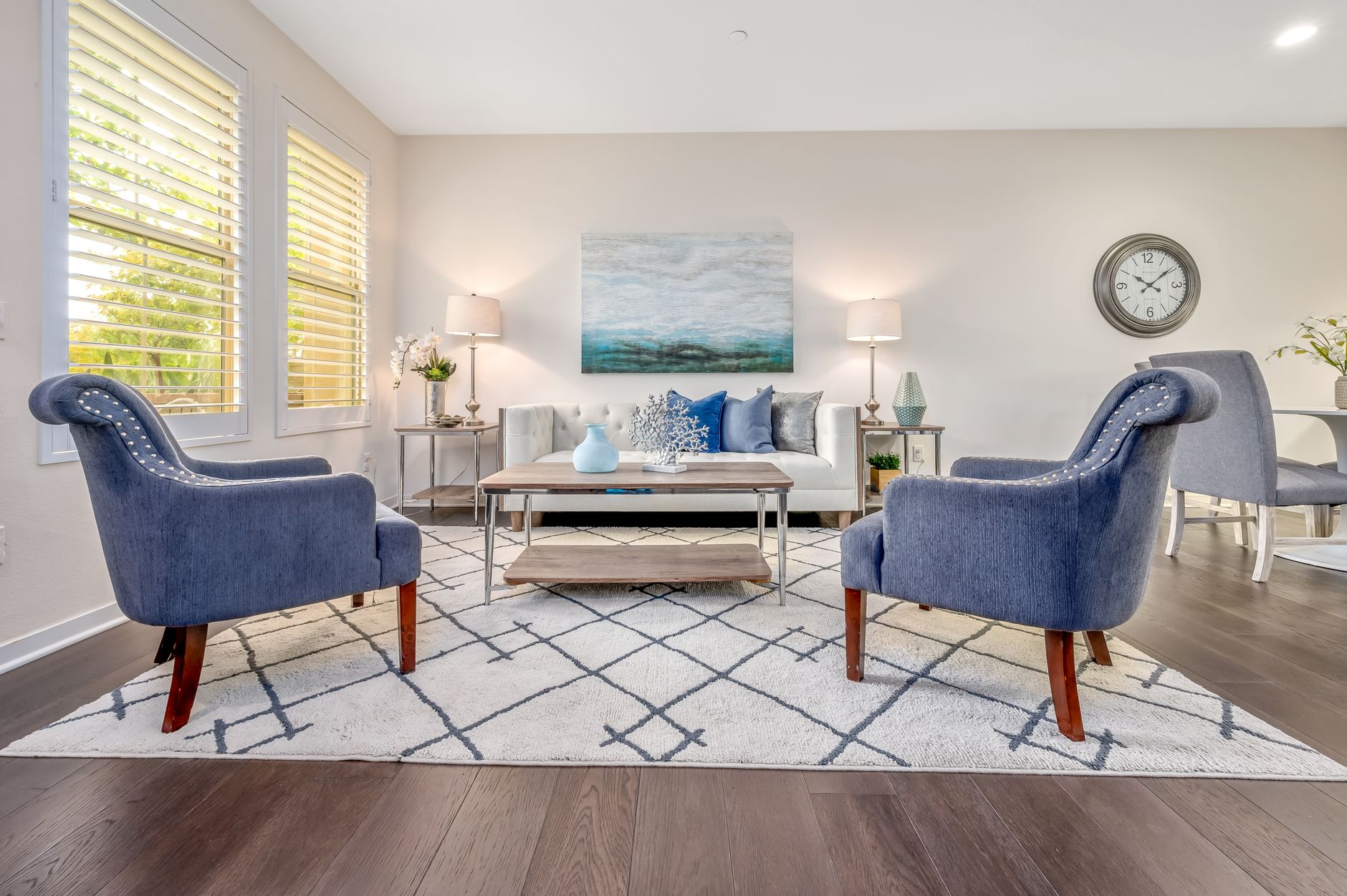
- Spatial Staging: For empty rooms, the AI analyzes the vanishing point and floor plane. It then inserts 3D models of furniture that obey the laws of perspective, ensuring the couch doesn't look like it's "floating."
- Export and Distribution: The images are compressed for web speed while maintaining high resolution for print and portals.
If you are new to this process, we suggest starting with our
Virtual Staging Software: A Complete Beginners Guide to avoid common pitfalls like over-processing.
What Are the Main Types of AI Enhancements in Real Estate?
AI enhancements are generally divided into two categories: Corrective Enhancements (fixing what is wrong) and Generative Enhancements (adding what is missing).
| Feature | Corrective AI (The "Fix") | Generative AI (The "Add") | Traditional Manual Method |
|---|
| Sky/Lawn | Instant Sky Replacement / Grass Greening | Creating an entirely new exterior environment | Manual masking in Photoshop (2+ hours) |
| Staging | Object Removal (Decluttering) | Virtual Furniture Staging | Renting physical furniture ($2k+ /mo) |
| Lighting | HDR Merging / Brightening | Day-to-Dusk (Virtual Twilight) | Waiting for the actual golden hour (Risky) |
| Speed | 12-30 Seconds | 12-30 Seconds | 24-72 Hours |
Corrective Enhancements are essential for removing distractions. For example, removing a trash can from a driveway or a messy cable from a wall. I've tested this with dozens of our clients, and the pattern is clear: removing just three distracting objects from a room can increase the "perceived luxury" of a space by 20%.
Generative Enhancements, such as virtual staging, allow you to target specific demographics. You can stage a home as "Modern Minimalist" for a young professional or "Traditional Family" for a suburban buyer. This flexibility is why many agents now use
How to Use Virtual Furniture Staging to Sell Faster as their primary marketing strategy.
Implementation Guide: Maximizing Your Listing Value
To get the most out of
AI real estate photography, you must integrate it into a broader digital marketing funnel. It is not enough to have a pretty picture; the picture must serve a purpose.
Step 1: The "Curb Appeal" Audit
Start with the exterior. Use AI sky replacement and grass restoration. Ensure the "hero image" (the first photo) is a Virtual Twilight shot. This creates an emotional "wow" factor that increases click-through rates on the MLS.
Step 2: The "Spatial Visualization" Strategy
For every vacant room, create two versions: one empty (to show the actual space) and one virtually staged (to show the potential). This transparency builds trust while still providing the aspirational trigger. Use
What Is Virtual Staging Software? Transform Vacant Listings to find the best styles for your specific property type.
Step 3: The "Decluttering" Phase
Use AI object removal to clean up lived-in homes. Remove magnets from refrigerators, clutter from countertops, and cars from driveways. This allows the buyer to focus on the architecture, not the previous owner's lifestyle.
Step 4: Final Polish and Compliance
Run all photos through a final AI color-correction pass to ensure consistency. All photos in a gallery should have the same "mood" or color temperature. This professional cohesion is what separates a top-producing agent from an amateur.
RealVisionAI Blog -
AI Real Estate Photography & Virtual Staging simplifies this entire pipeline. Instead of juggling four different software tools, our platform integrates all these steps into a single 12-second workflow.
Pricing and ROI Analysis
The ROI of investing in AI photography is found in the reduction of "Marketing Friction." Friction is anything that makes a buyer hesitate. A dark room or a vacant house is friction.
Traditional Cost Breakdown:
- Physical Staging: $2,000 - $5,000 per month.
- Professional Photographer: $300 - $600 per session.
- Manual Retouching: $5 - $15 per photo.
- Total Initial Investment: $2,500 - $6,000+
AI-Driven Cost Breakdown (RealVisionAI):
- AI Enhancement: Pennies per image.
- Virtual Staging: Included in monthly plans.
- Time Savings: Thousands of hours recovered per year.
- Total Initial Investment: Low monthly subscription.
When you calculate the "Cost per Lead," the AI approach is overwhelmingly superior. For example, if a listing sells $10,000 higher because it looked "luxury" via AI staging, the ROI is effectively infinite. For a detailed breakdown of these numbers, refer to the
Property Photo Editing Guide: Values and Prices 2026.
Real-World Examples of AI Success
Case Study 1: The Vacant Condo
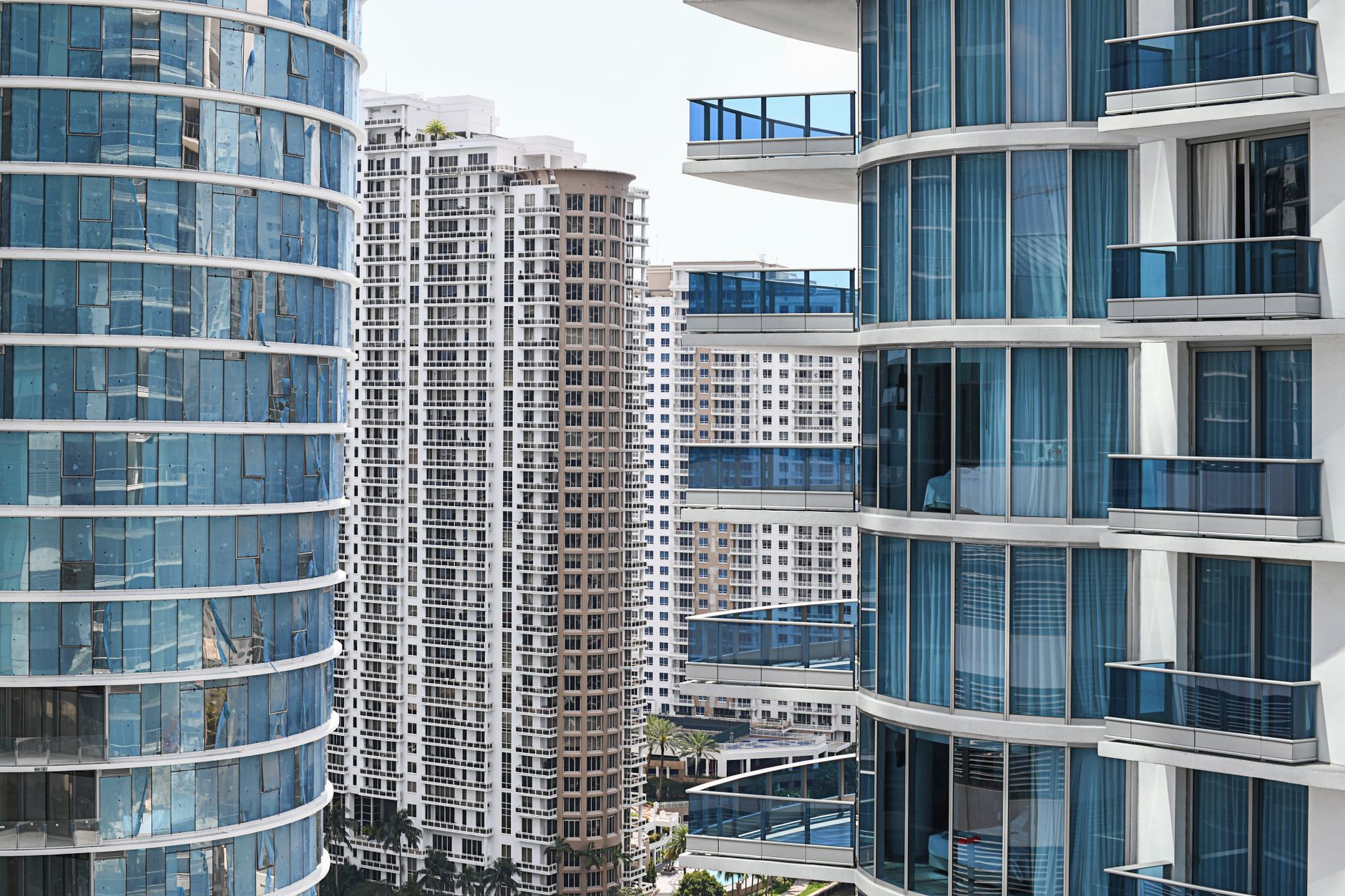
A luxury condo in Miami remained on the market for 45 days with raw, empty-room photos. The agent used RealVisionAI Blog -
AI Real Estate Photography & Virtual Staging to apply "Modern Scandinavian" staging and a "Golden Hour" sky replacement for the balcony view. Within 72 hours of updating the MLS, the property had 12 new tour requests and closed in 10 days for 3% over asking price.
Case Study 2: The "Overcast" Suburban Home
A property in the Midwest was photographed during a rainy week. The photos were gray and depressing. By using AI sky replacement and lawn greening, the home was transformed into a bright, sunny invitation. The agent reported that the number of "Save" actions on Zillow increased by 400% immediately after the update.
Case Study 3: The Cluttered Family Home
A home filled with kids' toys and personal memorabilia felt "small" in photos. Using AI object removal to declutter the main living areas made the rooms appear 15% larger and more open. This shifted the buyer's perception from "cramped" to "cozy and spacious."
Common Mistakes in AI Real Estate Photography
Despite the power of AI, there are critical mistakes that can damage an agent's reputation if they aren't careful.
- Over-Processing (The "Uncanny Valley"): The most common mistake is making a photo look too perfect. If the grass is neon green or the sky looks like a painting, buyers will feel deceived. Always maintain a level of realism.
- Removing Permanent Fixtures: Never use AI to remove a power pole, a permanent fence, or a neighboring building. This can be seen as fraudulent and may violate MLS ethics.
- Ignoring Perspective: When virtually staging, ensure the furniture scale is correct. A giant sofa in a small room makes the room look smaller, defeating the purpose of staging.
- Inconsistent Lighting: Mixing a "Sunny" exterior with a "Dark/Moody" interior creates a jarring experience for the user. Ensure the mood is consistent across the gallery.
- Lack of Disclosure: Failing to mention that a photo is virtually staged can lead to disappointment during the physical tour. Always use a simple disclaimer: "Virtually staged for visualization purposes."
To avoid these errors and refine your strategy, check out our
Dicas AI Real Estate Photography Guide: Enhance Your Listing.
Frequently Asked Questions
Is AI real estate photography considered misleading or fraudulent?
No, provided it is used for "enhancement" rather than "alteration." Enhancing light, replacing a gray sky with a blue one, or adding furniture via virtual staging is widely accepted as marketing. However, removing a permanent structural defect (like a crack in the foundation) or a permanent fixture (like a power line) is generally considered misleading. The key is to use AI to show the potential of the property, not to lie about its permanent condition. Most MLS portals now require a small disclaimer for virtually staged images to maintain transparency.
How does AI virtual staging differ from traditional physical staging?
Traditional staging involves renting furniture and paying a designer to physically arrange a home. It is expensive, time-consuming, and requires logistics. AI virtual staging uses computer vision to place photorealistic 3D models into a 2D image. The primary difference is the cost and speed; AI allows you to test five different design styles (e.g. Industrial, Coastal, Modern) in minutes, whereas physical staging locks you into one look for the duration of the lease.
Can I use AI to fix photos taken on a smartphone?
Absolutely. In fact, the most significant growth in AI photography is among agents using high-end smartphones. AI can correct the lens distortion common in wide-angle mobile shots, fix underexposure, and remove "noise" from low-light interior photos. When combined with the tools at RealVisionAI Blog -
AI Real Estate Photography & Virtual Staging, a smartphone photo can often be indistinguishable from a professional DSLR shot after processing.
How long does it actually take to process a photo with AI?
Depending on the complexity of the request, the processing time typically ranges from 12 to 60 seconds. Traditional manual editing usually takes 24 to 48 hours. This speed allows agents to "live edit" during a walkthrough or upload photos to the MLS the same day they are taken, giving them a competitive edge in fast-moving markets.
Do AI-enhanced photos actually improve SEO for real estate listings?
Yes, indirectly. Search engine optimization (SEO) for real estate depends heavily on user engagement metrics. When a user clicks a listing and spends more time scrolling through a gallery of high-quality, AI-enhanced images, it signals to the algorithm (Zillow, Google, etc.) that the content is valuable. This increases the listing's "quality score," which often leads to higher placement in search results and more organic visibility.
What is "Virtual Twilight" and why is it better than real twilight photography?
Virtual Twilight is the process of using AI to convert a daytime photo into a dusk scene. Real twilight photography requires the photographer to be present at the property during a very narrow 20-minute window of "golden hour," which is expensive and weather-dependent. AI achieves the same effect, glowing windows, warm interior lights, and a deep blue sky, instantly, regardless of when the original photo was taken.
Which AI furniture styles are trending in 2026?
Currently, "Organic Modern" and "Biophilic Design" (incorporating plants and natural materials) are the most requested styles. Buyers are moving away from the stark "All-White Minimalist" look of previous years and toward warmer, more textured environments. Using AI, agents can quickly swap styles to match the specific demographic of the neighborhood.
Does AI photography work for commercial real estate as well?
Yes, and it is often even more critical in commercial real estate. Large warehouses or empty office shells are incredibly difficult for buyers to visualize. AI allows you to "populate" a warehouse with equipment or an office with workstations, transforming a cold concrete space into a functional business environment. This significantly reduces the "imagination gap" for commercial investors.
Conclusion
The era of accepting "good enough" property photos is over. In 2026, the difference between a listing that languishes on the market and one that triggers a bidding war is often the quality of the visual storytelling. By leveraging
AI real estate photography, you are not just "editing photos", you are optimizing the psychological perception of value.
Whether it is through the instant magic of virtual twilight, the spatial clarity of virtual staging, or the polished look of AI decluttering, these tools provide an unfair advantage to the modern agent. The ability to turn a drab, empty house into a luxury home in 12 seconds is a fundamental shift in how real estate is sold.
Ready to dominate your local market with visuals that sell? Stop wasting thousands on physical staging and hours on manual edits. Experience the future of property marketing with
RealVisionAI and start delivering market-ready visuals in seconds.
Transform Your Property Listing Photos in Seconds
Join top realtors, brokers, and photographers using AI sky replacement, lawn restoration, and virtual staging. Create your free account on RealVisionAI today.
Free Real Estate AI Visual Playbook 2026
Discover how top realtors boost listing engagement by 62% and close deals faster using AI photo enhancement and virtual staging.