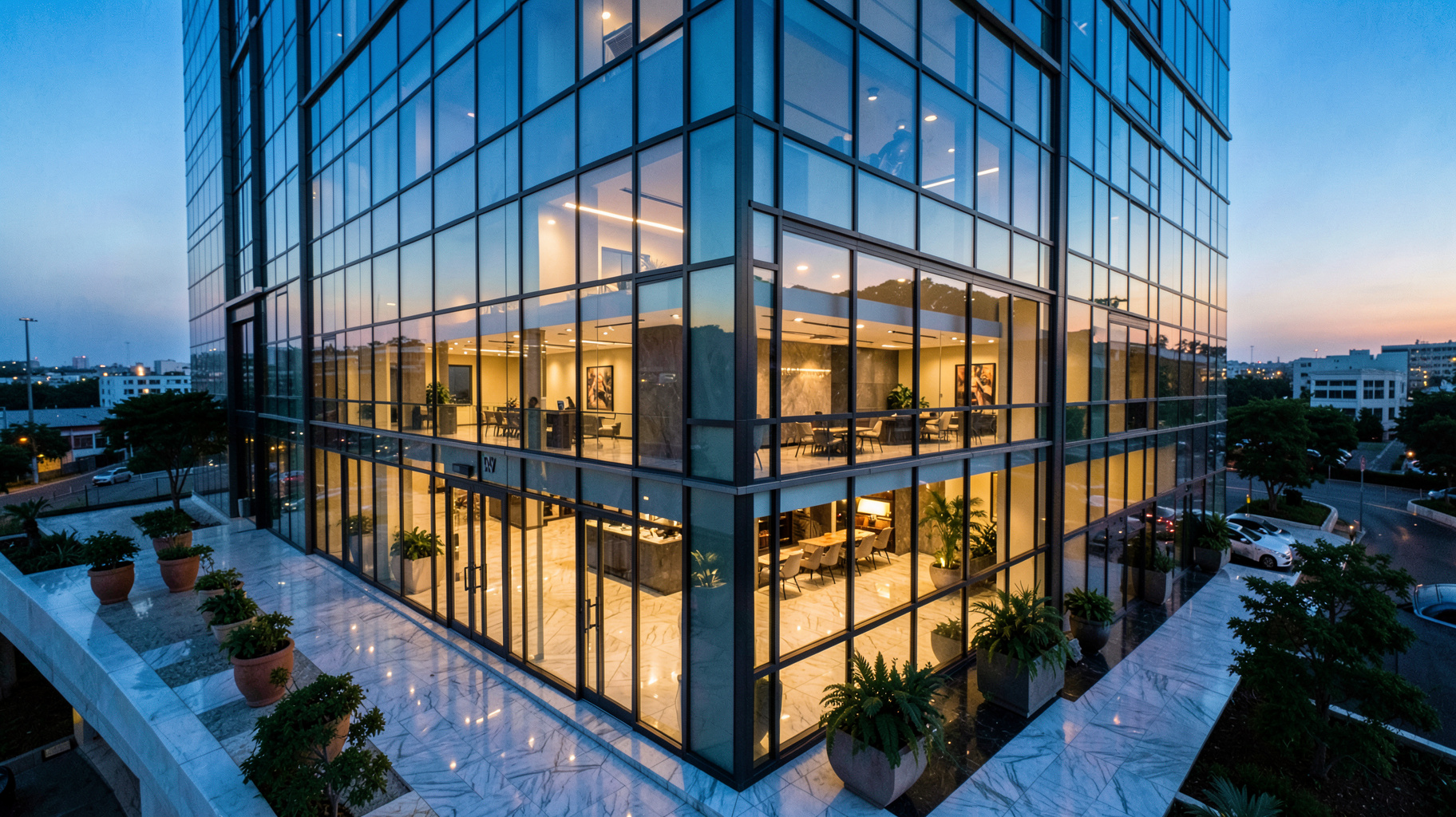


Why Should You Switch to AI Real Estate Photography?
The speed of a property sale in 2026 is decided in the first 1.5 seconds of a scroll. When a buyer browses a Multiple Listing Service (MLS), they aren't looking at floor plans or neighborhood data first; they are reacting to visual stimuli. If a living room looks dim or a backyard looks grey, the brain registers "low value" before the conscious mind even reads the price. This is why AI real estate photography has shifted from a "nice-to-have" luxury to a fundamental requirement for competitiveness. By leveraging computer vision and generative AI, agents can now transform a mediocre smartphone photo into a high-end architectural shot in seconds, eliminating the costly delay between the photo shoot and the listing going live.

What Exactly is AI Real Estate Photography and How Does it Work?
To understand the shift, we first need to define the technology. Unlike traditional editing, which involves a human manually adjusting sliders for exposure and contrast in Photoshop, AI-driven imagery uses neural networks trained on millions of high-end architectural photos to "understand" what a perfect room looks like.
📚
Definition
AI real estate photography is the application of computer vision and generative adversarial networks (GANs) to automate the enhancement, staging, and correction of property images, ensuring they meet professional architectural standards without manual retouching.
In my experience working with high-volume property managers, the biggest bottleneck has always been the "editing gap." You hire a photographer, they shoot on Tuesday, and you get the photos back on Friday. In a hot market, three days is an eternity. AI eliminates this gap. It doesn't just "filter" the photo; it performs semantic segmentation. This means the AI identifies exactly what is a "sky," what is "grass," and what is a "wall," applying specific logic to each. For instance, it can replace a cloudy, grey sky with a bright blue one while simultaneously adjusting the interior lighting to match the exterior luminosity.
According to research by Gartner, the integration of AI into visual content creation is expected to reduce production costs for enterprises by up to 50% by 2026, as the reliance on manual labor for repetitive editing tasks vanishes. This is precisely what we see in the real estate sector: the democratization of high-end visuals. You no longer need a $5,000 equipment kit and a master editor to achieve a "magazine look."
Why Does AI Imagery Directly Impact Your Bottom Line?
The reason for adopting this technology isn't just about "looking pretty"; it is about the psychology of conversion. High-quality visuals act as a filter that attracts higher-quality leads. When a listing looks professional, buyers perceive the property as being better maintained, which justifies a higher asking price.
Data from the National Association of Realtors (NAR) consistently shows that listings with professional-grade photography sell faster and often for more money than those with amateur photos. When we apply this to the AI era, the impact is magnified. Because AI real estate photography allows for instant virtual staging, you can present a vacant house not as an empty shell, but as a curated home. An empty room often feels smaller and colder to a buyer, whereas a virtually staged room provides a sense of scale and possibility.
The consequence of not acting on this is "listing fatigue." If your property sits on the market for 30 days with mediocre photos, buyers begin to wonder what is wrong with the house. They assume the poor photos reflect a poor property. In contrast, using tools like RealVisionAI Blog - AI Real Estate Photography & Virtual Staging allows you to pivot your strategy instantly. If a property isn't moving, you can change the staging style from "Modern Minimalist" to "Traditional Family" in 12 seconds to appeal to a different demographic.
Moreover, the ROI is clear. Traditional staging can cost thousands of dollars in furniture rentals and labor. AI virtual staging costs a fraction of that and can be deployed across multiple room configurations. According to McKinsey's analysis of AI adoption in marketing, companies that prioritize AI-driven personalization and visual optimization see a significant increase in lead conversion rates, often ranging from 15% to 30%.
Practical Application: How to Implement an AI Visual Workflow
Moving to an AI-centric workflow doesn't require a degree in data science. It requires a shift in how you handle your assets. The goal is to move from a linear process (Shoot $\rightarrow$ Edit $\rightarrow$ Post) to a real-time process (Shoot $\rightarrow$ AI Enhance $\rightarrow$ Post).
Here is the professional framework for implementation:
- Capture the Raw Asset: Use a wide-angle lens (or a modern smartphone with a 0.5x lens). Don't worry if the sky is grey or the room is slightly dim; the AI is designed to fix these specific pain points.
- Apply Environmental Correction: Use an AI tool to perform sky replacement and grass greening. This creates the "curb appeal" that stops the scroll.
- Execute Virtual Staging: For vacant properties, apply virtual staging. Focus on the "hero room" (usually the living room or primary bedroom) to create an emotional connection.
- Convert Day-to-Dusk: If you didn't shoot during the "golden hour," use a day-to-dusk AI converter. Twilight photos are statistically more likely to be clicked on Zillow and Redfin.
- Declutter and Clean: Use AI object removal to get rid of distracting elements—like a trash can in the driveway or a stray cable on the floor—that would normally require hours of manual cloning in Photoshop.
💡
Key Takeaway
The most effective AI workflow is one that prioritizes the "Hero Shot" first. By spending 12 seconds enhancing the main exterior and primary living area via RealVisionAI Blog - AI Real Estate Photography & Virtual Staging, you capture the lead's attention, making the rest of the gallery a supportive narrative rather than a hurdle.

Comparing the Three Paths to Property Visuals
Many agents struggle to decide between the traditional route and the new AI-driven approach. The mistake I made early on—and that I see constantly—is thinking that AI is just a "cheap substitute" for a photographer. It isn't. It is a multiplier.
| Approach | Speed | Cost | Quality Consistency | Best For |
|---|---|---|---|---|
| Traditional Manual | Slow (Days) | High | Very High (but variable) | Ultra-luxury estates ($5M+) |
| Generic AI Apps | Fast (Minutes) | Low | Low (Artifacts/Hallucinations) | Casual social media posts |
| Professional AI Studio | Instant (Seconds) | Moderate | High (Architectural Logic) | High-volume agents & MLS |
As the table shows, generic AI apps often "hallucinate" (creating weirdly shaped chairs or melting walls), which looks unprofessional. A professional AI studio, like RealVisionAI Blog - AI Real Estate Photography & Virtual Staging, uses models specifically trained on architectural constraints, ensuring that the perspectives remain straight and the furniture looks grounded in reality.
Common Questions and Misconceptions
There are several myths surrounding AI real estate photography that often prevent agents from adopting the technology. Most guides get this wrong by claiming AI will "replace" photographers. That is a fundamental misunderstanding of the value chain.
Myth 1: AI photos are "fake" and misleading.
Some argue that virtual staging or sky replacement is deceptive. In reality, these are digital versions of what "home staging" has always been. If you put a physical couch in a room to make it look better, you are altering the reality of the space. AI does the same thing, but more efficiently. The key is transparency; adding a small note that "images are virtually staged" satisfies ethical requirements and doesn't deter buyers.
Myth 2: You don't need a professional photographer anymore.
This is a dangerous assumption. AI enhances an image; it doesn't magically create a good composition from a bad one. You still need someone who understands framing, lighting, and angles. The "win" is that the photographer can now focus on the art of the shot and let the AI handle the labor of the editing.
Myth 3: AI is too complex for non-techy agents.
If you can upload a photo to Facebook, you can use an AI studio. The complexity is hidden in the backend (the computer vision algorithms). For the user, it is a simple "upload and click" experience.
Frequently Asked Questions
Will using AI real estate photography affect my MLS compliance?
Most Multiple Listing Services (MLS) allow AI-enhanced photos as long as they do not fundamentally misrepresent the property. For example, replacing a grey sky with a blue one or adding virtual furniture is generally accepted. However, removing a permanent structural wall or adding a swimming pool where none exists is a violation. Always check your local board's rules, but as long as you are enhancing existing features and not inventing new structural ones, you are typically in the clear.
How does AI handle different lighting conditions, like backlight?
AI uses a process called "HDR simulation" and global illumination mapping. When a photo has a bright window that blows out the interior (backlighting), the AI analyzes the luminosity levels and balances the exposure. It identifies the "blown-out" areas and fills them with data based on the surrounding pixels, creating a balanced image where both the interior and the view outside the window are visible. This replaces the old "bracketed" shooting method that took forever to process.
Is virtual staging better than physical staging?
For 90% of listings, yes. Physical staging is expensive, logistically difficult, and limits the buyer's imagination to one specific style. Virtual staging allows you to test different aesthetics—such as "Scandinavian" or "Industrial"—to see which resonates with your target audience. Furthermore, it allows you to stage a home before it is even cleaned or emptied, meaning the listing can go live the moment the contract is signed.
How long does it actually take to process an image with AI?
Depending on the tool, it typically takes between 5 and 15 seconds. Using a specialized platform like RealVisionAI Blog - AI Real Estate Photography & Virtual Staging, the process is near-instant. This is a massive shift from the traditional 24-to-72 hour turnaround time. This speed allows agents to make real-time adjustments based on client feedback or market shifts without waiting for an editor to get back to them.
Can AI help with "ugly" properties or dated interiors?
Absolutely. This is where "AI decluttering" and "virtual renovation" come into play. AI can remove old, cluttered furniture or outdated carpets and replace them with clean, modern alternatives. While you should never lie about a property's condition, showing a "potential" version of a room helps buyers visualize the value of the space after a renovation, which often leads to more offers on "fixer-upper" properties.
Final Thoughts on AI Real Estate Photography
The transition to AI real estate photography is not about replacing human creativity; it is about removing the friction that stands between a property and a buyer. In a market where attention is the most valuable currency, the ability to produce flawless, emotive, and high-converting visuals in seconds is a superpower. Those who continue to rely on slow, manual editing processes are essentially handing their leads to the competition.
Whether you are a solo agent or a large-scale property management firm, the goal is the same: stop the scroll and create an emotional connection. By utilizing the tools at RealVisionAI Blog - AI Real Estate Photography & Virtual Staging, you can ensure your listings are always market-ready, regardless of the weather or the state of the furniture.
Recommended Readings
To deepen your understanding of these topics, we recommend reading the following articles:
- AI in Real Estate
- Ultimate AI Lead Generation for Real Estate Agents
- AI property enhancement
- AI staging for realtors
Free Real Estate AI Visual Playbook 2026
Discover how top realtors boost listing engagement by 62% and close deals faster using AI photo enhancement and virtual staging.