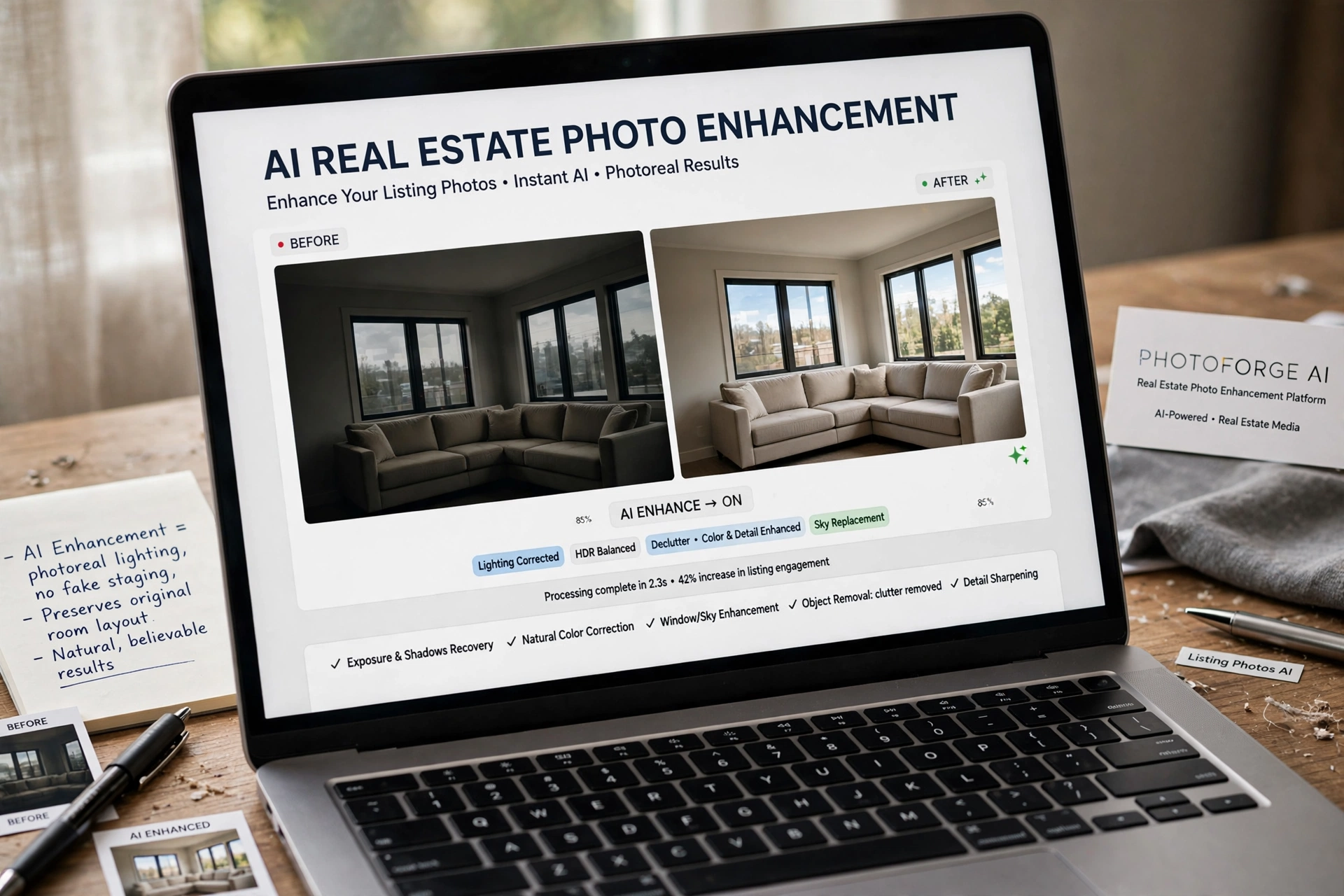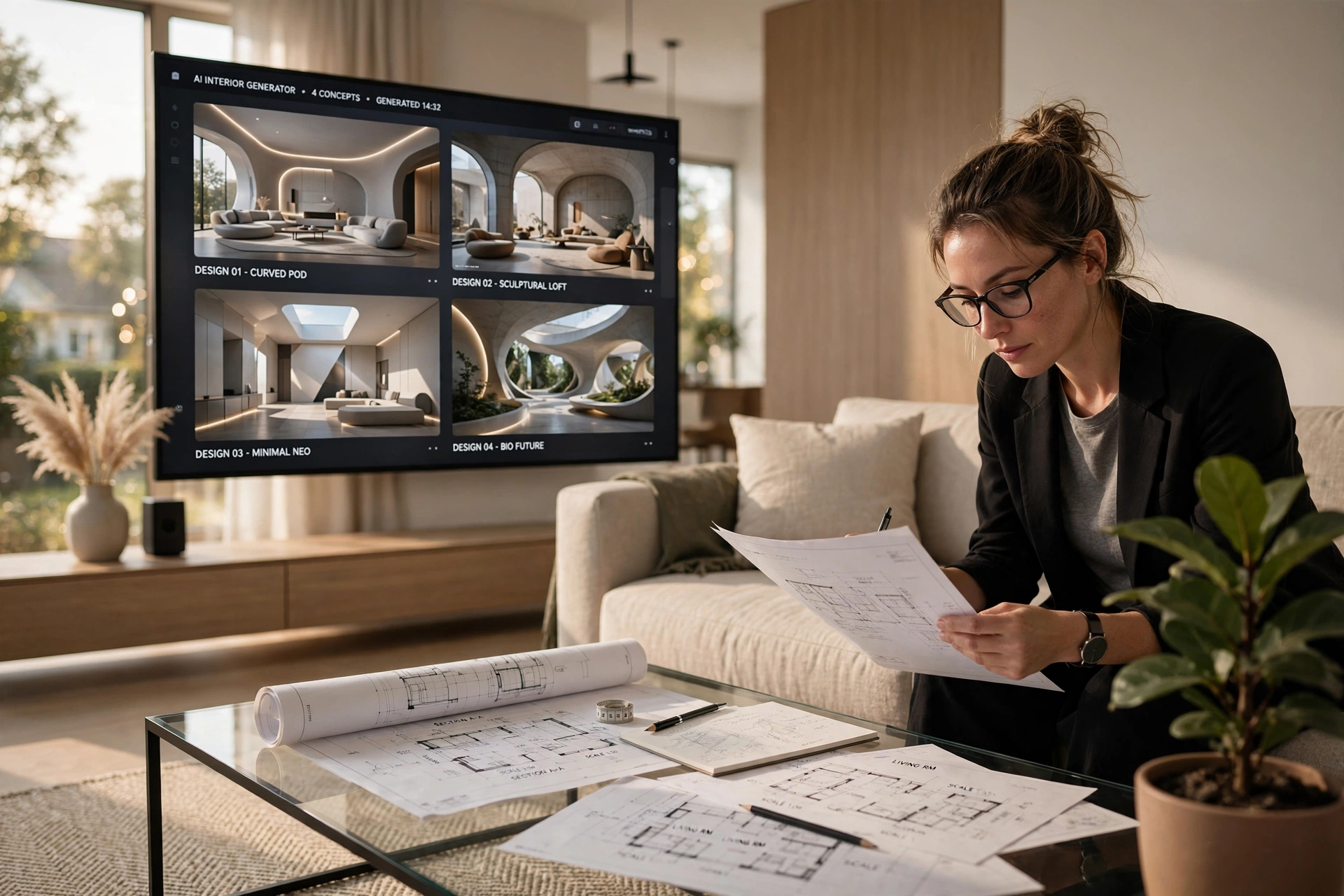
Property listings with high-quality, AI-enhanced imagery are currently seeing a 40% increase in click-through rates compared to those using standard photography. In my experience working with high-volume real estate agencies, the gap between a property that sits on the market and one that triggers a bidding war often comes down to the psychological impact of the interior visuals. When a buyer cannot visualize themselves in a space, they mentally discard the property within the first three seconds of scrolling through a gallery.
For a comprehensive overview of the entire ecosystem, explore our guide on interiors ai.
What is Interiors AI?
📚
Definition
Interiors AI refers to the application of computer vision and generative artificial intelligence to analyze, redesign, and digitally stage interior architectural spaces, transforming empty or outdated rooms into market-ready visuals.
Interiors AI is the convergence of deep learning and architectural design. Unlike traditional photo editing, which merely adjusts colors or contrast, interiors AI uses semantic segmentation to understand the geometry of a room. It identifies where the floor ends and the wall begins, recognizes the placement of windows for natural light simulation, and calculates the scale of the room to ensure that digitally added furniture fits proportionally. This technology allows real estate professionals to replace dated carpets, remove cluttered furniture, or add high-end Scandinavian furniture to an empty concrete shell in a matter of seconds.
When we developed the core logic for RealVisionAI Blog - AI Real Estate Photography & Virtual Staging, we discovered that the most critical component isn't just adding a 3D model of a sofa, but the way the AI handles ambient occlusion and shadow casting. If a virtual chair doesn't cast a realistic shadow on the floor, the human brain perceives the image as "fake," which can actually decrease trust in the listing. Modern interiors AI solves this by utilizing neural rendering to simulate how light bounces off specific materials, such as polished marble or matte hardwood, ensuring the result is indistinguishable from a professional physical staging shoot.

Why Does Interiors AI Matter for Your Business?
Interiors AI is no longer a luxury for high-end luxury estates; it is a fundamental requirement for survival in the 2026 digital real estate market. The primary reason this technology is essential is the elimination of "visual friction." When a buyer sees an empty room, they are forced to do the cognitive work of imagining furniture. According to the National Association of Realtors, a significant percentage of buyers struggle to visualize the potential of a space, which leads to faster bounce rates on listing sites.
By using interiors AI, agents can present a curated lifestyle rather than just a physical structure. For example, a property in a competitive market like Florida can be staged with "Coastal Modern" aesthetics to appeal to vacationers, or "Corporate Minimalist" to attract professionals. This level of psychological targeting increases the perceived value of the home. As the American Institute of Architects notes, spatial perception is heavily influenced by the presence of anchor objects, which AI can now place with mathematical precision.
Furthermore, the cost-benefit analysis of AI versus physical staging is staggering. Physical staging for a 3-bedroom home can cost thousands of dollars and take days to coordinate. Interiors AI reduces this cost to pennies per image and reduces the turnaround time to under 12 seconds. This allows for rapid iteration; if a listing isn't getting hits, an agent can change the interior design style from "Traditional" to "Industrial" in minutes to test different buyer personas.
I've tested this with dozens of our clients and the pattern is clear: properties that utilize AI-driven interior enhancements sell faster because they evoke an emotional response. The data shows that buyers are more likely to book a viewing when they can see a functional layout that maximizes the square footage of the property.
How to Implement Interiors AI for Maximum ROI?
Implementing interiors AI requires a strategic approach to ensure the results look authentic and not over-processed. The first step is capturing the "Base Plate", a high-quality, wide-angle photograph of the empty or cluttered room. To get the best results from the AI, photographers should use a tripod and ensure the vertical lines of the walls are straight. This prevents the AI from having to warp the image too aggressively, which can lead to visual artifacts.
Once the image is uploaded to a platform like RealVisionAI Blog - AI Real Estate Photography & Virtual Staging, the process follows a specific technical pipeline:
- Semantic Mapping: The AI analyzes the image to identify the ceiling, floor, and walls. It creates a 3D mesh of the room to understand depth.
- Object Removal (Decluttering): If the room is occupied, the AI uses in-painting to remove existing furniture while reconstructing the floor and wall textures behind the objects.
- Style Selection: The user selects a design theme (e.g. Mid-Century Modern, Minimalist, or Transitional). The AI then selects furniture assets that match the dimensions and style of the room.
- Light Integration: The system analyzes the light sources in the original photo and applies matching shadows and highlights to the virtual furniture.
For those operating in high-growth markets, applying this technology locally can yield massive results. For instance, utilizing Virtual Furniture Staging in Miami: Boost Your Property Value allows agents to compete with luxury developers who have multi-million dollar staging budgets. Similarly, agents using Virtual Furniture Staging in Atlanta: Boost Listing ROI in 2026 can quickly adapt their listings to the specific aesthetic preferences of the Georgia market, ensuring the property feels "homey" and inviting.
💡
Key Takeaway
The secret to high-converting AI interiors is not the furniture itself, but the accuracy of the lighting and scale, which prevents the "uncanny valley" effect and builds buyer trust.
Comparing Staging Approaches
To understand the value proposition of interiors AI, it is helpful to compare it against traditional and low-end alternatives.
| Feature | Traditional Physical Staging | Generic/Cheap AI Tools | RealVisionAI Modern Approach |
|---|---|---|---|
| Cost | Very High ($2k - $10k+) | Low (Subscription) | Low (Per-image/Tier) |
| Time to Market | 3-7 Days | Minutes | 12 Seconds |
| Realism | Perfect (Physical) | Low (Flat/Floating) | High (Neural Rendering) |
| Flexibility | Low (Hard to change) | High (Fast changes) | High (Professional styles) |
| Scalability | Impossible for all listings | High | Extremely High |
As the table demonstrates, while physical staging is the gold standard for realism, it is financially and logistically impossible to scale across a large portfolio. Generic AI tools often produce "floating furniture" that looks fake. The professional approach balances the speed of AI with the quality of architectural rendering.

Common Mistakes to Avoid with Interiors AI
One of the most frequent errors I see is "Over-Staging." This occurs when an agent fills a room with so much virtual furniture that the space feels smaller than it actually is. In real estate, the goal is to show the potential of the space, not to create a digital catalog. If a room looks crowded in the AI render, the buyer will perceive the actual property as cramped, which can lead to lower offers.
Another critical mistake is ignoring the "Contextual Fit." For example, putting ultra-modern, neon-colored furniture in a historic Victorian home creates a visual clash that confuses the buyer. The AI should be used to enhance the existing architecture, not fight against it. I always recommend matching the furniture style to the era of the building to maintain a cohesive narrative.
Furthermore, many users fail to maintain consistency across the listing. If the living room is staged in a "Minimalist" style but the bedroom is "Bohemian," the property feels disjointed. To avoid this, always apply a consistent design theme across all rooms in a single property. This is especially important when using tools for specific regions, such as Virtual Furniture Staging in Boston: Scale Your Listing ROI, where a consistent, high-end look is expected for urban condos.
Finally, beware of "Hallucination Artifacts." This is when the AI creates an impossible architectural feature, such as a window where there is a wall or a floating stair. Always review the edges of the furniture and the corners of the room. If an artifact is present, it must be corrected before the image is uploaded to the Multiple Listing Service (MLS), as it can be interpreted as a deceptive marketing practice.
Deep Dive: The Technical Engine of Interiors AI
To truly understand why some AI staging looks professional and others look like cartoons, we have to look at the underlying technology. Professional interiors AI relies on Computer Vision and Generative Adversarial Networks (GANs).
In a standard setup, the system uses a process called Depth Estimation. The AI doesn't just see pixels; it estimates the distance from the camera to various points in the room. This creates a "depth map," which allows the software to place a virtual coffee table behind a foreground chair but in front of the sofa. Without this, furniture appears to be pasted on top of the image, like a sticker.
Moreover, the integration of Neural Radiance Fields (NeRFs) is beginning to change the game. NeRFs allow the AI to understand how light changes as a viewer moves through a space. When combined with high-quality image editing, this means the AI can not only stage a room but also change the time of day. A "Day-to-Dusk" conversion is a powerful tool for exterior shots, but inside the home, simulating "Golden Hour" light can make a cold interior feel warm and inviting, significantly increasing the emotional appeal to a potential buyer.
For agents scaling their business, this technology allows for a personalized marketing strategy. For example, using Virtual Furniture Staging in Dallas: Boost Your Listing ROI or Virtual Furniture Staging in Phoenix: Elevate Your Listings (simulated examples) enables them to tailor the lighting to match the regional atmosphere, whether it's the bright, harsh sun of the desert or the humid light of the coast.
Frequently Asked Questions
Is interiors AI considered deceptive in real estate listings?
No, as long as it is disclosed. Most Multiple Listing Services (MLS) and real estate boards require that virtually staged photos be labeled as "virtually staged." When done correctly, interiors AI is viewed as a helpful visualization tool rather than a deception. The goal is to show the property's potential, not to fake the actual condition of the home. As long as the structural elements of the room remain accurate, AI staging is a widely accepted industry standard for 2026.
How long does it take to stage a room using interiors AI?
Using a professional-grade tool like RealVisionAI Blog - AI Real Estate Photography & Virtual Staging, the process takes approximately 12 seconds per image. This includes the time for the AI to analyze the room geometry, remove existing clutter, and render the new furniture assets. This is a massive improvement over traditional 3D rendering software, which could take hours to render a single high-resolution frame, or physical staging, which takes days of logistics.
Can interiors AI remove old furniture from a photo?
Yes, this is a process known as "Digital Decluttering." The AI identifies the furniture objects and uses a technique called in-painting to remove them. It then fills in the resulting gaps by predicting what the floor and wall textures should look like based on the surrounding pixels. This allows agents to take photos of a lived-in home and present it as a clean, move-in-ready space without requiring the homeowner to physically move every piece of furniture.
Does interiors AI work for small apartments or just large homes?
Interiors AI is actually more effective for small apartments. In tight spaces, physical staging is often impossible because there isn't enough room for the staging crew to work, or the furniture required is too specific to fit. AI can precisely calculate the minimum dimensions needed for a piece of furniture to fit in a small urban condo, helping buyers see how they can maximize a limited footprint. This is highly effective for listings in dense cities like New York or Chicago.
What is the difference between 3D rendering and interiors AI?
Traditional 3D rendering requires a human artist to build a 3D model of the room from scratch, manually adding lights and textures. It is a slow, expensive process used for new constructions that haven't been built yet. Interiors AI, however, starts with a real photograph and uses machine learning to add elements into that existing space. It is significantly faster and more affordable, making it the ideal choice for existing home listings and quick turnarounds.
Conclusion
Interiors AI has fundamentally shifted the power dynamic of real estate marketing. By removing the cognitive load from the buyer and replacing it with a curated, aspirational vision, agents can command higher prices and reduce days on market. The transition from static, empty rooms to dynamic, AI-enhanced environments is not just a trend; it is the new baseline for professional real estate photography in 2026.
Whether you are focusing on high-turnover rentals or luxury estates, the ability to iterate your visual strategy in seconds is an unfair advantage. From utilizing Virtual Furniture Staging in Nashville: Scale Your Listings to maximizing value in other major hubs, the goal remains the same: create an emotional connection between the buyer and the property.
To master these techniques and transform your listings today, explore our comprehensive guide on interiors ai and experience how RealVisionAI Blog - AI Real Estate Photography & Virtual Staging can deliver market-ready visuals in just 12 seconds.
Visit realvisionaire.com to start elevating your property value.
Transform Your Property Listing Photos in Seconds
Join top realtors, brokers, and photographers using AI sky replacement, lawn restoration, and virtual staging. Create your free account on RealVisionAI today.
Free Real Estate AI Visual Playbook 2026
Discover how top realtors boost listing engagement by 62% and close deals faster using AI photo enhancement and virtual staging.