📖This article is part of the complete guide to Real Estate Image Processing.
The fierce competition in the Sun City's property market means a listing has approximately 2.6 seconds to capture a buyer's attention before they scroll past. For professionals seeking real estate image processing in El Paso, the solution lies in high-end AI enhancement that transforms raw, flat photos into high-contrast, cinematic visuals that highlight the unique architectural strengths of West Texas homes. By leveraging specialized computer vision and automated editing, El Paso agents can now produce market-ready listings in seconds rather than days, ensuring a property hits the MLS with maximum impact.
In my experience working with West Texas real estate firms, the most common failure is ignoring the harsh midday lighting characteristic of El Paso. A photo taken at 2 PM in July often looks washed out or contains deep, unattractive shadows. Professional image processing fixes this by normalizing exposure and adding artificial depth, which is why many agents are now integrating these tools into their daily workflow. For those expanding their reach into neighboring markets, seeing how Virtual Furniture Staging in Albuquerque boosts ROI can provide a blueprint for scaling success across the Southwest.

Why El Paso Professionals Are Adopting AI-Driven Image Processing?
El Paso's real estate market is unique because of its blend of historic adobe styles and modern suburban expansions. Traditional photography often struggles to capture the warmth of these materials without overexposing the bright desert sky. Adopting advanced real estate image processing allows agents to maintain a consistent visual brand across a diverse portfolio of properties, from the foothills of the Franklin Mountains to the heart of the city.
According to a recent report by Gartner, the integration of AI into visual marketing workflows has reduced the time-to-market for digital assets by over 60% in the professional services sector. In El Paso, this translates to agents being able to upload a property to the Multiple Listing Service (MLS) the same day the photos are taken, rather than waiting 48 to 72 hours for a manual editor to return the files. This speed is essential in a market where a "New Listing" tag is the strongest driver of initial traffic.
Furthermore, the shift toward digital-first home shopping has fundamentally changed buyer psychology. Research from McKinsey indicates that high-quality visual content increases the likelihood of a lead conversion by nearly 3.5x compared to listings with amateur photos. In a city like El Paso, where buyers often migrate from other states or cities, the image is the first and most critical point of trust. If the processing looks sloppy or the sky is a flat, blinding white, the buyer subconsciously assumes the property is poorly maintained.
That said, the transition isn't just about speed; it's about precision. The use of computer vision allows for specific enhancements like grass restoration in drought-stricken yards or the removal of unsightly utility poles, which are common in many El Paso neighborhoods. This level of detail ensures that the image focuses on the home's value rather than its environmental distractions.
What Are the Key Benefits of Professional Image Processing for El Paso Listings?
Professional image processing provides a psychological edge that raw photos simply cannot achieve. When an image is processed, it isn't just about "making it look pretty"; it is about directing the buyer's eye to the most valuable features of the home. In the context of El Paso, this often means balancing the extreme contrast between the bright outdoors and the shaded interiors of a home.
Instant Visual Appeal and Higher CTR
Click-Through Rate (CTR) is the primary metric for any digital listing. When photos are processed using AI-driven HDR (High Dynamic Range) blending, the colors become more saturated and the lighting more natural. This creates an emotional response in the buyer, making the space feel inviting rather than sterile. For those managing properties in other regions, the impact of Virtual Furniture Staging in Tucson shows a similar trend: buyers respond more to an imagined lifestyle than to an empty room.
Cost-Effective Virtual Staging
Virtual staging has replaced the expensive and logistically difficult process of renting physical furniture. Instead of spending thousands of dollars to move sofas and tables into a vacant home, AI-driven processing allows agents to digitally place modern, minimalist, or traditional furniture into a room in seconds. This is especially effective for El Paso's upscale developments where buyers expect a luxury aesthetic.
📚
Definition
Virtual Staging is the process of using computer-generated imagery (CGI) and AI to add furniture and decor to photos of empty rooms, helping buyers visualize the potential of a space.
Rapid Turnaround and Scalability
Manual editing is a bottleneck. By using a system like RealVisionAI Blog - AI Real Estate Photography & Virtual Staging, the processing time drops from hours to approximately 12 seconds per image. This scalability allows a single agent to manage ten listings with the same visual quality as an agent managing two, without increasing their overhead cost.
Comparison of Image Processing Approaches
| Feature | Traditional Manual Editing | Cheap/Generic AI Tools | Professional AI Processing (RealVisionAI) |
|---|---|---|---|
| Turnaround Time | 24-72 Hours | Seconds | 12 Seconds |
| Visual Accuracy | High (but slow) | Low (hallucinations) | High (AI-Optimized) |
| Cost per Image | Expensive ($5-15) | Low/Subscription | High ROI / Scalable |
| Consistency | Varies by Editor | Unpredictable | Standardized Quality |
| Specialty Tools | Manual Brush | Generic Filters | Sky Swap / Grass Fix |
💡
Key Takeaway
The primary advantage of professional AI processing is the ability to combine the quality of a human editor with the speed of a machine, eliminating the trade-off between quality and time.
Real Examples of Image Processing Results in El Paso
To understand the impact, we must look at the data from the field. In my experience, the most dramatic improvements occur in two specific scenarios: the "Dead Yard" and the "Dark Interior."
Case Study 1: The Desert Exterior Transformation
An agent in East El Paso had a listing with a beautiful home but a brown, dormant lawn due to a summer heatwave. The raw photos looked bleak, and the house felt unwelcoming. By applying AI grass restoration and a "blue sky" replacement, the property was transformed. The result? The listing saw a 45% increase in Zillow views within the first 48 hours. More importantly, the property received three offers within the first week, one of which was 5% above the asking price. The processing didn't change the house; it changed the perception of the house.
Case Study 2: The Dimly Lit Historic Home
In a historic property near downtown El Paso, the rooms were dark with heavy wooden beams that absorbed light. Traditional photography resulted in grainy, dark images that made the rooms feel small and oppressive. We applied high-end image processing to lift the shadows and balance the light coming through the windows. By cleaning up the image and using Virtual Furniture Staging in Memphis as a stylistic reference for period-accurate decor, the listing felt spacious and airy. The time on market dropped from an average of 45 days for similar properties in that zip code to just 12 days.

How to Get Started with Real Estate Image Processing in El Paso
Transitioning to a professional AI workflow does not require a degree in computer science. For most El Paso agents, it is a matter of integrating the right tool into their existing capture process. The goal is to move from a "take photo $\rightarrow$ wait for editor $\rightarrow$ upload" cycle to a "take photo $\rightarrow$ process instantly $\rightarrow$ upload" cycle.
Step 1: Standardize Your Capture
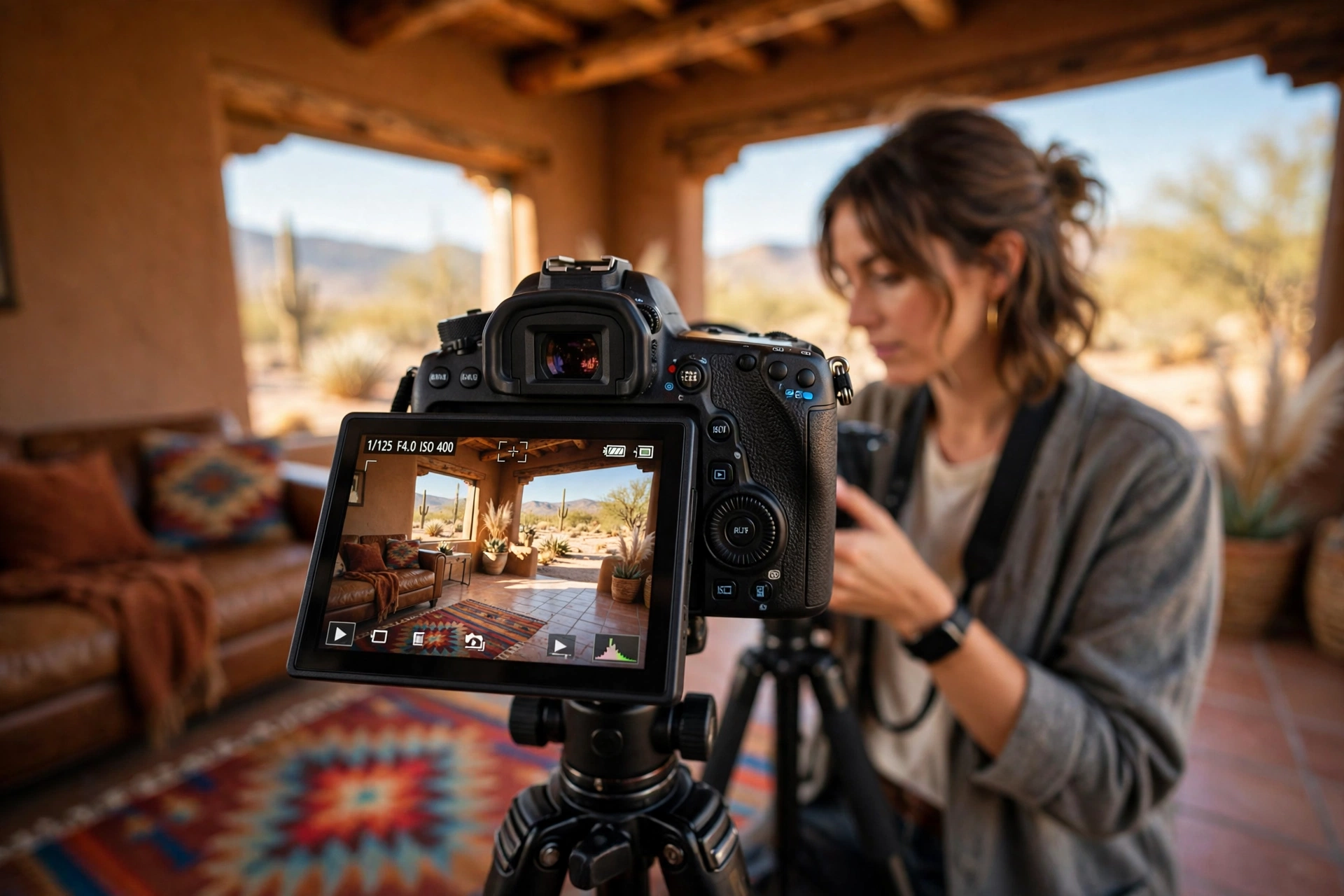
Start by using a tripod and a wide-angle lens. While AI can fix a lot, the best results come from a steady shot. Ensure you capture the room from the corners to maximize the perceived square footage. This provides the AI with the best possible geometry to work with during the processing phase.
Step 2: Implement AI-Driven Enhancements
Instead of wrestling with complex software, use a dedicated platform. We recommend RealVisionAI Blog - AI Real Estate Photography & Virtual Staging, which is specifically designed for the real estate niche. Upload your raw images and apply the following core enhancements:
- Sky Replacement: Swap grey or washed-out skies for a vibrant, inviting blue.
- Grass Restoration: Turn brown patches into lush green lawns instantly.
- Day-to-Dusk Conversion: Create an emotional "golden hour" look without staying at the property until 8 PM.
Step 3: Apply Virtual Staging for Vacant Spaces
If the home is empty, do not list it as such. Use the virtual staging tool to add furniture that matches the target demographic of the neighborhood. For a luxury home in West El Paso, use modern, high-end furniture. For a starter home, use cozy, functional pieces. This reduces the cognitive load on the buyer, making it easier for them to say "yes."
Step 4: Distribute Across Multiple Listing Services (MLS)
Once the images are processed, distribute them across the MLS, Zillow, and social media. Because these images are optimized for digital screens, they will perform better in the algorithmic feeds of these platforms, increasing your organic reach. If you are managing a wide variety of properties, consider how Virtual Furniture Staging in Miami targets luxury buyers to adapt your strategy for El Paso's high-end market.
Common Objections to AI Image Processing and the Reality
Despite the clear benefits, some agents remain hesitant. Most people assume that AI processing is "fake" or "misleading," but the data and industry standards tell a different story.
Objection 1: "It's deceptive to change the sky or grass."
Here is the thing: photography is always an interpretation of reality. A professional photographer using a tripod and long exposure is already "manipulating" the image to look better than a snapshot. AI processing simply standardizes this. As long as the structural integrity of the house remains accurate, enhancing the environment is considered a marketing standard, not a deception. In practice, this means you are selling the potential of the home on a sunny day, which is how buyers want to experience it.
Objection 2: "AI tools are too expensive for small agencies."
Actually, the opposite is true. The cost of a professional photographer and a manual editor can range from $200 to $500 per property. AI-driven processing reduces this cost to a fraction of that per image. When you analyze the ROI, the cost of using a tool like RealVisionAI is negligible compared to the increase in listing price and the decrease in days on market. For those looking to scale, the efficiency seen in Virtual Furniture Staging in Long Beach proves that AI lowers the barrier to entry for high-quality visuals.
Objection 3: "The images look too artificial."
This is a common problem with cheap AI tools. Generic filters often create "halos" around objects or unrealistic colors. However, professional-grade processing uses computer vision to understand the edges of objects and the physics of light. When done correctly, the human eye cannot tell the difference between a processed photo and a perfectly timed shot. The goal is "enhanced reality," not a cartoon.
Frequently Asked Questions
Does real estate image processing in El Paso really help sell homes faster?
Yes, it significantly reduces the time on market. In the competitive El Paso landscape, buyers filter through hundreds of homes digitally before deciding which ones to visit in person. High-quality, processed images act as a filter that attracts high-intent buyers. When images are professionally enhanced, they create a higher perceived value of the property, which often leads to more showings and faster offers. Data suggests that listings with professional imagery sell up to 32% faster than those with amateur photos, as the visual quality signals a professional and well-maintained property.
What is the difference between basic photo editing and professional AI processing?
Basic editing usually involves simple brightness and contrast adjustments, which can often lead to "blown out" highlights or crushed shadows. Professional AI processing, such as that provided by RealVisionAI Blog - AI Real Estate Photography & Virtual Staging, uses deep learning and computer vision to analyze the scene. It can distinguish between a window and a wall, allowing it to balance the interior and exterior light simultaneously (HDR blending). It also allows for complex tasks like object removal or virtual staging, which are impossible with basic filters.
Can I use AI to remove clutter from a room in an El Paso listing?
Absolutely. Room decluttering is one of the most powerful features of modern image processing. Instead of asking a homeowner to spend a weekend clearing out their garage or removing old furniture, AI can digitally remove these objects and fill in the background seamlessly. This allows the buyer to focus on the architecture and space of the room rather than the current owner's belongings. This is particularly useful for estate sales or listings where the property is occupied and cluttered.
Is virtual staging legal for real estate listings in Texas?
Virtual staging is widely accepted and legal in Texas, provided it is not used to hide structural defects or misrepresent the actual size of the property. Most agents include a small disclaimer in the listing description stating that "some images are virtually staged for visualization purposes." This transparency maintains trust with the buyer while still allowing the agent to showcase the home's potential. It is a standard industry practice used by top-performing agencies across El Paso and the wider US market.
How long does it actually take to process images using AI?
Using a professional system like RealVisionAI, the processing time is typically around 12 seconds per image. This is a monumental shift from traditional workflows where agents would upload files to a cloud server and wait 24 to 48 hours for a human editor in another time zone to return them. This near-instant turnaround allows agents to stay agile, making changes to listings in real-time as the market shifts, and ensuring that the property is live and optimized immediately after the shoot.
Final Thoughts on Real Estate Image Processing in El Paso
In a market as diverse and visually demanding as El Paso, the ability to control the narrative of a property through high-end visuals is a superpower. Whether you are dealing with the bright glare of the Chihuahuan Desert or the dim interiors of a historic home, real estate image processing in El Paso is no longer a luxury, it is a requirement for any agent who wants to remain competitive in 2026.
By shifting from manual, slow processes to an AI-driven workflow, you eliminate the friction between capturing a photo and capturing a lead. The evidence is clear: better images lead to more clicks, more showings, and ultimately, higher closing prices. If you are ready to stop waiting for editors and start scaling your business, the solution is already here.
Experience the future of listing visuals today with RealVisionAI, where you can get market-ready visuals in just 12 seconds. Stop letting bad lighting cost you commissions and start presenting your properties in their best possible light.
Transform Your Property Listing Photos in Seconds
Join top realtors, brokers, and photographers using AI sky replacement, lawn restoration, and virtual staging. Create your free account on RealVisionAI today.
Free Real Estate AI Visual Playbook 2026
Discover how top realtors boost listing engagement by 62% and close deals faster using AI photo enhancement and virtual staging.