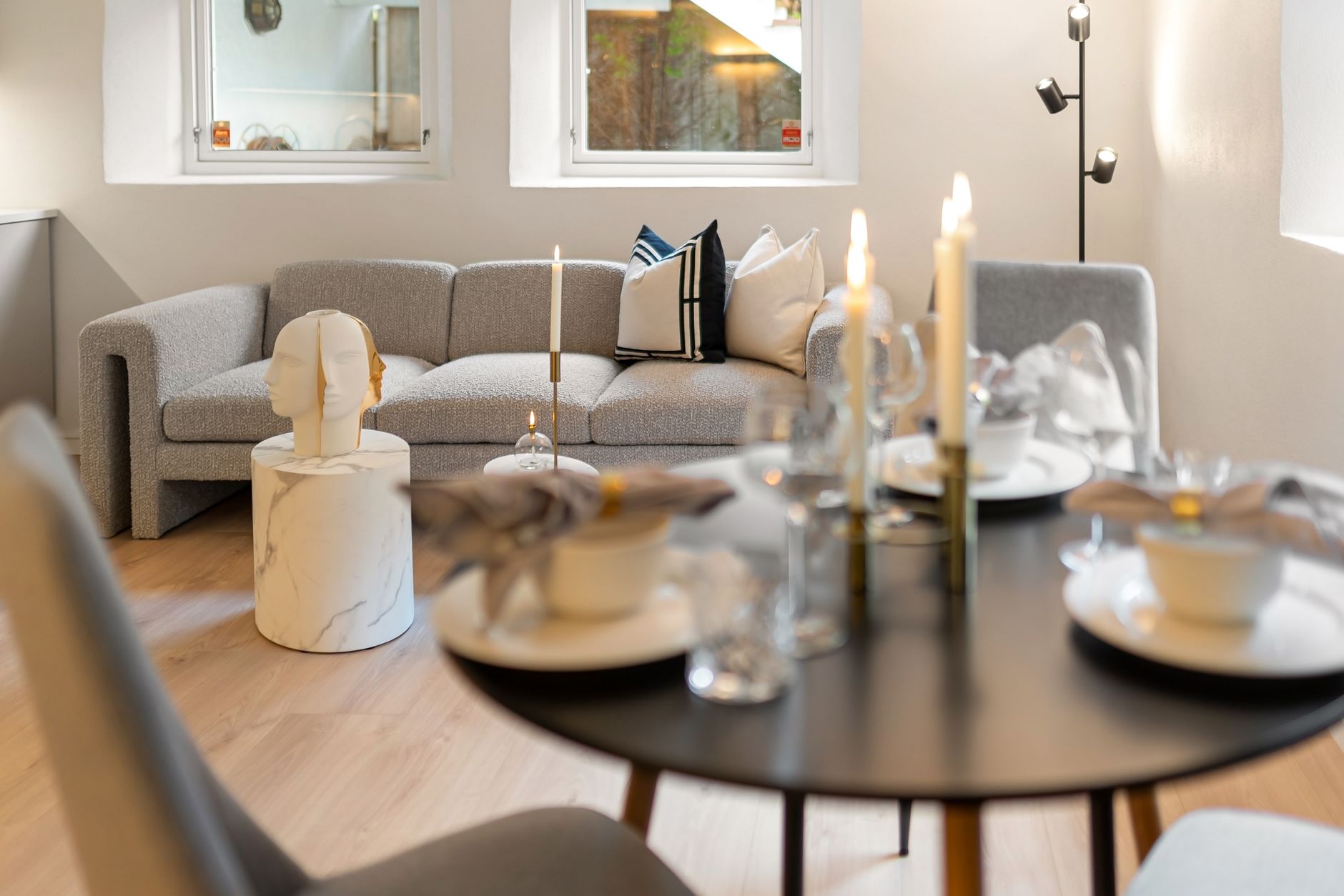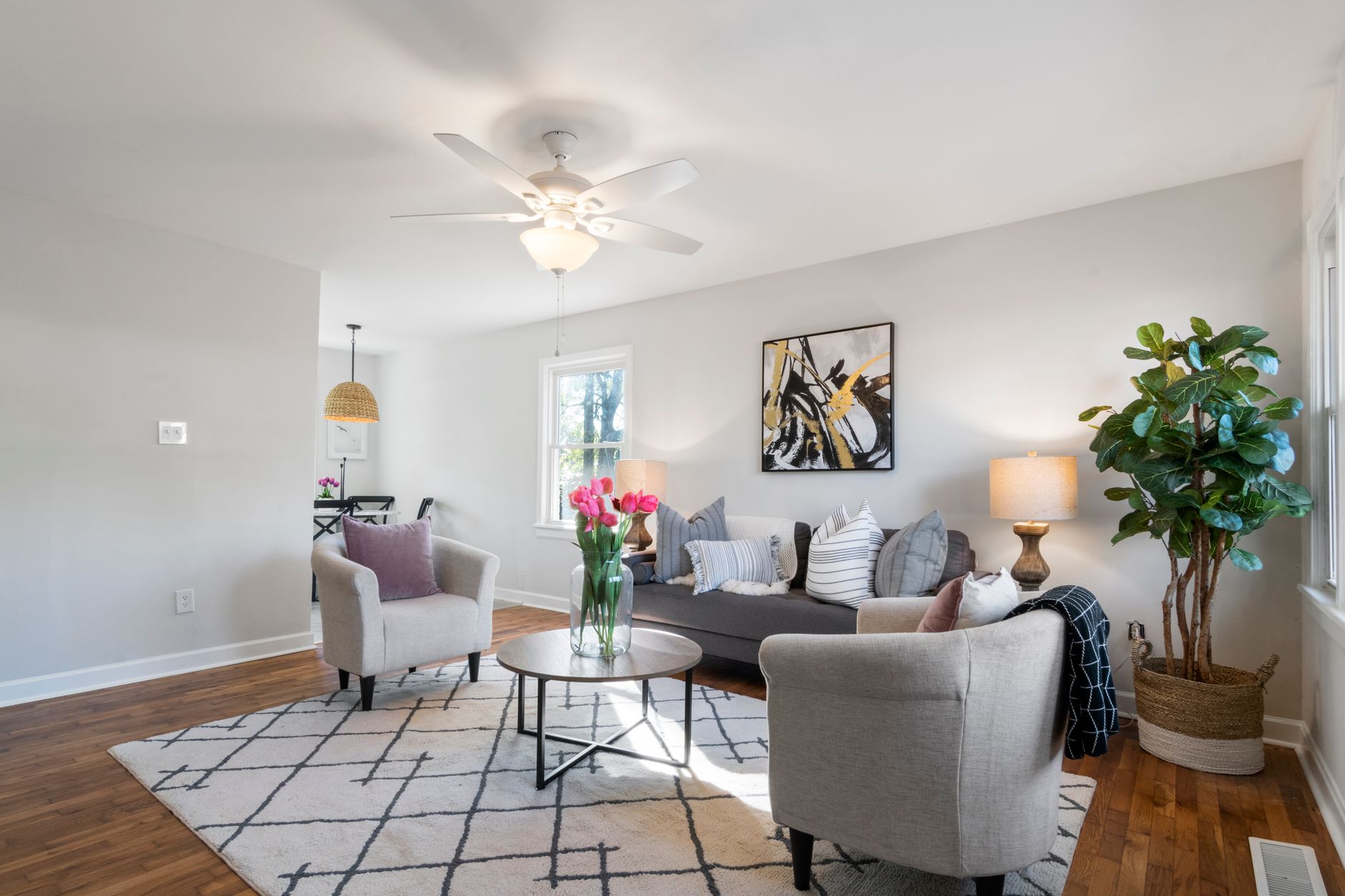

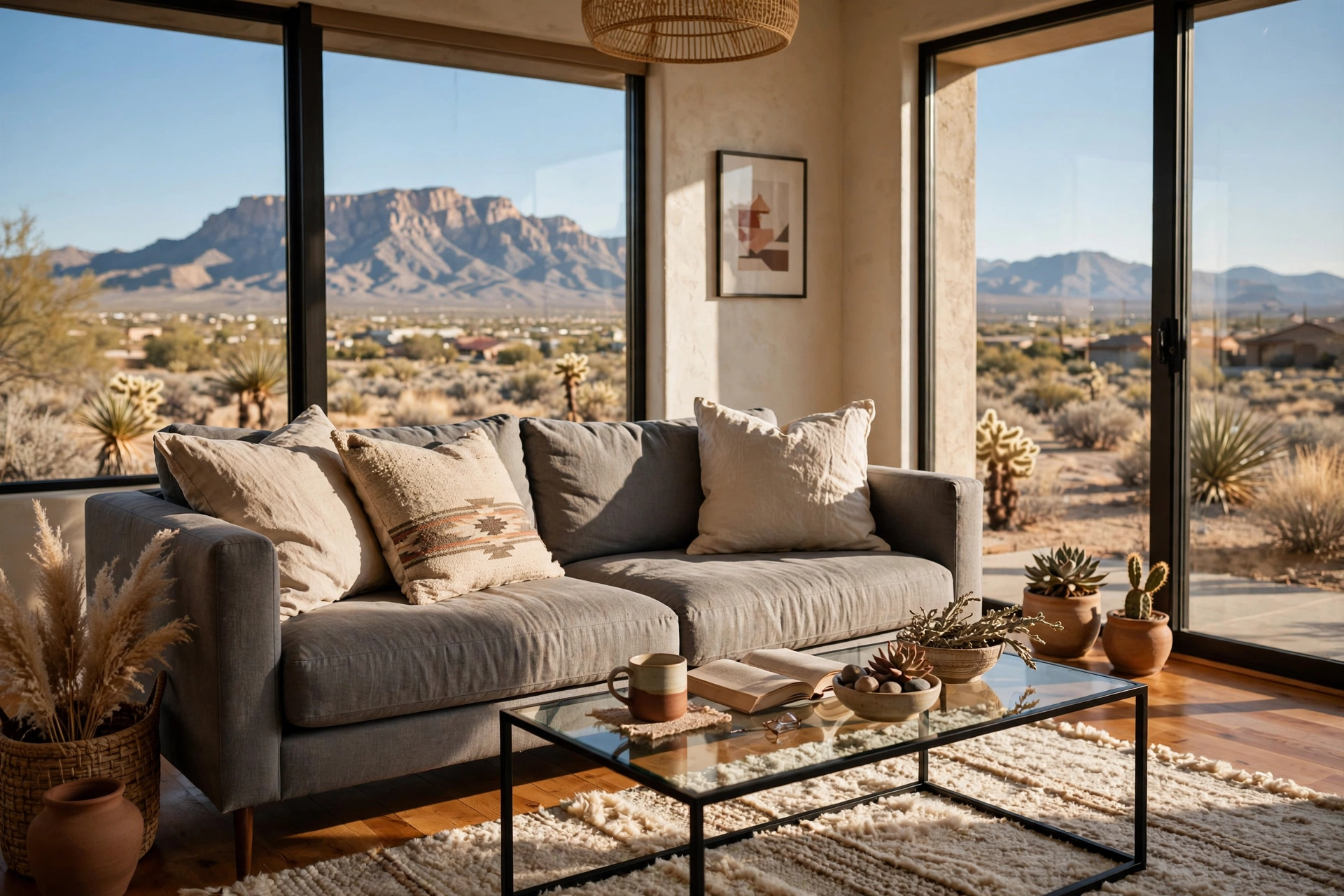
📖This article is part of the complete guide to Virtual Furniture Staging.
Empty homes in the Duke City often struggle to convey a sense of scale and warmth, leading to longer days on market and lower offers. For real estate professionals, virtual furniture staging in Albuquerque is the most efficient way to bridge this gap, using artificial intelligence to digitally place high-end furniture into empty rooms to help buyers visualize the property's full potential. By replacing the logistical nightmare of physical staging with high-fidelity digital renderings, agents can attract more qualified leads and accelerate the closing process without the heavy overhead of rental furniture.
Why are Albuquerque Real Estate Professionals Adopting Virtual Staging?
In my experience working with New Mexico property managers and agents, the most common friction point is the "empty room syndrome." Albuquerque's market is diverse, ranging from historic Nob Hill bungalows to sprawling estates in the North Valley. When a property is completely vacant, potential buyers often struggle to understand if their existing furniture will fit, or they perceive the space as smaller than it actually is. This psychological barrier often leads to a stagnation in listing activity.
This shift toward digital solutions isn't just a local trend; it is backed by global data on consumer behavior. According to a report by the National Association of Realtors, a significant percentage of buyers struggle to visualize a home's potential when it is empty, which directly impacts the perceived value of the asset. Furthermore, research from McKinsey indicates that the integration of AI-driven visual tools in commerce—including real estate—can increase lead conversion rates by up to 20% because it reduces the cognitive load on the consumer.
In Albuquerque, the cost of traditional staging—trucking furniture into a house, paying a professional stager, and risking damage to the property—can range from $2,000 to $5,000 per project. When you consider the fast-paced nature of the 2026 real estate market, waiting days for a staging crew to arrive is an unacceptable bottleneck. AI-powered virtual staging allows agents to go from an empty room to a market-ready listing in under 12 seconds, providing a competitive edge in a city where first impressions on the Multiple Listing Service (MLS) determine the volume of weekend showings.
What Are the Key Benefits of Virtual Staging for Albuquerque Listings?
📚
Definition
Virtual staging is the process of using computer vision and AI to digitally insert photorealistic furniture and decor into a photograph of an empty room, creating a curated interior design look without physical assets.
Increased Buyer Engagement and Emotional Connection
buyers don't buy square footage; they buy a lifestyle. An empty room is a blank slate, but a staged room is a home. By utilizing virtual furniture staging in Albuquerque, agents can target specific demographics. For a luxury listing in the Northeast Heights, you can implement a "Modern Minimalist" style. For a cozy cottage near Old Town, a "Traditional Southwestern" aesthetic works best. This emotional anchoring makes buyers feel at home before they even step through the door.
Drastic Reduction in Operational Costs
Physical staging is an expensive gamble. You pay for the furniture and the labor, regardless of whether the house sells in three days or three months. Digital staging eliminates this risk entirely. Instead of spending thousands, agents can invest a fraction of that cost into high-quality AI renders. This allows for a higher ROI on marketing spends, as the cost per listing is reduced by nearly 90% compared to traditional methods.
Faster Turnaround Time for MLS Listings
In the current market, every hour a listing remains "coming soon" or "pending photos" is a missed opportunity. Digital staging happens in real-time. Once the architectural photography is complete, the furniture is added via AI. There is no need to schedule movers or wait for a decorator's approval. This agility allows Albuquerque agents to get their listings live and optimized for search engine optimization (SEO) much faster than their competitors.
Comparison of Staging Methodologies
| Feature | Traditional Physical Staging | Generic/Cheap AI Tools | RealVisionAI Modern Approach |
|---|---|---|---|
| Cost | High ($2k - $5k+) | Low | Competitive/Scalable |
| Setup Time | Days/Weeks | Minutes | 12 Seconds |
| Visual Quality | Real | Often "Fake" or distorted | Photorealistic/High Fidelity |
| Flexibility | Hard to change styles | Limited presets | Fully customizable styles |
| Risk | Property damage possible | Low | Zero Risk |
💡
Key Takeaway
The primary advantage of virtual staging is the ability to manipulate the psychological perception of a space instantly, maximizing the listing's appeal while eliminating the financial risks of physical furniture rental.
Real-World Examples of Virtual Staging Results in Albuquerque
To understand the impact of these tools, let's look at two scenarios I've analyzed recently. The pattern I see consistently is that properties with virtual staging receive more clicks on the MLS and a higher volume of initial inquiries.
Case Study 1: The Empty Mid-Century Modern in Nob Hill
An agent had a stunning mid-century modern home that had sat empty for 45 days. The rooms were spacious but felt cold. We applied a "Mid-Century Modern" virtual staging package, adding a curated velvet sofa, a geometric rug, and strategic greenery.
The Result: Within 72 hours of updating the photos, the listing saw a 40% increase in showing requests. The buyer specifically mentioned that the photos helped them realize the living room was large enough for their oversized sectional, a detail they had missed in the empty photos.
Case Study 2: The Luxury Estate in the North Valley
This property featured massive, open-concept rooms that actually felt too large and intimidating when empty. Using virtual furniture staging in Albuquerque, we broke the space down into functional zones: a formal dining area, a conversation pit, and a reading nook.
The Result: The property sold for 4% over the asking price. The buyer's agent noted that the virtual staging helped the buyer visualize the flow of the house, removing the "intimidation factor" of the vast empty space. This illustrates how computer vision can be used not just to fill space, but to define it.
How to Get Started with Virtual Furniture Staging in Albuquerque
Implementing a digital staging workflow is simpler than most agents realize. You don't need to be a graphic designer or a tech expert; you just need the right toolset.
Step 1: Capture High-Quality Base Images
Start with professional real estate photography. While AI can do a lot, the foundation must be a clear, wide-angle shot of the empty room. Ensure the lighting is balanced. If the room is too dark, use an AI-driven daylight-to-dusk conversion first to make the space feel inviting.
Step 2: Define the Target Demographic
Before adding furniture, ask yourself: "Who is the ideal buyer for this property?" A young professional looking for a condo near UNM wants a different look than a retiree moving into a quiet suburb. Choose a style—Minimalist, Modern, Traditional, or Industrial—that aligns with the local neighborhood's vibe.
Step 3: Deploy AI Staging via RealVisionAI Blog - AI Real Estate Photography & Virtual Staging
This is where the magic happens. Instead of spending hours in Photoshop, use the RealVisionAI Blog - AI Real Estate Photography & Virtual Staging platform. Simply upload your empty room photo, select your desired style, and let the AI handle the perspective, lighting, and shadows. Because the system is optimized for real estate, the furniture doesn't look like it's "floating"; it looks like it was professionally placed by an interior designer. The entire process takes about 12 seconds per image.
Step 4: A/B Test Your Listings
I recommend using both empty and staged photos in your listing. Use the staged photo as the primary "hero" image to stop the scroll on Zillow or Redfin, and include the empty photo in the gallery for transparency. This strategy builds trust while maximizing the initial emotional hook.
Common Objections to Virtual Staging and the Data-Backed Reality
Many agents are hesitant to move away from physical staging due to old misconceptions. Here is the reality based on current market data.
Objection 1: "Buyers will feel cheated if the furniture isn't actually there."
Most people assume this is a risk, but the data shows the opposite. According to industry standards in digital marketing, consumers are accustomed to "representative" imagery. As long as the listing clearly states the images are virtually staged, there is no loss of trust. In fact, providing a vision of what is possible is seen as a helpful service, not a deception. The key is transparency in the caption.
Objection 2: "AI furniture looks fake and unrealistic."
This was true five years ago. However, modern computer vision and generative AI have solved the problem of scale and lighting. When you use a specialized tool like RealVisionAI Blog - AI Real Estate Photography & Virtual Staging, the AI analyzes the vanishing points of the room and the light sources. The shadows are cast realistically, and the textures (leather, fabric, wood) react to the ambient light of the photo. The "fake" look only happens when using generic, non-specialized AI tools.
Objection 3: "It's too much work to manage the software."
If you are thinking about hiring a freelance editor and waiting three days for a draft, then yes, it's a lot of work. But a specialized AI studio reduces the workflow to a few clicks. When the process is reduced to 12 seconds, the "work" becomes a non-issue. The time saved on logistics and coordination far outweighs the time spent uploading a few photos.
Frequently Asked Questions
Is virtual furniture staging in Albuquerque legal and compliant with MLS rules?
Yes, virtual staging is widely accepted across most Multiple Listing Services (MLS) in New Mexico, provided that it is disclosed. The industry standard is to include a small disclaimer in the photo caption or the listing description stating, "Some images have been virtually staged." This ensures full transparency with the buyer and prevents any claims of misrepresentation. In practice, this disclosure actually protects the agent while still allowing the property to benefit from the visual appeal of a staged home, making it a safe and effective marketing strategy for any professional in the Albuquerque region.
How does virtual staging actually help sell a home faster?
Virtual staging works by triggering an emotional response and removing a mental hurdle known as "spatial anxiety." When a buyer sees an empty room, they have to do the hard work of imagining where their sofa goes and if it will fit. By providing a professionally curated layout, you remove that cognitive burden. This allows the buyer to move immediately into the "emotional ownership" phase, where they envision themselves living in the space. This psychological shift typically leads to more showings and a faster decision-making process, as the property feels move-in ready and aspirational.
Can virtual staging be used for rental properties or just for-sale homes?
Virtual staging is incredibly effective for rental properties, especially in the competitive Albuquerque rental market. For apartments or corporate housing, virtual staging helps potential tenants see the versatility of the space. For example, a room that could be either a bedroom or a home office can be shown in both configurations through digital renders. This increases the property's appeal to a wider range of tenants and can justify a higher monthly rental price by demonstrating the functional value of the square footage, which is often overlooked in empty rental units.
How is AI virtual staging different from traditional 3D rendering?
Traditional 3D rendering often requires building the entire room from scratch in software like SketchUp or 3ds Max, which is time-consuming and expensive. AI virtual staging, such as that provided by RealVisionAI Blog - AI Real Estate Photography & Virtual Staging, uses existing photographs as the base. It employs computer vision to understand the geometry of the room and then "paints" the furniture into the scene. This results in a much faster turnaround—seconds instead of days—and a more natural look because the furniture is integrated into a real-world environment rather than a synthetic one.
Which styles of furniture work best for the Albuquerque market?
Depending on the neighborhood, different styles resonate more. In the historic areas like Old Town or Nob Hill, a "Southwestern Modern" or "Boho-Chic" look—combining earthy tones with modern lines—tends to perform well. For the newer developments in the Westside or Northeast Heights, "Contemporary Minimalist" or "Scandinavian" styles are more effective. The beauty of virtual furniture staging in Albuquerque is that you can swap these styles instantly to match the specific aesthetic of the target buyer without ever moving a single piece of physical furniture.
Final Thoughts on Virtual Furniture Staging in Albuquerque
Real estate is a visual business. In a city like Albuquerque, where the architecture is as diverse as the landscape, the ability to present a property in its best possible light is a fundamental requirement for success. Relying on empty rooms is a gamble that most agents can no longer afford. By integrating virtual furniture staging in Albuquerque into your workflow, you are not just adding furniture to a photo; you are providing a vision of a future home for your buyers.
Whether you are dealing with a luxury estate or a starter home, the goal is to maximize the emotional impact and the perceived value of the property. The transition from physical staging to AI-driven digital staging is the most significant efficiency gain available to agents in 2026. Stop wasting thousands of dollars on rental furniture and start leveraging the speed and precision of artificial intelligence.
To experience the future of listing visuals, visit RealVisionAI Blog - AI Real Estate Photography & Virtual Staging and transform your empty listings into market-ready masterpieces in just 12 seconds.
Recommended Readings
To deepen your understanding of these topics, we recommend reading the following articles:
- Virtual Furniture Staging in Fresno
- Virtual Furniture Staging in Louisville
- Virtual Furniture Staging in Tucson
- Qual o Melhor Virtual Furniture Staging
Free Real Estate AI Visual Playbook 2026
Discover how top realtors boost listing engagement by 62% and close deals faster using AI photo enhancement and virtual staging.