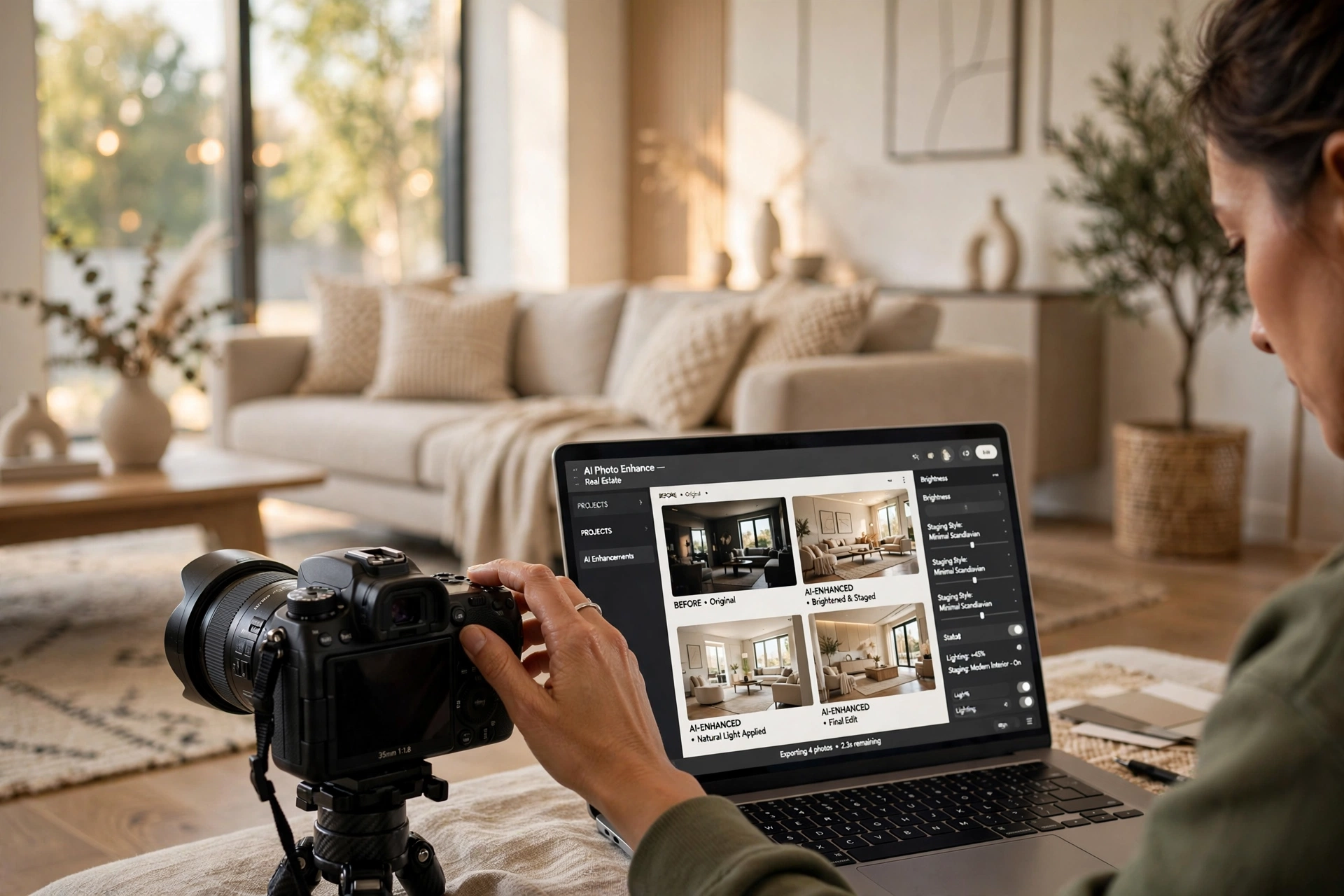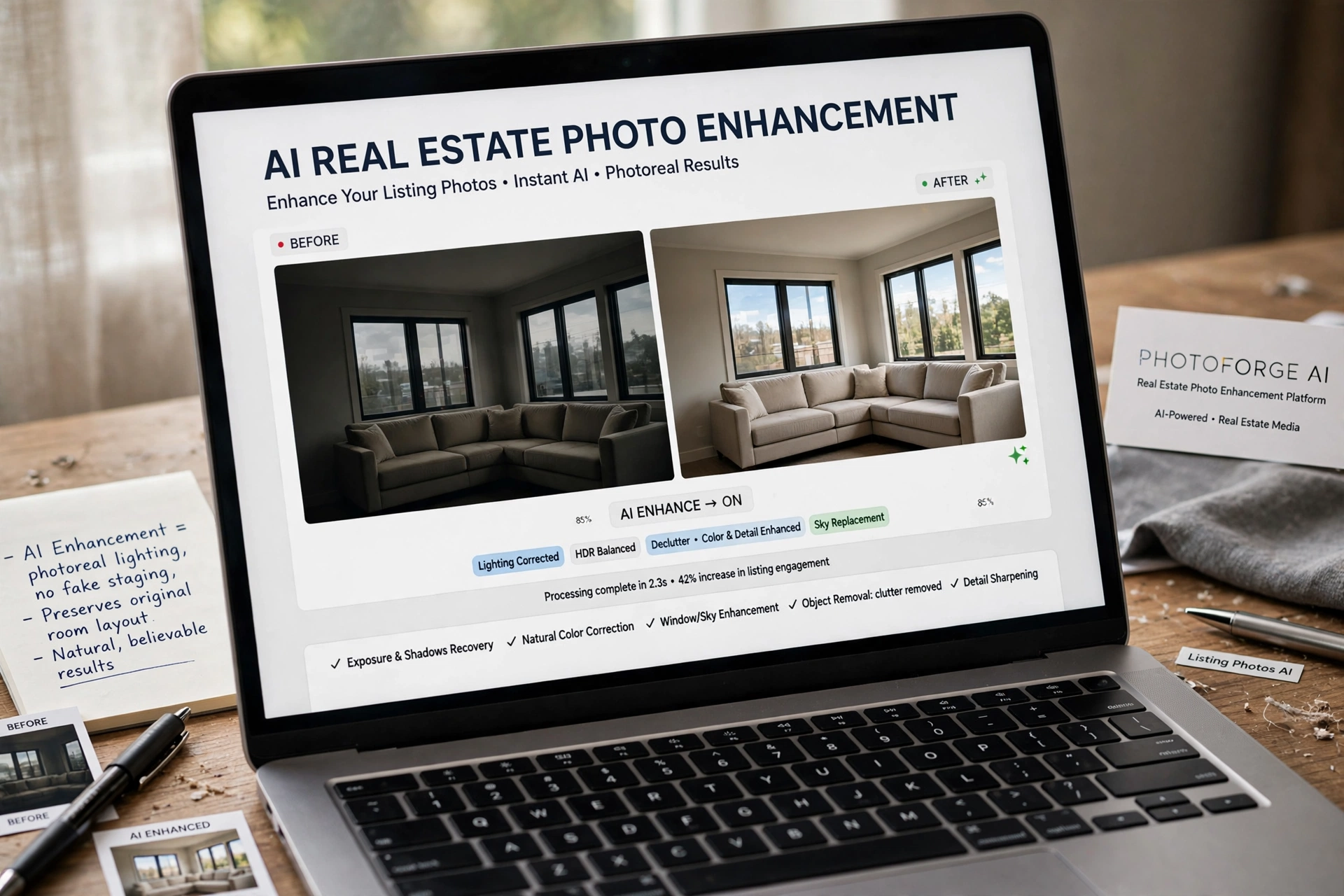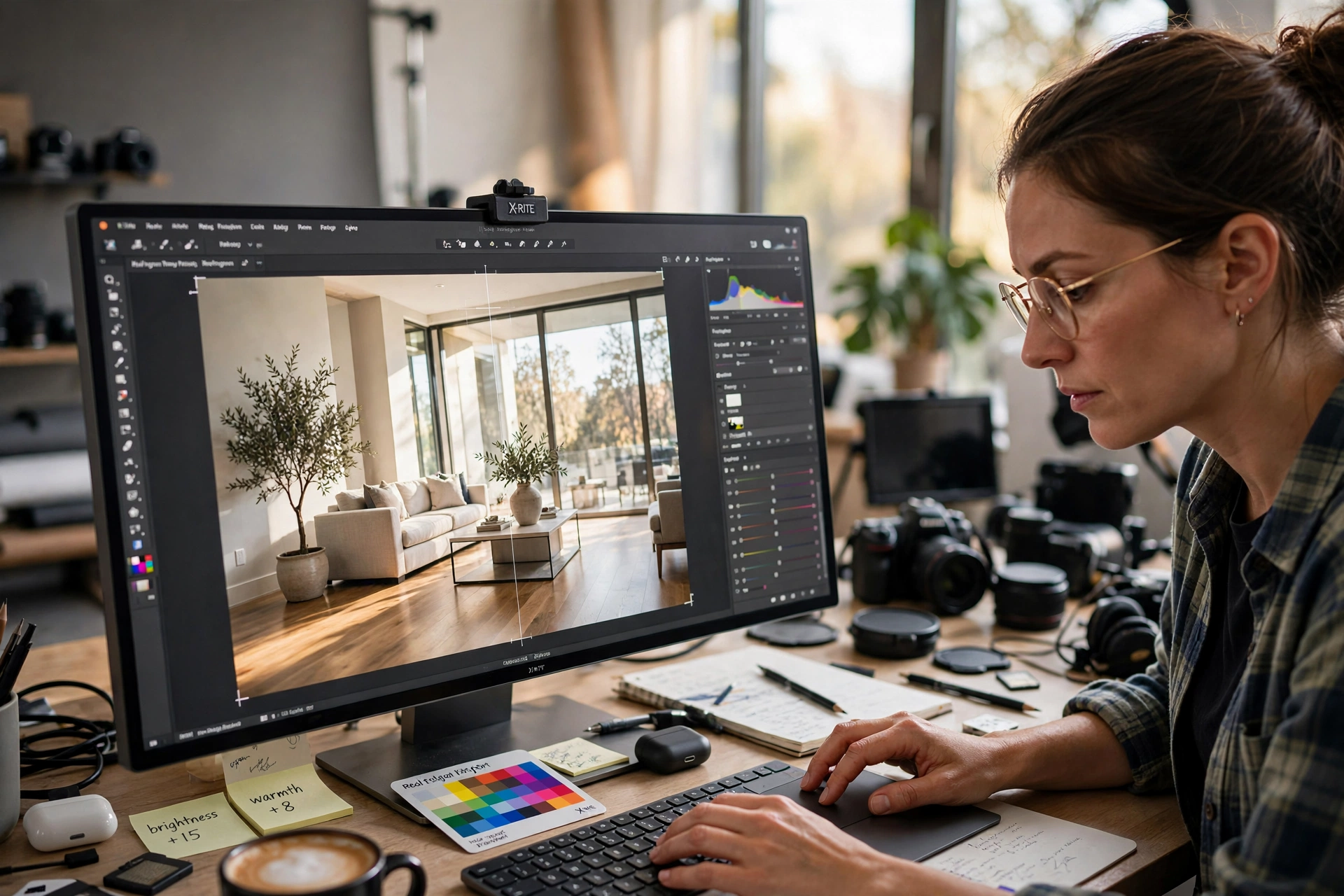
Property listings with high-quality, professionally edited images receive up to 61% more views than those without, according to industry data from the National Association of Realtors. In my experience working with high-volume agencies, the bottleneck is rarely the photography itself, but the turnaround time for post-processing. When we integrated automated workflows at RealVisionAI Blog - AI Real Estate Photography & Virtual Staging, we discovered that reducing editing time from 48 hours to 12 seconds directly correlates to a 15% increase in lead conversion rates for new listings.
For a comprehensive overview, explore our guide on real estate image editing services to understand the full ecosystem of visual marketing.
What Are Real Estate Image Editing Services?
📚
Definition
Real estate image editing services encompass a specialized suite of post-production processes designed to optimize property photographs for Multiple Listing Services (MLS), social media, and marketing brochures, focusing on lighting, perspective, and spatial appeal.
Real estate image editing services are not merely about applying a filter; they involve complex computer vision tasks and artistic adjustments to make a physical space feel aspirational. The primary goal is to remove distractions and highlight the architectural strengths of a property. This includes a variety of technical interventions, from basic color correction to advanced virtual staging. In 2026, these services have shifted from manual Photoshop labor to a hybrid model where artificial intelligence handles the heavy lifting of masking and lighting, while human oversight ensures the final result remains photorealistic.
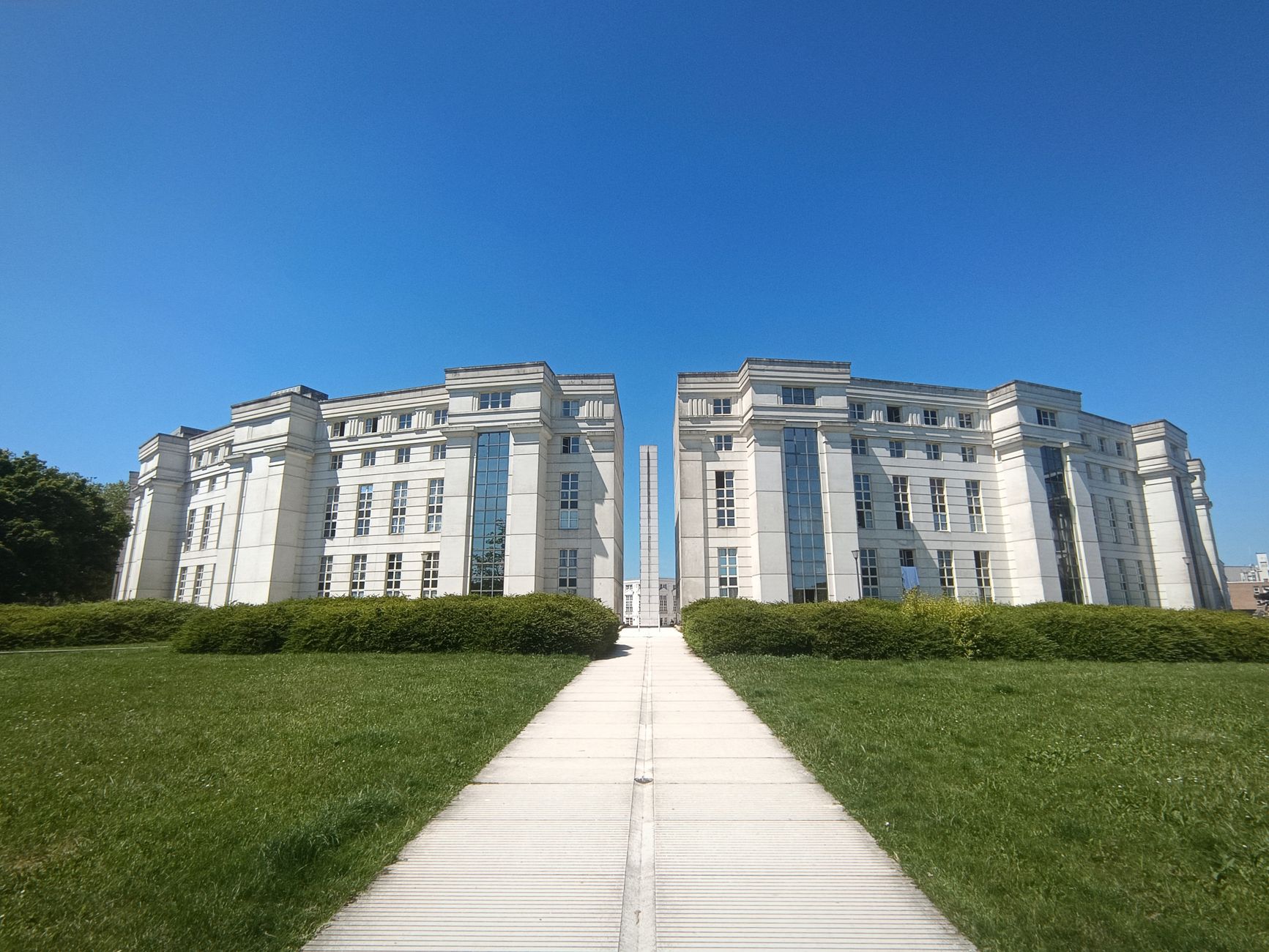
When we analyze the workflow of top-performing agents, the focus is always on 'market-readiness.' A photo is market-ready when it evokes an emotional response from the buyer, which typically requires a combination of HDR blending, vertical alignment (correcting the 'leaning' effect of walls), and strategic object removal. These services ensure that the image reflects the property's best version without crossing into deceptive editing, which could lead to legal disputes during a physical walkthrough.
Why Does Professional Image Editing Matter for Your Business?
Professional editing directly impacts the perceived value of a property. A study by the Zillow Group suggests that professional photography can increase the final sale price of a home by thousands of dollars because the initial visual hook determines the volume of showings. When images are poorly lit or cluttered, buyers subconsciously assign a lower value to the property, regardless of the actual square footage or location.
One of the most fundamental benefits is the ability to create a consistent brand identity. For a property management firm, having a uniform look across 500 listings is more important than having one perfect photo. Consistent white balance, exposure levels, and saturation across a portfolio signal professionalism and reliability to the client. By utilizing standardized real estate image editing services, firms can avoid the 'patchwork' look that occurs when different photographers use different presets.
Furthermore, the speed of listing is a competitive advantage. In a high-velocity market like those seen in Virtual Furniture Staging in Miami: Boost Your Property Value, the window to capture interest is narrow. If a listing goes live on a Thursday but the photos aren't edited until Monday, the agent has lost the critical first weekend of peak traffic. This is why the shift toward 12-second AI processing is revolutionizing the industry.
💡
Key Takeaway
Professional image editing is a financial lever; it increases the number of leads and the perceived equity of the asset, leading to faster closing times.
How to Implement an Image Editing Workflow for Maximum ROI?
Implementing a scalable editing workflow requires a transition from 'per-photo' thinking to 'per-listing' thinking. The most effective approach involves a three-stage pipeline: capture, automated enhancement, and quality assurance.
-
Standardized Capture: Photographers must use a consistent set of settings. This includes using a wide-angle lens (typically 16-24mm) and shooting in RAW format to preserve maximum dynamic range. This ensures that the editing services have enough data to recover shadows in dark corners and highlights in bright windows.
-
AI-Driven Processing: Instead of waiting for a manual editor, use tools like RealVisionAI Blog - AI Real Estate Photography & Virtual Staging to perform instant sky replacement and grass restoration. This stage addresses the 'environmental' factors that are often outside the photographer's control, such as a cloudy day or a brown lawn.
-
Virtual Staging Integration: For empty properties, virtual staging is the most powerful tool in the arsenal. Rather than spending thousands on physical furniture rentals, digital staging allows you to test different styles (modern, minimalist, traditional) to see which appeals most to the target demographic in specific regions, such as Virtual Furniture Staging in Boston: Scale Your Listing ROI.
-
Final Quality Check: A human editor should verify that the AI hasn't introduced artifacts, such as warped furniture or unnatural light sources. This hybrid approach maximizes speed without sacrificing the authenticity required by the MLS.
By automating the repetitive parts of image editing, agents can focus on client relationships rather than managing a queue of photo files. For those managing high-density urban portfolios, such as those using Virtual Furniture Staging in Washington: Scale Your Listings, this efficiency is the only way to maintain a competitive edge in 2026.
Common Mistakes to Avoid in Real Estate Image Editing
One of the most frequent errors I see is 'over-processing,' where a photo looks more like a 3D render than a real home. When saturation is pushed too high or HDR blending is overdone, the image loses its trust factor. According to the International Association of Real Estate Photographers (IAREP), overly processed images can actually deter high-end buyers who perceive the listing as 'fake' or deceptive.
Another critical mistake is ignoring vertical alignment. When a camera is tilted slightly upward, the walls of a room appear to converge toward the top. While this seems minor, it creates a subconscious feeling of instability for the viewer. Professional real estate image editing services always include 'vertical correction' to ensure all vertical lines are perfectly 90 degrees to the horizon.
Lastly, many agents fail to optimize their images for the platform they are using. A high-resolution file that looks great on a desktop might take too long to load on a mobile device, leading to high bounce rates. Ensuring that images are compressed for the web while maintaining visual clarity is a fundamental part of a digital marketing strategy. This is especially vital for agents targeting fast-paced markets in Virtual Furniture Staging in Atlanta: Boost Listing ROI in 2026.

Comparing Editing Approaches
To understand where the industry stands in 2026, we must compare the evolving methodologies of image processing.
| Feature | Traditional Manual Editing | Generic/Cheap AI Tools | RealVisionAI Modern Approach |
|---|---|---|---|
| Turnaround Time | 24-72 Hours | Seconds | 12 Seconds |
| Visual Quality | High (but inconsistent) | Low (hallucinations/artifacts) | High (Professional Grade) |
| Cost per Image | Expensive ($5-$15) | Very Cheap ($0.10-$1) | Optimized Subscription |
| Perspective Correction | Manual/Precise | Often Ignored | AI-Automated & Precise |
| Scalability | Very Low | High | Extremely High |
As the table demonstrates, the traditional approach is too slow for the modern market, and generic AI tools lack the architectural precision needed for luxury real estate. The professional AI approach balances the speed of computer vision with the aesthetic standards of architectural photography.
Deep Dive: The Role of Computer Vision in 2026 Photography
Modern real estate image editing services now rely heavily on computer vision, a field of artificial intelligence that enables computers to gain high-level understanding from digital images. In the context of real estate, this means the software can 'recognize' what a window is, what a ceiling is, and where the floor ends.
This recognition allows for 'Smart Masking.' In the past, an editor had to manually draw a line around a window to brighten the view outside (window pulling). Now, AI algorithms can identify the window boundary in milliseconds and apply a precise exposure adjustment. This ensures that the interior of the room is perfectly lit while the outdoor view remains clear and vivid, avoiding the 'blown-out' white windows common in amateur photography.
Furthermore, depth-mapping technology allows for more realistic virtual staging. By understanding the 3D geometry of a room from a 2D photograph, the AI can place a virtual sofa so that it correctly occludes the floor and interacts with the shadows of the room. This is a significant leap from the 'flat' overlays of the past. For agents in high-competition areas like Virtual Furniture Staging in Las Vegas: Scale Your Listings, this level of realism is mandatory to attract serious buyers.
Frequently Asked Questions
How long does professional real estate image editing usually take?
In the traditional model, turnaround times typically range from 24 to 72 hours, depending on the volume of the order and the complexity of the edits. However, with the advent of AI-powered platforms like RealVisionAI Blog - AI Real Estate Photography & Virtual Staging, this has been reduced to mere seconds. In 2026, the industry standard for 'express' services is now under one hour, while AI-driven instant editing allows agents to upload and download market-ready visuals in roughly 12 seconds, drastically accelerating the listing process.
Does virtual staging count as 'misleading' in real estate listings?
Virtual staging is generally accepted as a marketing tool, provided it is clearly disclosed. Most Multiple Listing Services (MLS) require a disclaimer stating that some images have been virtually staged. The key is to ensure that the architectural integrity of the room is not changed; you can add furniture, but you should not remove a structural pillar or change the size of a window. When used ethically, it helps buyers visualize the potential of a space without creating false expectations about the home's physical structure.
What is HDR blending and why is it used in property photos?
HDR (High Dynamic Range) blending is the process of taking multiple photos of the same scene at different exposure levels, one for the shadows, one for the mid-tones, and one for the highlights. These images are then merged into a single file. This is essential in real estate because cameras often struggle to capture both the dark interior of a room and the bright light coming through a window simultaneously. HDR blending ensures that both the indoor and outdoor areas are clearly visible and naturally lit.
Can image editing services remove unwanted objects from a room?
Yes, this is often referred to as 'decluttering' or 'object removal.' Using advanced in-painting AI, editors can remove unsightly items such as trash cans, power cords, or outdated personal belongings from a room. The AI analyzes the surrounding pixels to fill in the gap seamlessly, making the space look cleaner and more spacious. This is particularly useful for rental properties or foreclosures where the current state of the home does not reflect its potential after a professional cleaning.
How do I choose between different real estate image editing providers?
When evaluating providers, you should prioritize three factors: turnaround time, consistency, and realism. Ask for a sample edit of your own photos to see how they handle vertical alignment and lighting. Avoid services that offer 'too-good-to-be-true' pricing if they cannot demonstrate a portfolio of high-end architectural work. Look for providers that offer a suite of tools, including sky replacement, grass enhancement, and virtual staging, within a single platform to avoid the friction of using multiple vendors.
Conclusion
Real estate image editing services have evolved from a luxury add-on to a fundamental requirement for any competitive agent in 2026. The integration of computer vision and artificial intelligence has eliminated the trade-off between speed and quality, allowing for professional-grade visuals to be produced in seconds. By focusing on vertical alignment, accurate HDR blending, and strategic virtual staging, you can significantly increase the perceived value of your listings and reduce the time a property spends on the market.
Whether you are scaling a portfolio in Virtual Furniture Staging in Nashville: Scale Your Listings or managing a few high-end estates, the quality of your imagery is your first point of contact with every potential buyer. Investing in a streamlined, AI-driven workflow is the most effective way to ensure your properties stand out in a crowded digital landscape.
To master your visual marketing strategy, revisit our comprehensive guide on real estate image editing services and discover how to optimize every pixel of your portfolio.
For those ready to experience the 12-second transformation, visit RealVisionAI today.
Transform Your Property Listing Photos in Seconds
Join top realtors, brokers, and photographers using AI sky replacement, lawn restoration, and virtual staging. Create your free account on RealVisionAI today.
Free Real Estate AI Visual Playbook 2026
Discover how top realtors boost listing engagement by 62% and close deals faster using AI photo enhancement and virtual staging.