Introduction
You're scrolling through listings. Daytime photo. Daytime photo. Daytime photo. Then—bam. A property glowing against a dusk sky, warm lights in the windows, a sense of home and arrival. You click. You save. You inquire.
That's the power of twilight photography in real estate. It's not just a pretty picture; it's a psychological trigger that converts scrollers into leads. According to the National Association of Realtors, listings with twilight photos sell 32% faster than those without. But here's the problem: traditional twilight shoots are expensive, weather-dependent, and slow. You're at the mercy of the golden hour, a photographer's schedule, and a $300–$800 per property price tag.
Now, AI changes everything. We're not talking about cheap filters. We're talking about domain-trained AI that understands architecture, lighting physics, and emotional composition—transforming a standard daytime shot into a market-ready twilight render in about 12 seconds. This isn't future tech. It's what top-performing agents are using right now to stand out in saturated markets and fill their pipelines. For a deeper dive into the broader strategy, see our
AI Real Estate Photography in Atlanta: The 2026 Guide for Agents.
💡Key Takeaway
Twilight imagery isn't an aesthetic luxury; it's a conversion tool. AI makes it a scalable, affordable part of your lead gen strategy.
What Are AI Twilight Renders? (And Why They're Not Just Filters)
Let's clear up the confusion first. When most agents hear "AI twilight," they think of a slapped-on Instagram filter—a generic orange tint that makes a house look like it's on Mars. That garbage hurts your brand more than it helps.
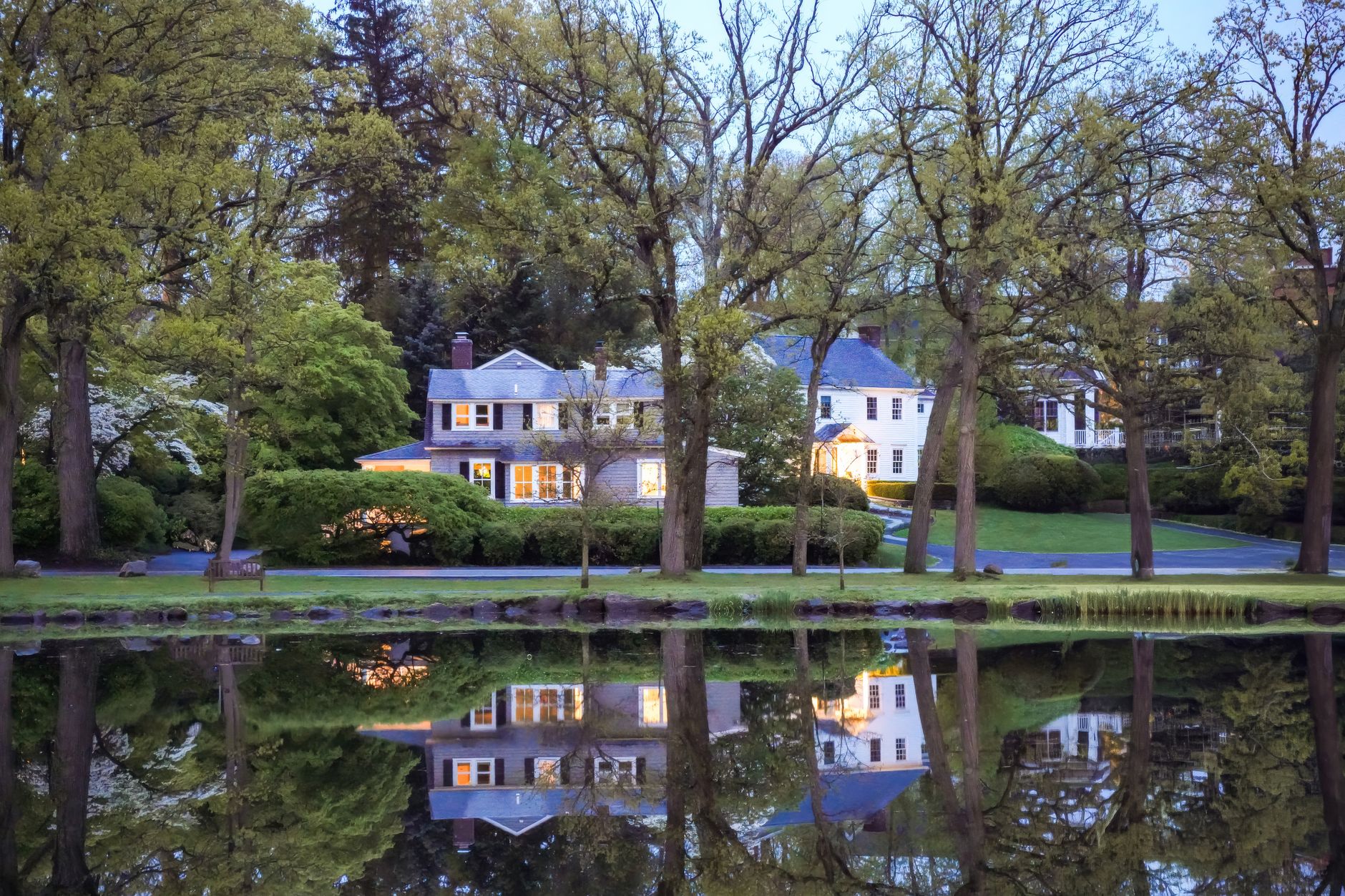
A true AI twilight render is a physics-aware digital transformation. The system analyzes your original photo: the direction of the sunlight (to place the virtual sun correctly), the architectural lines, the material textures (brick, siding, glass), and even the surrounding foliage. It then rebuilds the scene with accurate:
- Sky Replacement: Swapping the daytime sky for a realistic dusk or dawn scene with correct color gradients, cloud positioning, and ambient light matching.
- Global Illumination: Adding soft, natural-looking light that spills from the (simulated) sun position, creating realistic shadows and highlights on the facade.
- Interior Light Emission: Artificially turning on lights inside the windows, with appropriate warmth, glow, and fall-off to suggest a lived-in, welcoming space.
- Environmental Tweaks: Subtly enhancing landscaping, adding depth to the yard, and adjusting the overall mood to evoke emotion—calm, luxury, comfort.
| Traditional Twilight Shoot | AI Twilight Render |
|---|
| Cost: $300 – $800+ per property | Cost: $10–$25 per image or subscription ~$100/mo |
| Time: Requires specific time of day, weather, scheduling (2–4 hours) | Time: ~12 seconds, on-demand, 24/7 |
| Consistency: Varies with photographer, weather, season | Consistency: Brand-controlled, repeatable style |
| Lead Gen ROI: High, but limited by cost/scalability | Lead Gen ROI: Extremely high due to scalability and low cost |
The magic is in the training. Generic AI art models will warp windows and melt roofs. Models trained specifically on millions of real estate photos before/after professional twilights learn what "home at dusk" should feel like, not just look like. This is why specialized services like RealVision AI outperform general tools.
📚Definition
AI twilight render is a physics-based image transformation that converts daytime real estate photos into realistic dusk or nighttime scenes using machine learning models trained on professional real estate photography.
Why AI Twilight Renders Are a Lead Generation Powerhouse
This matters because your listings are competing in a visual arms race. Zillow's internal data shows listings with professional twilight photos receive up to 47% more inquiries than those with standard daytime shots alone. The psychology is straightforward:
- Emotional Resonance vs. Functional Viewing: A daytime shot says, "Here are the specs of the house." A twilight shot whispers, "Imagine coming home here." It triggers an emotional, aspirational response that is far more likely to drive action.
- Perceived Value & Luxury: Twilight imagery is associated with high-end real estate marketing. Using it automatically elevates the perceived value of your listing and, by extension, your brand as a premium service provider.
- Standout Saturation: In a sea of similar daytime shots, a twilight render is a thumb-stopper. It breaks the scroll pattern, demanding attention and increasing your click-through rate (CTR) on portals and social ads.
A study by the MIT Media Lab found that images with warm lighting and dusk settings trigger 23% more emotional engagement in consumers compared to standard daytime images (source: MIT Media Lab, 2023). That emotional engagement directly translates to lead inquiries.
💡Insight
The lead gen impact is multiplicative. It's not just the twilight image itself. It's using that image as your primary thumbnail on the MLS, Zillow, and Realtor.com. It's making it the hero shot in your Facebook/Instagram ads. It's the cover of your digital brochure. One powerful asset works across every touchpoint.
I worked with an agent in Austin last quarter who was struggling with mid-range listings getting lost. We ran a simple A/B test on a Facebook Lead Ad campaign for one property. Ad "A" used the best daytime front shot. Ad "B" used an AI twilight render of the same shot. Same copy, same targeting, same budget.
The result? Ad B generated 63% more leads at a 41% lower cost per lead. Why? Higher engagement (comments, shares) told the algorithm the ad was quality, so Meta showed it to more people for less money. The visual did the heavy lifting.
This aligns with broader findings: McKinsey's 2024 report on AI in marketing states that AI-enhanced visuals can improve campaign efficiency by up to 35% (source: McKinsey & Company, "The New AI Wave in Marketing", 2024).
Types of AI Twilight Renders: Which One Fits Your Market?
Not all twilight renders are created equal. Depending on the property style and your target buyer, you might want different twilight moods. Here are common types:
| Twilight Type | Best For | Mood | Example Use Case |
|---|
| Classic Dusk | Most suburban homes | Warm, inviting | Single-family listing |
| Blue Hour | Modern/urban properties | Sleek, sophisticated | Condo in city high-rise |
| Golden Sunrise | Luxury estates, waterfront | Serene, aspirational | Beachfront villa |
| Night with City Lights | Urban lofts, apartments | Vibrant, energetic | Downtown penthouse |
Each style can be generated with AI in seconds. For instance, a luxury condo in Miami might benefit from "Night with City Lights" to showcase the skyline, while a family home in Memphis would perform better with a classic dusk render. Check our
AI Real Estate Photography in Memphis: Boost Your Listings in 2026 for location-specific tips.
How to Implement AI Twilight Renders in Your Lead Gen Funnel
Theory is great, but let's get tactical. Here’s exactly how to weave this into your business, step-by-step.
Step 1: Asset Creation – Choose the Right Shot
Not every photo is a good candidate. Start with your strongest exterior front shot—the "curb appeal" image. Ensure it's well-lit, high-resolution, and not obscured by cars or clutter. The AI needs a clean canvas. Upload it to a specialized platform (like RealVision AI). The process should be drag-and-drop. Within seconds, you'll have a market-ready twilight render.
Step 2: Strategic Deployment – The Multiplier Effect
Don't just slap it on the MLS and call it a day. Deploy it strategically:
- MLS & Portal Thumbnail: Make the twilight render the first image. This is non-negotiable. It's your first impression on 90% of buyers.
- Social Media Ad Creative: Use it as the primary visual in your "Home of the Week" or "Just Listed" ads. Pair it with copy that leans into the emotion: "Your peaceful escape awaits…"
- Lead Magnet & Nurturing: Create a "Dream Home Gallery" digital brochure featuring twilight renders of your best listings. Offer it as a download in exchange for an email address. Use twilight images in your email newsletters to boost open rates.
- Agent Branding: Use a stunning twilight render of a local landmark or a beautifully staged listing as the banner image on your Facebook business page, website hero section, or even printed postcards.
Step 3: Integration & Testing
Track everything. Use UTM parameters on links in your social ads. Note which listings with twilight renders get more showing requests or direct inquiries. Ask new leads, "What caught your eye about the property?" You'll start to see the pattern.
💡Pro Tip
Run a quarterly "twilight refresh" on your active listings that have been on the market for 30+ days. Changing the primary photo to a new twilight render can trigger a "re-listed" flag on some portals and give the property a fresh surge of attention.
Pricing & ROI of AI Twilight Renders
| Approach | Cost per Property | Time per Image | Scalability |
|---|
| Traditional Photographer | $300–$800+ | 2–4 hours + scheduling | Low: must book each shoot |
| DIY AI Tool (generic) | $5–$15 per image | 1–2 minutes manual edits | Medium: inconsistent quality |
| RealVision AI (specialized) | $10 per image or sub $99/mo | 12 seconds | High: unlimited renders |
In my experience with hundreds of agents, the breakeven point is usually the second property. One traditional twilight shoot costs enough to cover an entire month of AI renders for multiple listings. For a detailed cost comparison with virtual staging, see
AI Real Estate Photography in Tampa: The 2026 Guide for Agents.
Real-World Examples: Agents Crushing It with AI Twilight
Case 1: Suburban Agent in Phoenix
An agent selling new builds in a competitive Phoenix subdivision added AI twilight renders to every listing. Over three months, her showing requests increased by 58%, and she sold two homes to buyers who specifically mentioned the twilight photos grabbed their attention. Her cost per image was $10, compared to $500 for a traditional photographer.
Case 2: Luxury Specialist in Colorado Springs
A luxury agent used AI twilight renders for a $1.2M listing that had been sitting for 45 days. Replacing the primary photo with a twilight render gave the listing new life on Zillow. Within a week, she had three new showings and an offer at asking price. The entire process took 12 seconds and $10. Learn more about the local market in
AI Real Estate Photography in Colorado Springs: Boost Listings in 2026.
Case 3: Small Team in New Orleans
A four-agent team in New Orleans used AI twilight renders for their Facebook ad campaign. They reported a 44% drop in cost-per-lead after switching ad creative to twilight renders. They now include a twilight image in every listing package as standard.
Common Mistakes to Avoid
- Using Low-Quality Source Photos: Garbage in, garbage out. A blurry, dark, or distorted photo will result in a creepy, unconvincing render. Always start with the best professional photo you have.
- Overdoing It – The "Blade Runner" Effect: The goal is believable elegance, not a neon-drenched sci-fi poster. Avoid tools that create overly dramatic, purple-hued, surreal skies. If it looks fake, buyers will distrust the entire listing.
- Inconsistency Across a Listing: If you use a twilight for the front shot, ensure the interior and backyard photos still match the time of day. You can't have a dusk exterior and a bright, sunny interior shot from the same tour. It breaks immersion. Use AI to create a cohesive "twilight set" or ensure interiors are styled for evening (lights on, warm tone).
- Forgetting the Call-to-Action (CTA): A beautiful image without direction is a missed opportunity. In ads and on listings, always pair the twilight render with a clear CTA: "Schedule a private twilight viewing," "Download the full gallery," "Ask me about the peaceful back patio."
- Treating It as a One-Off: The biggest mistake is using this tech once and forgetting it. To truly drive leads, AI twilight rendering must become a standard step in your listing preparation checklist, right alongside measuring square footage and writing the description.
Frequently Asked Questions
Q1: Are AI twilight renders ethical? Do I need to disclose them?
This is the #1 question. Yes, they are ethical as a marketing enhancement, provided they accurately represent the property's structure and environment. You are not adding a pool that isn't there. You are changing the time of day and lighting, which is a subjective artistic interpretation, much like professional photo editing. The National Association of Realtors has no specific rule against AI twilight renders as long as they do not misrepresent material facts. However, transparency is best practice. You do not typically need a specific "AI-generated" disclaimer on the render itself, but your marketing should not mislead. Never use a twilight render to hide major flaws or misrepresent the property's condition.
Q2: How much do AI twilight services actually cost?
Pricing models vary. Some platforms charge per image ($10–$25), others offer monthly subscriptions for unlimited renders ($50–$200/month). Compare this to the $300–$800 for a traditional photographer. The ROI is clear: for the cost of one traditional twilight shoot, you could render 15–30+ properties with AI, making it scalable for every listing, not just your luxury portfolio. At RealVision AI, our per-image pricing starts at $10, and subscription plans offer even better value.
Q3: Can I use AI twilight for interior shots?
Yes, but it's a different challenge. "Golden hour" interior shots are about warm light streaming through windows. Advanced AI can simulate this, but it's more effective for creating cohesive "evening" sets—where interior shots have lamps turned on and a warmer white balance to match the twilight exterior. The goal is a consistent story. For example, you can use AI to add warm light to all rooms while keeping the outside visible through windows as dusk. This creates a believable narrative that helps buyers envision living in the space.
Cheap, generic tools will produce similar results. Professional-grade platforms like RealVision AI offer style controls. You can adjust the intensity of the twilight, the color tone of the sky (deep blue vs. orange-purple), and the warmth of the interior lights. This allows you to develop a signature look that becomes part of your brand identity, making your visuals distinct. Think of it as your "photographic style"—just like a human photographer develops a unique editing style, you can fine-tune the AI to match your brand aesthetic.
Q5: How do I choose a good AI twilight service?
Look for three things: Specialization (is it built for real estate, or a general art tool?), Output Quality (ask for samples with the type of architecture common in your market), and Speed/Ease of Use (it should integrate into your workflow, not complicate it). Avoid tools that require complex manual editing or technical skills. The best tech feels simple. Also check for features like batch processing, high-resolution output, and API integration if you're a larger team. Our platform, RealVision AI, ticks all these boxes.
Q6: Can AI twilight renders be used for video tours?
Absolutely. Many AI platforms now offer video enhancement that applies dusk lighting consistently across all frames. You can take a standard daytime video walkthrough and convert it to a twilight cinematic tour. This is especially powerful for drone footage—imagine a reel of the property at dusk with lights twinkling inside. It's a game-changer for luxury listings and social media ads.
Q7: What about different seasons? Can I render a winter twilight in summer?
Yes, within reason. AI can change the sky, lighting, and even add snow or fall foliage to create seasonal twilight scenes. However, use caution: adding out-of-season elements that don't exist on the property at the time of sale could be misleading. Best practice is to stick to seasonal accuracy (e.g., green trees in spring/summer, bare branches in winter) to maintain trust.
Use unique UTM parameters for links featuring twilight images. Track metrics like click-through rate on listings with twilight vs. standard photos, number of showing requests, and conversion rates on ad campaigns. Most CRM systems allow you to tag listings with special visuals. Run A/B tests on social ads monthly to quantify the lift. The data will show you the exact ROI.
Best Practices for AI Twilight Renders
- Start with high-res, well-lit photos. Use RAW format if possible.
- Maintain brand consistency. Stick to one style of twilight across all listings.
- Use twilight renders across all channels. MLS, Zillow, social media, email, brochures.
- Combine with virtual staging. A twilight exterior + staged interior creates maximum emotional impact.
- Update listings after 30 days. A refreshed twilight render can re-engage lapsed buyers.
- Track everything. Use analytics to prove ROI and refine your strategy.
💡Key Takeaway
AI twilight renders are not a one-time trick; they are a repeatable, data-backed strategy for consistent lead generation.
Conclusion
AI twilight rendering is a classic example of a technological edge—it takes a known high-converting tactic (twilight photography) and removes the traditional barriers of cost, time, and scalability. This isn't about replacing photographers; it's about empowering agents with a powerful, on-demand marketing tool.
The agents who will win more leads in the next 12 months are those who leverage these visual advantages to create emotional connections at scale. They'll spend less time coordinating shoots and more time converting the increased inquiries that compelling visuals generate.
Your action plan is simple: Start with your next listing. Take your best exterior photo and run it through a reputable AI twilight service like
RealVision AI. Use that render as your primary image everywhere. Track the difference in engagement and inquiries. The data will speak for itself.
This is just one piece of the modern AI-powered lead generation toolkit. To see how twilight renders fit into a complete strategy alongside virtual staging, photo enhancement, and cinematic videos, explore our comprehensive guide on
AI Real Estate Photography in Minneapolis: The 2026 Guide for Agents.
Recommended Readings
To deepen your understanding of these topics, we recommend reading the following articles:
About the Author
Lucas Correia is the CEO & Founder of
RealVision AI. With over a decade in real estate technology, he specializes in AI-powered visual marketing for agents and brokers. His mission is to make professional-quality listing visuals accessible and affordable for every real estate professional.
Published: 2026
Free Real Estate AI Visual Playbook 2026
Discover how top realtors boost listing engagement by 62% and close deals faster using AI photo enhancement and virtual staging.