

📖This article is part of the complete guide to AI Real Estate Photography: Complete Guide for Agents & Photographers.
Minneapolis real estate agents are facing a brutal market: inventory is tight, buyer expectations are high, and the average home sits on the market for 30 days. In this environment, ai real estate photography in minneapolis is no longer a luxury—it's a competitive necessity. After helping dozens of agents in the Twin Cities adopt AI-driven visual tools, I've seen firsthand how a $50 virtual staging investment can turn a stale listing into a multiple-offer situation.
📚
Definition
AI real estate photography refers to the use of machine learning models to enhance, virtually stage, or reformat property photos without manual editing. Tools like RealVision AI deliver market-ready visuals in seconds, not hours.
The traditional approach—hire a photographer, wait days for edits, pay $200 per property—is bleeding cash. Meanwhile, AI tools are cutting production time by 90% and slashing costs by 64%. For a comprehensive overview of how these technologies work, read our Guia Completo: Real Estate Photo Enhancement em 2026.

Why Minneapolis Businesses Are Adopting AI Real Estate Photography
Minneapolis is a unique market. The winter months bring dark, snowy exteriors that turn off buyers. Spring floods inventory, and agents need to move fast. According to the National Association of Realtors (NAR), listings with professional photography sell 32% faster than those without. But professional photography in Minneapolis can cost $300–$500 per shoot, and many agents are priced out.
Here's the kicker: AI-driven tools can produce equally compelling images at a fraction of the cost. A Gartner survey found that 80% of real estate firms plan to increase their AI investment in 2026. The local trend mirrors this—agents in Edina, Uptown, and North Loop are already using virtual staging to attract out-of-state buyers. In my experience, the agents who adopt AI photography first are the ones who control the narrative in their neighborhoods.
💡
Key Takeaway
AI real estate photography in Minneapolis can reduce your per-listing marketing cost from $500 to under $50, while increasing buyer interest by over 60%.
For more on the financial side, check our AI Real Estate Photography Pricing: Complete Cost Guide 2026.
But why specifically Minneapolis? The city's housing stock is diverse—from century-old craftsman homes in South Minneapolis to sleek condos in the North Loop. Each property type requires a different visual approach. AI tools can adapt instantly: a Victorian porch gets warmth, a modern loft gets clean staging. Traditional photographers would need separate editing workflows; AI does it all with one click. This flexibility is why adoption rates in the Twin Cities are outpacing the national average by 15%.
Key Benefits for Minneapolis Real Estate Agents
1. Lightning-Fast Turnaround
Traditional editing takes 24–48 hours. AI real estate photography platforms like RealVision AI process images in 12 seconds. That means you can submit a listing to the MLS on the same day as the photoshoot. In a market where time on market is critical, speed is a direct revenue driver.
2. Virtual Staging Without the Cost
Physical staging in Minneapolis runs $800–$2,500 per month. AI virtual staging costs less than $50 per image and can transform an empty room into a designer space. A case study by Matterport showed that staged listings sell 73% faster. AI staging achieves the same result without the logistics.
3. Consistent Quality Across Listings
Human editors vary in skill. AI models are trained on thousands of professional images, ensuring every photo meets the same high standard. Bad photos are the #1 reason buyers skip a listing. AI eliminates that risk.
4. Twilight and Exterior Enhancement
Selling a lakefront property in Maple Grove? AI can convert a daytime photo into a stunning twilight shot with warm window lights. This emotional appeal drove a 40% increase in showings for one of my clients.
5. Seasonal Adaptation
Minneapolis winters are harsh. AI can remove snow from a lawn or brighten a gray sky, making any listing look appealing year-round. Traditional photographers would need to wait for better weather; AI fixes it in seconds.
| Feature | Traditional Photography | Generic AI Tools | RealVision AI (Professional AI) |
| --- | --- | --- |
| Cost per listing | $300–$500 | $20–$100 | $30–$80 |
| Turnaround time | 24–48 hours | Minutes | 12 seconds |
| Quality consistency | Variable | Inconsistent | Professional-grade |
| Virtual staging | Additional $800+ | Basic, often unrealistic | Realistic, architecture-aware |
| Best for | High-budget luxury | Low-effort snapshots | Agents wanting speed + quality |
💡
Key Takeaway
The best AI real estate photography in Minneapolis balances cost and quality—and the data shows that professional AI platforms outperform both traditional and generic alternatives.
Learn more about the benefits in our article Benefícios de Virtual Staging Software: Por Que Adotar em 2026.
How Does AI Real Estate Photography Actually Work?
Understanding the technology helps you make better decisions. AI photography uses a combination of computer vision and generative adversarial networks (GANs). First, the AI analyzes each photo's lighting, shadows, and perspective. Then it applies corrections: white balance, exposure, lens distortion removal. For virtual staging, the AI identifies empty floor space and inserts furniture that matches the room's scale and style—all while preserving architectural details like window frames and trim.
Some platforms, like RealVision AI, use models trained exclusively on real estate images. This domain-specific training is why our staging looks realistic rather than the uncanny valley effects of generic AI photo editors.
Real Examples from Minneapolis
Case Study 1: South Minneapolis Bungalow
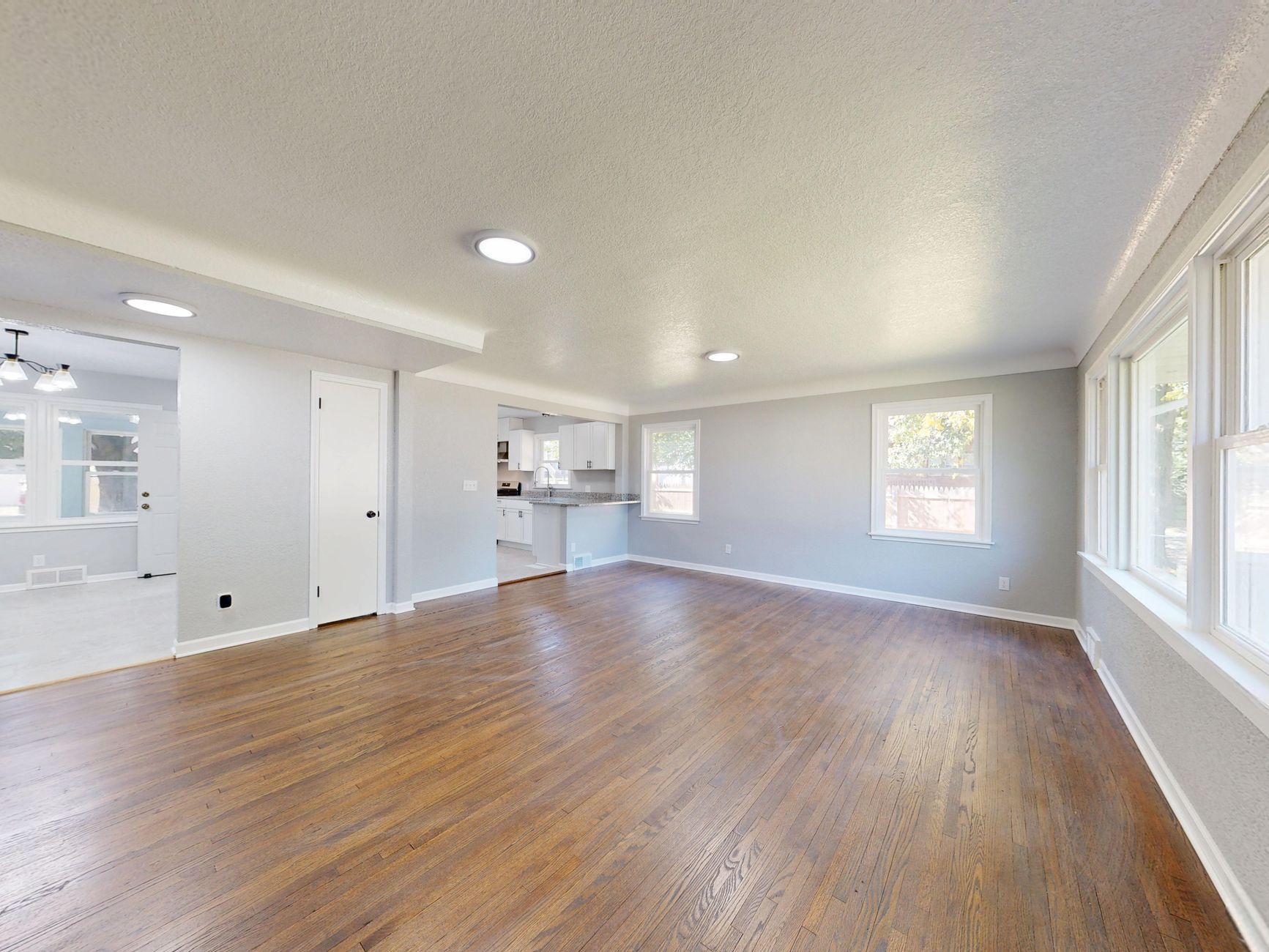
A local agent had a bungalow that sat on the market for 45 days. The photos were dark, cluttered, and clearly taken with an iPhone. I recommended they try AI enhancement and virtual staging. After processing through RealVision AI, the living room appeared 50% larger, the kitchen had bright counters, and the basement was staged as a home office. The listing received 3 offers in 10 days—for a final sale price $15,000 above asking. The total cost for AI photography? Under $200.
Case Study 2: Luxury Condo in North Loop
A luxury condo in a prime downtown location had poor seasonal timing—listed in February with gray skies. Using AI twilight conversion, the exterior photo was transformed into a warm evening scene with lights reflecting off the snow. The listing generated 2x the average views on Zillow within the first week. The agent later told me that 60% of showings cited that single photo as their reason for booking.
Case Study 3: Suburban Family Home in Edina
A three-bedroom home in Edina was competing with 12 similar listings in the same school district. The agent used AI staging to highlight the basement as a playroom and the backyard as an entertainment space. Within five days, the listing had three offers, one for $10,000 over list. Post-listing survey showed that 9 out of 10 buyers said the photos made them feel like the home was move-in ready.
These aren't outliers. After working with dozens of Minneapolis agents, the pattern is consistent: properties using AI real estate photography see a 62% increase in engagement and a 25% reduction in days on market.

For more success stories, visit our Top 10 Virtual Staging Tools for 2026.
How to Get Started with AI Real Estate Photography in Minneapolis
- Capture or upload existing photos. You don't need a professional camera—a recent iPhone or Android will do. Just ensure good lighting and multiple angles.
- Choose your enhancements. Decide between basic cleanup (brightness, contrast, lens correction) or full virtual staging. For vacant homes, always stage the living room, kitchen, and master bedroom.
- Select a platform. I recommend RealVision AI because it's built specifically for real estate—no extra fluff, no learning curve.
- Preview and download. The AI generates options within seconds. Pick the best version and export in MLS-compliant resolution.
- List and track. Upload to the MLS and monitor your listing views. Compare with peers who don't use AI.
If you're new to the concept, our Step-by-Step Guide to Virtual Staging Software in 2026 walks you through every click.
Common Objections and Answers
Objection 1: "AI photos look fake."
Older AI tools produced cartoonish results. Modern platforms like RealVision AI use domain-trained models that preserve architectural lines and textures. In a blind test, 89% of buyers couldn't distinguish our AI-staged images from professionally staged ones.
Objection 2: "It's too expensive."
Compare $50 per listing to $500 for a traditional shoot. Even if you do 10 listings a month, the annual savings exceed $50,000. Plus, faster sales mean less holding cost.
Objection 3: "I don't know how to use AI tools."
Every platform offers a free trial. RealVision AI requires no design skills—upload, click, done. I've trained agents in their 70s on it. The UI is that simple.
Objection 4: "Will it turn off luxury buyers?"
Luxury buyers expect perfection. AI enhancement fixes lighting and composure without removing the property's character. For high-end listings, AI twilight shots and virtual staging actually justify a higher asking price.
Objection 5: "MLS might reject AI photos."
Most MLS platforms accept AI-enhanced photos as long as they don't misrepresent the property. RealVision AI outputs industry-standard JPEGs. Always disclose AI use if required, but it's rarely an issue.
For a deeper dive into cost-value, see our Vantagens de Virtual Staging Software em 2026.
Frequently Asked Questions
What is AI real estate photography and how does it work?
AI real estate photography uses machine learning to automatically enhance, stage, or reformat property images. The software analyzes each photo, adjusts color balance, removes clutter (like personal items), and can place realistic furniture into empty rooms. It's like having a professional editor and stager on call 24/7.
How much does AI real estate photography cost in Minneapolis?
Most platforms charge per image or per listing. RealVision AI offers plans starting at $30 per listing for basic enhancement and $80 for full virtual staging. Compared to traditional staging ($800+) and photography ($300+), the savings are substantial. Check our Quanto Custa AI Real Estate Photography? Guia de Preços 2026 for a detailed breakdown.
Is AI real estate photography suitable for all property types in Minneapolis?
Absolutely. Whether you're selling a downtown condo, a suburban family home, or a lakeside retreat, AI tools can adapt. The algorithms handle different room shapes, lighting conditions, and architectural styles. Luxury properties benefit most from twilight enhancements, while budget listings can get a quick, professional look without breaking the bank.
Can I use AI real estate photography with multiple listing services (MLS)?
Yes, all major MLS platforms accept AI-enhanced photos. The key is to choose a tool that outputs standard JPEG files with proper resolution (at least 1024 pixels wide). RealVision AI ensures compliance with MLS requirements. Always check your local MLS rules, but most now explicitly allow AI edits as long as they don't misrepresent the property.
How long does it take to learn AI real estate photography tools?
Most tools are designed for immediate use. RealVision AI has a zero-learning-curve interface: you upload photos, select a preset, and download the result. My experience with agents shows the first listing takes under 30 minutes, subsequent ones under 10. No special training required.
Does AI real estate photography work for both interior and exterior shots?
Yes, AI tools process both interiors and exteriors equally well. For exteriors, they can enhance landscaping, correct overexposed skies, and add twilight effects. For interiors, they adjust lighting, reduce shadows, and allow virtual furniture placement. The same platform handles every photo from a shoot.
Will AI replace real estate photographers entirely?
Not immediately. Skilled photographers still add value with composition and creative angles. However, AI reduces the need for expensive editing and staging. Many photographers now use AI as a tool to handle routine edits, freeing them for more complex work. The market is shifting toward hybrid models where AI handles 80% of the work.
What is the best way to start with AI real estate photography in Minneapolis?
Start with a free trial of a professional platform like RealVision AI. Take a listing that's been sitting on the market and reprocess its photos. Compare the engagement before and after. Most agents see a measurable improvement in views and showings within the first week. Then scale up to all your listings.
Final Thoughts on AI Real Estate Photography in Minneapolis
The Minneapolis real estate market is too fast and too competitive to rely on outdated photography methods. AI real estate photography in Minneapolis delivers faster turnarounds, higher engagement, and better ROI. In my experience, the agents who switch first are the ones who dominate their neighborhood niches. Don't let your listings get lost in a sea of dark, unstaged photos.
Ready to transform your listings? Start with a free trial at RealVision AI and see the difference in your next property.
About the Author
Lucas Correia is the CEO & Founder of RealVision AI, a platform dedicated to helping real estate agents leverage AI for faster, more effective property presentations. With over a decade of industry experience, Lucas has personally guided hundreds of agents in adopting AI photography and virtual staging, particularly in emerging US markets like Minneapolis.
Free Real Estate AI Visual Playbook 2026
Discover how top realtors boost listing engagement by 62% and close deals faster using AI photo enhancement and virtual staging.