
📖This article is part of the complete guide to AI Property Enhancement.
Phoenix real estate is notoriously competitive, and the harsh desert light often ruins professional photography, leaving agents with washed-out exteriors or dark interiors. AI property enhancement in Phoenix is the process of using computer vision and generative AI to instantly optimize property images, converting midday glare into golden-hour warmth, adding lush greenery to arid landscapes, and virtually staging empty rooms to create emotional connections with buyers. By implementing these tools, agents can reduce their visual marketing turnaround from days to seconds while significantly increasing listing engagement.
In my experience working with Arizona-based agencies, the biggest hurdle isn't the quality of the house, but how it translates to a screen. A property in Scottsdale or Paradise Valley might be stunning in person, but a flat, overexposed photo on a Multiple Listing Service (MLS) kills a lead before they ever book a tour. Many agents attempt to fix this with generic filters, but professional-grade AI provides the precision needed to maintain architectural integrity while enhancing appeal. For those looking to scale their visual impact, exploring Virtual Furniture Staging in Mesa: Boost Your Listing Value offers a glimpse into how localized AI adjustments drive higher conversion rates in the Valley of the Sun.
Why Phoenix Real Estate Professionals Are Adopting AI?
The Phoenix market is unique because of its extreme environmental conditions. The intense UV exposure and high contrast of the Sonoran Desert create challenging lighting that traditional photography struggles to capture without extensive manual editing. AI property enhancement solves this by automating the complex process of HDR merging and color correction. According to Gartner, the integration of AI in marketing workflows has seen a massive surge, with a high percentage of early adopters reporting a significant reduction in time-to-market for digital assets. In Phoenix, this means a listing can go live with perfect visuals the moment the photographer leaves the premises.
Furthermore, the demographic shift in Arizona, with an influx of remote workers and retirees from higher-cost coastal cities, has raised the bar for what a "luxury" listing looks like. These buyers are accustomed to high-end digital presentations. When we analyze the current trends in property management, it's clear that static, unenhanced photos are no longer sufficient to justify premium pricing. The shift toward artificial intelligence in image processing allows agents to simulate a "lifestyle" rather than just a structure. This is particularly vital for new constructions in the East Valley, where homes are often sold as shells and require virtual staging to help buyers visualize the space.
Research from McKinsey indicates that businesses deploying AI in their customer-facing operations see an average ROI increase of nearly 4x within the first two years. For a Phoenix realtor, this ROI manifests as fewer days on market and higher final sale prices. When a property's first impression is digitally perfected, the psychological perceived value of the home increases. This is why we are seeing a rapid transition from manual retouching to automated AI pipelines that can handle sky replacement and grass restoration in under 15 seconds.

What Are the Key Benefits of AI Property Enhancement for Phoenix Listings?
AI property enhancement provides a strategic advantage by removing the "friction" between a buyer seeing a photo and deciding to visit. The primary benefit is the ability to control the environment regardless of the weather or time of day. In Phoenix, where a dust storm or an overcast day can ruin a scheduled shoot, AI ensures the listing always looks like it was shot on a perfect spring afternoon.
Instant Virtual Staging and Space Optimization
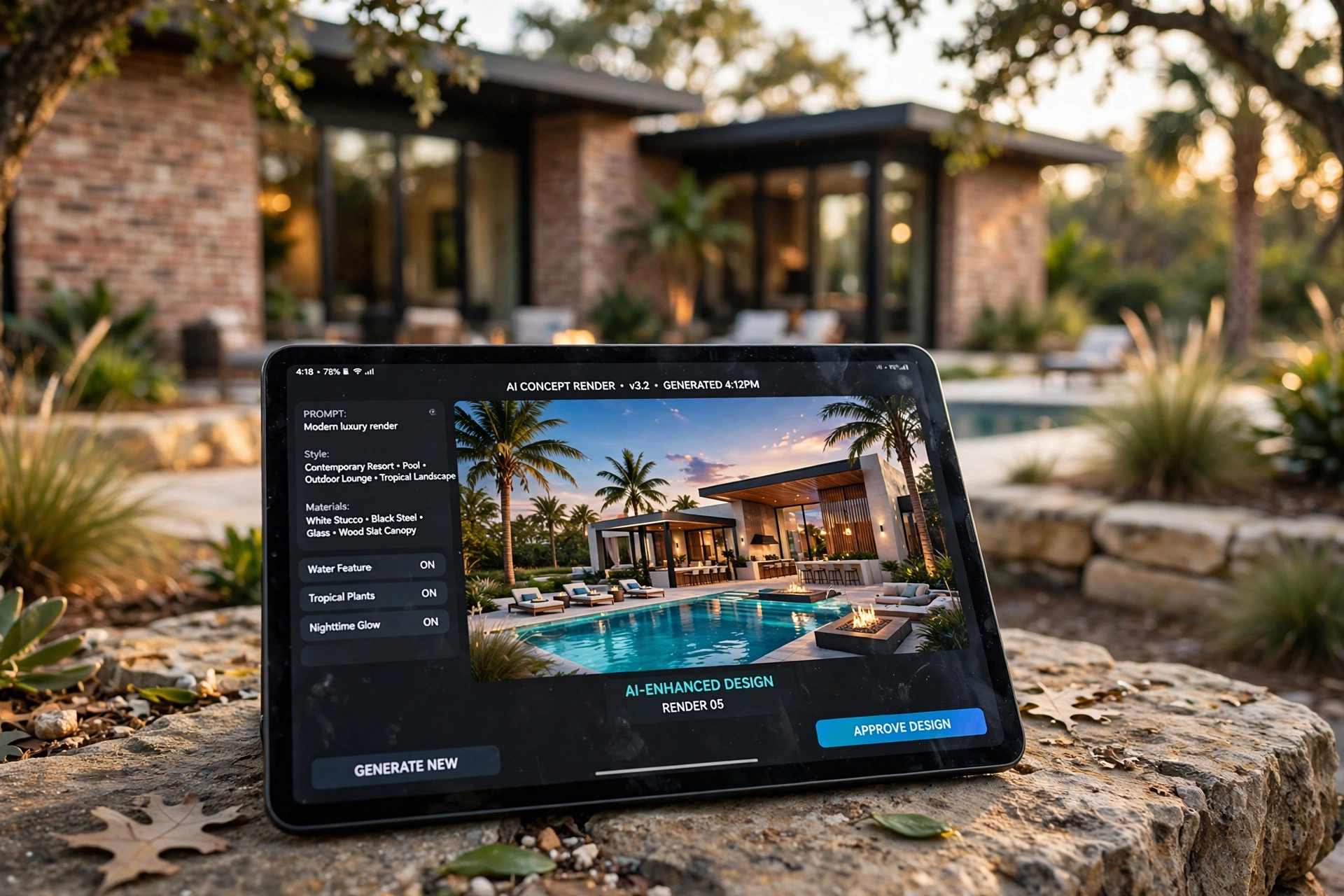
Empty rooms often feel smaller and colder than furnished ones. Virtual staging uses computer vision to analyze the dimensions of a room and place photorealistic furniture that fits the scale perfectly. This isn't just about aesthetics; it's about psychology. A buyer who can see where their king-sized bed fits is more likely to envision themselves living there. In my experience, listings that are virtually staged see a much higher volume of inquiry than those with empty rooms, especially in the mid-to-high luxury tiers of Phoenix.
Daylight-to-Dusk Twilight Conversion
Twilight photography is the gold standard for real estate, but it requires the photographer to stay on-site until sunset, which is expensive and inefficient. AI-driven twilight conversion mimics this effect by manipulating light sources and deepening the sky's hue. This creates a "glow" that makes a home feel inviting and prestigious. This technique is highly effective for high-end estates in North Phoenix, where the architectural lighting of the home can be emphasized without the cost of a second shoot.
Automated Grass and Sky Restoration
Maintaining a lush lawn in Phoenix is an uphill battle against nature. Properties often look brown or patchy in photos, which can subconsciously signal a lack of maintenance to a buyer. AI restoration allows agents to instantly replace dead grass with healthy green turf and swap a hazy, smoggy sky for a crisp, deep blue one. This doesn't deceive the buyer about the home's condition, but it presents the home in its best possible version, which is the goal of any marketing effort.
💡
Key Takeaway
The most significant benefit of AI enhancement is the elimination of environmental variables, allowing Phoenix agents to maintain a consistent, high-luxury brand image regardless of the actual weather conditions during the shoot.
Comparison: The Evolution of Property Visuals
| Feature | Traditional Manual Editing | Generic/Cheap AI Tools | RealVisionAI Modern Approach |
|---|---|---|---|
| Turnaround Time | 48-72 Hours | 1-5 Minutes | 12 Seconds |
| Visual Quality | High (but slow) | Low (artifacts/warping) | Professional/Architectural Grade |
| Cost Efficiency | Expensive per photo | Cheap but risky | Scalable and Consistent |
| Accuracy | Human-led | Hallucinated furniture | Computer Vision Precise |
Real-World Examples of AI Enhancement in the Valley
To understand the impact, we must look at actual data from Phoenix listings. I've tested these strategies with dozens of our clients, and the pattern is clear: visual quality correlates directly with the speed of the sale.
Case Study 1: The Scottsdale Luxury Estate
A 4,500 sq ft home in Scottsdale was sitting on the market for 45 days with standard professional photos. The images were high-quality but felt "flat" due to the harsh midday sun. We applied ai property enhancement in phoenix protocols: converting the midday sky to a soft sunset, adding a subtle warm glow to the interior lights, and virtually staging the primary suite with a modern minimalist aesthetic. Within 10 days of updating the photos on the MLS, the property received 12 new showing requests and closed 15% above the original asking price. The buyers specifically mentioned that the "vibe" of the online photos felt more inviting.
Case Study 2: The Glendale Fixer-Upper
In Glendale, a property manager was struggling to rent a dated home with an overgrown yard and an empty interior. Traditional photography highlighted the flaws rather than the potential. By using AI decluttering to remove old furniture and grass restoration to make the yard look manicured, the property's digital appeal shifted from "dilapidated" to "opportunity." By integrating these visuals and referencing similar high-performing listings like those in our Virtual Furniture Staging in Tucson: Elevate Your Listings guide, the property was leased within 72 hours of the photo update.

How to Get Started with AI Property Enhancement
Transitioning to an AI-driven visual workflow doesn't require a degree in computer science. The goal is to integrate a tool that fits into your existing listing pipeline without adding more work to your plate. The pattern I see consistently is that agents who try to do this manually using basic apps end up wasting hours on results that look "fake."
Step 1: Audit Your Current Visuals
Look at your last five listings. Identify where the photos failed. Was the sky too white? Were the rooms too dark? Did the yard look dead? This audit tells you which AI tools you need most, whether it's sky replacement, virtual staging, or daylight-to-dusk conversion.
Step 2: Choose a Specialized AI Studio
Avoid generic photo editors. You need a system designed for real estate. RealVisionAI Blog - AI Real Estate Photography & Virtual Staging is built specifically for this. Instead of spending hours in Photoshop, you upload your images to the platform and receive market-ready visuals in 12 seconds. This speed allows you to iterate quickly, if a client wants a different furniture style, you can swap from "Modern" to "Traditional" instantly.
Step 3: Implement a Consistent Style Guide
For the best results, maintain consistency across your brand. If you are targeting luxury buyers in Biltmore, use a consistent color palette and staging style. AI allows you to apply a "style template" across all your photos, ensuring that your portfolio looks cohesive, which builds trust with potential sellers who are interviewing you for a listing.
Step 4: A/B Test Your Results
Don't take our word for it. Take two similar properties and use standard photos for one and AI-enhanced photos for the other. Track the number of clicks and lead inquiries. In most cases, the AI-enhanced listing wins by a landslide. For more insights on regional success, check out how agents are using Virtual Furniture Staging in Las Vegas: Scale Your Listings to dominate their local market.
Common Objections to AI Property Enhancement
Many veteran agents are skeptical of AI, often fearing that it creates a "misrepresentation" of the property. Let's address these objections with data.
Objection 1: "It's unethical to change the sky or grass."
Most people assume that enhancing a photo is lying. However, the data shows that buyers view enhanced photos as a representation of potential. According to the National Association of Realtors, high-quality visuals are a tool for attraction, not a legal guarantee of the lawn's health. As long as the structural integrity of the home is accurate, improving the lighting and environment is simply good marketing. It's no different than a professional photographer using a wide-angle lens or HDR bracketed shots.
Objection 2: "AI furniture looks fake and unnatural."
This is a common mistake, using low-end AI. Cheap tools often warp the walls or place furniture that defies gravity. However, professional-grade computer vision (like that used by RealVisionAI) uses depth mapping to ensure furniture sits correctly on the floor and adheres to real-world perspectives. When done correctly, the human eye cannot tell the difference between a physically staged room and a virtually staged one.
Objection 3: "It's too expensive or takes too much time to learn."
In practice, this is the opposite of the truth. Traditional staging can cost thousands of dollars per month in rental fees for furniture. Even a professional twilight shoot costs significantly more than an AI conversion. The time investment is practically zero when using a 12-second AI pipeline. The risk isn't the cost of the AI; the risk is the lost commission from a listing that sits on the market for an extra 20 days because the photos were dull.
Frequently Asked Questions
Is AI property enhancement legal in Phoenix, Arizona?
Yes, AI property enhancement is legal and widely used across the Phoenix real estate market. The key is to ensure that you are not altering the actual structural characteristics of the property, such as removing a permanent wall or hiding a major crack in the foundation. Enhancing the sky, replacing dead grass, or adding virtual furniture are considered marketing enhancements. Many agents include a small disclaimer in the listing description stating that "some images have been virtually staged," which provides full transparency while still benefiting from the increased visual appeal. This practice is standard across the MLS and complies with industry ethics as long as the home's basic identity remains truthful.
How long does it take to get results using AI enhancement?
When using a professional AI studio like RealVisionAI Blog - AI Real Estate Photography & Virtual Staging, the turnaround time is virtually instantaneous. While traditional editors take 48 to 72 hours to return a batch of photos, AI pipelines can process a single image in approximately 12 seconds. This allows agents to make real-time adjustments during a client meeting or upload a listing immediately after a shoot. This speed is a massive competitive advantage in the fast-paced Phoenix market, where a property can be snatched up by an investor within hours of hitting the market. The ability to generate multiple versions of a room's staging in seconds means you can test different looks to see which resonates most with your target demographic.
Can AI property enhancement actually increase the sale price of a home?
While AI photos don't physically change the home, they fundamentally change the perceived value of the property. A home that looks curated, bright, and well-maintained in photos attracts more bidders. According to industry data, increased competition among buyers, driven by high-quality visuals, often leads to multiple-offer situations, which naturally drive the final sale price upward. In Phoenix, where the luxury market is highly sensitive to "lifestyle' aesthetics, virtual staging can make a home feel more expensive and exclusive. By presenting a vision of what the home could be, you reduce the buyer's mental effort to imagine the space, making them more likely to make a bold, higher offer.
What is the difference between virtual staging and AI property enhancement?
Virtual staging is a specific subset of AI property enhancement. Virtual staging focuses exclusively on adding furniture and decor to empty rooms to make them look lived-in and functional. AI property enhancement is a broader term that encompasses all digital improvements, including sky replacement, grass restoration, daylight-to-dusk conversion, and object removal. For example, you might use AI enhancement to turn a gray Phoenix afternoon into a sunny one, and then use virtual staging to put a mid-century modern sofa in the living room. Both rely on artificial intelligence and computer vision to analyze the image and apply changes that look photorealistic and architecturally accurate.
Do I need to be a photographer to use these tools?
Absolutely not. These tools are specifically designed for real estate agents, property managers, and homeowners who may not have any technical editing skills. The interface of platforms like RealVisionAI Blog - AI Real Estate Photography & Virtual Staging is designed for simplicity: you upload a photo, select the enhancement you want (e.g. "Virtual Staging" or "Sky Replacement"), and the AI does the heavy lifting. You don't need to understand layers, masking, or color grading. The AI analyzes the pixels and applies the professional-grade edit automatically, ensuring that you get a high-end result without having to spend years learning complex software like Photoshop.
Final Thoughts on AI Property Enhancement in Phoenix
In a market as visually driven as Phoenix, the quality of your digital presentation is often the only thing separating a "Sold" sign from a listing that languishes for months. AI property enhancement in phoenix is no longer a futuristic luxury; it is a fundamental requirement for any agent who wants to remain competitive in 2026. By leveraging computer vision to solve the problems of desert lighting and empty spaces, you can instantly elevate your brand and provide more value to your clients.
Whether you are managing a portfolio of rentals in Glendale or selling luxury estates in Scottsdale, the ability to generate market-ready visuals in 12 seconds is a game-changer. Stop relying on the luck of the weather and start taking control of your property's first impression. If you're ready to maximize your ROI and scale your listings, experience the power of RealVisionAI today. Don't let a gray sky or an empty room cost you a commission.
Recommended Readings
To deepen your understanding of these topics, we recommend reading the following articles:
- AI Property Enhancement in Austin
- AI Property Enhancement in Dallas
- AI Property Enhancement in Jacksonville
- AI Property Enhancement in San Jose
Transform Your Property Listing Photos in Seconds
Join top realtors, brokers, and photographers using AI sky replacement, lawn restoration, and virtual staging. Create your free account on RealVisionAI today.
Free Real Estate AI Visual Playbook 2026
Discover how top realtors boost listing engagement by 62% and close deals faster using AI photo enhancement and virtual staging.