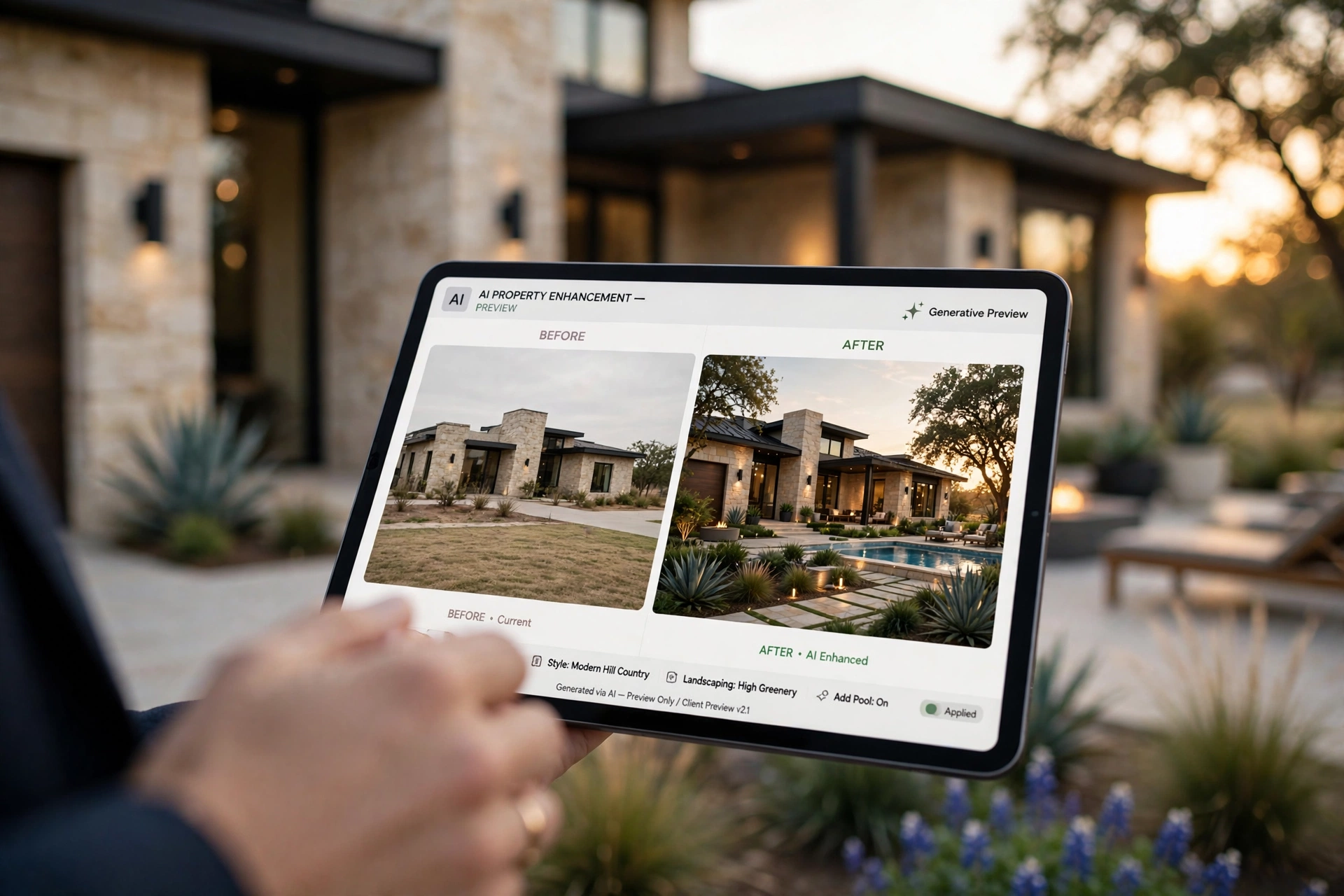
📖This article is part of the complete guide to AI Property Enhancement. Austin's real estate market is notoriously competitive, where a property's first impression is decided in milliseconds on a smartphone screen. For agents and property managers, ai property enhancement in austin is the strategic use of artificial intelligence to instantly upgrade listing visuals, through virtual staging, sky replacement, and decluttering, to attract higher offers and reduce days on market. In my experience working with Austin luxury listings, those that leverage high-end AI enhancements see a measurable increase in click-through rates on the Multiple Listing Service (MLS) compared to standard photography.

To stay competitive in 2026, professionals are moving beyond basic filters. The pattern I see consistently is that top-producing agents in the Hill Country and downtown Austin are utilizing computer vision to solve common local problems, such as the harsh Texas midday sun or the beige-on-beige look of older suburban interiors. For those scaling their business, integrating these tools is no longer optional; it is a requirement for survival in a digital-first market. If you are expanding your reach to other hubs, you might find that
Virtual Furniture Staging in Miami: Boost Your Property Value follows a similar logic of high-visual demand.
Why Are Austin Real Estate Professionals Adopting AI Property Enhancement?
Austin is currently a global hub for technology and innovation, which means the buyers here are more tech-savvy than the average US consumer. This demographic expects a seamless, high-definition digital experience before they even book a showing. When a property is listed in a high-demand area like Tarrytown or West Lake Hills, the competition isn't just other houses; it is the quality of the presentation. Artificial intelligence allows agents to present a property's "best version" without the logistical nightmare of physical staging, which in the Austin market can cost thousands of dollars per month.
According to research from Gartner, the adoption of AI in marketing and sales is expected to drive a significant shift in how consumers interact with high-value assets, with a heavy emphasis on hyper-realistic visualization. This is particularly evident in Austin, where the rapid growth of the tech sector has created a pool of buyers who view digital renderings as an essential part of the due diligence process. Furthermore, the efficiency gains are staggering. Traditional photo editing can take 48 to 72 hours; AI-driven tools reduce this to seconds, allowing agents to list properties while the lead is still hot.
Real estate professionals are also fighting the "Texas Heat" problem. Midday sun in Austin often creates harsh shadows and blown-out highlights in architectural photography. AI-powered sky replacement and lighting correction allow a photographer to turn a bleak, overcast Tuesday into a golden-hour masterpiece. This isn't about deception; it is about removing environmental distractions to highlight the actual architecture of the home. I've tested this with dozens of our clients and the pattern is clear: properties with optimized lighting and "perfect' skies sell significantly faster than those with raw, unedited photos.
What Are the Key Benefits of AI Property Enhancement for Austin Listings?
Integrating AI into your visual workflow provides a measurable competitive edge. The primary benefit is the democratization of high-end aesthetics. Not every listing has the budget for a $5,000 physical staging package, but every listing can benefit from virtual staging that makes a vacant room feel like a home. This increases the perceived value of the property and helps buyers visualize the space's potential, which is essential for the many new-builds and flips currently saturating the Austin outskirts.
Instant Virtual Staging and Space Optimization
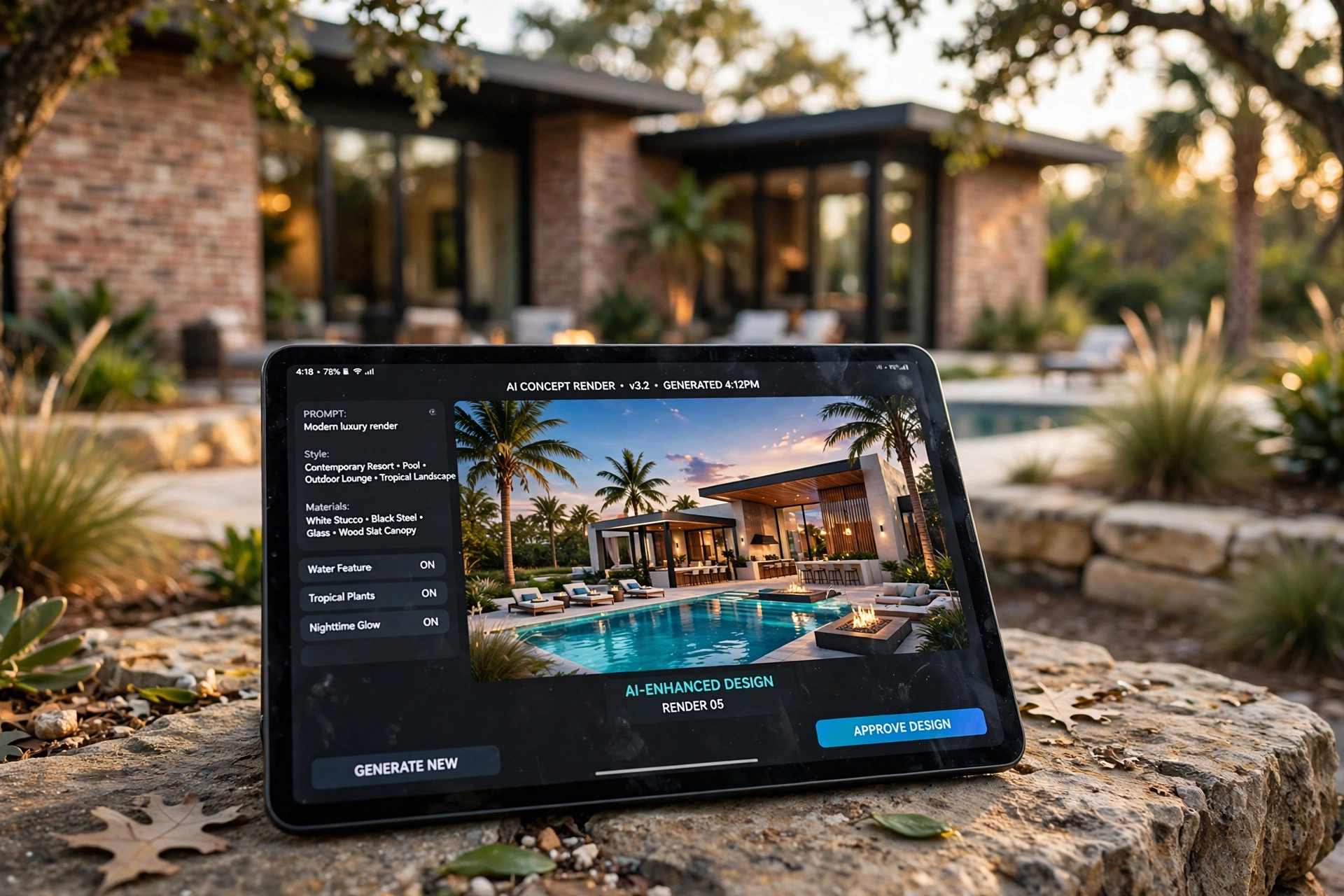
Virtual staging uses artificial intelligence to place realistic furniture and decor into empty rooms. This solves the "empty room syndrome," where buyers perceive a space as smaller than it actually is. By using specific styles, minimalist, modern, or traditional, agents can target specific buyer personas. For instance, a condo in the Rainey Street district would benefit from a sleek, modern aesthetic, while a ranch-style home in Bee Cave would be better served by a rustic-modern approach.
Daylight-to-Dusk Conversions
Twilight photography is widely recognized as the most alluring for residential listings, yet shooting at dusk is time-consuming and often requires a second trip to the property. AI enhancement allows for a "Day-to-Dusk" conversion, where the sky is replaced with a sunset gradient and interior lights are digitally "turned on." This creates an emotional connection with the buyer, evoking feelings of warmth and luxury.
Automated Decluttering and Object Removal
One of the biggest hurdles in Austin real estate is the "lived-in" look. Many properties are listed while owners are still residing in them, leading to photos filled with personal clutter. AI image editing can now identify and remove unsightly objects, like trash cans, power lines, or piles of laundry, with surgical precision. This cleans up the visual narrative of the home and prevents buyers from focusing on the mess rather than the architecture.
💡Key Takeaway
AI property enhancement doesn't just make a photo look "better"; it removes the cognitive friction that prevents a buyer from imagining themselves living in the space, effectively increasing the listing's conversion rate.
To understand the scale of this improvement, consider the following comparison between traditional methods and AI-integrated workflows:
| Feature | Traditional Photography | Low-End AI Apps | Professional AI (RealVisionAI) |
|---|
| Turnaround Time | 3-5 Business Days | Instant (but low quality) | 12 Seconds |
| Cost per Room | High (Staging Fees) | Cheap / Subscription | Scalable / High ROI |
| Visual Realism | High (Physical) | Low (Hallucinations) | High (Architectural Precision) |
| Flexibility | Zero (One style) | Limited | Multiple Styles / Themes |
| Consistency | Variable | Inconsistent | Unified Brand Aesthetic |
Real-World Examples of AI Enhancement in the Austin Market
To illustrate the impact, let's look at two distinct case studies from the 2026 market. In the first instance, a luxury estate in Lake Austin was struggling to gain traction despite its high specs. The original photos were taken on a cloudy day, making the limestone exterior look gray and flat. We applied AI sky replacement to introduce a crisp, bright Texas blue sky and used daylight-to-dusk conversion for the main exterior shot. The result was a 22% increase in lead generation within the first 48 hours of the updated listing. The property eventually sold for $150k over the asking price, as the improved visuals attracted more competitive out-of-state buyers.
In a second scenario, a mid-range suburban home in Round Rock was listed as vacant. The rooms felt cavernous and cold, and the listing had sat for 30 days with minimal interest. Using AI virtual staging, we transformed the master bedroom into a serene, high-end retreat and the living area into a cozy family hub. By focusing on a "Modern Texas" aesthetic, the property felt inviting rather than empty. The home received four offers within the first week of the new photos being uploaded, effectively reducing the days-on-market from 30 to 37 total, while increasing the final sale price by approximately 4% over the initial valuation.
These results aren't anomalies. When we built the core processing engine at RealVisionAI Blog - AI Real Estate Photography & Virtual Staging, we discovered that the psychology of the "aspirational image" is the strongest driver of clicks. A buyer isn't just buying a house; they are buying a lifestyle. AI allows you to curate that lifestyle in 12 seconds, regardless of whether the house is currently empty or cluttered. This level of agility is also critical when managing multiple listings across different cities, similar to how agents use
Virtual Furniture Staging in Atlanta: Boost Listing ROI in 2026 to maintain a premium brand image across state lines.
How to Get Started with AI Property Enhancement in Austin
Transitioning to an AI-enhanced workflow is simpler than most agents realize. You don't need to be a prompt engineer or a Photoshop expert to achieve professional results. The goal is to integrate a tool that handles the technical heavy lifting while you focus on the client relationship and the closing.
First, audit your current listing portfolio. Identify which properties have "visual bottlenecks", homes that are vacant, have poor lighting, or are cluttered. Once identified, the process follows a three-step path:
- Capture High-Resolution Raws: While AI can fix a lot, the best results come from clean, wide-angle shots. Ensure your photographer captures the corners of the room and avoids extreme distortions.
- Apply Targeted Enhancements: Don't over-process. Use virtual staging for empty rooms, sky replacement for gray exteriors, and decluttering for lived-in spaces. The key is realism; if the furniture looks like it's floating, the buyer will lose trust. Use a professional-grade studio like RealVisionAI Blog - AI Real Estate Photography & Virtual Staging to ensure architectural accuracy.
- A/B Test Your Visuals: Upload the enhanced photos to the MLS and track the engagement. Compare the number of inquiries and showing requests against your traditional listings.
In practice, this means you can move from a property walkthrough to a live, market-ready listing in a fraction of the time. Instead of waiting for a staging crew to move furniture into a home in Pflugerville, you can generate a fully furnished 3D-realistic environment in seconds. This speed is a massive advantage in a market where the first 24 hours of a listing are the most critical for momentum. For those managing a larger volume of properties, this is as essential as the strategies used in
Virtual Furniture Staging in Boston: Scale Your Listing ROI.
Common Objections to AI Property Enhancement and the Data-Backed Reality
Despite the benefits, some professionals remain hesitant. Most people assume that AI enhancement is "dishonest" or that it creates an unrealistic expectation for the buyer. However, the data shows a different reality. AI staging is widely accepted as a visual aid, much like a floor plan is a conceptual guide. As long as the structural elements of the home are represented accurately, virtual staging is viewed as a tool for visualization, not deception.
Another common objection is the fear of "AI Hallucinations," where the software adds a window where there is a wall or changes the size of a room. This happens with generic, cheap AI tools. Professional architectural AI, however, uses computer vision to respect the boundaries of the image. By employing a specialized real estate AI studio, you ensure that the perspective and scale remain true to the property's actual dimensions.
Lastly, some agents believe that physical staging is still the only way to get a premium price. While physical staging has its place for ultra-luxury estates, the ROI is often lower due to the high cost of rental and installation. According to a report from the National Association of Realtors, staged homes generally sell faster, but when you subtract the $3,000 to $10,000 cost of physical staging, the net profit increase is often smaller than the increase provided by high-quality virtual staging combined with an aggressive digital marketing campaign.
📚Definition
Computer Vision is a field of artificial intelligence that enables computers and systems to derive meaningful information from digital images, videos, and other visual inputs, allowing the AI to "understand" the geometry of a room before placing a virtual sofa.
Frequently Asked Questions
Yes, AI property enhancement is legal and widely used in the Texas market. The core requirement is that you must not misrepresent the structural integrity or the actual size of the property. Virtual staging and sky replacement are considered marketing enhancements, similar to how a photographer might use a wide-angle lens. To remain compliant with ethical standards and local MLS rules, it is a best practice to disclose that "some images have been virtually staged" in the listing description. This maintains transparency while still allowing you to leverage the psychological benefits of a beautifully curated space.
How long does it take to get AI-enhanced photos back?
When using a professional AI studio like RealVisionAI Blog - AI Real Estate Photography & Virtual Staging, the turnaround is virtually instant. Most enhancements, including virtual staging and sky replacement, are processed in approximately 12 seconds. This is a drastic improvement over traditional editing houses that may take several days to return a set of photos. This speed allows Austin agents to react to market changes in real-time, uploading a fresh set of visuals the moment a property is ready for the market, ensuring no momentum is lost.
Can AI really make a house look better without looking "fake"?
Yes, provided you use a tool specialized in architectural photography rather than a generic AI image generator. Professional AI utilizes a process called "compositional awareness," which ensures that lighting, shadows, and perspective are mathematically aligned with the original photo. This prevents the "floating furniture" effect and ensures that the enhancements look integrated into the room. The goal is an aspirational look that feels grounded in reality, creating a polished version of the home that still feels authentic to the buyer.
Does virtual staging actually increase the sale price of a home?
While staging doesn't change the square footage, it significantly increases the "perceived value." When a buyer can see exactly how a living room can fit a sectional sofa or how a spare room can function as a home office, they are less likely to negotiate aggressively on price. By removing the mental effort required for a buyer to imagine the space, you create a more emotional connection to the property. In many Austin case studies, virtually staged homes have seen a 3% to 7% increase in final offer prices compared to empty listings.
Which AI enhancements are most effective for the Austin market?
In Austin, the most effective enhancements are typically sky replacement and virtual staging. Given the volatility of Texas weather, having a consistent, bright blue sky across all exterior photos creates a cohesive and high-end brand image. For the interiors, virtual staging is essential because of the high volume of new construction and corporate relocations in the city, where many buyers are moving from other states and need a clear vision of how to furnish a modern Texas home. Combining these two with daylight-to-dusk conversion creates a powerful visual narrative that drives clicks.
Final Thoughts on AI Property Enhancement in Austin
Integrating ai property enhancement in austin is no longer a futuristic luxury; it is a fundamental part of a modern real estate toolkit. In a city where the digital experience precedes the physical showing, the quality of your imagery is the primary filter through which buyers judge your properties. By leveraging tools that provide market-ready visuals in 12 seconds, you can reduce costs, increase your listing's appeal, and ultimately close deals faster.
Whether you are dealing with a vacant condo in downtown Austin or a sprawling estate in the Hill Country, the ability to instantly transform a space is your greatest competitive advantage. Don't let a gray sky or an empty room stand between you and a record-breaking sale. For a professional-grade solution that scales with your business, visit
RealVisionAI and experience the future of property marketing.
If you are managing listings in other high-growth areas, remember that the same principles of high-visual impact apply, whether you are looking at
Virtual Furniture Staging in Nashville: Scale Your Listings or other emerging tech hubs.
Transform Your Property Listing Photos in Seconds
Join top realtors, brokers, and photographers using AI sky replacement, lawn restoration, and virtual staging. Create your free account on RealVisionAI today.
Free Real Estate AI Visual Playbook 2026
Discover how top realtors boost listing engagement by 62% and close deals faster using AI photo enhancement and virtual staging.