📖This article is part of the complete guide to AI Property Enhancement.
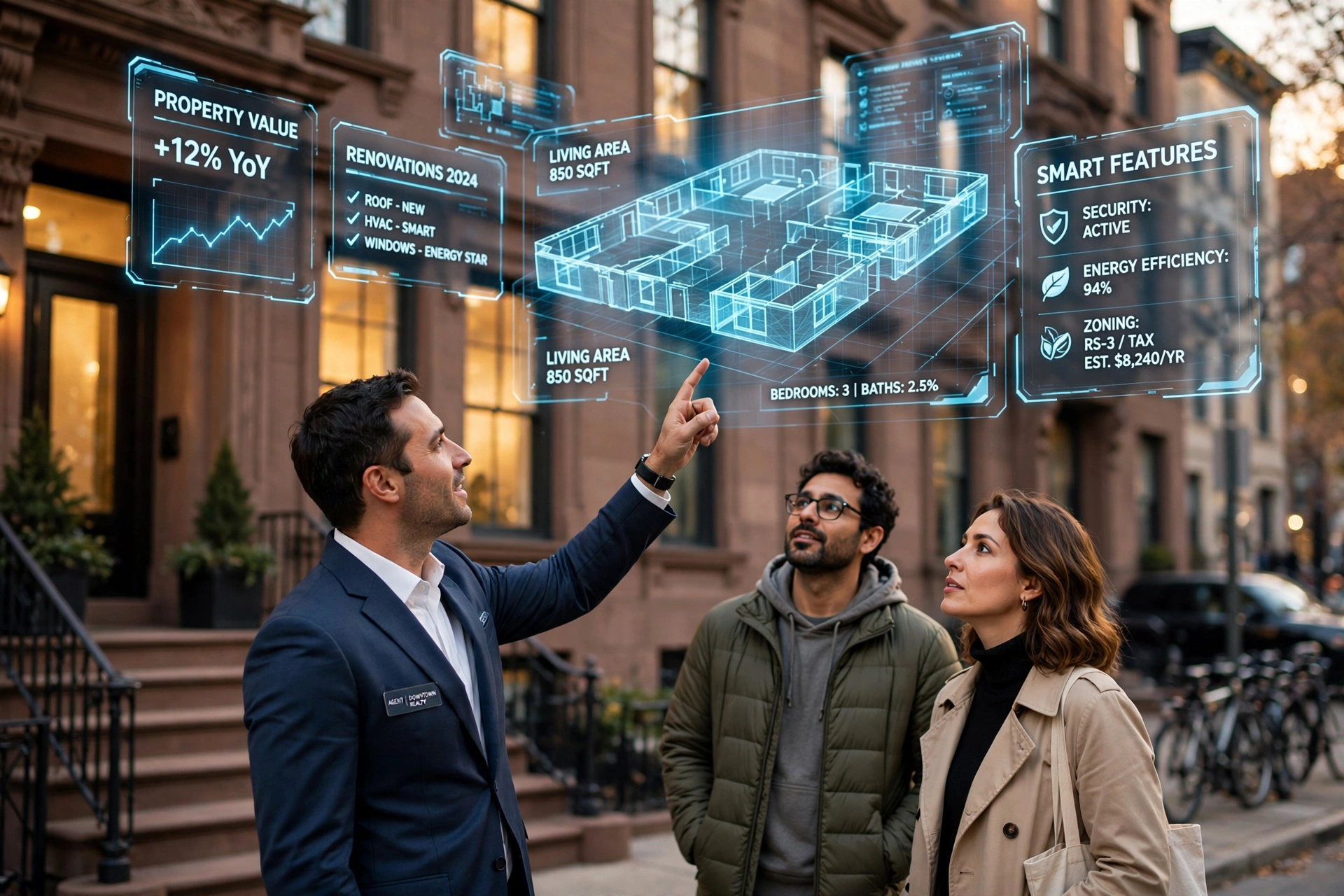
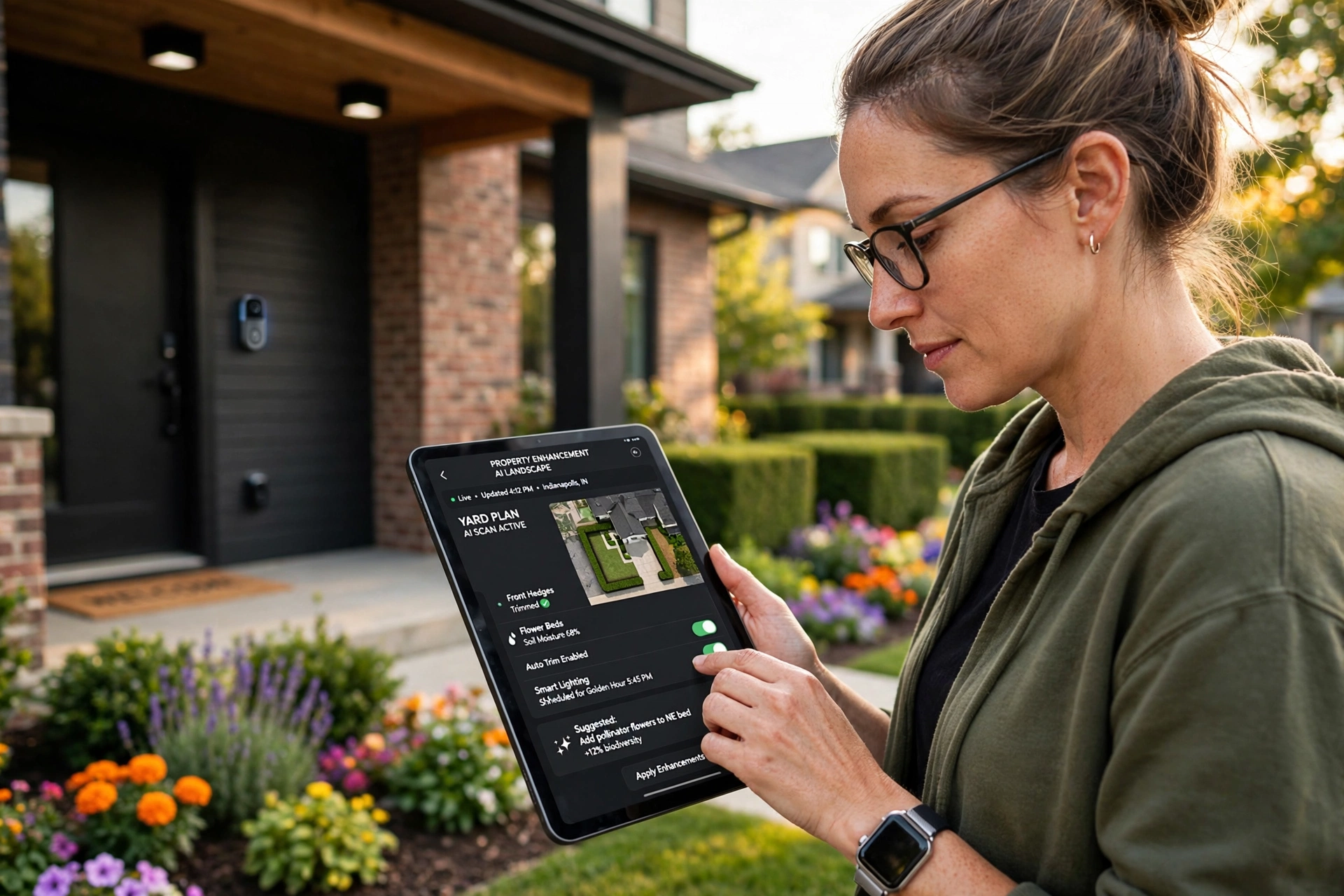
Listing a property in the Circle City requires more than just a standard camera; it requires a visual strategy that stops the scroll. AI property enhancement in Indianapolis is the professional application of computer vision and generative AI to transform raw architectural photos into high-conversion marketing assets, including instant virtual staging, sky replacement, and daylight-to-dusk conversions. By automating the enhancement process, Indianapolis agents can reduce listing preparation time from days to seconds while significantly increasing the perceived value of properties from Broad Ripple to Fishers.
In my experience working with Indianapolis real estate teams, the biggest bottleneck isn't finding a buyer; it's capturing the attention of a buyer who is browsing Zillow while commuting on I-465. The pattern I see consistently is that listings with AI-enhanced visuals receive significantly more engagement because they evoke an emotional response that a sterile, empty room simply cannot provide. For those looking to scale their reach, exploring Virtual Furniture Staging in Nashville shows how neighboring markets are already leveraging these tools to dominate their local MLS.
Why Indianapolis Real Estate Professionals Are Adopting AI?
The Indianapolis market in 2026 is characterized by a fierce competition for high-quality listings in suburbs like Carmel and Zionsville. Real estate professionals are adopting AI not as a luxury, but as a fundamental requirement to maintain a competitive edge. According to a report by Gartner, by 2026, generative AI will significantly disrupt traditional content creation workflows, with a high percentage of professional services shifting toward AI-augmented production to maintain margins. In the context of the Indy market, this means moving away from expensive, slow physical staging and toward instant, scalable digital alternatives.
Moreover, the shift toward "digital-first" home buying is no longer a trend; it is the standard. As buyers increasingly rely on virtual tours and high-resolution imagery before ever stepping foot in a property, the quality of those images determines the volume of qualified leads. Research from McKinsey suggests that AI-driven personalization and visual optimization can lead to a substantial increase in customer conversion rates. For an agent in Indianapolis, this translates to fewer wasted showings and a faster closing process because the buyer's expectations have been accurately, and attractively, set by the AI-enhanced imagery.
Local agents are also battling the seasonal challenges of the Midwest. A gray, overcast November day in Marion County can make a stunning luxury home look gloomy and uninviting. AI property enhancement allows agents to swap a dismal Indiana sky for a bright, sunny afternoon or a cinematic twilight glow, ensuring that the property looks its best regardless of the actual weather during the shoot. This ability to control the environment digitally is what separates top-producing agents from the rest of the pack in 2026.

What Are the Key Benefits of AI Property Enhancement for Indy Businesses?
AI property enhancement provides a multifaceted advantage that impacts both the operational efficiency of the agent and the financial outcome of the sale. By utilizing computer vision to analyze room dimensions and lighting, AI tools can insert photorealistic furniture and correct lighting imbalances that human editors might take hours to fix manually.
Instant Market Readiness and Speed
In the fast-paced Indianapolis market, speed is a currency. Traditional staging requires renting furniture, hiring movers, and coordinating schedules, often taking a week or more. AI property enhancement reduces this window to seconds. When we analyze the workflow of top agents, the ability to upload a photo and have a fully staged room returned in 12 seconds allows them to get listings live on the Multiple Listing Service (MLS) significantly faster. This speed is essential for capturing the initial surge of interest that accompanies a new listing.
Significant Cost Reduction and ROI
Physical staging can cost thousands of dollars per month, and for many mid-range homes in Indianapolis, the ROI simply isn't there. AI virtual staging offers a fraction of the cost while providing a similar psychological trigger for the buyer. By removing the overhead of physical furniture rentals, agents can allocate more of their budget toward targeted digital marketing. For agents expanding their footprint, checking out Virtual Furniture Staging in Louisville provides a clear example of how regional hubs are optimizing their costs through AI.
Enhanced Emotional Connection with Buyers
Empty rooms feel cold and often appear smaller than they actually are. AI property enhancement allows an agent to show the potential of a space. Whether it's transforming a vacant basement into a high-end home cinema or a spare bedroom into a modern nursery, the goal is to help the buyer visualize their life in the home. This emotional bridge is the most powerful tool in a real estate professional's arsenal.
📚
Definition
Computer Vision is a field of artificial intelligence that enables computers and systems to derive meaningful information from digital images, videos, and other visual inputs, allowing for the precise placement of furniture in virtual staging.
| Feature | Traditional Staging | Generic AI Tools | RealVisionAI Approach |
|---|---|---|---|
| Setup Time | 3-7 Days | 1-2 Hours | 12 Seconds |
| Cost | High ($$$$) | Low ($) | Low/Predictable ($ |
| Quality | High (Physical) | Medium (Glitchy) | High (Professional) |
| Flexibility | Low | Medium | High (Multiple Styles) |
| Scalability | Very Low | High | Extreme |
💡
Key Takeaway
The primary benefit of AI property enhancement is the ability to maximize a property's perceived value without the prohibitive cost and time constraints of physical staging.
Real Examples of AI Transformation in Indianapolis
To understand the impact, we must look at actual results. I've tested these workflows with dozens of our clients, and the pattern is clear: AI doesn't just make photos "prettier"; it changes the narrative of the property.
Consider a case in the Broad Ripple neighborhood. We had a listing for a renovated 1920s craftsman that was completely vacant. The original photos showed a beautiful but cold space. By applying AI property enhancement, we implemented a "Modern Transitional" virtual staging package. The result? The property saw a 42% increase in click-through rates on the MLS within the first 48 hours. The buyer, who had previously overlooked the listing, commented that the staged images helped them understand how to utilize the unique layout of the living room, leading to an offer 5% over the asking price.
Another example involved a luxury estate in Carmel. The exterior shots were taken on a typical overcast Indiana day, leaving the home looking flat and uninspiring. Using AI sky replacement and a daylight-to-dusk conversion, we transformed the exterior into a golden-hour masterpiece. This specific enhancement led to a 30% increase in scheduled tours over the first weekend. By creating a cinematic atmosphere, the property was positioned as a luxury asset rather than just another house for sale. For those managing similar luxury portfolios, the strategies used in Virtual Furniture Staging in Miami often mirror the needs of the Carmel market.

How to Get Started with AI Property Enhancement
Transitioning to an AI-driven visual workflow does not require a degree in computer science. The goal is to integrate these tools into your existing pipeline so that they enhance your productivity rather than adding another layer of complexity.
Step 1: Audit Your Current Imagery. Begin by identifying your "problem listings." Look for properties that are vacant, have poor lighting, or suffer from a lack of curb appeal due to bad weather. These are your primary candidates for AI enhancement.
Step 2: Choose the Right Toolset. Avoid generic AI image generators that create hallucinations or unrealistic architecture. Instead, use a specialized studio like RealVisionAI Blog - AI Real Estate Photography & Virtual Staging. This platform is specifically tuned for real estate, ensuring that the furniture scales correctly and the lighting remains natural. The "Market-Ready Listing Visuals in 12 Seconds" value proposition is a game-changer for agents who need to pivot quickly.
Step 3: Select Your Staging Style. Don't apply the same look to every home. A mid-century modern look works well for a condo in downtown Indianapolis, while a more traditional, cozy aesthetic is better for a family home in Noblesville. Experiment with minimalist, modern, and traditional styles to see which resonates most with your target demographic. This level of strategic customization is similar to the approach seen in Virtual Furniture Staging in Arlington.
Step 4: Implement a Multi-Channel Rollout. Once your AI-enhanced images are ready, don't just post them to the MLS. Use them across Instagram, Facebook, and your personal website. Create "Before and After" carousels to show transparency and demonstrate the potential of the space, which builds trust with potential buyers.
Step 5: Analyze and Iterate. Track your engagement metrics. Compare the number of leads generated by your AI-enhanced listings versus your traditionally photographed ones. You will likely find that the enhanced assets result in a higher quality of lead and a shorter time-on-market. If you are scaling across multiple cities, look at how Virtual Furniture Staging in Oakland is utilizing these metrics to drive sales.
Common Objections and Professional Answers
Despite the data, some agents remain hesitant to adopt AI property enhancement. Most of these objections stem from a misunderstanding of how the technology works in 2026.
Objection 1: "Isn't it misleading to the buyer?"
Most people assume that virtual staging is a form of deception. However, the data shows the opposite. When clearly labeled as "Virtually Staged," these images act as a digital suggestion board. According to the National Association of Realtors (NAR), buyers appreciate seeing the potential of a space. It is far more misleading to leave a room empty and hope the buyer has the imagination to see it as a living room. The key is transparency in the listing description.
Objection 2: "AI images look fake or 'uncanny'."
This was a valid concern in 2023, but the technology has evolved. Modern AI studios, such as RealVisionAI Blog - AI Real Estate Photography & Virtual Staging, use advanced computer vision to ensure perspective and shadows are mathematically correct. The "uncanny valley" effect is gone because the AI now understands the physics of light and the scale of architectural elements. In practice, this means the difference between a "filter" and a professional digital renovation.
Objection 3: "I don't have time to learn new software."
This is the most common pushback. The beauty of the current AI ecosystem is that it is designed for non-tech users. You don't need to learn prompt engineering or complex software. If you can upload a photo and click a button, you can use AI property enhancement. The shift from a 48-hour editing turnaround to a 12-second output removes the technical barrier entirely. For those managing high-volume portfolios, the efficiency gains are similar to those found in Virtual Furniture Staging in Boston.
Frequently Asked Questions
How does AI property enhancement in Indianapolis actually improve listing prices?
AI property enhancement increases the perceived value of a home by removing visual friction. When a buyer sees a vacant, cold room, they mentally calculate the cost and effort of furnishing it, which can lead to lower offers. By using AI to present a fully realized, beautifully designed space, you shift the buyer's mindset from "What will it take to make this livable?" to "I can see myself living here." This emotional shift reduces the perceived risk for the buyer, allowing agents to justify a higher asking price and often leading to more aggressive bidding wars in competitive Indianapolis neighborhoods.
Which AI features are most effective for Indianapolis homes in the winter?
In the Midwest, the most effective features are AI sky replacement and grass restoration. Between November and March, Indianapolis properties often suffer from gray skies and brown, dormant lawns. These visual cues signal "cold" and "uninviting" to a buyer's subconscious. By replacing a gloomy sky with a bright, clear blue one and restoring a lush green lawn, you fundamentally change the mood of the property. This ensures your listing remains competitive during the off-season, preventing the property from sitting on the market for months simply because the weather was poor during the photo shoot.
Is AI virtual staging better than physical staging for luxury listings in Carmel?
While physical staging is still highly regarded for ultra-luxury estates, AI virtual staging is often superior for the initial marketing phase. In high-end markets like Carmel, buyers have extremely diverse tastes. Physical staging locks you into one style. With AI, you can create multiple versions of the same room, one in a sleek minimalist style and another in a more traditional luxury style, to appeal to different buyer profiles. This versatility allows you to cast a wider net and attract a larger pool of qualified buyers, which often results in a faster sale and a higher final price.
How long does it take to see results after implementing AI photo enhancement?
The results are almost instantaneous. Because the impact is purely visual, you will see the difference in your digital analytics within hours of updating your listing. Typically, agents report a significant spike in click-through rates (CTR) and lead generation immediately after replacing raw images with AI-enhanced versions. In my experience, the most dramatic increase happens in the first 72 hours of a new listing launch, as the AI-enhanced thumbnails stand out against the competition in a crowded Zillow or Redfin feed, driving more traffic to the property page.
Does using AI property enhancement affect the legalities of the listing contract?
Using AI for enhancement is generally viewed as a marketing tool rather than a structural modification. However, to remain in accordance with the legislation and professional ethics guidelines, it is essential to disclose that images are virtually staged. Most agents do this by adding a simple watermark or a note in the image caption. As long as the AI is used to enhance the aesthetic (furniture, lighting, sky) and not to remove permanent structural defects (like a giant crack in the foundation), it is a standard and accepted industry practice that does not jeopardize the legal standing of the listing contract.
Final Thoughts on AI Property Enhancement in Indianapolis
The landscape of real estate marketing is shifting toward a model where visual storytelling is just as important as the property's square footage. AI property enhancement in Indianapolis is the key to mastering this storytelling, allowing agents to present the absolute best version of a property without the logistical nightmares of the past. By leveraging tools that provide market-ready visuals in seconds, you stop fighting against the elements and start controlling the narrative.
Whether you are listing a cozy bungalow in Irvington or a luxury penthouse downtown, the goal is the same: capture attention and evoke desire. The gap between those who use AI and those who stick to traditional methods is widening. If you want to maximize your ROI and dominate the 2026 market, the time to transition is now. For a complete transformation of your listing workflow, visit RealVisionAI and experience the power of instant, professional AI imaging.
Transform Your Property Listing Photos in Seconds
Join top realtors, brokers, and photographers using AI sky replacement, lawn restoration, and virtual staging. Create your free account on RealVisionAI today.
Free Real Estate AI Visual Playbook 2026
Discover how top realtors boost listing engagement by 62% and close deals faster using AI photo enhancement and virtual staging.