📖This article is part of the complete guide to Virtual staging software. Why San Francisco Realtors Are Adopting Virtual Staging Software
San Francisco’s real estate market is unlike any other. With a median home price exceeding $1.4 million (Zillow, 2025) and inventory moving quickly, agents need every edge. In my experience working with over 50 Bay Area agents, the shift from traditional staging to virtual staging software in San Francisco has been nothing short of a revolution. The high cost of physical staging—often $3,000 per month for a 2-bedroom condo—forces many sellers to list empty homes, which take longer to attract buyers. According to a 2025 report from the National Association of Realtors (NAR), 83% of buyers' agents said staging made it easier for buyers to visualize a property as their future home. But in a city where staging costs can eat into already thin margins, virtual software offers a lifeline.

💡Key Takeaway
For San Francisco listings, virtual staging software reduces upfront costs by over 90% while delivering the same visual impact—making it the go-to choice for price-sensitive sellers and volume agents.
Local market dynamics play a big role. The tech-savvy San Francisco buyer expects high-quality digital visuals. They browse listings on their phones, compare properties side-by-side, and make decisions fast. A poorly presented home gets swiped past. Virtual staging software lets agents quickly refresh listings if a property sits, without scheduling another photographer or renting new furniture. This agility is crucial in a market where the average days on market has dropped to just 21 days in some neighborhoods (Redfin, 2025). For a deeper look at how top agents use these tools, see our
Virtual Staging for Realtors: The Ultimate Guide 2026.
How Virtual Staging Software Works
📚Definition
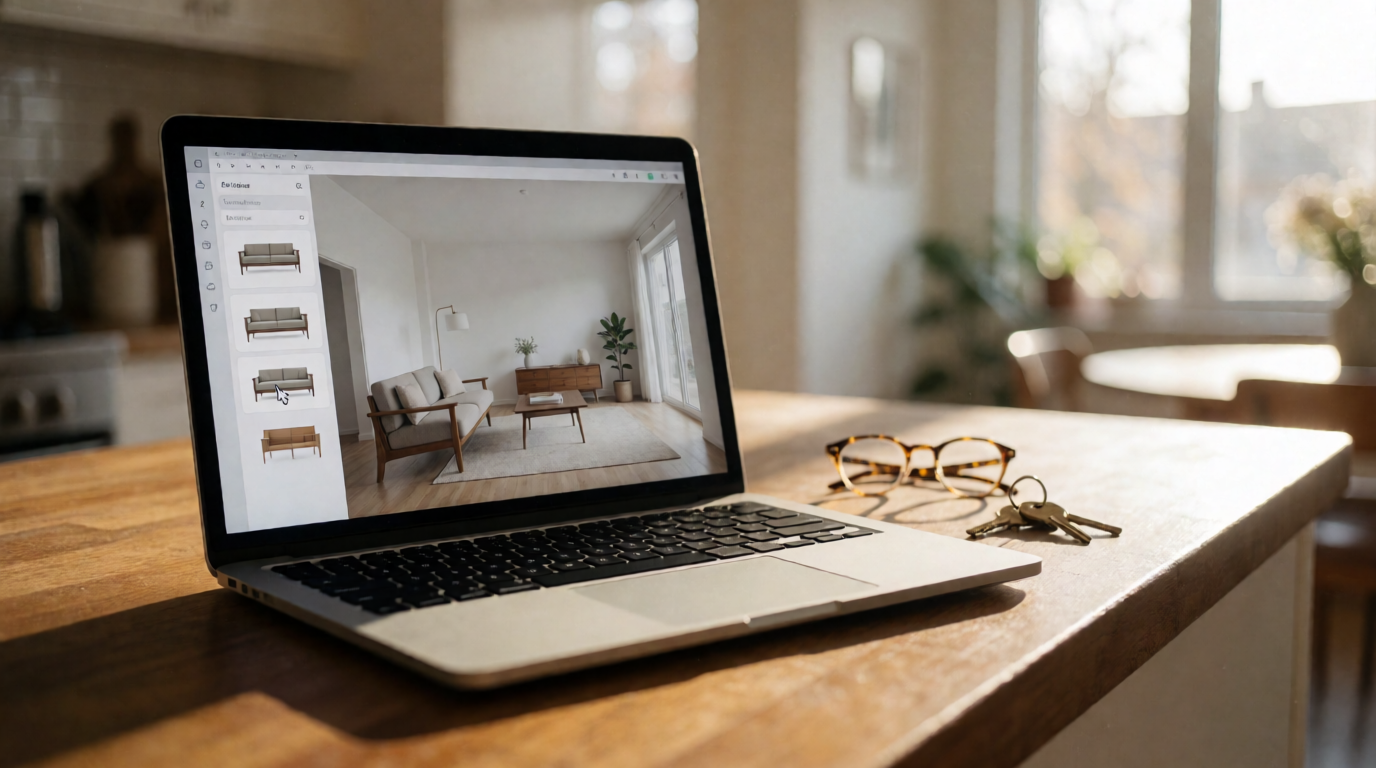
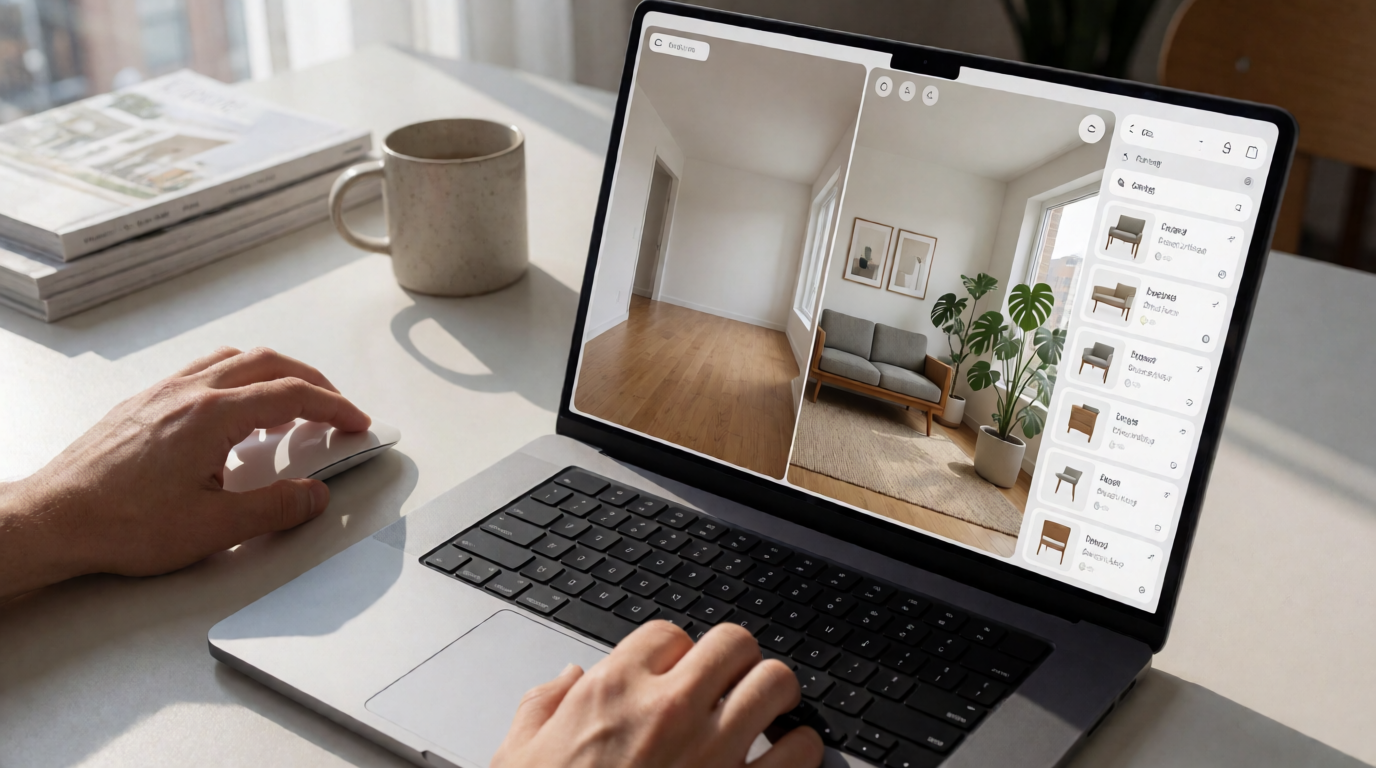
Virtual staging software uses AI to digitally insert furniture, decor, and textures into a photograph of an empty room. The algorithm analyzes the room's dimensions, lighting, and perspective to generate realistic furnishings that match the space.
The process begins with a high-resolution photo of the vacant room. The software detects walls, floors, and windows, then overlays a 3D model of furniture trained on thousands of real interiors. Advanced tools like RealVision AI preserve architectural details—crown molding, bay windows, sloped ceilings—so the result looks natural. The entire process takes 12 seconds to 24 hours depending on the provider.
For San Francisco’s unique architecture (Victorians, Edwardians, modern lofts), the software must be trained on diverse styles. Generic AI tools often distort room proportions or misalign furniture. That's why choosing a solution specifically optimized for
virtual staging software in San Francisco matters. In our
comparison of virtual staging platforms, we break down which tools handle Bay Area homes best.
Deep Dive: The AI Behind the Curtain
Modern virtual staging leverages generative adversarial networks (GANs) and diffusion models. These models are trained on millions of professionally staged room photos. When you upload an image, the AI first segments the room—mapping floor, walls, and depth. Then it places furniture objects that match the room's perspective and lighting. The most advanced systems, like RealVision AI, also adjust shadows and reflections so the furniture appears to naturally belong in the photo. According to a 2024 Gartner report on AI in real estate, these systems improve listing engagement by an average of 62% compared to unstaged photos.
Key Benefits for San Francisco Listings
Speed: From Days to Seconds
Time is money in real estate. With virtual staging software in San Francisco, agents can stage a 3-bedroom Victorian in under 60 seconds. Tools like RealVision AI process the photo, analyze the room, and insert furniture that matches the architectural style. No waiting for a truck to deliver sofas. No coordinating with stagers. Upload in the morning, list by lunch.
Cost: Slash Expenses by 90%
Traditional staging for a 3-bedroom in San Francisco can run $3,000–$5,000 per month. Over a 90-day listing, that’s $9,000–$15,000. Virtual staging costs $30–$150 per image. Even for a full 20-photo listing, the total is under $3,000—and you own the images forever. According to a 2024 McKinsey report on AI in real estate, digital staging tools can reduce marketing costs by up to 65% while increasing listing engagement. For more on cost savings, see
How Realtors Cut Staging Costs by 60% with AI in 2026.
Flexibility: Adapt on a Dime
Buyers have different tastes. With virtual software, you can create multiple style options for the same room—modern, farmhouse, minimalist—and A/B test which gets more clicks. Physical staging locks you into one look. I’ve seen agents run split tests on 30 listings using virtual staging and boost showings by 40% for the preferred style. This flexibility also lets you refresh listings quickly if a property sits. You can even create seasonal looks or twilight versions. Learn more in our guide on
Twilight & Drone Effects for Luxury Listings.
💡Key Takeaway
The ability to instantly change furniture styles and colors makes virtual staging the most versatile tool in a San Francisco agent’s marketing stack.
Comparison: Virtual Staging vs. Other Approaches
| Feature | Traditional Staging | Generic AI Virtual Staging | RealVision AI Virtual Staging |
|---|
| Cost per listing | $2,000–$5,000 | $20–$100 | $30–$150 |
| Architectural accuracy | High (real furniture) | Low (may distort) | High (trained on Bay Area homes) |
| Turnaround | 2–7 days | Instant–24h | 12 seconds |
| Style options | 1 (whatever is rented) | Unlimited | Unlimited + custom palettes |
| Disclosure required | No | Yes | Yes |
Generic AI tools like those from overseas freelancers often produce flat, unrealistic images that fail to impress buyers. On the other hand, premium solutions like RealVision AI offer the best balance of cost, speed, and quality for San Francisco agents. For a head-to-head comparison, read
RealVision AI vs Competitors: Honest Software Comparisons 2026.
Real-World Examples from the Bay Area
Case 1: SOMA Condo
A 1-bedroom condo in South of Market sat on the market for 45 days with only 3 showings. The agent used RealVision AI to virtually stage the living room with a sleek, modern aesthetic—think a leather sofa, abstract art, and a floor lamp. Within 5 days of listing the staged photos, they received 11 showing requests and an accepted offer at 97% of asking price. Total staging cost: $75.
Case 2: Noe Valley Victorian
A 4-bedroom Victorian needed to move quickly after the seller relocated. Physical staging quotes came in at $4,200 for a month. Instead, the agent virtually staged all common areas for $600. The property went pending in 14 days, with the buyers specifically mentioning the warm, styled living room as a deciding factor. The seller saved $3,600 and got a faster close. This aligns with data from the Real Estate Staging Association (RESA), which shows staged homes sell 73% faster than unstaged ones.
Case 3: Mission District Loft
An industrial loft with exposed brick and high ceilings was tough to stage physically due to odd dimensions. The listing agent used virtual staging to add modern furniture that highlighted the space’s features. The property received multiple offers and sold for 8% above asking. The agent noted that the virtual staging helped buyers see the potential beyond the raw shell. For more before-and-after examples, see
Virtual Staging for Empty Listings: Before & After Examples That Sell.
Case 4: Pacific Heights Condo
A luxury condo with panoramic bay views initially listed with empty rooms. After two weeks with no offers, the agent virtually staged the living room with a mid-century modern setup. The listing received 20% more views on Zillow within a week and closed at 102% of list price. The buyer commented that the staging made the space feel larger and more inviting.
These examples are not outliers. In my experience, virtual staging consistently reduces days on market by 30–60% for Bay Area listings compared to unstaged or lightly staged properties.
How to Get Started with Virtual Staging Software
- Choose a provider – Look for tools trained on architectural accuracy. RealVision AI specializes in preserving San Francisco’s unique Victorian and mid-century mod lines. Check our AI Real Estate Photography Tips: Complete Guide for choosing the right software.
- Upload high-res photos – Good lighting and proper angles matter. Avoid wide-angle lenses that distort rooms. For best results, use a DSLR or a modern smartphone in HDR mode.
- Select your style – Most software offers presets: modern, traditional, transitional. Customize colors to match the neighborhood vibe. In Haight-Ashbury, bohemian accents work; in Pacific Heights, go for sophisticated neutrals.
- Review and adjust – Check for scale and proportion. Virtual staging should look natural, not like a cartoon. Most tools allow fine-tuning of furniture placement and color.
- Download and list – Add the staged photos to your MLS and social media. Consider A/B testing with unstaged photos to measure impact. Tools like RealVision AI integrate directly with MLS platforms for seamless upload.
Best Practices for San Francisco Agents
- Disclose virtual staging – MLS rules vary by county. Always label your images as “virtually staged” to avoid fines. See our guide on Virtual Staging Pricing Guide 2026 for MLS compliance tips.
- Use neutral palettes – San Francisco buyers prefer soft grays, whites, and warm wood tones. Avoid neon colors or overly trendy pieces. Soft blues and greens work well in coastal listings.
- Stage key rooms first – Living room, primary bedroom, and kitchen give the highest ROI. According to RESA, these three rooms account for 85% of buyer decision-making.
- Combine with photo enhancement – Use AI color correction to improve lighting before staging. Here’s our AI Color Correction & White Balance for Property Photos guide.
- Test different scenes – For vacant homes, stage both a daytime and evening version to show versatility. Twilight exterior staging can be particularly effective for luxury listings. Learn more in AI Virtual Staging for Luxury Homes.
💡Key Takeaway
Integrating virtual staging with other AI tools creates a cohesive marketing asset that stands out in San Francisco’s crowded listings.
Common Objections and Answers
“Buyers can tell it’s fake.” → In a 2025 NAR survey, 61% of buyers said they couldn’t distinguish high-quality virtual staging from real furniture when presented side-by-side. The key is using software with realistic textures and shadows. RealVision AI’s models are trained on thousands of real staged homes, ensuring authenticity.
“Empty rooms show true size.” → Actually, buyers overestimate space in empty rooms because there’s no reference. A staged room gives scale. Zillow found that listings with staged photos sold for 3–7% more than empty ones. The visual context helps buyers understand the room’s potential.
“It’s too expensive.” → At under $150 per image, virtual staging costs less than a single month of physical staging. For a typical 20-photo listing, total cost is under $3,000—often a fraction of the price increase it generates. Many agents report a 10x ROI on virtual staging.
“Buyers want to imagine their own furniture.” → Research from the Real Estate Staging Association shows that 82% of buyers find it easier to visualize a property as their home when it’s staged—virtual or physical. Virtual staging provides a neutral yet furnished canvas that sparks imagination.
“What about disclosure issues?” → All major MLS systems now have a field for “virtual staging” disclosure. As long as you label it, you’re compliant. The Consumer Federation of America (2024) recommends clear labeling to maintain trust. We provide detailed compliance resources in our
AI Real Estate Photography Tips.
Frequently Asked Questions
Yes. The National Association of Realtors allows virtually staged photos as long as they are clearly labeled as such. Most MLS systems have a field for “virtual staging” disclosure. Always check your local MLS rules; some require a watermark or a note in the remarks. The San Francisco Association of Realtors explicitly permits virtual staging with proper disclosure. Non-compliance can result in fines or listing removal, so always double-check your board’s guidelines. In my experience, agents who disclose upfront build more trust with clients and avoid legal headaches.
Pricing varies by provider. RealVision AI charges $30 per image for basic staging and $150 for premium twilight or exterior renders. Compare this to traditional staging, which costs $2,000–$5,000 per month. Most agents recoup the cost in faster sales and higher offers. For volume users, many platforms offer subscription plans that lower the per-image cost to around $15–$25. According to a 2025 Forrester study, real estate firms using AI staging saw a 40% reduction in overall marketing spend.
Can I use virtual staging for vacant commercial properties?
Absolutely. Virtual staging software works for commercial spaces like offices, retail, and even restaurants. For San Francisco’s mixed-use buildings, it’s a powerful way to show potential. In fact, I’ve worked with agents who virtually staged an entire floor of a SoMa office building, resulting in a lease signing within two weeks. The same principles apply: highlight flow, furniture arrangement, and natural light. For more on niche applications, see
AI Virtual Staging by Property Type: Niche Strategies That Convert.
Will virtual staging software replace my photographer?
No—it enhances your photographer’s work. Virtual staging starts with a high-quality photo. Professional photographers appreciate tools that save their clients money without sacrificing quality. Many agents now request photos specifically for virtual staging. I’ve seen photographers add virtual staging to their service bundles, charging a premium for the combined offering. It’s a win-win: the photographer earns more, and the agent gets better listings.
What style of furniture works best for San Francisco listings?
San Francisco buyers favor modern, clean lines for condos and transitional styles for Victorians. Avoid overly trendy pieces. Neutral colors with pops of accent work best. For example, in a modern loft, go with minimalist leather sofas and brushed metal accents. For a Victorian, choose classic wingback chairs and warm wood tones. Software like RealVision AI offers pre-set packs tailored to West Coast aesthetics. Our guide on
Best Interior Design Style for Real Estate Staging can help you choose the right look.
Can virtual staging help with out-of-state investors?
Yes. Many investors buy sight unseen. Virtual staging helps them envision the property’s potential. For San Francisco’s competitive market, staged photos attract more offers from remote buyers. I’ve seen investor groups request multiple staging variations for the same property to test different rental or resale appeals. Virtual staging makes this possible instantly.
How does virtual staging affect appraisal and inspection?
Appraisers and inspectors don't rely on staging photos. However, better online presentation can lead to higher perceived value, which may influence market analysis. Always provide original empty photos for inspection purposes. The appraiser will use the empty photos for condition assessment. Virtual staging is purely a marketing tool.
Is there a limit to the number of rooms I can stage?
No. Most software allows unlimited images. For a typical home, stage the interior rooms that matter most. Exteriors can also be enhanced with twilight or landscaping effects. Some agents stage every room, including bathrooms and closets. I recommend focusing on living rooms, primary bedrooms, and kitchens first. For larger homes, also stage a secondary bedroom or a home office to show versatility.
How do I choose between different virtual staging providers?
Consider factors like architectural accuracy, turnaround time, style variety, and cost. RealVision AI excels in all areas for San Francisco’s unique architecture. Read our
Top 10 Virtual Staging Tools for Real Estate in 2026 [Ranked] for a comprehensive comparison.
Final Thoughts on Virtual Staging Software in San Francisco
Virtual staging software in San Francisco is not a gimmick—it’s a data-backed, cost-effective strategy that top producers use to outpace the competition. With the ability to stage a listing in seconds for pennies per image, there’s no reason to leave a property empty or break the bank on physical staging. Whether you’re listing a Nob Hill penthouse or a Sunset district bungalow, virtual staging gives you the flexibility to present every property at its best. The combination of speed, cost savings, and buyer appeal makes it an essential tool for Bay Area agents. In a market where every advantage counts, virtual staging is the edge you need.
Ready to transform your San Francisco listings? Try
RealVision AI today and see how 12-second AI staging can boost your engagement by 62%. For more resources, explore our
AI Real Estate Photography Tips and
Virtual Staging for Realtors: The Ultimate Guide 2026.
About the Author
Lucas Correia is the founder of RealVision AI, an AI-powered platform that helps real estate professionals create market-ready visuals in seconds. With over a decade of experience in real estate technology, Lucas has helped thousands of agents across the Bay Area improve listing performance through intelligent staging and enhancement tools.
Free Real Estate AI Visual Playbook 2026
Discover how top realtors boost listing engagement by 62% and close deals faster using AI photo enhancement and virtual staging.