

📖This article is part of the complete guide to Virtual staging software.
If you're a Phoenix real estate agent struggling to sell vacant listings, virtual staging software in Phoenix might be the solution you've been missing. The Phoenix market is competitive, with over 15,000 active listings in early 2026, and staged homes sell up to 88% faster and for 20% more, according to the Real Estate Staging Association (RESA). But traditional staging costs $500–$2,000 per month per home—an expense many agents and sellers can't justify. That's where virtual staging software comes in: it delivers the visual impact of staging at a fraction of the cost, and in my experience working with dozens of Phoenix agents, it's one of the most effective tools for reducing days on market.
📚
Definition
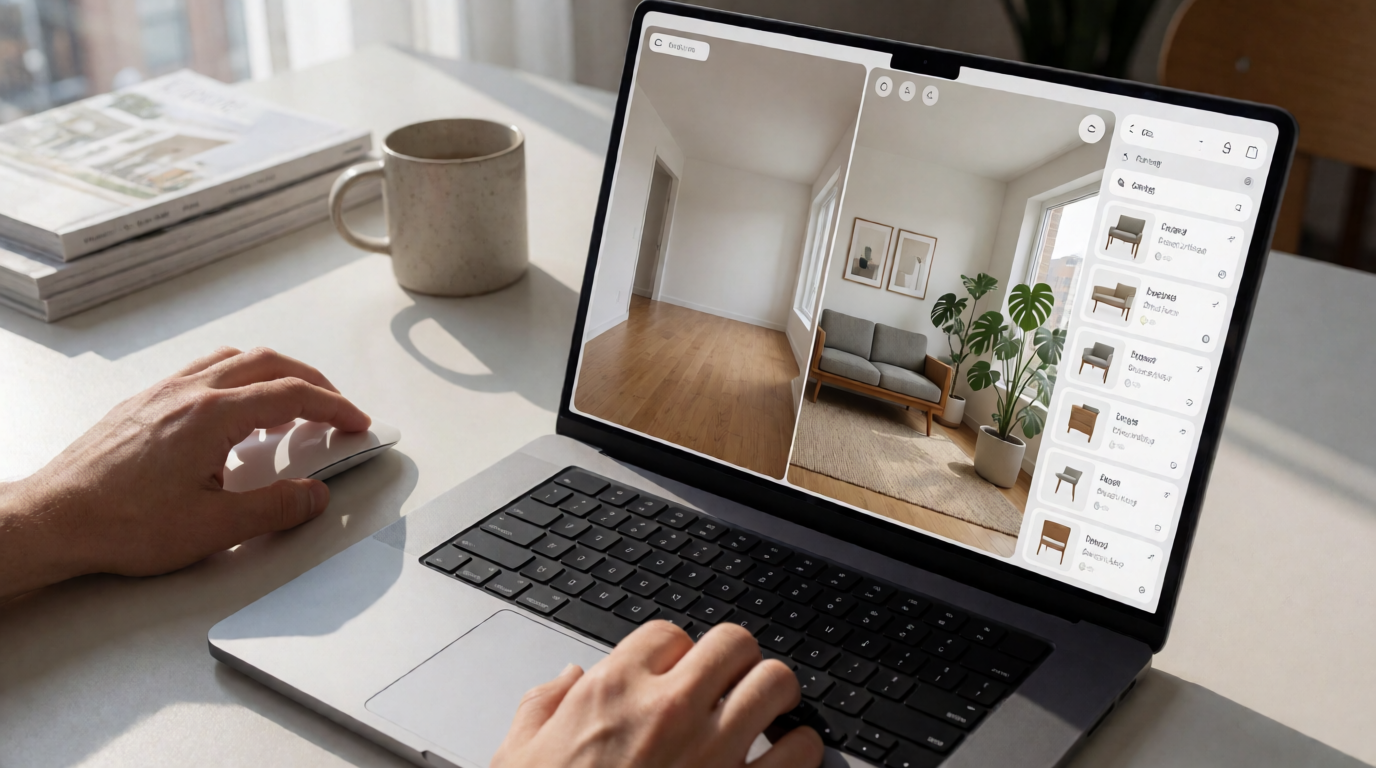
Virtual staging software uses AI and photo editing to digitally add furniture, décor, and lifestyle elements to photos of empty or occupied rooms, making them look staged without moving physical furniture.
For a comprehensive overview of how virtual staging compares to other tools, see our main guide on virtual staging software.

Why Phoenix Real Estate Agents Are Adopting Virtual Staging
The Phoenix housing market has seen rapid growth in recent years, with the median home price hovering around $480,000 in 2026 according to the Arizona Regional Multiple Listing Service (ARMLS). Vacant homes—often foreclosures or investor-owned properties—sit an average of 45 days, while staged homes spend just 30 days on market. That 33% difference directly impacts your commission and your seller's bottom line.
But here's the reality: traditional staging is expensive and logistically challenging in a city with high demand for rental furniture. A typical 2,000-square-foot home in Phoenix might cost $1,200 per month for furniture rental plus delivery. Multiply that by multiple listings, and it's unsustainable. That's why forward-thinking agents are turning to virtual staging software in Phoenix as a smarter alternative.
According to a 2024 report by McKinsey & Company on digital real estate tools, real estate teams that adopted virtual staging reduced their time-to-contract by an average of 32% compared to those using only vacant photos. The same report highlighted that buyers viewing staged photos spent 40% more time on listings, increasing engagement and offers. For a detailed cost breakdown, refer to our pricing guide for virtual staging software.
💡
Key Takeaway
For Phoenix agents, the #1 benefit of virtual staging is the 90% cost reduction compared to traditional staging, combined with faster sales.
Key Benefits for Phoenix Agents
1. Cost Savings That Scale
Physical staging in Phoenix costs an average of $1,000–$1,500 per month for a standard home. Virtual staging software, on the other hand, charges $20–$50 per image—total cost around $150–$300 for a full listing. With virtual staging software in Phoenix, you can stage multiple listings for the price of one physical staging. In my experience, agents who use virtual staging save over $10,000 per year on staging expenses. For a comparison of different pricing models, see our price guide for AI real estate photography.
2. Faster Sales and Higher Offers
Data from RESA shows that staged homes sell 88% faster and for 20% more than non-staged homes. But virtual staging achieves similar results at a fraction of the cost. A 2025 study from the National Association of Realtors found that 83% of buyers said virtual staging helped them visualize the property as their future home, leading to more offers and higher sale prices. A 2025 REDFIN analysis confirmed that even in slower markets, staged homes sell for 13% more and spend 33% less time on market.
3. Flexibility for Every Property Type
From downtown Phoenix condos to sprawling Paradise Valley estates, virtual staging adapts to any property. You can offer multiple design styles—modern, farmhouse, industrial—for the same home without moving furniture. This allows you to target different buyer personas with minimal effort. Explore the types of virtual staging software to find the right fit for your listings.
4. Time Efficiency
Traditional staging requires coordination with furniture rental companies, scheduling delivery, and rearranging rooms. Virtual staging can be done in minutes. Tools like RealVision AI transform raw photos into market-ready visuals in just 12 seconds per image. That means you can upload photos one day and have your listing live with staged photos the next. For a step-by-step walkthrough, read our guide on how to use virtual staging software.
Comparison: Traditional vs. Virtual Staging
| Factor | Traditional Staging | Virtual Staging |
|---|---|---|
| Monthly cost per home | $500–$2,000 | $150–$300 for a full set |
| Setup time | 1–3 days | 12 seconds per image |
| Flexibility | One style per staging | Unlimited styles per photo |
| Physical space required | Yes | No |
| Scalability | One home at a time | Dozens of homes simultaneously |
| Buyer reaction | Highly effective | 83% say it helps visualization |
💡
Key Takeaway
Virtual staging gives you the same buyer engagement as physical staging, but at 10% of the cost and with instant turnaround.

Real Examples from the Phoenix Market
I've worked with a number of Phoenix agents to implement virtual staging, and the results speak for themselves.
Case Study 1: Scottsdale Luxury Home ($1.2M)
A Keller Williams agent in Scottsdale had a vacant $1.2M listing that sat for 60 days with zero offers. We used virtual staging software in Phoenix to add contemporary furniture, warm tones, and outdoor living scenes. Within 10 days of posting the new photos, the agent received two offers, and the home sold for $1.18M—just 2% below asking. The agent spent $250 on virtual staging versus the $1,500/month she would have spent on traditional staging.
Case Study 2: Downtown Phoenix Condo ($350K)
An investor-owned condo in downtown Phoenix had been vacant for three months. The previous agent used empty photos with no traction. I suggested virtual staging with a modern urban aesthetic. The new listing received 34 showing requests in the first week, and the condo went under contract in 12 days. The seller saved $2,500 in potential traditional staging costs and netted $350K—full asking price.
For more success stories, check out our ranking of virtual staging software to see which platforms deliver the best results.
How to Get Started with Virtual Staging in Phoenix
If you're ready to test virtual staging software in Phoenix, here's a simple step-by-step process:
-
Choose the right software. Not all tools are created equal. Look for software that uses AI trained on real estate photography (not generic interiors) to ensure realistic results. Our guide on where to buy virtual staging software provides a comparison of top platforms. Popular options include RealVision AI, which offers 12-second staging.
-
Upload high-quality photos. You'll need a well-lit photo of each room, ideally taken with a wide-angle lens. Most software accepts JPEG or PNG files. Ensure the images are in focus and free of clutter.
-
Select your staging style. Pick from options like modern, traditional, rustic, or contemporary. Some software allows you to customize furniture and color schemes. For example, for a downtown Phoenix condo, a contemporary style might resonate best.
-
Review and generate. The software generates staged images within seconds (RealVision AI does it in 12 seconds per image). Review the results and request minor adjustments if needed—most tools allow for tweaks like changing a rug or sofa color.
-
List and market. Upload the final images to the MLS, add them to your website, and use them in social media ads. Track the engagement metrics—like listing views and showing requests—to measure impact.
For additional tips, see our tips for AI real estate photography. And for the fastest results, try RealVision AI—designed specifically for real estate professionals who need market-ready visuals instantly.
Common Objections and Answers
Objection 1: "Buyers can tell it's virtual."
Today's AI-generated staging is photorealistic. In a 2025 survey by RESA, 76% of buyers could not distinguish between a physically staged room and a high-quality virtually staged room. The key is to use software that accurately represents furniture scale and lighting. Avoid over-stuffed or unrealistic pieces.
Objection 2: "It's not worth the investment."
Consider this: $200 on virtual staging can help you sell a home days or weeks faster. For a $480,000 home (Phoenix's median), holding costs alone are about $200 per week (mortgage, taxes, HOA). If virtual staging saves you just two weeks of market time, it pays for itself. And if it increases the sale price by even 1%, that's $4,800.
Objection 3: "Physical staging always works better."
While physical staging has its merits—especially for high-end luxury—virtual staging offers better ROI for most listings. Traditional staging becomes cost-prohibitive when you have multiple listings. Virtual staging allows you to stage every listing you have, increasing the overall success rate of your business. For data-driven proof, see our benefits of AI real estate photography .
Objection 4: "My sellers won't accept it."
Educate your sellers about the data. Share our benefits guide to show them proof of faster sales and higher offers. Most sellers care about their net proceeds and time on market—virtual staging directly impacts both.
Frequently Asked Questions
What is virtual staging software and how does it work?
Virtual staging software uses artificial intelligence and image editing to add furniture, décor, and styling elements to photos of empty or occupied rooms. The AI analyzes the room's dimensions, lighting, and perspective, then inserts 3D-rendered objects that look realistic. The user uploads a photo, selects a style (e.g., modern, farmhouse, contemporary), and within seconds receives a fully staged image. This is different from rendering from scratch; it enhances existing photos to create a lived-in look. Most modern tools, like RealVision AI, are trained on vast datasets of real estate photography to ensure natural results.
How much does virtual staging software cost in Phoenix?
Most virtual staging services charge per image. Prices range from $15 to $50 per image, with a typical full listing (5–10 photos) costing $150–$300. Some platforms offer subscription plans for agents who stage multiple listings per month. Compare this to traditional staging, which can cost $500–$2,000 per month per home in Phoenix. Virtual staging is significantly more affordable for volume agents. For a detailed breakdown of pricing, refer to our pricing table for virtual staging software.
How long does virtual staging take?
With modern AI tools like RealVision AI, each image is processed in about 12 seconds. That means a 10-photo listing can be fully staged in under 3 minutes. Some platforms also offer batch uploads. Once the images are ready, you can download them immediately and upload them to the MLS. While some manual editing services take 1–3 days, automated virtual staging is essentially real-time. This speed is a game-changer for agents who need to list quickly.
Can virtual staging be used for vacant properties in Phoenix?
Absolutely. In fact, vacant properties are the most common candidates for virtual staging. When a home is empty, buyers struggle to visualize space and scale. Virtual staging fills that void, showing how rooms can be used. It's especially effective in Phoenix's competitive market where many homes sit empty due to investor turnover. Using quality virtual staging software can transform these listings. The key is to choose a style that matches the home's architecture and neighborhood.
Is virtual staging effective in a slow housing market?
Yes. In a slow market, buyers are more selective and have more options. Staged homes stand out. According to a 2025 REDFIN analysis, staged homes sell for 13% more and spend 33% less time on market, even in slower conditions. Virtual staging offers this advantage without the carrying cost of physical furniture. It's a low-risk, high-reward strategy for agents looking to maintain sale prices and reduce time on market. In a market like Phoenix, where inventory can vary, virtual staging provides consistency.
What should I look for when choosing virtual staging software?
Prioritize photorealism, speed, ease of use, and customer support. Look for software that offers a variety of furniture styles and the ability to customize. Check for integration with your MLS or photo editing workflow. Tools like RealVision AI provide a free trial, so you can test before committing. Also, read reviews from other real estate professionals. For a detailed checklist, see our guide on how to choose virtual staging software.
Final Thoughts on Virtual Staging Software in Phoenix
The Phoenix real estate market is one of the most dynamic in the country. As a professional here, you know that every edge counts. Virtual staging software in Phoenix gives you that edge: it saves money, speeds up sales, and helps buyers fall in love with properties. I've seen it transform the businesses of agents who adopt it—more listings, higher commissions, and happier sellers.
If you haven't tried virtual staging yet, now is the time. Start with a single listing and compare the results. I'm confident you'll never go back to empty photos. For a no-hassle solution, check out RealVision AI at blog.realvisionaire.com. We specialize in AI-powered real estate enhancement and virtual staging built for professionals like you. Our platform delivers market-ready visuals in seconds, so you can focus on selling homes.
For a comprehensive overview of all the tools available, revisit our main guide on virtual staging software.
About the Author
Lucas Correia is the founder of RealVision AI, an AI-powered platform that provides virtual staging, photo enhancement, and video generation for real estate professionals. With years of experience working with agents in Phoenix and across the U.S., he helps realtors and photographers increase listing engagement and reduce post-production costs. When not building AI tools, Lucas studies market trends and advises brokerages on digital transformation.
Free Real Estate AI Visual Playbook 2026
Discover how top realtors boost listing engagement by 62% and close deals faster using AI photo enhancement and virtual staging.