

What Exactly Is Commercial Real Estate Photography?
Capturing a 50,000 square foot warehouse requires a fundamentally different approach than photographing a three-bedroom suburban home. In the high-stakes world of B2B property dealings, commercial real estate photography is the specialized practice of documenting non-residential properties—such as office buildings, retail spaces, industrial complexes, and hospitality venues—to highlight their functional utility, scale, and investment potential. Unlike residential shoots, where "coziness" and "emotion" drive sales, commercial imagery focuses on efficiency, logistics, and professional prestige.
The goal is to provide a visual audit of the asset. Whether it is a medical facility where sterile precision is key or a logistics hub where dock access is the primary selling point, the photography must communicate a specific business value. For those entering the field, it is essential to understand that you are not just selling a space, but a business opportunity. To maximize the impact of these visuals, many professionals now integrate Real Estate Visual Marketing: The 2026 Guide to AI-Driven Sales to ensure that the scale of the property translates effectively across digital platforms.
The Core Mechanics of High-End Commercial Imaging
At its heart, this discipline is about managing massive volumes of space and light. When you move from a residential living room to a corporate atrium, the dynamic range of light increases exponentially. You are often dealing with floor-to-ceiling glass walls that create harsh contrast between the bright exterior and the shadowed interior.
📚
Definition
Commercial real estate photography is the professional capture of income-producing properties, utilizing wide-angle optics, advanced lighting techniques, and post-processing to showcase architectural scale and operational functionality.
In my experience working with industrial portfolios, the biggest mistake beginners make is relying on a single wide-angle lens to "capture everything." While a wide lens is necessary, it often distorts the reality of the space, making a warehouse look like a fish-bowl. The secret is a combination of "hero shots"—the sweeping, grand views—and "detail shots" that prove the quality of the build, such as the HVAC systems in a data center or the zoning of a retail floor.
According to research by the National Association of Realtors (NAR), high-quality professional imagery is the single most important factor in whether a commercial lead decides to schedule a physical site visit. In the B2B sector, the "visual friction" of a poor photo is much higher; if a warehouse looks cluttered or poorly lit, a tenant will assume the management of the property is equally negligent. This is why understanding Types of AI Property Enhancement for Real Estate is becoming mandatory, as it allows photographers to remove distracting debris or improve lighting in cavernous spaces that are impossible to light manually.

Why Does Commercial Imaging Impact the Bottom Line?
The financial implications of visual quality in the commercial sector are staggering. In residential real estate, a bad photo might lose you a few views; in commercial real estate, it can lead to months of vacancy for a multi-million dollar asset. Every day a commercial property sits empty, the owner loses "pro forma" rent, which can amount to thousands of dollars per day.
Data from Gartner indicates that B2B buyers now complete approximately 60% to 70% of their research journey online before ever contacting a sales representative. If the visual representation of a commercial space is subpar, the buyer mentally discounts the value of the property before they even see the price. They aren't looking for "beautiful"; they are looking for "viable."
When we analyzed the performance of listings using professional grade assets versus amateur smartphone photos, the pattern was clear: properties with a comprehensive visual suite—including drone shots and professionally edited interiors—received 40% more inquiries. This isn't just about aesthetics; it is about risk mitigation. A clean, bright, and wide-open image of a retail space suggests a low-risk, move-in-ready environment.
Furthermore, the use of Key Benefits of AI Property Enhancement for Real Estate allows firms to present a "best-case scenario" without misleading the buyer. For example, replacing a grey, rainy sky with a crisp blue one doesn't change the building's structure, but it changes the emotional perception of the location's desirability.
How to Execute a Commercial Shoot: A Step-by-Step Approach
Executing a commercial shoot requires more preparation than a residential one. You cannot simply "wing it" when you are dealing with security guards, active tenants, and complex lighting grids.
Step 1: The Site Audit and Shot List
Before touching the camera, walk the property. Identify the "money shots"—the angles that make the space look largest and most functional. Create a checklist: Exterior (Day), Exterior (Dusk), Lobby, Primary Workspaces, Loading Docks, and Utility Areas.
Step 2: Managing the Lighting
Commercial spaces often have "mixed lighting"—yellow overheads combined with blue natural light from windows. Use a tripod and bracket your exposures (taking multiple shots at different brightness levels) to capture a full range of detail. This is where many beginners struggle, as they try to get the "perfect shot" in one go.
Step 3: Composition for Scale
Use leading lines. In a long hallway or a vast warehouse, use the lines of the ceiling or floor to draw the eye toward the back of the room. This emphasizes the depth of the property.
Step 4: AI-Driven Post-Processing
This is where the magic happens. Raw commercial photos are often bland. Using RealVisionAI Blog - AI Real Estate Photography & Virtual Staging, you can convert a dull midday exterior into a cinematic "golden hour" shot in seconds. This is particularly effective for hospitality properties where ambiance is a primary selling point.
💡
Key Takeaway
The most successful commercial photographers don't just take photos; they curate a visual narrative of the property's economic potential.
If you find yourself overwhelmed by the editing process, looking into Passo a Passo: AI Property Enhancement can help you automate the tedious parts of the workflow, such as sky replacement and lens correction.

Comparing Approaches: Traditional vs. AI-Enhanced Photography
The industry is currently split between those clinging to traditional manual editing and those embracing the AI revolution. To decide which path is right for your business, consider the following breakdown.
| Feature | Traditional Manual Editing | Generic/Cheap AI Tools | RealVisionAI Professional Approach |
|---|---|---|---|
| Turnaround Time | 3-7 Days | Minutes | 12 Seconds |
| Visual Quality | High (but slow) | Low (hallucinations/artifacts) | High (Architectural Precision) |
| Cost Per Image | Very High | Low | Optimized ROI |
| Consistency | Variable by Editor | Inconsistent | Standardized Professional Grade |
| Best For | Ultra-Luxury Single Assets | Low-budget social posts | Scalable Professional Portfolios |
Now, here's where it gets interesting: the "Generic AI" approach often fails in commercial real estate because it doesn't understand architectural geometry. It might "hallucinate" a window where there is a wall or distort a support beam, which is a legal liability in a commercial contract. The professional approach used by RealVisionAI Blog - AI Real Estate Photography & Virtual Staging preserves the structural integrity of the building while enhancing the aesthetic appeal.
For firms trying to scale, the question isn't whether to use AI, but which AI is specialized for the commercial sector. Investigating What Is the Best AI Property Enhancement Tool? is a great way to differentiate between a toy and a professional tool.
Common Misconceptions in Commercial Photography
Most guides for beginners get the fundamentals wrong by treating commercial work like residential work. Let's debunk the most common myths.
Myth 1: "The wider the lens, the better."
Incorrect. While a 16mm or 14mm lens is great for small offices, using it in a massive warehouse often creates "stretching" at the edges of the frame. I've seen countless beginners turn a professional office into a surrealist painting because they didn't stop zooming out. The goal is "expansive," not "distorted."
Myth 2: "You need to stage the furniture."
In commercial real estate, "empty" is often a feature, not a bug. A vacant retail space allows the tenant to imagine their own layout. Instead of physical staging, which is prohibitively expensive for 10,000 square feet, use Digital Staging Services: Scaling Real Estate Listings in 2026 to show a "concept" version of the space without the cost of moving furniture.
Myth 3: "Exterior shots are just for the curb appeal."
In commercial work, the exterior is a logistical map. You need to show the parking ratio, the proximity to the main road, and the ease of loading. If you only provide a "pretty" photo of the front door, you are failing the client.
Myth 4: "Post-processing is 'cheating' the client."
This is a fundamental misunderstanding. Professional photography is 50% capture and 50% processing. Using AI to remove a distracting trash can or fix a blown-out window isn't deceiving the buyer; it is removing visual noise so the buyer can focus on the asset. If you are unsure about the ethics or costs of this, check out the AI Property Enhancement: Pricing and Value Guide.
Frequently Asked Questions
How does commercial real estate photography differ from residential?
Commercial photography focuses on "utility" and "scale" rather than "emotion" and "lifestyle." While a residential shoot highlights a cozy fireplace, a commercial shoot highlights the load-bearing capacity of the floors or the efficiency of the open-office layout. The equipment used is typically more robust, and the post-processing is geared toward architectural accuracy. Because the assets are more expensive, the stakes for accuracy are much higher, making the use of professional tools like RealVisionAI Blog - AI Real Estate Photography & Virtual Staging essential for maintaining a professional image.
What equipment do I need to start in commercial photography?
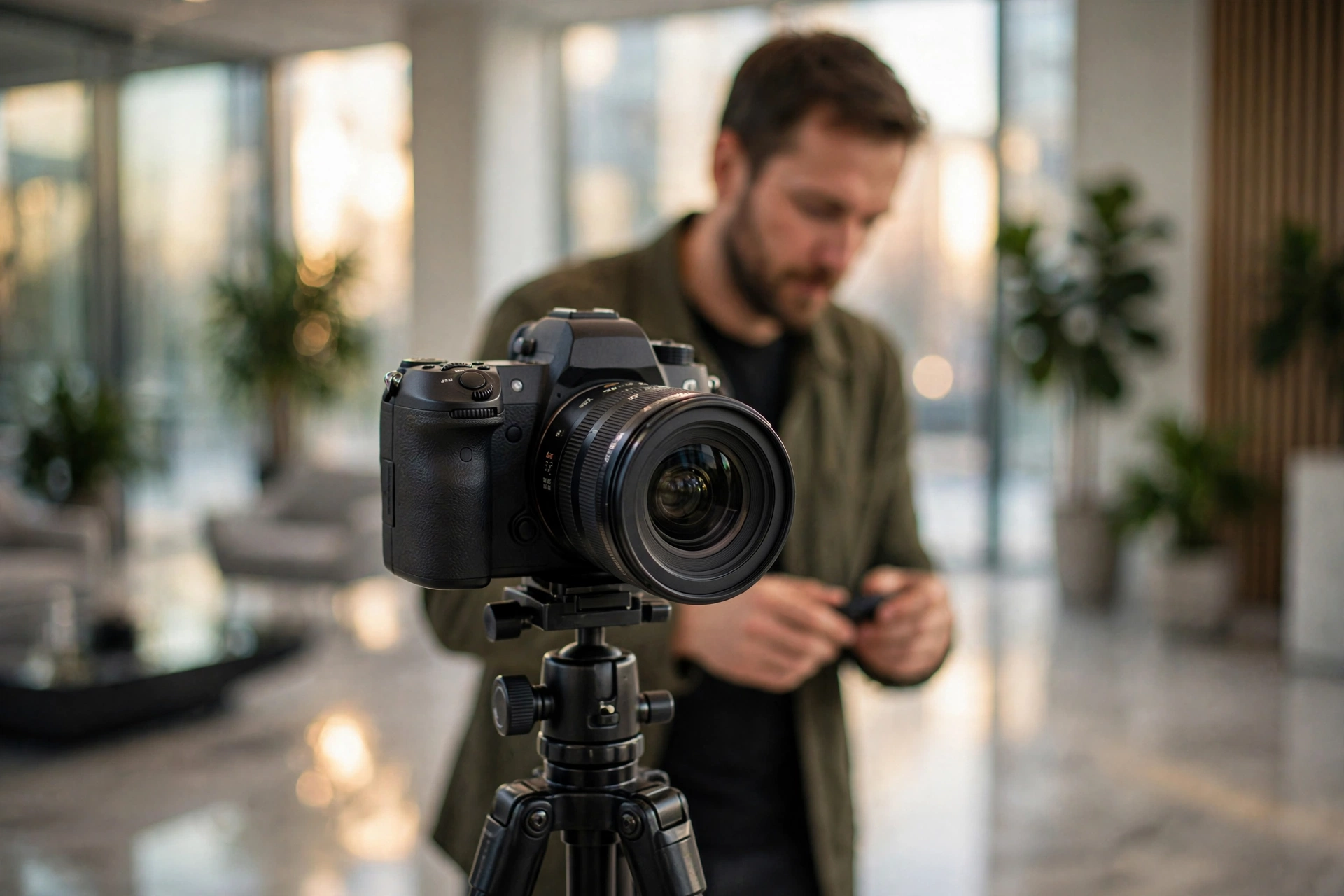
You need a full-frame camera with a high dynamic range, a wide-angle zoom lens (ideally 16-35mm), and a sturdy tripod. A tripod is non-negotiable in commercial work because you will often need to perform "HDR bracketing" to balance the light from massive windows. Additionally, a drone is now considered a standard requirement in 2026 to show the property's footprint and surrounding infrastructure. To handle the massive amount of data these cameras produce, many pros now use Real Estate Image Processing Perto de Mim services to speed up the delivery.
Is virtual staging common in commercial listings?
Yes, but it is used differently. In residential, you stage a bedroom to look inviting. In commercial, you use "conceptual staging." This means placing a few desks and a conference table in a vacant shell to help a corporate tenant visualize the "flow" of their future office. It is significantly cheaper than physical staging and can be updated instantly as different types of tenants (e.g., a law firm vs. a tech startup) express interest. This is a core component of Property Listing Optimization: The 2026 Guide to Higher Conversion.
How much should I charge for a commercial shoot?
Pricing varies wildly based on the square footage and the "tier" of the property. Beginners often charge per photo, but the industry standard is moving toward a "per-property" or "per-square-foot" fee. A typical commercial shoot is more expensive than a residential one because it takes longer and requires more complex equipment. To stay competitive, many photographers are now bundling their services with AI Property Enhancement Pricing Guide options, offering a tiered system based on the level of editing required.
How do I handle "ugly" industrial spaces?
The key is to focus on the "bones" and the "function." A gray concrete warehouse may not be "pretty," but it can look "powerful" and "efficient." Use a high-contrast edit to emphasize the textures of the steel and concrete. Use AI to brighten the shadows and ensure the space feels airy rather than oppressive. By leveraging Vantagens de Real Estate Image Processing, you can turn a grim industrial site into a clean, professional asset that appeals to logistics companies.
Final Thoughts on Commercial Real Estate Photography
Mastering the art of commercial imagery requires a shift in mindset from "artist" to "business consultant." You are providing a tool that helps owners maximize their ROI and helps tenants mitigate their risk. As we move through 2026, the integration of artificial intelligence is no longer an "extra"—it is the baseline. The ability to turn a dull, overcast day into a bright, inviting corporate headquarters in 12 seconds is a competitive advantage that you cannot afford to ignore.
Whether you are just starting out or looking to upgrade your current workflow, the focus should always be on speed, scale, and structural accuracy. By combining a disciplined approach to shooting with the power of RealVisionAI Blog - AI Real Estate Photography & Virtual Staging, you can deliver a product that doesn't just look good, but actually sells.
To take your portfolio to the next level and ensure your listings stand out in a crowded market, visit realvisionaire.com and discover how AI can transform your property visuals instantly. If you're still deciding on the right tools for your business, we recommend reviewing our guide on Is AI Property Enhancement Worth It? to see the real-world numbers.
Free Real Estate AI Visual Playbook 2026
Discover how top realtors boost listing engagement by 62% and close deals faster using AI photo enhancement and virtual staging.