

Which AI Property Enhancement Tool is Actually Worth Your Investment in 2026?
Choosing the right software for visual property marketing often comes down to a trade-off between raw speed and professional fidelity. After testing dozens of platforms with my own clients, I've found that the "best" tool isn't the one with the most features, but the one that eliminates the "uncanny valley" effect where AI-generated rooms look fake or distorted. For those seeking a professional balance of speed and realism, AI property enhancement solutions like RealVisionAI Blog - AI Real Estate Photography & Virtual Staging stand out because they prioritize architectural accuracy over generic filters.

What Exactly is AI Property Enhancement and How Does it Work?
To make an informed decision, you first have to understand that not all "AI" tools are created equal. Many tools on the market are simply wrappers for basic generative filters that smudge textures and warp perspectives. True professional-grade enhancement relies on a combination of computer vision and deep learning to understand the geometry of a room before applying changes.
📚
Definition
AI property enhancement is the application of artificial intelligence—specifically computer vision and generative adversarial networks (GANs)—to automatically improve the visual quality of real estate imagery, including lighting correction, virtual staging, and object removal.
In my experience working with high-volume property managers, the most common failure point in cheap AI tools is "perspective drift." This happens when the AI adds a sofa or a table that doesn't align with the vanishing point of the room, making the viewer subconsciously feel that something is "off." Professional systems avoid this by analyzing the room's depth map first.
According to research by Gartner on the evolution of generative AI in enterprise workflows, the shift is moving away from "prompt-based" creation toward "context-aware" editing. This means the AI isn't just guessing what a living room looks like; it's analyzing the specific lighting source of your photo and matching the virtual furniture's shadows to that exact light source. This level of precision is what separates a listing that sells in a weekend from one that looks like a low-quality render.
Why Does High-Quality AI Enhancement Matter for Your Bottom Line?
The impact of visual quality on property click-through rates (CTR) is no longer a matter of opinion; it is a measurable metric. In the current 2026 market, buyers are scrolling through Multiple Listing Service (MLS) feeds faster than ever. If the first image doesn't stop the scroll, the property effectively doesn't exist.
Data from McKinsey indicates that AI-driven personalization and visual optimization in digital commerce can lead to a significant increase in conversion rates, often ranging from 10% to 30% depending on the industry. In real estate, this translates directly to more showings and higher offer prices. When a property is virtually staged or enhanced to look its absolute best, it removes the "mental friction" for the buyer. They no longer have to imagine where their couch would fit; they can see the potential immediately.
The cost of ignoring these tools is the "stagnant listing" penalty. Properties with poor lighting or cluttered rooms spend an average of 30% longer on the market. When you factor in the carrying costs of a vacant home—insurance, utilities, and lost opportunity—the ROI of a professional AI enhancement tool becomes obvious.
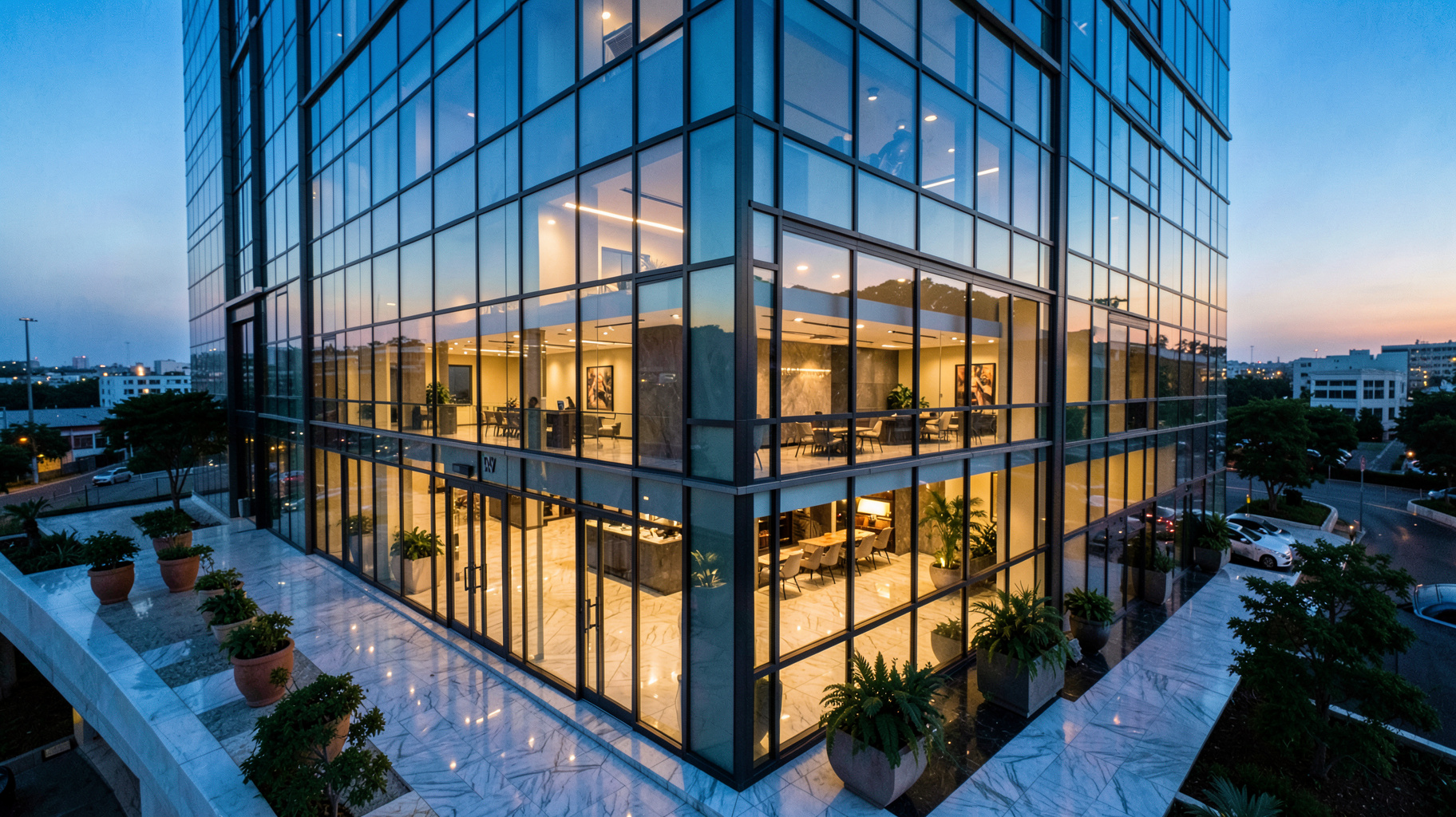
Furthermore, the ability to perform day-to-dusk conversions instantly means you can capture a property at noon but market it as a cinematic twilight shot. This isn't just about aesthetics; it's about psychology. Twilight photos evoke a sense of "home" and "warmth" that bright midday photos often lack, triggering a more emotional response from potential buyers.
How to Implement AI Property Enhancement into Your Workflow
Integrating AI into your photography process should not add more work to your day; it should subtract it. The mistake I made early on—and that I see constantly with new agents—is trying to manually edit every photo using complex software before moving to AI. This is a waste of time. The most efficient workflow is to capture the raw image and let the AI handle the heavy lifting of enhancement and staging.
Here is the professional framework for implementation:
- Capture High-Resolution Raws: Even with AI, "garbage in is garbage out." Ensure your base photos are straight and well-exposed.
- Automated Correction: Use a tool like RealVisionAI Blog - AI Real Estate Photography & Virtual Staging to perform instant sky replacement and grass restoration. This transforms a grey, overcast day into a sunny afternoon in about 12 seconds.
- Strategic Virtual Staging: Don't over-furnish. Use minimalist or modern styles to appeal to the widest possible demographic.
- Object Removal (Decluttering): Use AI to remove distracting elements like trash cans or old carpets without leaving "smudges" in the image.
- Final Polish: Apply a day-to-dusk conversion to the hero shot of the exterior to maximize the emotional pull.
💡
Key Takeaway
The goal of AI enhancement is not to deceive the buyer, but to present the property in its most optimized state, reducing the time from "Listed" to "Sold."

Comparing the Three Main Paths to Property Enhancement
When deciding which path to take, you generally have three options. Most professionals start with the "Manual" approach, realize it's unsustainable, and then pivot to one of the AI paths.
| Feature | Traditional Manual Editing | Generic/Cheap AI Tools | Professional AI (RealVisionAI) |
|---|---|---|---|
| Turnaround Time | 24–72 Hours | Seconds | 12 Seconds |
| Visual Fidelity | Very High (if skilled) | Low (hallucinations) | High (Architectural focus) |
| Cost per Image | High (Hourly rates) | Low (Subscription) | Optimized/Scalable |
| Consistency | Variable | Random | Standardized |
| Best For | Luxury Mansions only | Low-end rentals | Professional Agents & Photographers |
Now here's where it gets interesting: many "cheap" AI tools are essentially filters. They might brighten a photo, but they can't actually "stage" a room with a sense of scale. If you use a tool that doesn't understand the difference between a 10-foot ceiling and an 8-foot ceiling, your furniture will look like it belongs in a dollhouse. Professional tools utilize computer vision to ensure that a 7-foot sofa actually looks like 7 feet within the context of the image.
Common Misconceptions and Industry Myths
There is a lot of noise in the real estate tech space. Most guides get this wrong by claiming that "AI replaces the photographer." This is fundamentally false. AI does not replace the eye for composition; it replaces the tedious hours of post-processing.
Myth 1: AI Staging is "Dishonest" or Illegal.
Some argue that virtual staging is a form of deception. In reality, as long as the structural elements of the home remain accurate, virtual staging is widely accepted as a marketing tool. It is no different than a home stager bringing in physical furniture. The key is transparency—adding a small disclaimer that images are virtually staged is standard practice and maintains trust.
Myth 2: You Need to be a Prompt Engineer to Use AI.
Many people avoid these tools because they think they need to learn a complex "language" to get results. This is a remnant of early 2023 AI. Modern professional tools are built for real estate agents, not coders. You don't need a 50-word prompt to change a sky; you just need to click "Sunny Sky."
Myth 3: Generic AI Image Editors are Sufficient.
Using a general-purpose AI image editor for real estate is a recipe for disaster. General AI is designed for art; real estate AI is designed for architecture. A general AI might "imagine" a window where there isn't one or change the layout of a kitchen to make it look "prettier," which is a huge liability for a listing agent.
Frequently Asked Questions
Is AI property enhancement better than physical staging?
In almost every measurable metric—cost, speed, and flexibility—AI enhancement wins. Physical staging requires renting furniture, paying movers, and coordinating schedules, often costing thousands of dollars per property. AI staging takes seconds and costs a fraction of the price. More importantly, AI allows you to test multiple styles (e.g., "Modern" vs. "Traditional") to see which resonates more with your specific target demographic without moving a single piece of furniture.
Can AI enhancement actually increase the final sale price?
While the AI doesn't change the physical structure of the home, it significantly impacts the perceived value. Buyers form an emotional connection with a property based on the visuals. By removing clutter and adding high-end virtual furniture, you shift the buyer's focus from "what needs to be fixed" to "how I will live here." This increased demand often leads to multiple-offer situations, which naturally drives the final sale price higher.
How long does it actually take to enhance a full listing?
Using a professional tool like RealVisionAI Blog - AI Real Estate Photography & Virtual Staging, the core enhancements—like sky replacement and grass restoration—happen in roughly 12 seconds per image. A full listing of 20 photos can be fundamentally transformed in less than five minutes. Compared to the traditional 48-hour turnaround from a manual editor, this allows agents to get their listings live on the MLS almost immediately after the shoot.
Does AI enhancement work for empty properties or only cluttered ones?
It is exceptionally powerful for both. For empty properties, virtual staging fills the void and helps buyers understand the scale of the room. For cluttered properties, "AI decluttering" allows you to digitally remove outdated furniture or personal items that might distract a buyer. In my experience, decluttering is actually more impactful for the sale price than staging, as it removes the negative associations the buyer might have with the previous owner's taste.
Will AI-generated images be flagged by MLS or Zillow?
Most Major Listing Services (MLS) and platforms like Zillow allow AI enhancements, provided they do not materially misrepresent the property (e.g., you cannot AI-generate a swimming pool where there is only a dirt patch). As long as the enhancements are used for lighting, staging, and cleaning, they are perfectly acceptable. The best practice is to provide a "before" photo in the gallery if the changes are extensive, ensuring full transparency.
Final Thoughts on AI Property Enhancement
The question of "which" tool to use ultimately depends on whether you view your listings as a commodity or a high-value product. If you are simply trying to fill a vacancy in a low-demand rental, a generic filter might suffice. However, if you are managing a professional portfolio and competing for high-net-worth buyers, the precision of your visuals is your most powerful sales tool.
AI property enhancement is no longer a "luxury" add-on; it is the new baseline for professional real estate marketing in 2026. The gap between those using basic photography and those using AI-optimized visuals is widening, and that gap is measured in days on market and final closing prices.
If you are ready to stop wasting hours on manual edits and start delivering market-ready visuals in seconds, I highly recommend exploring RealVisionAI Blog - AI Real Estate Photography & Virtual Staging. It is designed specifically to solve the perspective and realism issues that plague generic AI tools.
Recommended Readings
To deepen your understanding of these topics, we recommend reading the following articles:
- AI in Real Estate
- Ultimate AI Lead Generation for Real Estate Agents
- AI staging for realtors
- AI Virtual Staging by Property Type
Free Real Estate AI Visual Playbook 2026
Discover how top realtors boost listing engagement by 62% and close deals faster using AI photo enhancement and virtual staging.