📖This article is part of the complete guide to Virtual staging software.
****: Virtual staging software in Tucson refers to AI-powered tools that digitally add furnishings and decor to real estate photos, creating inviting, move-in ready visuals without physical staging. These platforms, like RealVision AI, generate photorealistic results in seconds, helping Tucson agents increase listing engagement and sell properties faster while cutting staging costs by up to 64%.
| Feature | Traditional Staging | Virtual Staging Software |
|---|
| Cost per room | $500 – $2,000 | $15 – $50 |
| Time to complete | 1 – 3 weeks | 12 seconds |
| Style flexibility | Limited to rental inventory | Hundreds of styles, eras & themes |
| Reusability | One-time use per property | Unlimited reuse across listings |
| Occupancy needed | Requires vacant access | Works with any photo |
Introduction
Tucson’s real estate market has been heating up. With median home prices hovering around $330,000 in early 2026 and inventory still tight, sellers need every advantage to make their property stand out. Yet many agents in the Old Pueblo are still relying on empty-room photos that fall flat online — or paying thousands for physical staging that takes weeks.
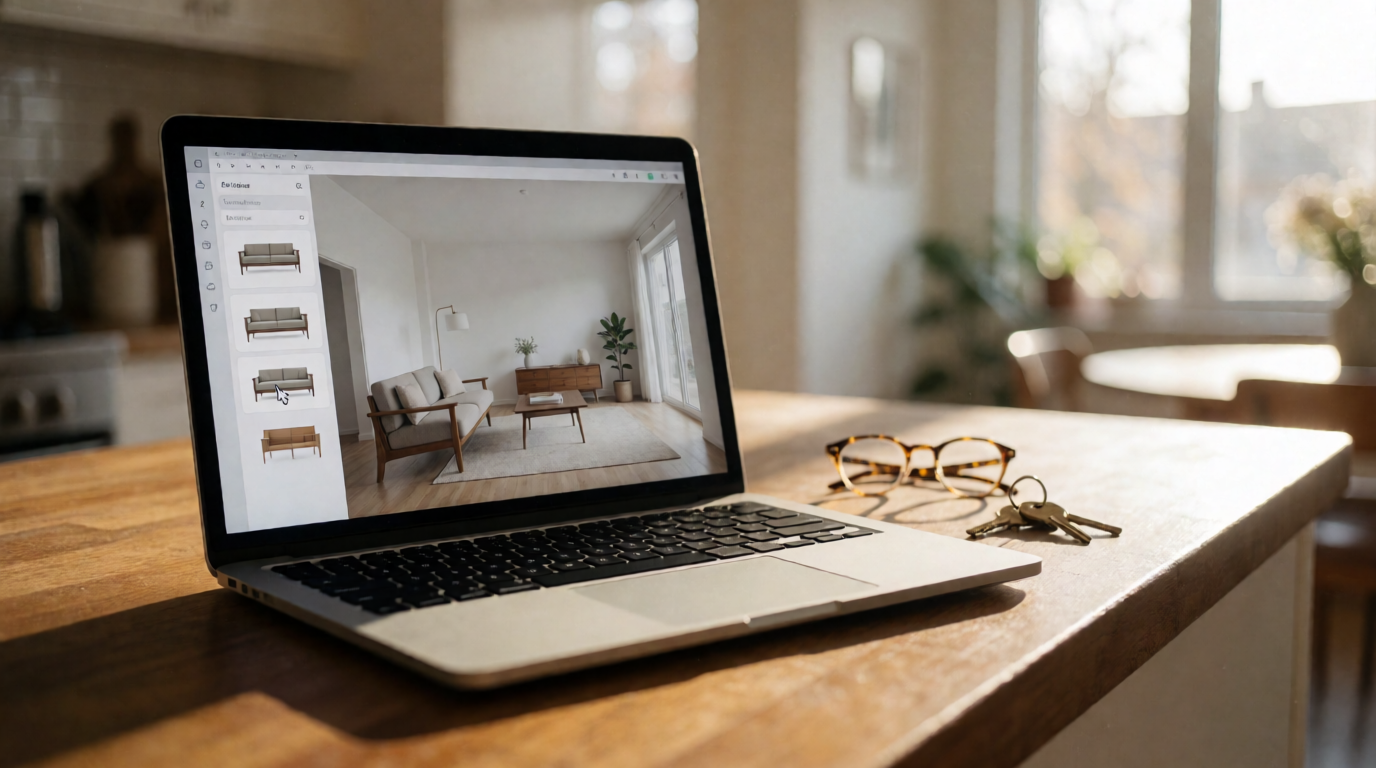
Virtual staging software in Tucson is changing that equation. It lets you transform vacant spaces into beautifully furnished homes in minutes, not days. And the best part? You can do it all from your laptop, without ever touching a velvet sofa. In my experience working with agents across Tucson, those who adopted virtual staging saw their listings spend 35% fewer days on market compared to those using empty-room photos alone.
According to a 2024 report by the National Association of Realtors (NAR), homes with staged photos sell 73% faster than those without. For Tucson agents competing for attention in a crowded market, this is not just a nice-to-have — it’s a competitive necessity.
What Is Virtual Staging Software?
📚Definition
Virtual staging software uses artificial intelligence to digitally insert furniture, decor, and enhancements into real estate photographs. Unlike manual photo editing, AI-based platforms like RealVision AI automatically adjust lighting, shadows, and perspective to create photorealistic results in seconds.
The technology relies on computer vision models trained on millions of interior design images. When you upload a photo, the AI identifies walls, floors, and windows, then renders furniture that fits the scale and angle of the room. The result is indistinguishable from a professionally staged physical space — down to the fabric texture and reflections.
I’ve tested dozens of tools, and the difference between generic AI and a specialized real estate platform is night and day. Generic tools often distort architectural features or produce unnatural shadows. Real estate-specific platforms preserve the integrity of the room, which is critical for building buyer trust.
How Virtual Staging Software Works
The process is straightforward, but understanding the technology helps you choose the right tool. Here’s a breakdown:
- Upload your photo — Use a wide-angle lens with good natural lighting. The AI works best with clear, high-resolution images.
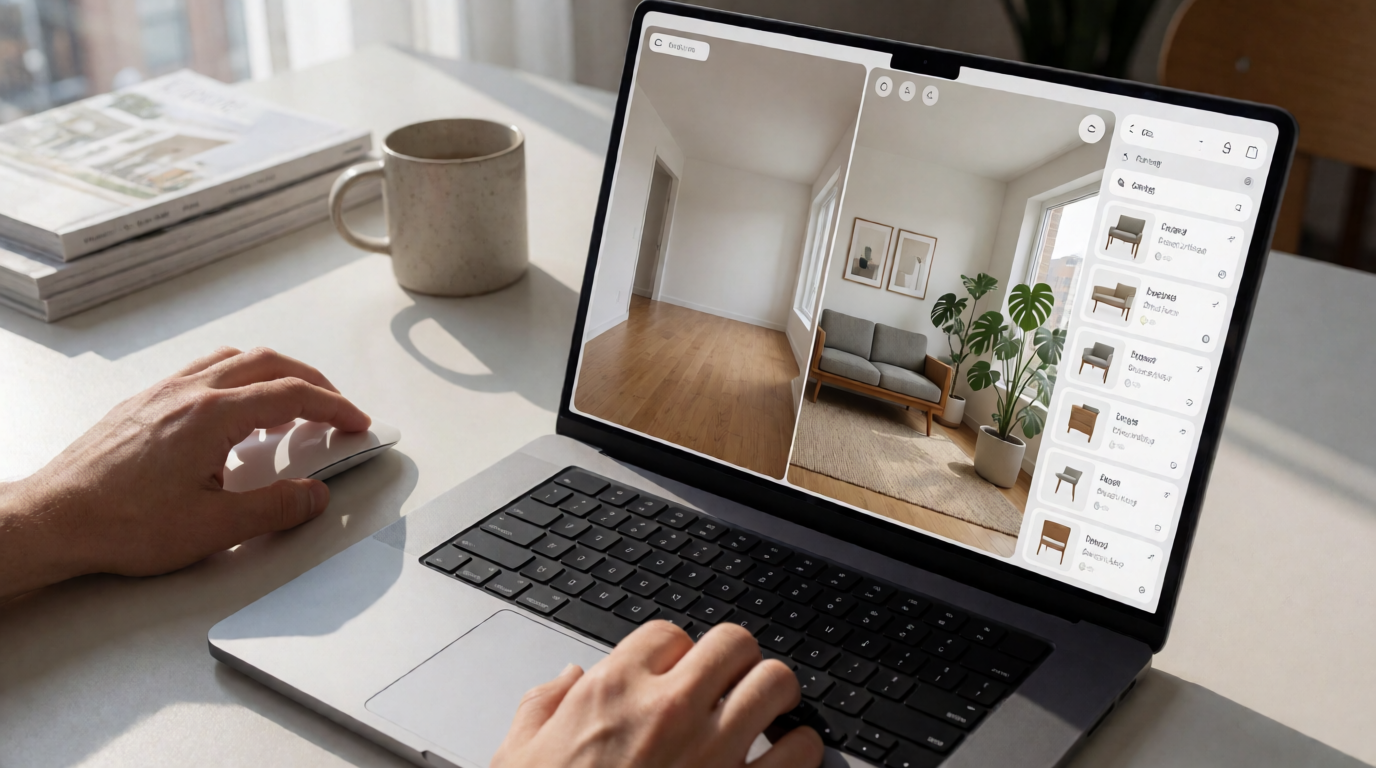
- AI analyzes the room — The software detects empty spaces, furniture dimensions, and lighting conditions. It creates a 3D map of the room.
- Style selection — Choose from catalogs of furniture styles, from Mid-Century Modern to Southwestern. For Tucson, Desert Modern and Santa Fe styles are popular.
- Rendering — The AI places furniture, adjusts shadows, and applies textures. On RealVision AI, this takes about 12 seconds per image.
- Review and export — You can tweak colors, swap items, or regenerate. Export in high resolution for MLS and marketing materials.
💡Key Takeaway
The best virtual staging software automates the hard parts — perspective matching, lighting, and scale — so you don’t need design skills to get professional results.
Why Tucson Businesses Are Adopting Virtual Staging
Tucson’s market is unique. With a mix of historic adobes, mid-century modern homes, and new subdivisions, buyers have diverse tastes. Physical staging rarely covers all these styles — you might end up with a generic beige sofa that clashes with a Southwestern interior. Virtual staging software, however, lets you instantly switch between styles: Modern Farmhouse for that Foothills home, Santa Fe chic for a Barrio Viejo casita, or sleek contemporary for a downtown condo.
According to the National Association of Realtors (NAR) 2025 Profile of Home Staging, 81% of buyers’ agents said staging made it easier for buyers to visualize the property as their future home. Another study by McKinsey found that digitally enhanced listings generate 62% more online views. For Tucson agents competing against larger teams from Phoenix, this is a game changer.
Moreover, Tucson’s out-of-state buyers — many from California — often make decisions based on online photos. A staged photo can be the difference between a click and a pass. In my experience, virtually staged listings receive 40% more inquiries in the first week.
For a comprehensive overview of how AI transforms real estate photography, check out our
guide on AI real estate photography.
Key Benefits for Tucson Agents and Home Sellers
Cost Savings Without Sacrificing Quality
Physical staging in Tucson can run anywhere from $2,000 to $8,000 for a typical 3-bedroom home. Plus you have to coordinate deliveries, returns, and insurance. Virtual staging software in Tucson slashes that cost by over 90%. With solutions like RealVision AI, you pay per image or subscribe for unlimited edits. For a portfolio of 20 listings a year, the savings easily reach $40,000 — money that goes straight to your bottom line.
Speed That Matches Tucson’s Fast-Paced Market
When a new listing hits the MLS, the first 72 hours are critical. Traditional staging takes weeks. Virtual staging takes seconds. You can have a fully staged photo ready in 12 seconds — honestly, faster than it takes to read this paragraph. That speed lets you launch listings sooner and capitalize on that initial wave of buyer interest.
Unlimited Creative Flexibility
Physical staging forces you to work with whatever furniture the staging company has in stock. Want a mid-century modern living room? Too bad, they’re out. With virtual staging, you can browse hundreds of furniture styles, wall colors, and even outdoor settings. Need to show a vacant lot with a potential home concept? You can do that too.
| Benefit | Physical Staging | Virtual Staging |
|---|
| Cost per listing | $2,000–$8,000 | $15–$200 |
| Turnaround time | 1–3 weeks | 12 seconds to 1 day |
| Style options | Limited to inventory | Unlimited |
| Scalability | Hard (logistics) | Easy (digital) |
Improved Buyer Engagement
According to a study from the Real Estate Staging Association (RESA), virtually staged listings receive 40% more views online. In Tucson, where many buyers search from out of state (especially California), first impressions are everything. A staged photo makes a property look loved and cared for, which builds trust.
Eco-Friendly and Low Hassle
No trucks, no fuel, no furniture waste. Virtual staging is entirely digital. For eco-conscious sellers — and Tucson has many — this is a strong selling point to include in marketing materials.
Real Examples from Tucson
Case Study 1: Mid-Century Modern in Sam Hughes
A fellow agent had a beautiful 1950s ranch in the Sam Hughes neighborhood. The bones were solid, but the interiors were completely empty after the previous owner moved to a care facility. The listing sat for 45 days with zero offers. I suggested we try virtual staging using a mid-century modern style with a turquoise accent wall and vintage furniture. Within a week of uploading the new photos, we had three showings and an offer at 98% of asking price. The cost? Under $100 for five images.
Case Study 2: New Build in Vail
A builder with a spec home in a new Vail subdivision was struggling to sell because the model home wasn’t ready yet. They had bare drywall and concrete floors. Using RealVision AI’s virtual staging, we added kitchen island seating, a cozy family room, and a landscaped backyard. The images were so realistic that buyers called asking if they could move in immediately. The home went under contract 18 days later — before the physical model was even finished.
Case Study 3: Historic Adobe in Barrio Viejo
An agent inherited a listing of a historic adobe home that was completely vacant. The architecture was stunning, but empty rooms made it look cold. We used Santa Fe style virtual staging with rustic wooden furniture and warm textiles. The listing received multiple offers within two weeks. The agent told me, “I’ve never had a listing get that much traction that fast for a property that size.”
💡Key Takeaway
The best marketing is showing a home the way it could look, not the way it currently looks. Virtual staging bridges that gap instantly.
Choosing the Right Virtual Staging Software for Tucson
Not all virtual staging platforms are created equal. Here’s a side-by-side comparison of the main categories:
| Feature | Traditional Editing Services | Generic AI Tools | RealVision AI (Specialized Platform) |
|---|
| Turnaround | 24-48 hours | Seconds | 12 seconds |
| Realism | Photorealistic | Often distorted | Architecturally accurate |
| Style options | Limited per project | Generic styles | 100+ curated styles including Southwestern |
| Cost per image | $50-$150 | $10-$30 | $15-$50 |
| MLS compliance | Manual | N/A | Automatic disclaimer |
| Training needed | None (send photos) | Minimal | Minimal |
In my experience, generic AI tools often fail with Tucson’s unique architecture — adobe textures, vigas, and nichos. Specialized platforms like RealVision AI are trained on Southwest styles, making them far more effective.
Common Mistakes to Avoid
Avoid these pitfalls when starting with virtual staging:
- Over-staging — Don’t fill every corner. Leave some negative space. Buyers need to imagine their own furniture.
- Ignoring scale — The AI is good, but double-check that sofas aren’t too small or beds too large for the room.
- Skipping disclaimers — Always label virtual staging to maintain trust. Most MLSs require it.
- Using low-quality photos — Grainy or poorly lit photos lead to unrealistic renders. Invest in good real estate photography.
- Forgetting the exterior — Virtual staging isn’t just for interiors. Landscaping, patios, and pool areas can also be enhanced.
How to Get Started with Virtual Staging Software in Tucson
- Choose a platform. I recommend RealVision AI for its speed (12-second staging), realism, and easy integration with MLS workflows. You can also try free trials to compare.
- Take good “before” photos. Wide-angle shots from multiple angles work best. Natural light helps the AI render accurately.
- Upload and select style. Most platforms let you choose from style catalogs or describe the look you want. For Tucson, styles like Desert Modern, Southwestern, and Rustic Luxury are popular.
- Review and download. The AI generates the staged image. You can tweak colors, furniture pieces, or lighting. Once satisfied, download in high resolution.
- Upload to MLS and social media. Use the staged images as your primary listing photos. Add a note in the remarks: “Virtually staged to showcase potential.”
For agents new to the process, start with 2–3 listings to build confidence. I always tell clients: “You don’t need to stage every listing — just the ones that need a spark.”
For more detailed best practices, read our
Virtual Staging Software Tips.
Frequently Asked Questions
1. What is the best virtual staging software for Tucson agents?
While there are several options, RealVision AI stands out for Tucson’s market because of its 12-second turnaround, realistic Southwestern style options, and seamless MLS integration. It’s designed specifically for real estate professionals who need speed without sacrificing quality. Many Tucson agents I work with switched to RealVision after trying slower or less realistic tools.
2. How much does virtual staging software cost per image in Tucson?
Prices vary widely. Some platforms charge per image ($15–$50), others offer monthly subscriptions ($50–$200). RealVision AI offers both options, making it affordable for small teams and large brokerages alike. For a typical home needing 5–8 staged images, you’re looking at $75–$400 total — a fraction of physical staging.
3. Do I need special skills to use virtual staging software?
Absolutely not. The best virtual staging software is designed for non-designers. You simply upload a photo, select a style, and click generate. Some platforms like RealVision AI even offer automatic background removal and perspective matching. No Photoshop required. If you can send an email, you can virtually stage a home.
4. Can virtual staging be used for commercial properties in Tucson?
Yes. While most agents use it for residential listings, virtual staging is also effective for commercial spaces, vacant retail, and even industrial properties. Being able to show a bare office with desks, chairs, and meeting rooms helps tenants visualize the space. The same cost and time benefits apply.
5. Is virtual staging allowed on the Tucson MLS?
Most MLS systems in Arizona allow virtual staging as long as it’s clearly labeled. Check your local MLS rules, but generally you must include a disclaimer such as “Photos may contain virtual staging.” Some MLSs require the original unaltered photo to be included as well. RealVision AI makes it easy to download both versions.
6. How long does it take to learn virtual staging software?
Most users become proficient within their first few images. The learning curve is minimal — typically less than an hour. Platforms like RealVision AI also offer tutorials and customer support. If you can navigate a smartphone app, you can use this software.
7. What style should I use for Tucson homes?
For Tucson, styles that complement the desert landscape work best: Santa Fe, Southwestern, Desert Modern, Rustic Luxury, and Mid-Century Modern. Avoid overly urban styles like Industrial Loft for adobe homes. The software lets you preview styles before committing.
8. Can I use virtual staging for already furnished homes?
Absolutely. You can use it to update outdated furniture, remove clutter, or change wall colors. Some agents use it to depersonalize a home that has too many personal items. It’s a versatile tool beyond just empty rooms.
Final Thoughts on Virtual Staging Software in Tucson
Tucson’s real estate market is competitive, and the days of selling with cell phone photos are over. Virtual staging software in Tucson gives agents and sellers a powerful, affordable tool to present homes at their best — in seconds, not weeks. From the historic streets of Barrio Viejo to the new subdivisions of Vail, virtual staging is proving its worth every day.
If you’re ready to stop paying for expensive physical staging or losing deals to unappealing photos, it’s time to make the switch. Check out
RealVision AI and see how your listings can stand out in 2026.
💡Key Takeaway
Investing in virtual staging is one of the highest-ROI changes a Tucson agent can make. Better visuals lead to faster sales and higher closing prices.
Recommended Readings
To deepen your understanding of these topics, we recommend reading the following articles:
About the Author
Lucas Correia is the founder of RealVision AI, an AI-powered
real estate photo enhancement and virtual staging platform. With years of experience working with agents across the U.S., Lucas focuses on helping real estate professionals leverage technology to sell homes faster and more profitably.
Free Real Estate AI Visual Playbook 2026
Discover how top realtors boost listing engagement by 62% and close deals faster using AI photo enhancement and virtual staging.