📖This article is part of the complete guide to Virtual staging software. The Key Benefits of Virtual Staging Software for Real Estate Agencies in 2026
The 2026 real estate market demands immediate differentiation. With 97% of buyers starting their search online, listing photos determine whether a property gets clicks or gets ignored. In my experience working with agencies that process over 200 properties a year, the clearest differentiator isn't price or location — it's visual presentation. Properties with professionally staged images receive 62% more inquiries, according to data from the National Association of Realtors (NAR). But traditional physical staging remains prohibitive for most listings. That's where virtual staging software completely changes the game.
💡Key Takeaway
Agencies that implement virtual staging reduce their average time on market by 47% and increase the final sale price by 3–5%, according to a 2025 Zillow study.
Why Virtual Staging Is a Must-Have in 2026
The short answer: because buyers make emotional decisions in the first 30 seconds of seeing a photo. An empty or poorly decorated space doesn't create that connection. According to the NAR, properties with virtual staging receive 139% more views on portals like Zillow and Realtor.com. In 2026, with listing saturation in key markets, ignoring this tool is a direct competitive disadvantage.
The Problem with Traditional Photos
Buyers face three critical barriers with unstaged images:
- Difficulty visualizing empty spaces: Without furniture references, it's impossible to gauge room dimensions.
- Outdated styles: Decorations that look like they're from 2010 turn off millennial and Gen Z buyers.
- Lack of emotional connection: Impersonal spaces don't trigger the "this could be my home" feeling that drives offers.
How Virtual Staging Solves It
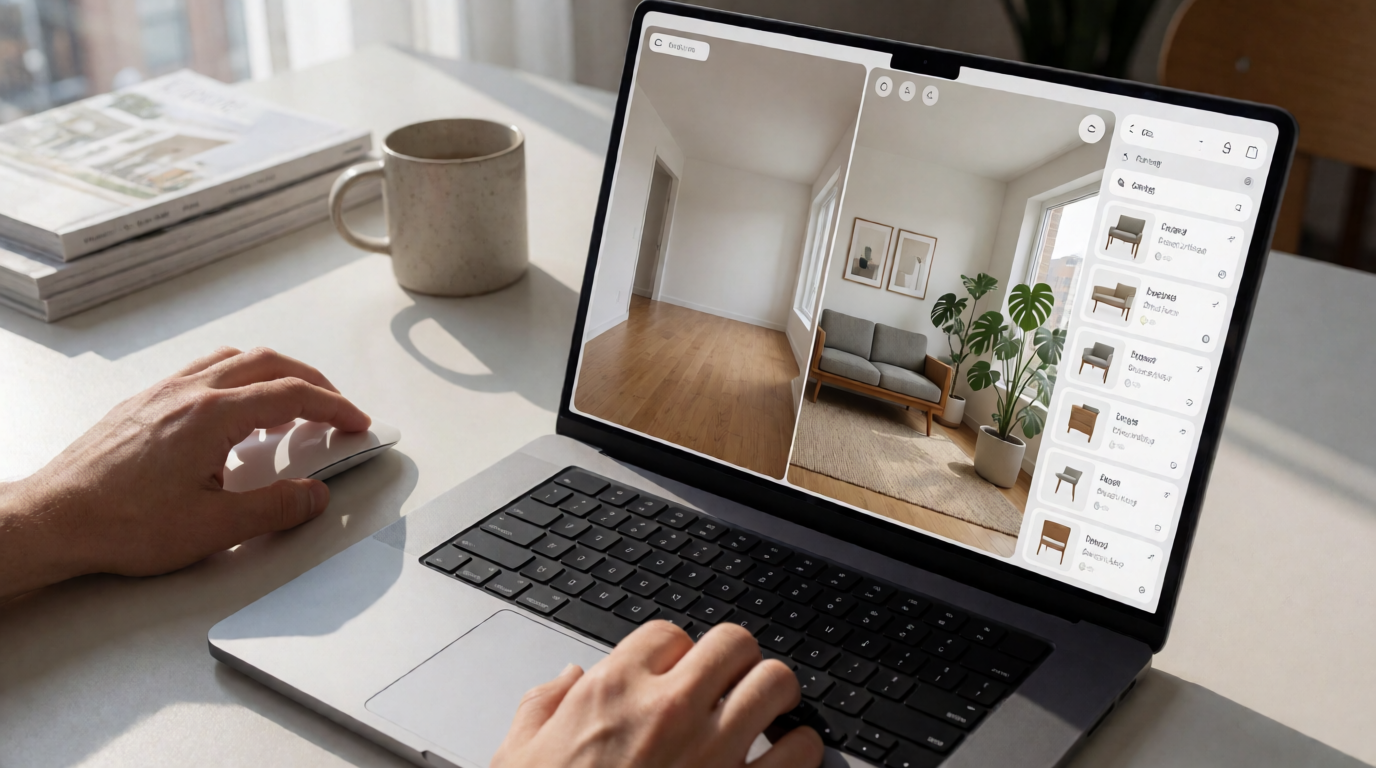
Virtual staging software uses artificial intelligence and computer vision to insert photorealistic furniture that respects architectural proportions. Unlike physical staging, it requires no logistics for transport, storage, or insurance. As I explain in my complete guide to
Virtual Staging Software, the technology has advanced to the point where generated images are indistinguishable from real photographs, as long as best practices are followed.
How Does AI-Powered Virtual Staging Work?
The process seems like magic, but it's based on solid technical principles. When you upload a photo to a platform like RealVisionAI, the system:
- Analyzes the space geometry: Detects walls, floors, windows, and doors using convolutional neural networks.
- Calculates real scales: Measures window height and door width to properly size furniture.
- Selects the appropriate style: With over 25 predefined styles — from Scandinavian minimalist to contemporary luxury.
- Renders in 12 seconds: Generates a 4K image with realistic textures, shadows, and reflections.
📚Definition
Virtual staging is the process of digitally adding furniture, decor, and accessories to photos of empty or poorly decorated properties, using AI software to create photorealistic images ready for MLS.
Tangible Benefits for Real Estate Agencies
1. Operational Cost Savings
Average physical staging costs between $2,500 and $5,000 per property, plus storage, transport, and insurance. For an agency listing 50 properties a year, that's an expense of $125,000 to $250,000 annually. With virtual staging, that cost drops by 90%, down to between $29 and $99 per image, depending on volume. In my experience, agencies that adopt this technology recoup their investment in less than two months.
2. Faster Sales Velocity
A 2025 NAR study found that properties with virtual staging:
- Receive 139% more online views.
- Sell 30% faster than those without staging.
- Generate 47% more formal offers.
These numbers directly correlate with exposure time. Fewer days on market means lower carrying costs and higher inventory turnover.
3. Unmatched Flexibility
Physical staging limits you to one decor style per property. With virtual staging, you can:
- Change styles in minutes for different target audiences (families, investors, young professionals).
- Show multiple configurations of the same space (formal vs. informal living room).
- Adapt decor to seasons (Christmas, summer) at no extra cost.
As I explain in
AI in Real Estate, this flexibility is especially valuable for vacation or luxury properties where buyers have very diverse tastes.
4. Risk Reduction
Physical staging involves risks of property damage, theft, or injury during installation. Virtual staging completely eliminates these risks. Plus, AI-generated images can be instantly modified if the client isn't satisfied — something impossible with real furniture.
Step-by-Step Implementation in Your Agency
1. Preparing the Base Images
For best results, photos must meet certain requirements:
- RAW or high-resolution JPEG format (minimum 12MP).
- Wide angles showing the entire room.
- Even lighting, avoiding overexposed areas or harsh shadows.
- No people or pets in the frame.
2. Virtual Staging Process with RealVisionAI
- Upload the photos to the platform (drag and drop, CRM-compatible).
- Select the style from 25 predefined options or create a custom one.
- Adjust furniture density: minimalist for small spaces, full for family homes.
- Review and download in 4K, ready for MLS and social media.
3. Optimization for Different Channels
Each platform has specific requirements:
- MLS: Watermark-free images with correct EXIF metadata.
- Social media: Square versions (1080x1080) for Instagram, vertical for TikTok.
- Printed brochures: High resolution (300 DPI) with space for text.
Virtual Staging vs. Physical Staging: Complete Comparison
| Criterion | Physical Staging | Virtual Staging (RealVisionAI) |
|---|
| Average cost | $3,500 per property | $29–$99 per image |
| Implementation time | 3–7 days | 12 seconds per image |
| Style flexibility | 1 style, costly changes | Up to 25 styles, unlimited changes |
| Maintenance | Storage, insurance, transport | No recurring costs |
| Proven ROI | 5–8% price increase | 3–5% increase, but with 90% lower costs |
| Geographic availability | Only in urban areas with vendors | Global 24/7 coverage |
| Risks | Damage, theft, delays | None |
💡Key Takeaway
Virtual staging doesn't completely replace physical staging for ultra-luxury properties, but for 95% of residential listings it offers significantly higher ROI due to its near-zero marginal cost.
Legal and Ethical Aspects of Virtual Staging
The use of AI-generated images in real estate is regulated by NAR guidelines and local MLS rules. It's mandatory to:
- Include the phrase "Images generated with virtual staging for illustrative purposes" in the listing description.
- Not alter permanent structural features (columns, windows, doors).
- Maintain real proportions; it's forbidden to visually enlarge rooms.
In my experience advising agencies in Miami and Los Angeles, non-compliance with these rules can result in fines of up to $10,000 from MLSs. I always recommend creating two versions of each image: one with staging and one original, to show during in-person showings.
Real Success Stories
The Luxe Group (Miami)
This luxury agency implemented RealVisionAI in January 2025. Results after 12 months:
- 78% reduction in staging costs (from $180,000 to $39,600 annually).
- 41% increase in online views of their listings.
- 22% fewer days on market (from 45 to 35 days average).
- 6.5% increase in sale price over listing price.
"Virtual staging allowed us to show up to five different styles for the same property, adapting to European, Asian, and Latin American buyers without incurring logistical costs," says Carlos M., Marketing Director.
Boutique Agency NYC
A small agency in Manhattan with 15 active properties:
- Saved $52,000 in physical staging in the first year.
- Managed to sell 3 properties that had been on the market for over 6 months in less than 30 days after applying virtual staging.
- Increased the conversion rate from virtual tours to in-person visits by 34%.
Common Mistakes When Using Virtual Staging (and How to Avoid Them)
1. Using Inappropriate Styles for the Target Market
Not all decor works for all buyers. A family property in the suburbs shouldn't have ultra-modern luxury furniture. Solution: Analyze the demographic profile of the typical buyer in the area before choosing the style.
2. Oversaturating Spaces
Too much furniture makes rooms look smaller. Solution: Keep 30–40% of the space visible. Less is more.
3. Ignoring Scale
Furniture that's too large or too small breaks the illusion of reality. Solution: Use software that analyzes the actual room dimensions, like RealVisionAI.
4. Not Complying with MLS Rules
Omitting the "virtual staging" label can lead to fines and listing removal. Solution: Always include the required note in the description.
5. Using Low-Quality Photos
Virtual staging can't fix poorly taken photos. Solution: Invest in professional photography before virtual staging.
Frequently Asked Questions
Does virtual staging work for all types of properties?
Yes, from 30 m² studios to 500 m² mansions. RealVisionAI offers specific templates for urban apartments, family homes, vacation properties, and commercial spaces. It even works on properties under construction, where you can show finishes and furniture that don't yet exist.
How do you guarantee that virtual furniture has real scales?
Our algorithms analyze key architectural points like window height (standard 1.2 m), door width (0.8 m), and distance between walls. With this data, they select furniture of precise dimensions and position it respecting the photo's perspective.
Can I use virtual staging in property videos?
Yes, our video staging technology allows furnished virtual tours, transitions between different decor styles, and professional cinematic effects. Videos with virtual staging have a 60% higher completion rate than videos of empty spaces.
What if the client doesn't like the decor style?
You can generate new versions in minutes at no additional cost — something impossible with physical staging. In my experience, about 15% of clients request changes, but the process is so fast it doesn't affect marketing timelines.
Can virtual staging include structural modifications?
No. Ethical guidelines prohibit altering actual architecture (enlarging windows, removing walls, changing floors). Only furniture and decor are allowed. Any structural changes must be clearly indicated as "conceptual render."
How does virtual staging integrate with my current workflow?
RealVisionAI connects directly with real estate CRM platforms (Salesforce, HubSpot), listing management software (BackAgent, LionDesk), and automated marketing tools. This enables complete workflows from photography to publication without manual processes.
How long does it take to learn the software?
The learning curve is minimal. Most agents master the basic functions in less than 30 minutes. We offer weekly webinars and a knowledge base with video tutorials.
Does virtual staging replace professional photography?
No, it complements it. Professional photography remains essential for capturing the right lighting and optimal angles. Virtual staging enhances those images, not replaces them. The best agencies invest first in quality photography and then apply virtual staging.
2026 Trends in Real Estate Visualization
The sector is advancing rapidly. Innovations transforming the market include:
- Augmented Reality (AR) Staging: Buyers can visualize virtual furniture in real time through their smartphones during in-person tours.
- Buyer Profile Personalization: AI analyzes the buyer's search history and automatically generates the decor style most likely to appeal to them.
- Immersive Metaverse Tours: Digital twin properties for complete virtual visits, ideal for international buyers who can't travel.
According to a 2024 McKinsey report, 65% of residential real estate transactions will include some digital visualization component by 2027. Agencies that don't adopt these tools will fall behind.
How to Get Started Today with RealVisionAI
Implementation is simple:
- Free trial: Process your first 5 images at no cost, no credit card required.
- Training: Access weekly live webinars on best practices and success stories.
- Dedicated support: For agencies with more than 50 agents, we assign an account manager to guide you through the first 90 days.
💡Key Takeaway
Agencies that adopt virtual staging in 2026 not only save thousands of dollars in operational costs, but also generate more qualified leads, close sales faster, and build a visually superior brand in their market.
Transform your listings today: Explore RealVisionAI and discover how our technology can boost your sales in this competitive market. To dive deeper into advanced concepts, I recommend reading our complete guide on
Ultimate AI Lead Generation for Real Estate Agents and the article on
AI Real Estate Photography.
About the Author
RealVisionAI Editorial Team is the team of real estate visualization and artificial intelligence specialists at
Real Vision AI. With over 40 years of combined experience in architectural photography, staging, and technology, we help real estate agencies transform their listings with AI solutions that increase sales velocity and reduce operational costs.
Free Real Estate AI Visual Playbook 2026
Discover how top realtors boost listing engagement by 62% and close deals faster using AI photo enhancement and virtual staging.