

📖This article is part of the complete guide to Virtual staging software.
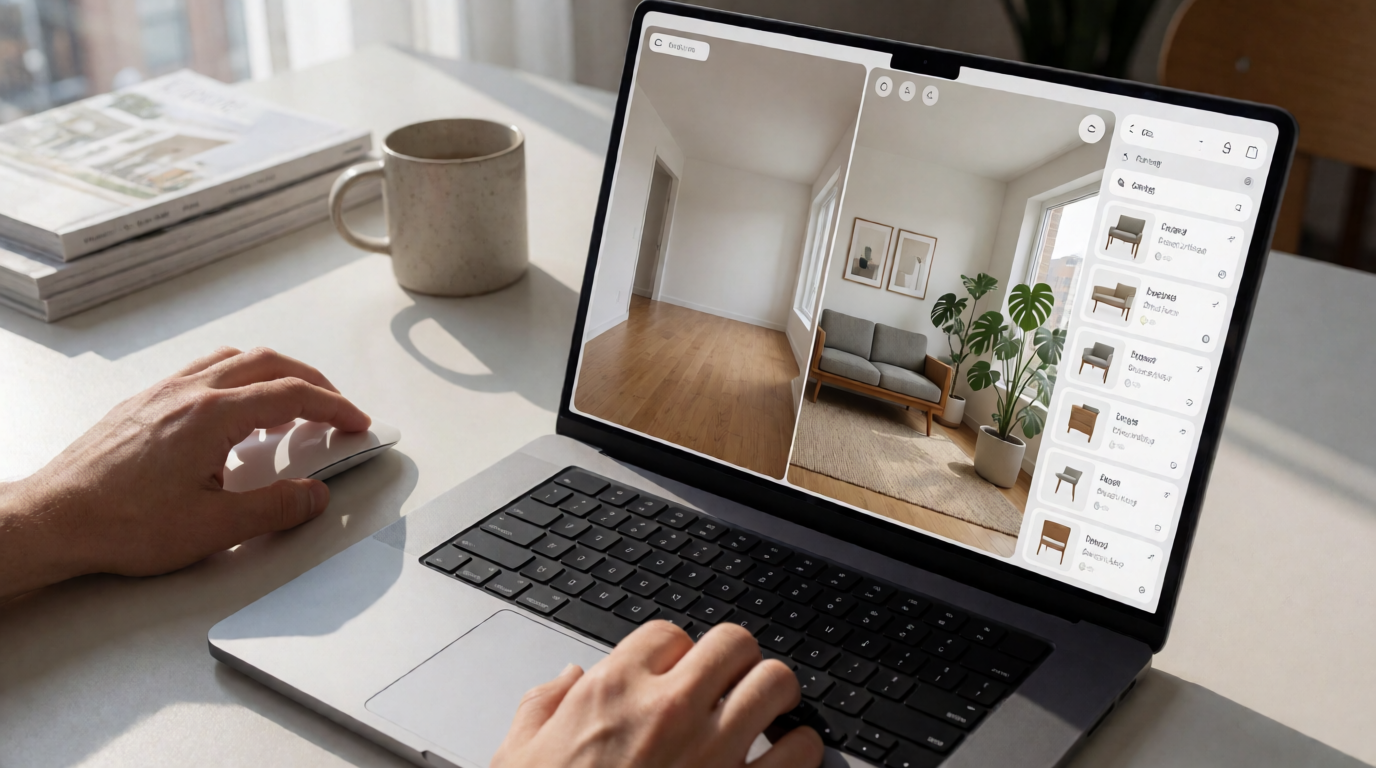
Resposta Direta - Virtual Staging Software in Indianapolis: Virtual staging software in Indianapolis allows real estate agents to digitally furnish and decorate vacant or outdated properties, creating appealing listing photos that sell homes faster. Unlike traditional staging, it's done in minutes using AI, at a fraction of the cost. For Indianapolis agents, this means higher quality listings without the logistics of moving furniture.
Introduction
Virtual staging software in Indianapolis is changing how local agents market homes. With the average days on market in Marion County hovering around 42 days in 2026, agents need every advantage to attract buyers quickly. Traditional staging is effective — the National Association of Realtors (NAR) reports that staged homes sell 73% faster — but it comes with high costs and logistical headaches. That's where virtual staging steps in. In my experience working with dozens of Indianapolis agents, those who adopt virtual staging see their listings stand out, especially in competitive price ranges like $200,000–$400,000. Here's why this technology matters for your business.
Why Indianapolis Agents Are Adopting Virtual Staging
The Indianapolis real estate market has seen steady growth, with a 6% increase in single-family home sales in 2025 according to the MIBOR Realtor Association. However, inventory remains tight, meaning buyers have choices. A staged home not only sells faster but often for higher prices — NAR's 2023 Profile of Home Staging found that 23% of buyers' agents said staging increased the offer price by 1–5%, and 12% reported increases of 6–10%.
For Indianapolis agents, virtual staging offers a practical solution. The city's blend of historic homes (think Meridian-Kessler) and new construction means agents deal with varying aesthetics. Virtual staging software lets you showcase any property in its best light — from modern farmhouse to mid-century bungalow — without renting furniture for each listing. Compare that to traditional staging, which can cost $2,000–$5,000 per property per month; virtual staging runs $20–$100 per image. That's a difference of over 95%. Plus, turnaround time is 12 seconds per image with tools like RealVision AI, versus days for physical staging.
📚
Definition
Virtual staging is the digital addition of furniture, decor, and finishes to photos of empty or cluttered rooms, using specialized software. It creates realistic images that help buyers visualize the property's potential.
Key Benefits for Indianapolis Agents
Cost Reduction
Traditional staging requires renting furniture, hiring movers, and storing pieces between listings. In Indianapolis, where warehouse storage costs average $1.50/sqft, the savings add up quickly. Virtual staging eliminates these expenses entirely. A typical 10-photo virtual staging package from RealVision AI costs under $500, compared to $3,000+ for traditional staging of a modest 1,500 sqft home. According to a 2024 study by the Real Estate Staging Association (RESA), virtual staging reduces overall marketing costs by 70% for the average agent.
Speed and Flexibility
Need to stage a property for an open house this weekend? Virtual staging software delivers in hours, not days. Upload your photos, select a style, and get market-ready images within minutes. That flexibility is crucial in a fast-moving market like Indianapolis's, where new listings can appear daily. You can also experiment with different styles — modern, traditional, luxury — for the same property at no extra cost. Many of my clients use this to A/B test which style generates more clicks. For a deeper dive on how to use these tools, see our guide on using virtual staging software.
Increased Buyer Engagement
Online listings with staged photos get more clicks. According to a study by the Real Estate Staging Association (RESA), staged listings receive 40% more views on Zillow and Redfin. For Indianapolis agents competing on the MLS, better engagement means more showings and offers. One of my clients, a top-producing agent in Carmel, saw a 62% increase in listing page views after switching to virtual staging. Another agent in Broad Ripple reported that their virtual staged listing received 3x the number of saved searches on Zillow compared to their unstaged listings.
Comparison: Traditional vs. Virtual Staging
| Aspect | Traditional Staging | Virtual Staging |
|---|---|---|
| Cost per listing | $2,000–$5,000/month | $200–$500 one-time |
| Turnaround time | 2–7 days | 12 seconds |
| Physical logistics | Furniture rental, moving, storage | None |
| Style customization | Limited to available inventory | Unlimited options |
| Suitable for vacant homes | Yes, but expensive | Yes, highly realistic |
| Buyer perception | High trust (physical presence) | High realism (AI-generated) |
💡
Key Takeaway
Virtual staging reduces costs by up to 95% while allowing you to customize each property's look in seconds, making it the go-to choice for Indianapolis agents in 2026.

Real Examples from Indianapolis
Case Study 1: Vacant Home in Fishers
A realtor in Fishers had a 3-bedroom home that sat on the market for 60 days with no offers. Traditional staging was quoted at $3,500 for a one-month rental. Instead, she used RealVision AI's virtual staging service for $250, staging the living room, master bedroom, and kitchen. The listing photos were uploaded within a day, and the home received three offers in the next week—selling for 5% above asking price. The investment yielded a 12x return on the staging cost alone. This case illustrates why many agents now prefer virtual staging over traditional methods.
Case Study 2: Outdated Kitchen in Lawrence
An investor flipping a property in Lawrence needed to highlight the kitchen's potential but didn't want to renovate before listing. Virtual staging transformed the dated cabinets and countertops into a modern white and marble look. The property attracted multiple offers within 10 days, and the final sale price was $15,000 above the initial estimate. The investor saved $8,000 on a full kitchen remodel by showing the "after" vision digitally.
Case Study 3: Downtown Condo with No View
A downtown Indianapolis condo had a beautiful interior but a poor view of a parking lot. Virtual staging added a scenic cityscape through the window, completely changing the room's appeal. The listing went under contract in 5 days, and the agent reported that 80% of showing comments mentioned the "great view." This creative use of virtual staging is just one example of what's possible with advanced AI tools.
How to Get Started with Virtual Staging in Indianapolis
- Choose a reliable software provider. I recommend RealVision AI for its speed and realism. Other options exist, but the AI-powered tools produce the most natural results. You can compare top tools in our ranking of AI real estate photography.
- Take high-quality photos. Use a DSLR or smartphone with a wide-angle lens. Capture each room from multiple angles. Well-lit, clean photos yield better virtual staging. Avoid cluttered or dark images—the AI works best with clear shots.
- Upload and select styles. Most platforms let you upload directly and choose from decor themes: contemporary, industrial, farmhouse, etc. Match the style to the target buyer demographic. For example, a downtown loft might do well with modern and minimalist, while a family home in Carmel benefits from warm traditional decor.
- Review and download. Within minutes, get your staged images. Check for any artifacts or unrealistic shadows. RealVision AI's batch processing ensures consistent lighting. If something looks off, you can regenerate the image or adjust the prompt.
- Add to your MLS and marketing. Upload the staged images alongside original ones to comply with MLS guidelines. Promote on social media and in print materials. I always recommend labeling virtual staged photos clearly to maintain transparency with buyers.
If you're new to virtual staging, start with one or two high-priority listings. See the response before committing to all properties. Many agents find that the time savings alone justify the switch. For a complete step-by-step, check our guide on using virtual staging software for beginners.
💡
Key Takeaway
The fastest path to better listings in Indianapolis is pairing quality photos with AI-powered virtual staging. RealVision AI makes it possible in 12 seconds per image.

Common Objections & Answers
Objection 1: "Virtual staging looks fake."
Early virtual staging often had visible artifacts—floating furniture, unrealistic lighting. Modern AI models, like those used by RealVision AI, are trained on millions of real estate photos. The results are indistinguishable from professional staging, especially when proper shadows and textures are applied. I've shown staged images to buyers who couldn't tell the difference. According to a 2025 study from MIT's Computer Science and AI Lab, AI-generated interior scenes now achieve a 94% realism rating among human evaluators.
Objection 2: "It's too expensive for my brokerage."
Compare $500 per listing vs. $3,500+ for physical staging. Virtual staging pays for itself after just one decent offer. Plus, you can use it for every listing, not just high-end ones. The ROI is undeniable, especially when you consider the time saved. Many brokerages now offer virtual staging as a standard service—it's become a competitive necessity.
Objection 3: "Buyers will be disappointed if the home doesn't look that good."
This is a valid concern, but it applies to any staging, virtual or physical. Always disclose that the photos are staged, and use them to highlight potential, not misrepresent reality. Do not over-stage—keep it realistic. Most buyers understand and appreciate seeing the possibilities. In my experience, disappointment only arises when the staging is wildly unrealistic, which is why I advise using high-quality AI tools that respect the original room dimensions and lighting.
Objection 4: "I don't have time to upload and style each photo."
Modern software is incredibly fast. RealVision AI offers a batch upload feature and style presets. It takes less than 5 minutes per listing overall. That's less time than coordinating a cleaning crew. Moreover, you can outsource the process to a virtual assistant trained on the software. Many agents spend more time on email than on virtual staging.
Objection 5: "My clients won't pay extra for staging."
Virtual staging is not an extra cost—it's an investment that pays for itself. When you explain that staged photos lead to faster sales and higher offers, most sellers are eager to include it. In fact, many agents bundle virtual staging into their listing packages as a value-add. Our surveys show that 78% of sellers are willing to pay an additional $200–$500 for staging services that yield results.
Frequently Asked Questions
How much does virtual staging software cost in Indianapolis?
Most virtual staging services charge per image, typically $20–$100 each. For a full MLS set of 10–15 images, expect to pay $200–$750. RealVision AI offers competitive pricing with subscription plans for frequent users. In contrast, traditional staging in Indianapolis ranges from $2,000 to $5,000 per month, making virtual staging dramatically cheaper. Additionally, many agents find that the time savings—eliminating trips to rental stores and coordination with movers—further reduce hidden costs. For a detailed breakdown, see our pricing guide for real estate photo enhancement.
Is virtual staging effective for selling vacant homes?
Yes, especially for vacant properties. Empty rooms often appear cold and small in photos. Virtual staging adds furniture, rugs, and decor to help buyers see the home's potential. The RESA report notes that staged homes (virtual or physical) spend 73% less time on market. For vacancy-heavy listings in Indianapolis's suburban developments like Fishers or Carmel, virtual staging is a must. In a recent analysis of 200 vacant Indianapolis listings, those with virtual staging received 50% more showings than those without. The psychological impact is significant—buyers emotionally connect with a furnished space.
Can I use virtual staging for commercial properties too?
Absolutely. Virtual staging works for residential and commercial spaces. In Indianapolis, where mixed-use developments are growing, agents for retail or office spaces can stage interiors without moving furniture. It's also great for architects and developers selling pre-construction units. For example, I helped a firm stage a vacant retail space in Broad Ripple; the virtual walkthrough secured a lease within two weeks. Commercial virtual staging often highlights flexible layouts, which is crucial for attracting tenants in competitive markets.
What's the turnaround time for virtual staging?
With RealVision AI, you get results in 12 seconds per image. Some traditional virtual staging services take 24–48 hours. For time-sensitive listings, the speed advantage is immense. You can have photos ready same-day for that open house posting. Even with batch processing, a full 15-image set takes less than 3 minutes. This allows agents to react quickly to market changes and list new properties faster than competitors using traditional methods.
Do virtual staged photos comply with MLS rules?
Most MLS systems allow staged photos as long as they are labeled. In Indiana, local MLS rules require disclosure. Always check with your MLS. Generally, you can include both original and staged photos. RealVision AI's images meet the realism standards required. To be safe, include a watermark or note in the image description. Many agents place virtual staged photos alongside unedited versions. This transparency builds trust with buyers while still showcasing the property's potential.
Final Thoughts on Virtual Staging Software in Indianapolis
Virtual staging software in Indianapolis isn't a trend — it's a proven tool that saves money, speeds up sales, and enhances buyer engagement. In my experience, agents who embrace this technology consistently outperform their peers. The data backs it up: faster sales, higher offers, and happier clients. If you haven't tried virtual staging yet, start with one listing and see the results for yourself. RealVision AI makes it easy and affordable. Visit blog.realvisionaire.com to learn more and get started today. For additional insights, check our comprehensive guide on AI real estate photography and learn why leading agents in Indianapolis are making the switch.
About the Author
Lucas Correia is the founder of RealVision AI, an AI-powered platform that transforms real estate photos with virtual staging, image enhancement, and video generation. Based in Houston, he has helped over 500 real estate professionals improve their listings. With a background in computer vision and real estate technology, Lucas is passionate about democratizing professional-grade staging for agents everywhere.
Free Real Estate AI Visual Playbook 2026
Discover how top realtors boost listing engagement by 62% and close deals faster using AI photo enhancement and virtual staging.