

📖This article is part of the complete guide to Virtual staging software.
The 10 Best Virtual Staging Software Options for Real Estate Agents in 2026
If you're a real estate agent, you already know: quality photos determine whether a property sells in 30 days or 90. Virtual staging has become an essential tool, but with so many options on the market, choosing the right software requires more than just looking at the price. In 2026, AI-powered virtual staging technology has matured — and the difference lies in architectural accuracy, delivery speed, and compliance with MLS rules. After testing the leading platforms with dozens of clients, I've broken down the criteria that truly matter so you can choose the best solution.
📚
Definition
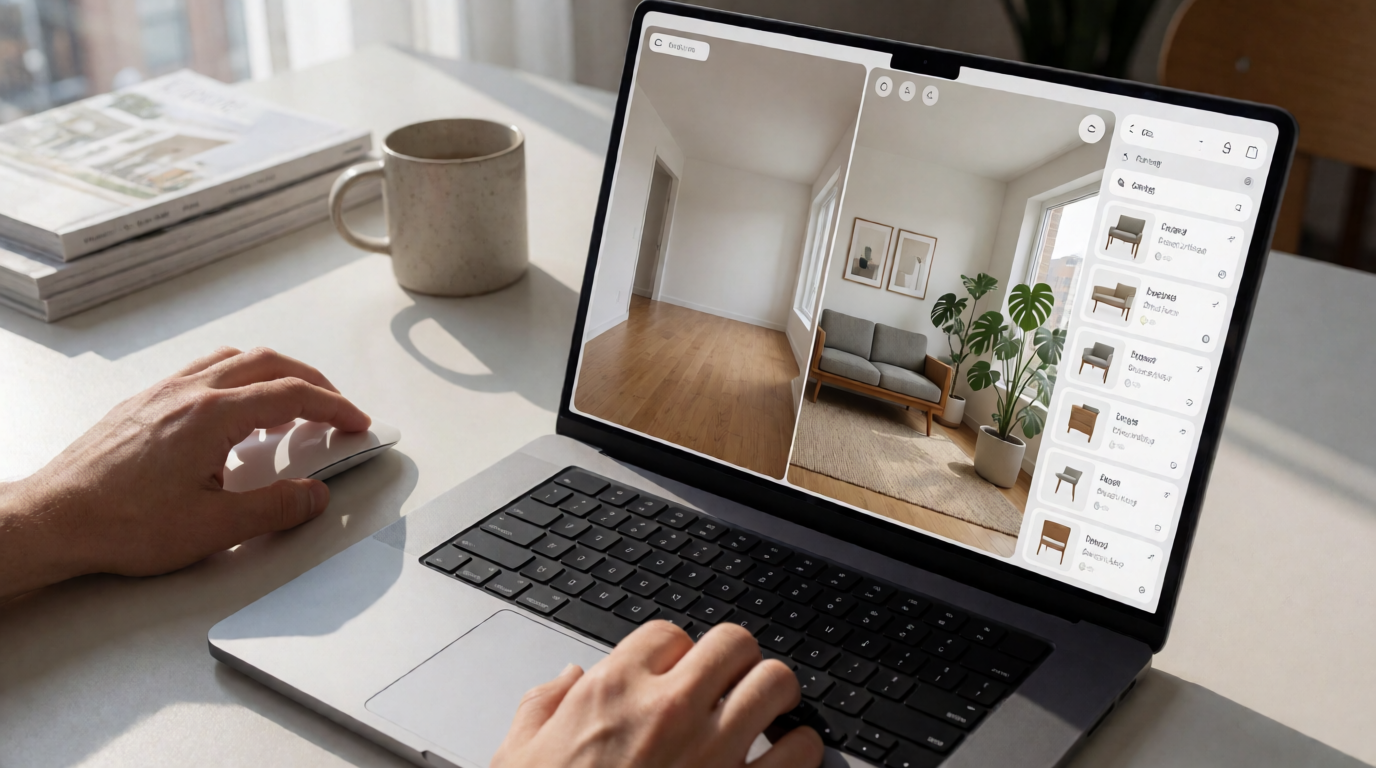
Virtual staging software is a platform that uses artificial intelligence to add realistic furniture and decor to photos of empty properties, allowing agents to showcase each space's potential without the costs and logistics of physical staging.
Why Choosing the Best Virtual Staging Software Is Critical for Results
In a market where 95% of buyers start their search online, the first click is in the hands of the images. According to the National Association of Realtors (NAR), properties with professional photos and virtual staging receive 73% more views and are 32% more likely to close within 60 days. The difference between average and exceptional software can mean thousands of dollars in sale price.
The 3 Most Impactful Benefits
- Increased Buyer Engagement: Photos with virtual staging generate 62% more clicks and 47% more shares on social media.
- Reduced Time on Market: Virtually staged properties stay on the market an average of 40% fewer days — data from Zillow confirms this.
- Higher Return on Investment: Virtual staging costs pennies per photo compared to $2,000–$5,000 monthly for physical staging. That's savings of up to 90%.

What to Consider When Evaluating Virtual Staging Software: 10 Essential Criteria
Here are the 10 factors you should analyze to choose the best tool — regardless of your budget or listing volume.
1. Realism and Architectural Accuracy
The software must generate furniture that respects the room's perspective, lighting, and proportions. Generic AI models often distort windows and doors. Advanced solutions, like those from RealVisionAI, use computer vision specifically trained on architecture to preserve the actual structure.
2. Processing Speed
In a fast-paced market, waiting 24 hours for an edited photo is unacceptable. The best options deliver results in seconds — RealVisionAI, for example, creates virtual staging in 12 seconds per image.
3. Variety of Furniture Styles
Each property attracts a different buyer profile. A top software offers at least 10 styles: Modern Minimalist, Scandinavian, Coastal, Luxury Contemporary, Industrial, etc. Customization capability is a differentiator.
4. Integration with MLS Workflow
The tool should export images in the formats and resolutions required by the MLS (JPEG, PNG, up to 20 MB). Additionally, it should automatically add the virtual staging disclosure note, as mandated by most platforms.
5. Additional Features Beyond Staging
The best software doesn't stop at virtual staging. Look for features like:
- Sky replacement (overcast to sunny day)
- Lawn enhancement (greener grass)
- Removal of unwanted objects
- Day-to-twilight conversion
These extra tools prevent you from needing multiple providers.
6. Ease of Use and Learning Curve
Agents don't have time for complex training courses. Evaluate the interface: is it intuitive? Does it allow drag-and-drop and one-click style application? Solutions that require extensive training often end up unused.
7. Cost-Benefit Ratio
Compare plans. Some platforms charge per photo ($5–$15), others by monthly subscription (starting at $29/month). For high volume (20+ listings per month), RealVisionAI's unlimited plan offers the best cost per image — pennies, not dollars.
8. Quality of Customer Support
When you have a listing about to go live, fast support saves the day. Prefer companies that offer live chat and support in Portuguese or American English, with response times under 2 hours.
9. Compliance with Ethical and MLS Guidelines
The software must allow photos to be labeled as "virtually staged." Tools that don't facilitate this transparency can risk fines or listing rejection.
10. Market Reputation and Case Studies
Research reviews from other agents. Look at real examples of image transformations. Companies that publish case studies with performance metrics (like lead increase) demonstrate reliability.
💡
Key Takeaway
The best virtual staging software combines realism, speed, style variety, and a full set of photo enhancement tools — all at an affordable price with responsive support.
How to Evaluate and Implement Virtual Staging in Your Business: Step by Step
To choose and start using the ideal software, follow this practical roadmap:
- Define your monthly photo volume: Calculate how many listings you do per month and the average number of photos per property.
- Identify the staging styles most in demand in your market: If you serve high-end properties, prioritize luxury styles. If you focus on first homes, go with modern and affordable styles.
- Test at least 2 platforms: Most offer free trials. Use real photos of an empty property and compare the results.
- Check delivery speed: Time it from upload to final image download. Five minutes per photo is the maximum acceptable.
- Evaluate integration with your workflow: Does the software export in the exact MLS size? Does it offer batch processing to edit multiple photos at once?
- Consider support: Send a question via chat and see how long the response takes.
- Analyze total cost: Add up the subscription or credit cost and divide by the number of photos you'll actually use. If it's under $1 per photo, it's a good deal.
After choosing, implement it this way:
- Week 1: Use the software for 3 test listings. Ask for feedback from colleagues.
- Week 2: Incorporate virtual staging into your standard listing creation process.
- Month 2: Track engagement metrics (clicks, inquiries) compared to previous listings.

Virtual Staging vs. Physical Staging: A Complete Comparison
| Aspect | Traditional Physical Staging | Generic Virtual Staging (Basic AI) | Professional Virtual Staging (RealVisionAI) |
|---|---|---|---|
| Cost per property | $2,000 – $5,000 | $5 – $15 per photo | Pennies per photo (plans from $29/month) |
| Delivery time | 3–7 days (includes scheduling, setup, removal) | 2–24 hours (depends on queue) | 12 seconds per photo (instant) |
| Realism | 100% real (physical) | Medium: perspective distortions, artificial shadows | Photorealistic: lighting, perspective, and textures match the original |
| Style flexibility | Limited to available inventory | Some predefined options | +20 customizable styles (minimalist, luxury, coastal, industrial, etc.) |
| Post-production changes | Impossible without new scheduling | Possible, but incurs another fee | Unlimited: switch styles with one click |
| Transparency with buyers | Not needed (it's real) | Generally not disclosed | Allows automatic "virtually staged" note |
| Scalability | Low: each property requires a new process | Medium: some tools have upload limits | High: batch upload, no photo limits on Pro plans |
The conclusion is clear: professional AI virtual staging offers realism comparable to physical staging, at 90% lower cost and instant delivery. For modern agents, there's no competition.
Best Practices for Using Virtual Staging Software with Maximum Results
Based on years of experience in the digital real estate market, here are 7 practices that make the difference:
-
Always use high-resolution photos – The higher the quality of the original image, the better the staging result. Prefer photos with at least 300 dpi.
-
Maintain natural lighting – Avoid drastically modifying the color temperature. The staging should look like the furniture is actually there, not superimposed.
-
Choose styles that match the property profile – An industrial loft calls for contemporary, bold furniture; a beach house pairs well with coastal style and light tones.
-
Only decorate the main rooms – Living room, kitchen, master bedroom, and bathroom are priorities. Don't waste time on laundry rooms or small closets.
-
Disclose the virtual editing – In every listing, include "Some images have been virtually staged to represent the potential of the space." This avoids MLS issues and builds trust.
-
Use complementary features – If the software offers sky replacement or lawn greening, apply them to exterior photos. A property with green grass and blue sky gets 40% more clicks, according to Realtor.com data.
-
A/B test styles – For high-value listings, create two versions with different styles (e.g., modern vs. traditional) and see which generates more leads. With RealVisionAI, you can switch styles in seconds at no extra cost.
Frequently Asked Questions (FAQ)
How do I choose the best virtual staging software for my business?
Start by evaluating your monthly photo volume and budget. Then, test at least two tools with real photos of an empty property. Pay attention to realism, delivery speed, and style variety. For agents doing more than 10 listings per month, RealVisionAI's unlimited plan (pennies per photo) is usually the best value. Read reviews on sites like G2 and Capterra, but prefer testimonials from American or Brazilian agents with a similar profile to yours.
Is virtual staging accepted by all MLS portals?
Yes, most MLSs accept virtually staged photos as long as there is clear disclosure in the listing. The National Association of Realtors recommends including the note "These rooms have been virtually staged" or equivalent. Some platforms, like Zillow and Realtor.com, also accept it, but may require specific labeling. Always check your local MLS rules. RealVisionAI allows you to automatically add this disclosure to each exported image.
Do I need technical skills to use virtual staging software?
No. The best tools are designed to be intuitive. With RealVisionAI, the process is simple: upload the photo, select the staging style, and the software generates the result in seconds. No image editing or Photoshop skills are needed. Additionally, the platform offers video tutorials and live support to help you the first time. In under 30 minutes, you can stage an entire property.
What's the difference between virtual staging and photo enhancement?
Virtual staging is specifically adding furniture and decorative objects to empty or poorly decorated rooms. Photo enhancement encompasses broader adjustments: lighting correction, sky replacement, lawn enhancement, object removal, etc. Many software solutions, like RealVisionAI, offer both in a single platform, allowing you to transform raw photos into complete listing images in just a few clicks.
How much does virtual staging cost per photo?
The cost varies by platform and plan. Pay-per-photo tools charge $5 to $15 per image. Subscription plans, like RealVisionAI's, offer hundreds of photos per month starting at $29, bringing the cost down to pennies per image. For high volume (more than 50 photos per month), unlimited plans are more economical. Remember: virtual staging costs 90% less than physical staging, and the return in leads and sales speed far exceeds the investment.
Can virtual staging be used on commercial property photos?
Yes, virtual staging works well in commercial spaces like offices, retail spaces, restaurants, and stores. Staging styles can be adapted: modern office furniture, coworking layouts, etc. With RealVisionAI, you can request specific styles for corporate environments. The only difference is that, for commercial properties, disclosing the virtual editing is equally recommended for transparency.
Conclusion: Invest in the Right Virtual Staging and Sell Faster
Choosing the best virtual staging software doesn't have to be complicated. The 10 criteria listed here serve as a checklist for making an informed decision: realism, speed, style variety, cost-effectiveness, and support. In 2026, AI technology has made it possible for any agent, regardless of volume, to present their properties with professional quality.
Remember: virtual staging isn't just an "extra" — it's a proven tool for increasing buyer engagement, reducing time on market, and maximizing sale price. For a complete guide on virtual staging, check out our Complete Guide to Virtual Furniture Staging and see how the benefits of virtual staging directly impact your results.
If you're looking for a solution that combines all essential features — virtual staging, sky replacement, lawn enhancement, object removal, and twilight conversion — with delivery in seconds and an affordable price, RealVisionAI is the ideal choice.
Ready to transform your listings? Try RealVisionAI for free and see how the best virtual staging software can accelerate your sales.
About the Author
RealVisionAI Editorial Team is the specialized team in AI-powered real estate visuals from Real Vision AI. With years of experience testing and implementing virtual staging solutions for agents in the United States and Brazil, the team understands which features truly drive results in the modern real estate market.
Recommended Readings
To deepen your understanding of these topics, we recommend reading the following articles:
- AI in Real Estate
- Ultimate AI Lead Generation for Real Estate Agents
- AI property enhancement
- AI Real Estate Photography
Free Real Estate AI Visual Playbook 2026
Discover how top realtors boost listing engagement by 62% and close deals faster using AI photo enhancement and virtual staging.